Citicoline
also CDP-choline · Cytidine 5'-diphosphocholine · Cytidine diphosphate choline · Citicholine
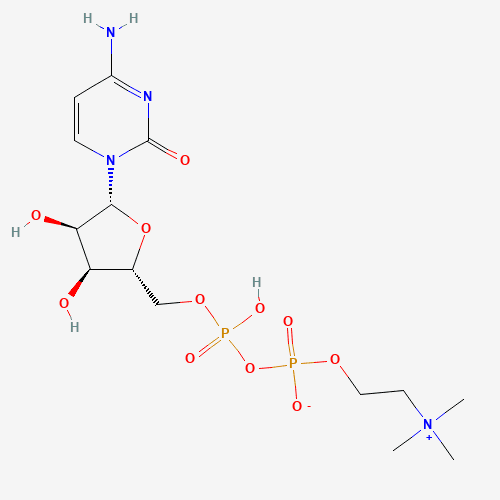
Citicoline (CDP-choline) is an intermediate in the synthesis of phosphatidylcholine, the main phospholipid in cell membranes [1]. It is a prescription drug in some countries and a supplement in others. A meta-analysis found it improved cognitive status in mild cognitive impairment, Alzheimer's disease and post-stroke dementia, though the underlying studies were of poor quality [2].
One of the better-supported choline sources for cognitive decline, with a broad but mostly low-quality evidence base.
- meta-analysis
- RCT
- trial
- observational
- preclinical / case
- review / patent / other
- retracted
- + Supplies both choline and cytidine for membrane repair
- + Positive signal across several dementia studies
- + Well tolerated
- − Trial quality is generally poor
- − Stroke results have been inconsistent
Overview
Citicoline is research-backed mostly in older and neurologically impaired populations. A systematic review of 47 articles concluded it is useful for slowing dementia progression and improving prognosis after stroke, and that it enhances cognitive function in healthy people. The authors also judged its effect after brain trauma unclear [3].
In the nootropics community it is the most common choline source paired with racetams such as Piracetam.
Mechanism
Citicoline is the direct precursor in the body's route to phosphatidylcholine. The usual explanation for its effects is that it stimulates phosphatidylcholine synthesis in injured brain tissue, though the experimental evidence for that is limited [1]. Animal work on cerebral ischaemia points to a second action as well, slowing membrane breakdown by inhibiting phospholipases and preserving cardiolipin and sphingomyelin [1].
Once it has been metabolised it also supplies choline, the raw material for acetylcholine. That is why the nootropics community treats it as a "choline source".
- Phosphatidylcholine synthesis (Kennedy pathway)activatessupplies substrate for membrane phospholipid synthesis [1]moderate
- Phospholipase activationblocksmay limit membrane breakdown after ischaemia (animal data) [1]weak
- Acetylcholine synthesisactivatesits choline can feed acetylcholine productionunclear
Safety
risks and cautions, not medical adviceCiticoline is well tolerated in the clinical literature, and none of the reviews cited here report serious adverse effects. The main caveat is about evidence rather than harm. The meta-analysis supporting its use in dementia rated the overall study quality as poor [2].
- Sold as a prescription medicine in some countries and a supplement in others, so product quality varies
Interactions
documented pairs only, not exhaustive- Alpha-GPCcompatibleTwo choline sources with no adverse interaction documented; taking both mostly duplicates the same lever
- CaffeinecompatibleStudied together in a beverage that improved sustained attention in healthy adults [4]
FAQ
References
entry last reviewed 2026-09-18- [1]Citicoline: neuroprotective mechanisms in cerebral ischemia.Adibhatla RM, Hatcher JF, Dempsey RJJ Neurochem 2002reviewPMID 11796739◌ unreviewed
- [2]Is Citicoline Effective in Preventing and Slowing Down Dementia?-A Systematic Review and a Meta-Analysis.Bonvicini M, Travaglini S, Lelli D et al.Nutrients 2023meta-analysis · humanPMID 36678257◌ unreviewed
- [3]Application of Citicoline in Neurological Disorders: A Systematic Review.Jasielski P, Piędel F, Piwek M et al.Nutrients 2020meta-analysis · humanPMID 33053828◌ unreviewed
- [4]Improvements in concentration, working memory and sustained attention following consumption of a natural citicoline-caffeine beverage.Bruce SE, Werner KB, Preston BF et al.Int J Food Sci Nutr 2014RCT · humanPMID 25046515◌ unreviewed
- [5]A multicentre trial to evaluate the efficacy and tolerability of alpha-glycerylphosphorylcholine versus cytosine diphosphocholine in patients with vascular dementia.Di Perri R, Coppola G, Ambrosio LA et al.J Int Med Res 1991clinical trial · humanPMID 1916007◌ unreviewed