Uridine Monophosphate
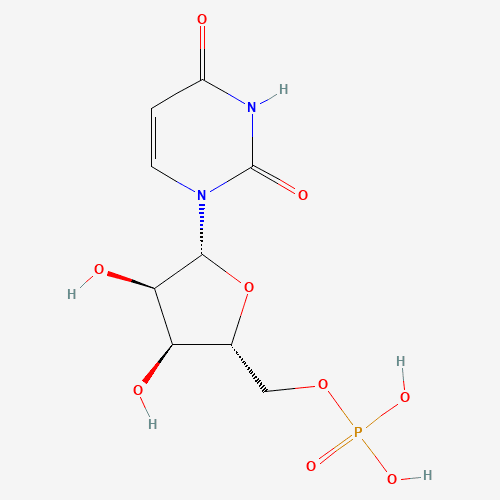
also Uridine 5'-monophosphate · 5'-UMP · UMP · Uridylic acid · Uridine 5'-phosphate
Uridine monophosphate (UMP) is a nucleotide and dietary source of uridine, one of the precursors used to make phosphatidylcholine and other neuronal membrane phospholipids. In rodents, UMP raises brain phosphatides and can increase striatal acetylcholine release [1][2]. Human cognitive evidence does not isolate UMP: the trials used it inside a multinutrient drink with choline, DHA, EPA, phospholipids, vitamins and selenium, and the primary cognitive outcomes were mixed [3][4][5].
Biologically plausible as a membrane precursor, but there is no convincing human evidence that UMP by itself improves memory.
- meta-analysis
- RCT
- trial
- observational
- preclinical / case
- review / patent / other
- retracted
- + Supplies uridine for the Kennedy pathway that makes phosphatidylcholine
- + Raised brain phosphatides and acetylcholine release in rodent studies
- + Multinutrient formulations containing UMP have been well tolerated in long trials
- − No cited human cognition trial tested UMP alone
- − Positive and negative clinical results belong to a multi-ingredient product, not to UMP
- − High-dose oral uridine caused dose-limiting diarrhoea in a small pharmacology study
Overview
UMP is uridine with a phosphate attached at the 5' position. It is both a normal biological nucleotide and an oral source of uridine. The nootropic case begins with a real biochemical bottleneck: neurons need uridine, choline and a polyunsaturated fatty acid such as DHA to build phosphatidylcholine through the Kennedy pathway, and each precursor can be rate-limiting [2][6].
In rodents, supplying UMP can raise brain phosphatides and synaptic proteins. Aged rats eating a diet containing 0.5% UMP for one week had a 16% increase in striatal acetylcholine content, while higher dietary concentrations roughly doubled or nearly tripled baseline acetylcholine release after one or six weeks [1]. These are useful mechanistic results, but they are not evidence that an oral supplement improves human memory.
The human evidence is a formulation story. Souvenaid's Fortasyn Connect combines UMP with choline, DHA, EPA, phospholipids, vitamins B6, B12, C and E, folate and selenium. A 12-week trial in 225 people with mild Alzheimer's disease improved delayed verbal recall but not the other primary cognitive measure or the functional and global outcomes [3]. A larger 24-week trial in 527 treated patients found no benefit on ADAS-cog [4]. In 311 people with prodromal Alzheimer's disease, the 24-month LipiDiDiet trial missed its primary neuropsychological endpoint, though secondary measures of cognition-function and hippocampal atrophy favoured the active drink [5]. None of those trials can say which ingredient mattered.
Mechanism
The Kennedy pathway turns choline, a cytidine nucleotide and diacylglycerol into phosphatidylcholine. Uridine enters the brain from the circulation, becomes UTP and then CTP, and CTP donates the cytidine moiety needed to form CDP-choline. DHA-rich diacylglycerol is preferentially used at the final step [2]. Providing all three precursors therefore has a larger effect than providing one alone [2][6].
The combination is important. In gerbils, DHA alone increased hippocampal dendritic spine density by 19%; DHA plus UMP increased it by 36%, while UMP alone did not significantly increase mature spine density [2]. UMP also raised acetylcholine release in rats, plausibly because additional phosphatidylcholine can release choline for acetylcholine synthesis [1]. These experiments support precursor synergy, not a claim that UMP is a direct cholinergic agonist.
- CTP supply for the Kennedy pathwayactivatesmoderate
- Brain membrane phosphatide synthesisactivatesmoderate
- Striatal acetylcholine availabilityactivatesdietary UMP increased baseline acetylcholine release and tissue acetylcholine in aged rats [1]moderate
- Hippocampal dendritic spinesmodulatesUMP alone did not significantly raise mature spine density in gerbils, but it amplified the effect of DHA; the combination raised density by 36% [2]weak
Dosing
as studied or commonly reported; not a recommendationDoses below are what studies used or, where marked, what is commonly reported. None is a recommendation.No peer-reviewed human dosing data. The doses below come from animal studies or company filings; animal doses do not translate directly to people.
Oral
- 0.5% of the dietacetylcholine content and release in young and aged ratscontinuously in feed · 1 weekanimal study[1]
- 2.5% of the diet
- Form
- Human Alzheimer trials used UMP only as one part of Fortasyn Connect, alongside choline, DHA, EPA, phospholipids, vitamins and selenium [4][5]. Those results cannot establish a dose or effect for UMP alone.
- Notes
- No human dose of isolated UMP for cognition has been studied in the cited literature. A small pharmacology study instead administered gram-scale oral uridine, not UMP; bioavailability was low and diarrhoea became dose-limiting, so its doses are not presented as UMP dosing [7].
Pharmacokinetics
what the body does with it| Metabolism | UMP functions as an oral uridine source; circulating uridine enters the brain and is converted to UTP and CTP for phospholipid synthesis [2][6]. Direct clinical pharmacokinetics for isolated UMP were not reported in the cited literature. |
|---|
Safety
risks and cautions, not medical adviceThe clinical safety record mostly belongs to multinutrient products. In S-Connect, adverse-event rates and blood safety measures did not differ from control over 24 weeks [4]. In LipiDiDiet, serious adverse events occurred in 22% of the active group and 19% of controls over two years, with none judged related to the intervention [5].
Isolated oral uridine was studied at oncology-scale doses in only 15 people. Single doses up to 10–12 g/m² and repeated 5 g/m² doses every six hours produced low bioavailability, and diarrhoea was dose-limiting [7]. That is not a UMP supplement trial, but it is the closest direct human tolerability evidence for its uridine payload in the cited literature.
- High-dose oral uridine caused dose-limiting diarrhoea in a small human pharmacology study [7]
- No cited randomised human trial tested UMP as a single ingredient for memory or cognition
- Souvenaid and LipiDiDiet used an eleven-ingredient formulation, so their outcomes cannot be attributed to UMP [4][5]
- The largest multinutrient trials missed their primary cognitive endpoints in mild-to-moderate and prodromal Alzheimer's disease [4][5]
- The clearest cholinergic and synaptic findings are from rodents [1][2]
Interactions
documented pairs only, not exhaustive- CiticolinecompatibleBoth feed the Kennedy pathway; combining them may duplicate cytidine/uridine precursor supply rather than add an independent mechanism [2]
- Omega-3 Fish Oilcompatible
FAQ
References
entry last reviewed 2026-09-20- [1]Dietary supplementation with uridine-5'-monophosphate (UMP), a membrane phosphatide precursor, increases acetylcholine level and release in striatum of aged rat.Wang L, Albrecht MA, Wurtman RJBrain Res 2007preclinical · animalPMID 17184749◌ unreviewed
- [2]Synapse formation and cognitive brain development: effect of docosahexaenoic acid and other dietary constituents.Wurtman RJMetabolism 2008reviewPMID 18803968◌ unreviewed
- [3]Efficacy of a medical food in mild Alzheimer's disease: A randomized, controlled trial.Scheltens P, Kamphuis PJ, Verhey FR et al.Alzheimers Dement 2010RCT · humanPMID 20129316◌ unreviewed
- [4]The S-Connect study: results from a randomized, controlled trial of Souvenaid in mild-to-moderate Alzheimer's disease.Shah RC, Kamphuis PJ, Leurgans S et al.Alzheimers Res Ther 2013RCT · humanPMID 24280255◌ unreviewed
- [5]24-month intervention with a specific multinutrient in people with prodromal Alzheimer's disease (LipiDiDiet): a randomised, double-blind, controlled trial.Soininen H, Solomon A, Visser PJ et al.Lancet Neurol 2017RCT · humanPMID 29097166◌ unreviewed
- [6]Synaptogenesis: Modulation by Availability of Membrane Phospholipid Precursors.Cansev MNeuromolecular Med 2016reviewPMID 27250850◌ unreviewed
- [7]Clinical and pharmacologic study of orally administered uridine.van Groeningen CJ, Peters GJ, Nadal JC et al.J Natl Cancer Inst 1991clinical trial · humanPMID 1999851◌ unreviewed