Caffeine
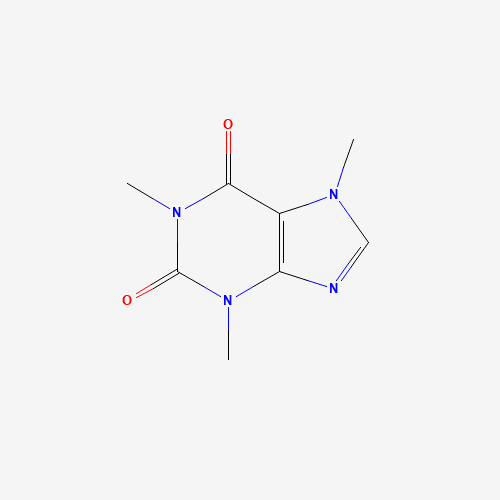
also 1,3,7-Trimethylxanthine · Guaranine · Theine · Methyltheobromine
Caffeine is the world's most widely used psychoactive compound, a methylxanthine that works by blocking adenosine receptors [1]. At low to moderate doses it reliably improves alertness, vigilance, attention and reaction time, with weaker and less consistent effects on memory and higher-order judgement [1]. It is the reference point every other stimulant on this wiki gets compared to.
The best-evidenced alertness compound there is; its costs are sleep, tolerance and withdrawal, and all three are dose-dependent.
- meta-analysis
- RCT
- trial
- observational
- preclinical / case
- review / patent / other
- retracted
- + Reliable gains in alertness, vigilance and reaction time
- + Improves physical performance above roughly 3 mg/kg
- + Cheap, well characterised, available everywhere
- − Disrupts sleep even when taken six hours before bed
- − Withdrawal headache and fatigue after regular use
- − Metabolism varies widely between people
Overview
Caffeine is consumed by more than 80% of US adults, mostly through coffee, tea, soft drinks and energy products [1]. It is also sold as tablets and powder, and is in pre-workout and "focus" blends.
The effects are well mapped. Doses from about 40 mg up to about 300 mg improve alertness, vigilance, attention and reaction time. Memory and executive functions such as judgement and decision making show smaller and less consistent changes [1]. Physical performance benefits across endurance, strength and sprint measures appear at doses above roughly 200 mg, or about 3 mg/kg [1].
Mechanism
Adenosine accumulates in the brain the longer you are awake and signals sleep pressure through its A1 and A2A receptors. Caffeine blocks those receptors, which is why it feels like it removes tiredness rather than adding energy [1]. At higher concentrations it also mobilises intracellular calcium and inhibits phosphodiesterases. Those actions contribute little at dietary doses, but they become relevant in intoxication [2].
It also acts on the body clock. In a 49-day controlled study, a double-espresso dose three hours before bed delayed the melatonin rhythm by about 40 minutes, nearly half the shift produced by three hours of bright evening light, through an adenosine receptor and cAMP pathway [3].
- Adenosine A1 / A2A receptorsblocksblocks the build-up of adenosine's sleep pressure signal; the source of the alertness effectstrong
- Phosphodiesterasesblocksrelevant mainly at concentrations above normal dietary intakeweak
- Circadian clock (cAMP signalling)modulatesevening caffeine delays the melatonin rhythm by about 40 minutes [3]moderate
Safety
risks and cautions, not medical adviceAt everyday intakes caffeine's main costs are sleep, dependence and withdrawal. A moderate dose taken at bedtime, three hours before, or even six hours before bed significantly disrupted sleep compared with placebo [6]. Regular users who stop get a well-characterised withdrawal syndrome. Headache occurs in about half of people, onset is 12 to 24 hours after the last dose, and symptoms can appear after stopping intakes as low as 100 mg a day [7].
Caffeine intoxication is real, and the review literature notes that toxic and lethal thresholds are relative rather than fixed. Concentrated powders and tablets are the usual route to dangerous doses [2].
- Clearance is drastically slowed by CYP1A2 inhibitors such as fluvoxamine [4]
- Concentrated powders make accidental overdose easy; a teaspoon can hold several grams
- Most cognitive trials use habitual consumers after short abstinence, so part of the measured "benefit" may be reversal of withdrawal
- Effects on memory and complex decision making are inconsistent [1]
Interactions
documented pairs only, not exhaustiveAround 95% of caffeine is cleared by the liver enzyme CYP1A2, and genetic variants of that enzyme are a major reason why one person's morning coffee is another's sleepless night [5]. Strong CYP1A2 inhibitors change the picture dramatically. With fluvoxamine, caffeine's half-life went from about 5 hours to about 56 hours [4].
- L-TheaninecompatibleStudied together repeatedly; the combination improves attention switching in controlled trials [8]
- ModafinilcautionTwo wake-promoting agents with additive effects on arousal, heart rate and sleep; the combination has not been studied for cognition, and it stacks the sleep cost of each
- MelatonincautionEvening caffeine delays the circadian melatonin rhythm, working against the reason most people take melatonin [3]
What it feels like
subjective reports, the weakest evidence on the pageCommonly described as clean alertness at low doses, shading into jitteriness, anxiety and a crash as the dose climbs. Paired with L-Theanine, the edge is often reported to soften.
FAQ
- How long does caffeine last?
- The half-life averages about five hours but varies widely between people, largely because of CYP1A2 genetics [5].
- How late can I have caffeine without it affecting sleep?
- In a controlled study, a moderate dose six hours before bed still measurably disrupted sleep [6].
- Does tolerance develop?
- Yes, and stopping produces withdrawal symptoms, most often headache, that start 12 to 24 hours after the last dose and last two to nine days [7].
References
entry last reviewed 2026-09-18- [1]A review of caffeine's effects on cognitive, physical and occupational performance.McLellan TM, Caldwell JA, Lieberman HRNeurosci Biobehav Rev 2016reviewPMID 27612937◌ unreviewed
- [2]Caffeine: cognitive and physical performance enhancer or psychoactive drug?Cappelletti S, Piacentino D, Sani G et al.Curr Neuropharmacol 2015reviewPMID 26074744◌ unreviewed
- [3]Effects of caffeine on the human circadian clock in vivo and in vitro.Burke TM, Markwald RR, McHill AW et al.Sci Transl Med 2015RCT · humanPMID 26378246◌ unreviewed
- [4]Fluvoxamine impairs single-dose caffeine clearance without altering caffeine pharmacodynamics.Culm-Merdek KE, von Moltke LL, Harmatz JS et al.Br J Clin Pharmacol 2005RCT · humanPMID 16236038◌ unreviewed
- [5]Interindividual Differences in Caffeine Metabolism and Factors Driving Caffeine Consumption.Nehlig APharmacol Rev 2018reviewPMID 29514871◌ unreviewed
- [6]Caffeine effects on sleep taken 0, 3, or 6 hours before going to bed.Drake C, Roehrs T, Shambroom J et al.J Clin Sleep Med 2013RCT · humanPMID 24235903◌ unreviewed
- [7]A critical review of caffeine withdrawal: empirical validation of symptoms and signs, incidence, severity, and associated features.Juliano LM, Griffiths RRPsychopharmacology (Berl) 2004reviewPMID 15448977◌ unreviewed
- [8]Acute effects of tea constituents L-theanine, caffeine, and epigallocatechin gallate on cognitive function and mood: a systematic review and meta-analysis.Camfield DA, Stough C, Farrimond J et al.Nutr Rev 2014meta-analysis · humanPMID 24946991◌ unreviewed