Phenylpiracetam
also Fonturacetam · Phenotropil · Carphedon · Actitropil · 4-Phenylpiracetam
Phenylpiracetam is a Soviet-era piracetam analogue with a phenyl ring on the pyrrolidone, developed in 1983 and prescribed in Russia as Phenotropil [1]. Modern work identifies the dopamine transporter as its only significant molecular target, and the two enantiomers do different things [2][3]. It was the first nootropic banned in sport, in 1998 [4]. Its human evidence is substantial but almost entirely Russian and non-randomised: a matched 400-patient stroke-rehabilitation study [5], a 56-patient comparison against Piracetam [6] and a 1170-patient observational programme [7].
Genuinely stimulant-like and genuinely banned in competition; the pharmacology is real and the clinical evidence, once you look for controlled trials in English, essentially is not.
- meta-analysis
- RCT
- trial
- observational
- preclinical / case
- review / patent / other
- retracted
- + A clear, replicated molecular target — the dopamine transporter
- + Reported anticonvulsant activity that piracetam lacks
- + More potent than piracetam and used across a wider set of indications in Russia
- + A large Russian clinical record, including a 400-patient stroke-rehabilitation comparison
- − The clinical literature is almost entirely Russian, open-label and non-randomised
- − Prohibited in sport since 1998; detectable in urine
- − Sold in Europe as an unauthorised supplement ingredient and intercepted as bulk raw material
Overview
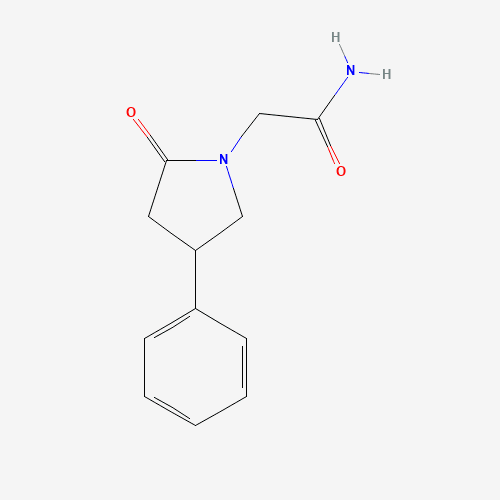
Phenylpiracetam is Piracetam with a phenyl ring at the 4-position. It was characterised in 1983 at the Soviet Institute of Pharmacology, where it was shown to activate operant behaviour more powerfully than piracetam, reverse the depressant effects of diazepam, inhibit post-rotational nystagmus, prevent retrograde amnesia — and, unlike piracetam, to have a specific anticonvulsant action [1].
It is prescribed in Russia as Phenotropil, and more recently as Actitropil, for cerebral ischaemia, asthenia, epilepsy and mental disorders [8]. Outside Russia it has no approval, and it turns up in two other contexts: as a doping agent, and as an unauthorised ingredient in supplements sold as nootropics [4][9].
Mechanism
Phenylpiracetam is the racetam whose mechanism is least like a racetam's. When R-phenylpiracetam was put through radioligand binding and enzyme activity panels, the dopamine transporter was the only significant target found [2]. Earlier work had already identified S-phenylpiracetam as a selective DAT inhibitor that does not act on norepinephrine or serotonin receptors [10].
That is a stimulant mechanism, and it explains the compound's character better than membrane fluidity does.
The enantiomers separate cleanly, which is unusual and informative. In mice, R-phenotropil raised locomotor activity at 10 and 50 mg/kg while the S-isomer needed 50 mg/kg; both produced antidepressant-like effects in forced swim; but only R-phenotropil improved passive avoidance memory, at 1 mg/kg, and the S-isomer was inactive in that test at any dose. Brain concentrations of the two were the same, so the difference is pharmacodynamic [3]. The racemate that people actually take is half an inactive memory compound.
The S-isomer does something else. Given to Western-diet-fed mice for eight weeks and to obese Zucker rats for twelve, it reduced body weight gain and fat mass, lowered plasma glucose and leptin, and improved glucose tolerance — without stimulating locomotor activity [10]. R-phenylpiracetam, meanwhile, attenuated LPS-induced fever and brain TNF-α, IL-1β and iNOS expression, and reduced carrageenan paw oedema [2].
Two Russian preclinical papers bear on how it compares with its parent and on how far the "nootropic" label stretches. In rats given cerebral ischaemia by bilateral carotid occlusion and by craniocaudal gravitational loading, phenotropil reduced neurological deficit, preserved locomotor, exploratory and memory function, improved survival and helped restore local cortical blood flow — and did so more than piracetam did in the same models [11]. Separately, a screen against antipsychotic models found phenotropil active in the apomorphine verticalisation and 5-HTP hyperkinesis tests and antagonising haloperidol catalepsy, without the sedation those drugs cause [12]. Both are animal work from the drug's own research tradition, and neither has been replicated outside it.
- Dopamine transporter (DAT)blocksmoderate
- Locomotor activityactivatesR-phenotropil raised open-field locomotor activity at 10 and 50 mg/kg in mice; the S-enantiomer only at 50 mg/kg [3]moderate
- Memory consolidationmodulatesR-phenotropil improved passive avoidance at 1 mg/kg while the S-enantiomer did nothing, despite identical brain concentrations [3]weak
- Neuroinflammatory signallingblocksa single intraperitoneal dose attenuated LPS-induced body temperature fall and brain TNF-α, IL-1β and iNOS overexpression in mice [2]weak
Dosing
as studied or commonly reported; not a recommendationDoses below are what studies used or, where marked, what is commonly reported. None is a recommendation.
Oral
- 100 mgasthenic syndrome in chronic brain ischaemia — an uncontrolled observational programme in 1170 patientsdaily · 2–3 monthshuman study[7]
- 400 mgischaemic stroke rehabilitation, 200 patients against 200 matched controls200 mg twice daily · 1.5-month courses beginning at months 1, 6 and 11 after the strokehuman study[5]
- 200 mg99 patients with encephalopathy after stroke, head trauma or glioma surgerydaily · 1 monthhuman study[13]
- 100 mgvertebrobasilar insufficiency, against piracetam 400 mg twice dailyonce daily, in the morning · 60 dayshuman study[6]
- 10 and 50 mg/kg (human equivalent ≈0.81 and ≈4.1 mg/kg)
- 1 mg/kg (human equivalent ≈0.08 mg/kg)
- Form
- Sold and prescribed as the racemate. The enantiomers are not interchangeable: memory-improving activity is characteristic only of R-phenylpiracetam, while both isomers raise locomotor activity and have antidepressant-like effects, and brain concentrations of the two are the same [3].
- Notes
- The Russian clinical studies used 100 mg once daily in the morning [6][7], 200 mg daily [13], and 400 mg daily split into two doses given as intermittent 1.5-month courses [5] — so the studied range is 100–400 mg a day, and dosing is consistently confined to the first half of the day. None of these was randomised or blinded, so they establish what has been given, not what works. Animal rows are converted to human equivalents by body-surface-area scaling and were never tested at those doses in people.
Pharmacokinetics
what the body does with it| Onset | R-phenylpiracetam at 50 mg/kg reached mouse brain tissue within 15 minutes of either intraperitoneal or oral dosing [2]. |
|---|---|
| Peak level | Peak brain concentration in mice was 28 µg/g after intraperitoneal and 18 µg/g after oral dosing at 50 mg/kg [2]. |
Safety
risks and cautions, not medical adviceNo controlled human safety data appears in the references cited here. The 1983 characterisation notes that at high doses the compound produces psychodepressant effects — the opposite of what it does at low ones [1].
The Russian trials report tolerability rather than measuring it formally. In the vertebrobasilar-insufficiency study, 3 of 35 patients on 100 mg daily stopped the drug: two for a rise in blood pressure and one for disturbed sleep [6]. Both are what a dopamine transporter inhibitor would be expected to do, and the hypertension signal matters because the patients taking this drug are being treated for cerebrovascular disease. The stroke-rehabilitation and encephalopathy studies report no adverse events at 400 mg and 200 mg daily [5][13], which is a weaker statement than it looks: neither was designed to collect them systematically.
The practical concerns are regulatory and market-related. Phenylpiracetam has been prohibited in sport since 1998, when fonturacetam became the first nootropic on the banned list [4], and an analytical method for detecting carphedon in human urine was published the following year [15]. Athletes subject to testing should treat any product that might contain it as disqualifying.
A 2020–2024 market surveillance study by twelve official European and Australian medicines control laboratories found phenylpiracetam among the prescription-only Russian drugs intercepted in pharmacological quantities — in some cases as large bulk quantities of raw material — with 69% of samples coming from the illegal market and about half presented as dietary supplements [9]. A 2021 US analysis found phenylpiracetam listed on cognitive-enhancement supplement labels, in a product category where 75% of declared quantities were inaccurate and undeclared unapproved drugs were common [16].
- Psychodepressant effects at high doses, opposite to its low-dose activation [1]
- Raised blood pressure, leading to withdrawal in 2 of 35 patients on 100 mg daily [6]
- Disturbed sleep, leading to withdrawal in 1 of 35 patients on 100 mg daily [6]
- No blinded or placebo-controlled adverse-event data is available in the references cited here
- Prohibited in sport since 1998 and detectable in urine; any athlete subject to testing should avoid it [4][15]
- Blood pressure rose enough to stop treatment in 2 of 35 patients with cerebrovascular disease; it inhibits the dopamine transporter, and the people prescribed it are often hypertensive [2][6]
- Not authorised as a medicine or a supplement ingredient in the EU, and frequently found in illegal-market products and bulk raw material [9]
- US supplements labelled as containing it belong to a category where undeclared drugs and inaccurate quantities are the norm [16]
- Its only identified target is the dopamine transporter [2], so it should be treated as a stimulant rather than as a benign nootropic
- No randomised controlled trial of phenylpiracetam appears in the references cited here
- The largest human dataset is an uncontrolled, unblinded observational programme using a subjective asthenia scale [7]
- Every human study cited here is open-label and non-randomised; none used a placebo control [5][6][7][13]
- The 400-patient stroke study assembled its groups by case-control matching rather than randomisation, with unblinded assessors rating every outcome scale [5]
- The clinical literature comes almost entirely from one national research tradition and has not been replicated outside it
- Most mechanistic work is in mice, and uses single enantiomers rather than the racemate people take [2][3][10]
- The memory effect belongs to one enantiomer only, so the racemate's dose-response cannot be read off the single-isomer studies [3]
- No human pharmacokinetic study is cited here; half-life, Tmax and bioavailability in people are unknown
Interactions
documented pairs only, not exhaustive- any stimulantcautionPhenylpiracetam inhibits the dopamine transporter [2]; combining it with other stimulants has not been studied and stacks dopaminergic effects
- CaffeinecautionNo interaction study exists, but both raise arousal and phenylpiracetam's only identified target is DAT [2]
- ModafinilcautionBoth act on the dopamine transporter; no combination study exists
- any choline sourcecompatibleNo interaction documented
- PiracetamcompatibleNo interaction documented; phenylpiracetam is described as the more potent of the two [17]
History
Phenylpiracetam was synthesised and characterised in the Soviet Union and first described in 1983 [1]. It entered Russian clinical practice as Phenotropil, and a 2024 Russian review of fonturacetam describes it as having anxiolytic, antiasthenic, antidepressant, anti-inflammatory and anticonvulsant effects, with proposed uses in cerebral ischaemia, neurodegenerative disease, epilepsy, asthenia and mental disorders [8].
The largest human dataset cited here is TRIUMPH, a non-interventional observational programme in 1170 patients aged 45–65 with chronic brain ischaemia, treated with 100 mg of phenotropil for two to three months. Asthenia scores on the MFI-20 fell significantly by the end of the first month and more than halved by three months, with the largest changes in younger patients [7]. There was no control group and no blinding, in a condition and on a subjective scale where both matter a great deal.
Three Russian clinical studies, published only in Russian and read here in the original, carry most of the remaining weight. The largest followed 400 patients after ischaemic stroke: 200 received three 1.5-month courses of phenotropil 400 mg a day at months 1, 6 and 11, and 200 matched controls did not. Adequate or full recovery of neurological function on the combined Barthel, Lindmark and Scandinavian Stroke scales was reached by 65.4% of the treated group against 27.7% of controls, and adequate or full independence in daily living on the Merton and Sutton scale by 70.1% against 37.1%, both at p < 0.0001 [5]. The effect size is large and the design is not: groups were assembled by case-control matching, not randomisation, with no placebo and no blinding, in a setting where the assessor's expectations reach every one of those scales.
A second study gave 200 mg a day for a month to 99 patients with encephalopathy in the late period after stroke, head injury or glioma surgery, and reported reduced limb and facial paresis, better coordination, memory, attention and calculation, more daily activity and less anxiety and depression, with EEG showing stronger alpha and beta rhythms and less paroxysmal and slow-wave activity [13]. A third compared 100 mg a day for 60 days against piracetam 800 mg a day in 56 patients with vertebrobasilar insufficiency; vertigo improved markedly in 25 of 32 completers and ataxia in 43.7%, with gains on word recall, digit span, figure recognition and clock drawing appearing by day 13, while the piracetam group changed little [6]. Neither was blinded either.
The pattern across all three is worth stating plainly: consistent, sizeable, positive results from a single national research tradition, none of them randomised or placebo-controlled, none replicated elsewhere.
The 2010 Western survey of the family records phenylpiracetam as more potent than piracetam and used for a wider range of indications — a characterisation, not a trial result [17].
Reputation
how it is regarded elsewhere, not this wiki's readingPhenylpiracetam's reputation is for stimulant-like drive, cold tolerance and physical endurance, with tolerance building fast. The first part is the best-supported claim of any racetam reputation on this site: DAT inhibition is a stimulant mechanism and it was the only target found on screening [2][10]. The endurance and cold-resistance claims trace to the Soviet literature and appear in passing in an analytical paper [15] rather than in any trial cited here.
What is missing is a randomised, placebo-controlled trial on any indication. The Russian clinical literature is extensive, and it is cited on this page — including papers that PubMed lists with no English abstract at all, read and translated from the Russian full text [5][6]. Language was never the problem. Design is: every human study here is open-label and non-randomised, most compare against piracetam or an untreated group rather than placebo, and the outcomes are clinician-rated scales in conditions that respond strongly to attention and expectation. So there is a great deal of evidence that patients given phenotropil are rated as improving, and none that establishes the drug is why.
FAQ
- Is phenylpiracetam a stimulant?
- Pharmacologically, yes. The dopamine transporter was the only significant target found when it was screened against a binding and enzyme panel [2][10].
- Will it fail a drug test?
- In sport, yes. Fonturacetam was the first nootropic prohibited in competition, in 1998 [4], and a urine detection method was published in 1999 [15].
- Is there a controlled trial showing it works?
- Not in the references cited here. The largest human study is an uncontrolled observational programme in 1170 patients using a subjective asthenia scale [7].
- Does it matter which enantiomer you get?
- For memory, yes — in mice only R-phenylpiracetam improved passive avoidance, at 1 mg/kg, while the S-isomer was inactive despite identical brain levels [3]. Products are sold as the racemate.
References
entry last reviewed 2026-09-20- [1][Pharmacological characteristics of a new phenyl analog of piracetam--4-phenylpiracetam].Bobkov IuG, Morozov IS, Glozman OM et al.Biull Eksp Biol Med 1983other · animalPMID 6403074in Russian◌ unreviewed
- [2]Neuroprotective and anti-inflammatory activity of DAT inhibitor R-phenylpiracetam in experimental models of inflammation in male mice.Zvejniece L, Zvejniece B, Videja M et al.Inflammopharmacology 2020other · animalPMID 32279140◌ unreviewed
- [3]Investigation into stereoselective pharmacological activity of phenotropil.Zvejniece L, Svalbe B, Veinberg G et al.Basic Clin Pharmacol Toxicol 2011other · animalPMID 21689376◌ unreviewed
- [4]Unauthorized ingredients in "nootropic" dietary supplements: A review of the history, pharmacology, prevalence, international regulations, and potential as doping agents.Jędrejko K, Catlin O, Stewart T et al.Drug Test Anal 2023reviewPMID 37357012◌ unreviewed
- [5][Efficacy of phenotropil in the rehabilitation of stroke patients].Koval'chuk VV, Skoromets AA, Koval'chuk IV et al.Zh Nevrol Psikhiatr Im S S Korsakova 2010clinical trial · humanPMID 21626817in Russian◌ unreviewed
- [6][The use of phenotropil in vertebrobasilar insufficiency].Liubimov AVZh Nevrol Psikhiatr Im S S Korsakova 2013clinical trial · humanPMID 24430043in Russian◌ unreviewed
- [7][Treatment of asthenic syndrome in patients with chronic brain ischemia: results of the non-interventional observational program TRIUMPH].Fedin AI, Solov'eva ÉI, Mironova OP et al.Zh Nevrol Psikhiatr Im S S Korsakova 2014observational · humanPMID 25726789in Russian◌ unreviewed
- [8][Pharmacological effects of fonturacetam (Actitropil) and prospects for its clinical use].Gromova OA, Torshin IYZh Nevrol Psikhiatr Im S S Korsakova 2024reviewPMID 39269293in Russian◌ unreviewed
- [9]The Occurrence of Illicit Smart Drugs or Nootropics in Europe and Australia and Their Associated Dangers: Results from a Market Surveillance Study by 12 Official Medicines Control Laboratories.Vanhee C, Deconinck E, George M et al.J Xenobiot 2025otherPMID 40558871◌ unreviewed
- [10]S-phenylpiracetam, a selective DAT inhibitor, reduces body weight gain without influencing locomotor activity.Zvejniece L, Svalbe B, Vavers E et al.Pharmacol Biochem Behav 2017other · animalPMID 28743458◌ unreviewed
- [11][Comparative evaluation of the neuroprotective activity of phenotropil and piracetam in laboratory animals with experimental cerebral ischemia].Tiurenkov IN, Bagmetov MN, Epishina VVEksp Klin Farmakol 2007preclinical · animalPMID 17523446in Russian◌ unreviewed
- [12][Identification and evaluation of the neuroleptic activity of phenotropil].Akhapkina VI, Akhapkin RVZh Nevrol Psikhiatr Im S S Korsakova 2013preclinical · animalPMID 23994920in Russian◌ unreviewed
- [13][The phenotropil treatment of the consequences of brain organic lesions].Savchenko AIu, Zakharova NS, Stepanov INZh Nevrol Psikhiatr Im S S Korsakova 2005clinical trial · humanPMID 16447562in Russian◌ unreviewed
- [14]A simple practice guide for dose conversion between animals and human.Nair AB, Jacob SJ Basic Clin Pharm 2016reviewPMID 27057123◌ unreviewed
- [15]Determination of carphedon in human urine by solid-phase microextraction using capillary gas chromatography with nitrogen-phosphorus detection.Kim S, Park JH, Myung SW et al.Analyst 1999other · humanPMID 10746314◌ unreviewed
- [16]Five Unapproved Drugs Found in Cognitive Enhancement Supplements.Cohen PA, Avula B, Wang YH et al.Neurol Clin Pract 2021otherPMID 34484905◌ unreviewed
- [17]Piracetam and piracetam-like drugs: from basic science to novel clinical applications to CNS disorders.Malykh AG, Sadaie MRDrugs 2010reviewPMID 20166767◌ unreviewed