AF710B
also ANAVEX3-71 · ANAVEX 3-71 · AF-710B · AN3-71
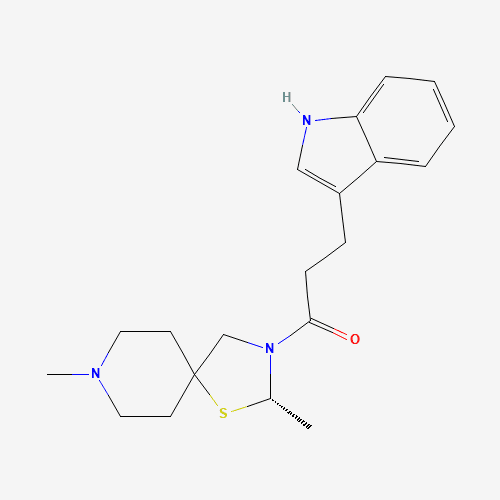
AF710B, now developed by Anavex Life Sciences as ANAVEX3-71, is an experimental drug that acts on two targets at once: it activates the M1 muscarinic acetylcholine receptor from an allosteric site, amplifying acetylcholine's own effect, and it is a sigma-1 receptor agonist [1][2]. In Alzheimer's-model mice and rats, doses of 10 µg/kg a day improved memory and reduced amyloid, tau phosphorylation and glial inflammation, and in rats the benefits outlasted the end of treatment by weeks [1][3][4]. In people it has been through a single-dose phase 1 study and a 71-person phase 2 trial in schizophrenia that met its safety endpoint but released no symptom or cognition results [5][6].
Unusually potent and selective in rodents, with Alzheimer's-model results that held up after treatment stopped, but after a phase 1 and a phase 2 safety trial there is still no evidence that it improves memory or symptoms in anyone.
- meta-analysis
- RCT
- trial
- observational
- preclinical / case
- review / patent / other
- retracted
- + Binds the M1 receptor with sub-nanomolar affinity and the sigma-1 receptor at 1.3 nM, with no significant activity at 83 other receptors, channels and transporters screened at 10 µM
- + Reversed a drug-induced memory deficit in rats at single oral doses of 1 to 30 µg/kg
- + In Alzheimer's-model mice and rats, lowered amyloid-β, tau phosphorylation and microglial and astrocyte activation, with rat benefits still present four to five weeks after the last dose
- + Single doses of 5 to 200 mg had no clinically relevant effect on heart rate or the PR, QRS or QTc intervals in healthy volunteers
- + Its pharmacokinetics were linear and dose-proportional, and food did not change them
- + In the 55-person schizophrenia phase 2, adverse events were no more frequent than on placebo and none was serious or severe
- − No human efficacy result exists; the schizophrenia trial reported biomarker "trends" without numbers and no symptom or cognition scores
- − It has never been tested in people with Alzheimer's disease, the condition it was developed for
- − The half-life in people is about 3.6 hours, so the phase 2 trial dosed it three times a day
- − The rodent efficacy work comes from the developer's laboratory and a collaborating laboratory
- − It is an unapproved investigational drug
The M1 muscarinic receptor has long been a target for Alzheimer's drugs, because the receptors in the cortex survive the disease better than the neurons that supply their acetylcholine [7]. Several muscarinic agonists reached phase 2 or 3 trials and were dropped for lack of efficacy or because they also stimulated muscarinic receptors outside the brain; xanomeline, which went furthest, caused nausea, vomiting, diarrhea, sweating and excess salivation [7]. AF710B was the next attempt from Abraham Fisher's group at the Israel Institute for Biological Research, which had earlier produced the orthosteric M1 agonists AF102B (cevimeline), AF267B and AF292 [1].
Instead of binding where acetylcholine binds, AF710B sits at a separate, allosteric site on the M1 receptor and makes the receptor respond more strongly to acetylcholine, while also activating the sigma-1 receptor, a chaperone protein in the endoplasmic reticulum [1]. It is the single active enantiomer of the racemic compound AF710; the other enantiomer, AF710A, was inactive in the rat memory test [1]. A 2019 study that tested it under the name ANAVEX3-71 gives its configuration as (S) [8].
The animal results are the reason anyone is interested. In rats, single oral doses of 1 to 30 µg/kg reversed the memory deficit caused by an M1-blocking drug, and the developer reported it as the most potent of the compounds it had tested in that model, including donepezil and its own earlier agonists [1]. In 3xTg-AD mice, which develop both amyloid and tau pathology, two months at 10 µg/kg a day improved water-maze performance and lowered amyloid-β, plaques, tau phosphorylation and glial activation [1]. In McGill-R-Thy1-APP rats, a transgenic amyloid model, 10 µg/kg orally prevented cognitive decline when started before plaques formed [4]. Started after plaques had formed, it restored novel object recognition and water-maze learning to wild-type levels: on the last training day treated transgenic rats found the hidden platform in 38 seconds, against 69 seconds untreated and 29 seconds for wild-type rats. It did not improve the probe trial, in which the platform is removed to test memory of where it was [3]. In both rat studies the effects were measured after the drug had been stopped for four to five weeks [3][4].
The human record is thin. A first-in-human single-ascending-dose study in healthy volunteers gave 5 to 200 mg and found linear pharmacokinetics, a half-life of about 3.6 hours, no food effect and no effect on the QT interval [2][5]. No trial in Alzheimer's disease or frontotemporal dementia followed [9]. Instead Anavex ran a phase 2 trial in 71 adults with schizophrenia on stable antipsychotics, and in October 2025 announced that it had met its primary endpoint, which was safety and tolerability. The release described "positive trends" in EEG and event-related-potential biomarkers and a reduction in the inflammation marker GFAP, with no numbers, and reported no results for the symptom, cognition and global-impression scales the trial had registered as secondary outcomes [6][10].
An allosteric M1 agonist that behaves like a modulator. In rat cortical membranes AF710B displaced the M1 radioligand [3H]-pirenzepine with a high-affinity constant of 0.046 nM [1]. Brucine, an M1 modulator that potentiates agonists acting at acetylcholine's own site, potentiated carbachol and AF267B but not AF710B, which places AF710B's binding site elsewhere on the receptor [1]. At 0.1 nM, AF710B lowered carbachol's high-affinity constant from 70 nM to 1 nM and raised carbachol's efficacy index (the ratio of its low- to high-affinity constants) from 110 to 1650 [1]. On its own it did not raise ERK1/2 phosphorylation in M1-expressing PC12 cells, but at nanomolar concentrations it increased the ERK1/2 and CREB phosphorylation produced by carbachol, the signaling route linked to memory consolidation [1]. Direct agonism needed far higher concentrations: in cells expressing each muscarinic subtype it was a partial agonist at M1 at 100 µM, inactive at 1 µM, and had no agonist activity at M2 to M5 [1].
One result separates it from other M1 modulators. Those potentiate acetylcholine's whole range of M1 responses, including the release of calcium inside the cell, but AF710B did not potentiate carbachol's calcium response; the authors report this, and several other cell results, as data not shown [1].
A sigma-1 agonist as well. AF710B displaced the sigma-1 ligand [3H]-pentazocine with a high-affinity constant of 1.3 nM and did not bind sigma-2 [1]. In the rat memory test the sigma-1 antagonist NE-100 cut its effect roughly in half, from a retention latency of 362 to 185 seconds, so the effect there depends partly on sigma-1; since the deficit was produced by an M1 blocker, the authors attribute the benefit to the two receptors acting together [1].
In mitochondria isolated from mouse forebrain, a Montpellier laboratory, testing it alongside other sigma-1 ligands in a study partly funded by Anavex, found that it raised reactive oxygen species by about 12% at 0.3–1 µM and increased complex I activity at 1 and 10 µM — concentrations far above those at which it binds its receptors. The experiments showing that the complex I effect depends on calcium and is reversed by a sigma-1 antagonist were done with the reference agonist PRE-084, not with this compound [8]. Against amyloid-β, it did less than the other agonists: its reduction of the amyloid-induced rise in reactive oxygen species did not reach significance, it did not protect respiration or complex I, and it only partly offset the loss of complex IV activity [8].
Both receptors were needed to protect spines. Mushroom-shaped dendritic spines, the stable kind associated with memory, are lost in hippocampal cultures from PS1 and APP knock-in mice. A 16-hour exposure to 30 nM AF710B restored them nearly to normal in both lines, while 1 µM of the orthosteric agonist AF267B gave a partial rescue in one line and none in the other [1]. The M1 antagonist pirenzepine abolished the rescue and NE-100 did not; but knocking down sigma-1 itself reduced mushroom spines from 38.4% to 22.1% in normal neurons, and AF710B could not reverse that [1]. The authors proposed that AF710B acts on an M1–sigma-1 receptor complex in the spine, and said further experiments would be needed to test it [1].
Downstream it touches each Alzheimer's hallmark measured. In 3xTg-AD mice, two months at 10 µg/kg a day lowered the β-secretase BACE1 and its APP product C99 while leaving APP and the α-secretases unchanged, reduced soluble and insoluble Aβ40 and Aβ42 and thioflavin-positive plaques, raised inhibitory phosphorylation of GSK3β, reduced the CDK5 activator p25, lowered tau phosphorylated at five epitopes including PHF-1, and reduced reactive astrocytes and microglia near plaques [1].
In McGill-R-Thy1-APP rats treated from 13 months of age, after plaques had formed, 4.5 months at 10 µg/kg followed by a 5-week washout cut mature plaques in the subiculum by 84% and insoluble and soluble cortical Aβ42 by 61% and 66%. Aβ42 in the cerebrospinal fluid rose, which the authors read as amyloid being cleared from the brain rather than trapped in plaques. Microglial clustering around CA1 neurons, hippocampal Iba1 protein and cortical IL-10 expression, all raised in the transgenic rats, returned to wild-type levels, as did the reduced synaptophysin mRNA and protein; the drug changed none of these in wild-type rats [3]. Started at 7 months, before plaques, and given for 7 months, it reduced plaque numbers and cortical Aβ42 and Aβ40, reduced glial recruitment toward amyloid-laden neurons and restored the conversion of the BDNF precursor to mature BDNF [4].
The evidence for how it works in people is limited to biomarkers. In the part A dose-escalation stage of the schizophrenia trial, a review reports dose-dependent increases in 40 Hz auditory steady-state response coherence and resting-state alpha power, measures linked to cortical function in schizophrenia [11]. The topline release for the whole trial described only "positive trends" in EEG and event-related-potential measures and lower GFAP than placebo, without values or statistics [6].
- M1 muscarinic acetylcholine receptor (allosteric site)activatesdisplaced the M1 radioligand [3H]-pirenzepine from rat cortex with a high-affinity constant of 0.046 nM; at 0.1 nM it lowered carbachol's high-affinity constant from 70 nM to 1 nM and raised its efficacy index fifteen-fold, and the M1 modulator brucine, which potentiates agonists at acetylcholine's own site, did not potentiate AF710B — evidence that it binds elsewhere [1]strong
- Sigma-1 receptoractivatesdisplaced [3H]-pentazocine with a high-affinity constant of 1.3 nM; the sigma-1 antagonist NE-100 blocked its anti-amnesic effect in rats, and knocking down sigma-1 in hippocampal neurons stopped it from rescuing dendritic spines [1]strong
- M2–M5 muscarinic, sigma-2 and nicotinic receptorsno bindingno agonist activity at M2 to M5 in cell assays, no binding to sigma-2 (IC50 well above 10 µM) or to α4β2 and α7 nicotinic receptors; the only other activity found was weak mu-opioid agonism (EC50 13 µM) and 17% partial agonism at 5-HT2B at 100 µM [1]strong
- Cardiac repolarization (QTc)no bindingin healthy volunteers given 5–200 mg the concentration–QTcF slope was −0.017 ms per µg/L, and an effect above 10 ms was excluded across all observed concentrations [2]strong
- ERK1/2 and CREB phosphorylationmodulatesdid not raise phospho-ERK1/2 on its own in M1-expressing PC12 cells, but at 0.1–10 nM increased the ERK1/2 and CREB phosphorylation produced by carbachol [1]moderate
- Hippocampal mushroom spinesactivates30 nM for 16 hours restored mushroom spines nearly to normal in hippocampal cultures from two Alzheimer's knock-in mouse lines; the M1 antagonist pirenzepine abolished the rescue, and so did knocking down sigma-1 [1]moderate
- Synaptophysin (synaptic marker)activatesrestored cortical synaptophysin mRNA and protein, both reduced in transgenic rats, to wild-type levels after 4.5 months of treatment and a 5-week washout [3]moderate
- BACE1 and amyloid-β productionblocksin 3xTg-AD mice lowered BACE1 and its APP product C99 without changing APP or the α-secretases ADAM10 and ADAM17, and reduced soluble and insoluble Aβ40 and Aβ42 and plaques; in McGill-R-Thy1-APP rats with established plaques it cut mature plaques in the subiculum by 84% and insoluble and soluble cortical Aβ42 by 61% and 66%, while raising Aβ42 in the cerebrospinal fluid [1][3][4]moderate
- GSK3β and CDK5/p25 (tau phosphorylation)blocksin 3xTg-AD mice raised inhibitory Ser9 phosphorylation of GSK3β, reduced the CDK5 activator p25 and lowered tau phosphorylated at the AT8, AT100, AT180, AT270 and PHF-1 epitopes, with total tau unchanged [1]moderate
- Microglial and astrocyte activationblocksfewer GFAP-positive astrocytes and Iba-1-positive microglia around plaques in 3xTg-AD mice; in transgenic rats it returned microglial clustering around CA1 neurons, hippocampal Iba1 protein and cortical IL-10 expression to wild-type levels, and reduced glial recruitment when given before plaques formed [1][3][4]moderate
- Mitochondrial complex Iactivatesat 1 and 10 µM increased complex I activity in mitochondria isolated from mouse forebrain, and at 0.3–1 µM raised reactive oxygen species by about 12%; the calcium dependence and sigma-1 antagonist reversal were shown for the reference agonist PRE-084, not for this compound [8]weak
- BDNF maturationactivatesrestored the conversion of the BDNF precursor to mature BDNF in transgenic rats treated before plaques formed [4]weak
Dosing
as studied or commonly reported; not a recommendationDoses below are what studies used or, where marked, what is commonly reported. None is a recommendation.
Oral
- 5–200 mg
- 160 mg
- 30 mg and 60 mg
- 60 mg
- 1–30 µg/kg (human equivalent ≈0.16–4.8 µg/kg)
- 10 µg/kg (human equivalent ≈1.6 µg/kg)
- 10 µg/kg (human equivalent ≈1.6 µg/kg)
Intraperitoneal (animals)
- 10 µg/kg (human equivalent ≈0.81 µg/kg)
- Form
- The clinical studies so far used an immediate-release oral capsule. In October 2025 Anavex announced that a once-daily modified-release tablet had been compared with the capsule in a phase 1b study in healthy adults; the announcement called the tablet's pharmacokinetics "superior" and "supportive of once-daily dosing" but gave no figures [14].
- Timing and food
- Food does not change its pharmacokinetics [5]. The schizophrenia trial gave it three times a day [10], in line with a half-life of about 3.6 hours [5].
- Notes
- These are investigational doses, not a recommendation, and ANAVEX3-71 is not approved anywhere. The animal and human doses sit on different scales. By body-surface-area scaling, the 10 µg/kg oral dose that worked in rats corresponds to about 1.6 µg/kg in a person, roughly 0.1 mg for a 60 kg adult [3][13], while the human studies have used 5 to 200 mg [5]. In the rat memory test the dose response was also not linear: 1 to 30 µg/kg reversed the deficit and 100 µg/kg did not [1].
Pharmacokinetics
what the body does with it| Half-life | Mean (SD) apparent terminal half-life of 3.56 (4.09) hours after single oral doses of 5 to 200 mg; its metabolite M8 has a half-life of 6.59 (1.64) hours [5]. |
|---|---|
| Peak level | Exposure rose in proportion to dose, and the kinetics were linear and time-invariant across 5 to 200 mg [5]. The highest plasma concentrations observed in that dose range were about 996 µg/L for the parent drug and 58 µg/L for M8 [2]. |
| Bioavailability | Food had no effect on the pharmacokinetics of ANAVEX3-71 or M8 when 160 mg was given fed and fasted to 12 healthy subjects [5]. |
| Metabolism | Forms a metabolite, M8, that circulates at much lower concentrations than the parent and is eliminated more slowly; it was left out of the primary QTc model because adding it barely improved the fit [2][5]. |
| Excretion | Age, body weight and creatinine clearance did not explain the variation between subjects in apparent clearance [5]. |
Safety
risks and cautions, not medical adviceIn animals, toxicity was far from the effective dose. In a GLP study in rats, single oral doses up to 50 mg/kg produced no toxic effects and no gross pathology, and the developer calculated a margin of 50,000 between the toxic and effective doses, against 400 for AF267B and 115 for cevimeline in the same rat model; the toxicology data themselves were not shown [1]. Two months of daily dosing in mice did not change body weight [1].
In healthy volunteers, single doses of 5 to 200 mg did not affect the heart's electrical cycle. There was no clinically relevant effect on heart rate or the PR and QRS intervals, the concentration–QTcF slope was slightly negative, and an increase above 10 ms was excluded at every plasma concentration observed [2]. The full texts of the two phase 1 papers were not available for this entry, so their adverse-event listings are not summarized here; the registered study enrolled 36 people [12].
In schizophrenia, adverse events were no more common than on placebo. In the 28-day part B, 11 of 28 people on 60 mg (39.3%) had a treatment-emergent adverse event against 13 of 27 on placebo (48%), and 5 (17.9%) against 4 (15%) had one judged related to treatment. None was serious or severe, and no one stopped the drug because of an adverse event, against two on placebo. In part A, one of six people on 30 mg had a treatment-related adverse event and none on 60 mg did [6]. The release did not say what the adverse events were, and these figures are company data that have not been peer reviewed.
The class risk is cholinergic. Earlier muscarinic agonists were abandoned largely because stimulating M1, M2 and M3 receptors outside the brain caused nausea, vomiting, diarrhea, sweating and excess salivation [7]. AF710B had no agonist activity at M2 to M5 in cell assays [1], but whether that spares people those effects cannot be judged until the adverse events from the human trials are itemized.
- In the 28-day phase 2 part B, treatment-emergent adverse events in 39.3% on 60 mg against 48% on placebo, and treatment-related events in 17.9% against 15% [6]
- No serious or severe adverse events and no discontinuations for adverse events on the drug in either part of the phase 2 trial [6]
- No clinically relevant effect on heart rate, PR, QRS or QTc intervals at single doses up to 200 mg [2]
- The specific adverse events in the human trials have not been itemized in any source cited here
- ANAVEX3-71 is an investigational drug with no marketing authorization in any country
- Muscarinic agonists as a class can cause nausea, vomiting, diarrhea, sweating and excess salivation by stimulating receptors outside the brain [7]
- In rats the memory effect was lost at the highest dose tested, 100 µg/kg, so more was not better [1]
- Its short half-life of about 3.6 hours means blood levels fall substantially between doses [5]
- No efficacy result has been published in people: the schizophrenia trial's release reported no results for the symptom (PANSS), cognition (BACS) or global-impression scales registered as secondary outcomes [6][10]
- The phase 2 results exist only in a press release, and its biomarker findings are described as trends with no values or statistics [6]
- It has never been tested in people with Alzheimer's disease or frontotemporal dementia, the conditions it was developed for [9]
- The rodent efficacy studies come from the developer's laboratory and its McGill collaborator, and the developer sits on Anavex's scientific advisory board [1][3]
- Several mechanistic results in the founding paper, including the calcium signaling, neuroprotection and toxicology data, are reported as data not shown [1]
- The proposed M1–sigma-1 receptor complex is a hypothesis its authors have not tested [1]
- Both phase 1 papers are company-authored analyses of single doses in healthy volunteers, and the multiple-dose pharmacokinetics measured in the schizophrenia trial have not been published [2][5][10]
- In the rat study started after plaques had formed, treatment restored object recognition and water-maze learning but not the probe trial of spatial memory, and the 16 transgenic rats were split between drug and vehicle [3]
- In isolated mitochondria it acted only at micromolar concentrations, and its protection against amyloid-β was weaker than that of the other sigma-1 agonists tested [8]
- The full texts of the two phase 1 papers and the 2023 transgenic rat study were not available for this entry, so their methods and secondary results are summarized from the abstracts
Interactions
documented pairs only, not exhaustive- any cholinergiccautionno combination has been studied; AF710B amplifies acetylcholine's action at M1, and excess muscarinic stimulation is what caused the adverse effects that ended earlier muscarinic agonists [7]
- tricyclics block muscarinic receptors, the opposite of AF710B's M1 action; in rats AF710B reversed the memory deficit caused by the M1 blocker trihexyphenidyl, but no combination with a tricyclic has been studied [1]
Abraham Fisher's medicinal chemistry group at the Israel Institute for Biological Research spent years on M1 agonists, the "AF series" that includes AF102B, better known as cevimeline, and AF267B and AF292 [1]. AF710 was synthesized there and separated into two enantiomers; AF710B was the active one, and the first full report of its pharmacology and its effects in Alzheimer's models appeared in 2016 [1]. Work in transgenic rats followed with Claudio Cuello's laboratory at McGill University in 2018 and 2023, by which time Fisher sat on Anavex's scientific advisory board and the compound was also called ANAVEX 3-71 [3][4].
Anavex ran the first-in-human single-ascending-dose study from July 2020 to October 2021 [12] and published its ECG and pharmacokinetic analyses in 2023 and 2024 [2][5]. Although those papers list frontotemporal dementia, schizophrenia and Alzheimer's disease as targets, the next trial, started in March 2024, was in schizophrenia [9][10]. Its topline results and the once-daily tablet were announced on the same day in October 2025 [6][14].
- Is AF710B the same as ANAVEX3-71?
- Yes. AF710B is the name it was given at the Israel Institute for Biological Research, where it was made, and ANAVEX3-71 is Anavex Life Sciences' development code for the same molecule [2][3].
- Is it the same drug as blarcamesine (ANAVEX2-73)?
- No. Blarcamesine is a different Anavex molecule [9], also a mixed muscarinic and sigma-1 agonist [1]. It is a diphenyl-furanmethanamine with an unrelated structure, and the rat study that compared the two notes that AF710B, unlike blarcamesine, has no agonist activity at the M2 to M5 receptors [3].
- Has it been tested in people with Alzheimer's disease?
- No. It was developed for Alzheimer's, but after the phase 1 study in healthy volunteers the only patient trial has been in schizophrenia [9][10].
- Did the schizophrenia trial work?
- It met its primary endpoint, which was safety and tolerability. Anavex reported trends in EEG biomarkers and a lower level of the inflammation marker GFAP, without numbers, and released no results for symptoms or cognition [6].
- Why were the animal doses so small?
- It binds its targets at sub-nanomolar to low-nanomolar concentrations, and in rats single doses of 1 to 30 µg/kg reversed a memory deficit [1]. Human studies have used milligram doses, from 5 to 200 mg [5].
- Is it related to cevimeline?
- It comes from the same laboratory. Cevimeline was AF102B, an earlier orthosteric M1 agonist in Abraham Fisher's AF series [1].
References
entry last reviewed 2026-10-22- [1]AF710B, a Novel M1/σ1 Agonist with Therapeutic Efficacy in Animal Models of Alzheimer’s Disease.Fisher A, Bezprozvanny I, Wu L et al.Neurodegener Dis 2016preclinical · animalPMID 26606130◌ unreviewed
- [2]Concentration-QTc Relationship from a Single Ascending Dose Study of ANAVEX3-71, a Novel Sigma-1 Receptor and Allosteric M1 Muscarinic Receptor Agonist in Development for the Treatment of Frontotemporal Dementia, Schizophrenia, and Alzheimer's Disease.Fadiran EO, Hammond E, Tran J et al.Clin Pharmacol Drug Dev 2023RCT · humanPMID 37515316◌ unreviewed
- [3]AF710B, an M1/sigma-1 receptor agonist with long-lasting disease-modifying properties in a transgenic rat model of Alzheimer's disease.Hall H, Iulita MF, Gubert P et al.Alzheimers Dement 2018preclinical · animalPMID 29291374◌ unreviewed
- [4]Early treatment with an M1 and sigma-1 receptor agonist prevents cognitive decline in a transgenic rat model displaying Alzheimer-like amyloid pathology.Orciani C, Do Carmo S, Foret MK et al.Neurobiol Aging 2023preclinical · animalPMID 37864952◌ unreviewed
- [5]Population-Based Characterization of the Pharmacokinetics and Food Effect of ANAVEX3-71, a Novel Sigma-1 Receptor and Allosteric M1 Muscarinic Receptor Agonist in Development for Treatment of Frontotemporal Dementia, Schizophrenia, and Alzheimer Disease.Fadiran EO, Hammond E, Tran J et al.Clin Pharmacol Drug Dev 2024clinical trial · humanPMID 38073274◌ unreviewed
- [6]Anavex Life Sciences Announces Positive Topline Results from Phase 2 Study of ANAVEX®3-71 for the Treatment of SchizophreniaAnavex Life Sciences Corp.Anavex Life Sciences press release, 2 October 2025 — company statement, not peer reviewed 2025other · human◌ unreviewed
- [7]The potential of muscarinic M1 and M4 receptor activators for the treatment of cognitive impairment associated with schizophrenia.Yohn SE, Harvey PD, Brannan SK et al.Front Psychiatry 2024reviewPMID 39483736◌ unreviewed
- [8]Sigma-1 Receptor Agonists Induce Oxidative Stress in Mitochondria and Enhance Complex I Activity in Physiological Condition but Protect Against Pathological Oxidative Stress.Goguadze N, Zhuravliova E, Morin D et al.Neurotox Res 2019preclinical · animalPMID 29127580◌ unreviewed
- [9]Revisiting the therapeutic landscape of tauopathies: assessing the current pipeline and clinical trials.Harris GA, Hirschfeld LR, Gonzalez MI et al.Alzheimers Res Ther 2025reviewPMID 40462159◌ unreviewed
- [10]A Study to Evaluate the Safety, Tolerability, Efficacy, Pharmacokinetics, and Electrophysiology of ANAVEX3-71 in Adult Patients With Schizophrenia in a Multiple Ascending Dose Study (Part A), Followed by a Double-Blind, Randomized, Placebo-Controlled Study (Part B)Anavex Life Sciences Corp.ClinicalTrials.gov registry record NCT06245213 2024other◌ unreviewed
- [11]Targeting muscarinic receptors for treating schizophrenia.Paul SM, Yohn SENeurotherapeutics 2026reviewPMID 41633901◌ unreviewed
- [12]A Double-blind, Randomized, Placebo-controlled, Phase 1 Safety and Tolerability, and Pharmacokinetics Study of ANAVEX3-71Anavex Life Sciences Corp.ClinicalTrials.gov registry record NCT04442945 2020other◌ unreviewed
- [13]A simple practice guide for dose conversion between animals and human.Nair AB, Jacob SJ Basic Clin Pharm 2016reviewPMID 27057123◌ unreviewed
- [14]Anavex Life Sciences Announces Successful Development of Once-Daily Oral Tablet Formulation for the ANAVEX®3-71 ProgramAnavex Life Sciences Corp.Anavex Life Sciences press release, 2 October 2025 — company statement, not peer reviewed 2025other · human◌ unreviewed