Coluracetam
also MKC-231 · BCI-540
Coluracetam, originally MKC-231, is the one racetam with a genuinely distinct mechanism: it enhances high-affinity choline uptake by acting on the choline transporter CHT1 itself [1]. Everything known about it comes from rodents with chemically lesioned cholinergic neurons [2][3][4]. No human trial with a published abstract is cited here.
A real and unusual mechanism with no human evidence behind it at all — the gap between its community reputation and its literature is the widest of any compound on this page.
- meta-analysis
- RCT
- trial
- observational
- preclinical / case
- review / patent / other
- retracted
- + A mechanism no other racetam has — direct action on the choline transporter
- + Repeated dosing produced cognitive improvement lasting 24 h after the drug had left the brain
- + Effective in rodent models where the cholinesterase inhibitor tacrine was not
- − No published human efficacy or safety trial is cited here
- − Its effects appear only in animals with damaged cholinergic neurons, not in normal ones
- − No human dose, half-life or tolerated exposure has been established
Overview
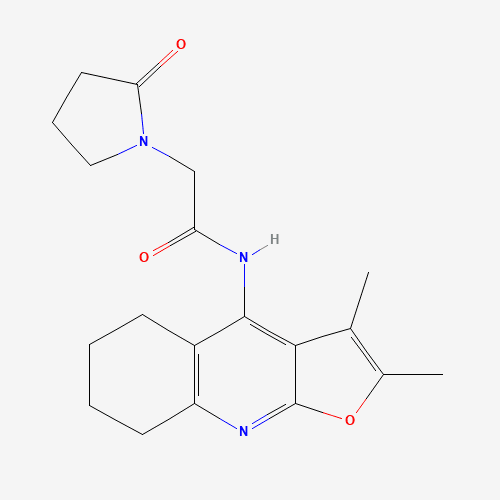
Coluracetam was made by Mitsubishi Tanabe as MKC-231 and later licensed to BrainCells Inc. as BCI-540. Its structure barely resembles the rest of the family: a piracetam-like acetamide head is attached to a large tetrahydrofuroquinoline, and the molecule is more than twice the weight of Piracetam.
It is included here because it is a racetam by descent and because the nootropics market sells it as one. On the evidence, it belongs in a different category from the others: this is a preclinical compound, and the literature cited here contains no human trial at all.
Mechanism
Coluracetam enhances high-affinity choline uptake — the rate-limiting step in acetylcholine synthesis — and it does so by acting on the transporter directly rather than on the supply of choline or on its breakdown.
In hippocampal synaptosomes from rats whose cholinergic terminals had been destroyed with AF64A, coluracetam raised the Vmax of choline uptake 1.6-fold and the Bmax of hemicholinium-3 binding 1.7-fold, and radiolabelled drug bound the cloned CHT1 transporter. The authors concluded it affects the trafficking of CHT1, increasing the number of transporters working at the synaptic membrane [1]. Downstream, it restores potassium-evoked acetylcholine release and basal hippocampal acetylcholine in the same lesioned animals [5].
Two negatives sharpen the picture. It has no effect on acetylcholinesterase activity or on muscarinic receptor binding, so it is not working like donepezil [3]. It does have a separate protective action against glutamate cytotoxicity in cultured cortical neurons [6]. And it increases choline uptake in synaptosomes from lesioned rats but not from normal ones [3] — it corrects a deficit rather than pushing a healthy system higher.
The most striking finding is temporal. After eight days of dosing, cognitive improvement was still present 24 h after the last dose, by which time the drug was undetectable in brain; the time course of the choline-uptake increase matched the time course of the behavioural benefit. The authors proposed that coluracetam changes the transporter regulation system rather than acting moment to moment [4].
- High-affinity choline transporter (CHT1)activatesbinds CHT1 and appears to increase the number of transporters at the synaptic membrane, raising the Vmax of choline uptake 1.6-fold and hemicholinium-3 binding sites 1.7-fold [1]moderate
- Acetylcholinesteraseno bindingno effect on acetylcholinesterase activity or on muscarinic receptor binding — it is not a cholinesterase inhibitor [3]strong
- High-affinity choline uptakeactivatesincreases choline uptake in hippocampal synaptosomes from cholinergically lesioned rats, but not from normal rats [3]moderate
- Acetylcholine synthesis and releaseactivatesreverses the fall in potassium-evoked acetylcholine release and in basal hippocampal acetylcholine caused by cholinergic lesioning [5]moderate
Dosing
as studied or commonly reported; not a recommendationDoses below are what studies used or, where marked, what is commonly reported. None is a recommendation.No peer-reviewed human dosing data. The doses below come from animal studies or company filings; animal doses do not translate directly to people.
Oral
- 1–10 mg/kg
- 1 or 3 mg/kgrats with AF64A-lesioned cholinergic neurons; benefit persisted 24 h after the last dosedaily · 8 daysanimal study[4]
- 0.3–3 mg/kg
- Notes
- No human dose has been studied in any trial cited here, so no human dose can be reported. Every row above is a rodent dose in an animal with chemically destroyed cholinergic terminals. Note also that acute dosing did not work in the mouse study — only chronic dosing did [2].
Safety
risks and cautions, not medical adviceNothing is known about coluracetam's safety in people from the literature cited here. There is no published human trial with an abstract, no adverse-event data, and no established tolerated dose.
What can be said is narrow and preclinical: at doses that improved learning in lesioned rats, coluracetam produced none of the tremor, salivation or hypothermia seen with high-dose tacrine in the same experiment [3]. That is a comparison in rats against a drug notorious for cholinergic side effects, not a safety profile.
- No human adverse-effect data exists in the references cited here
- In rats, effective doses produced none of the tremor, salivation or hypothermia caused by high-dose tacrine [3]
- No human dose has been studied; anyone taking this is the experiment
- The compound is sold as a research chemical and is not approved as a medicine anywhere
- Its distinct mechanism means intuitions carried over from other racetams do not apply
- No human trial with a published abstract is cited here, so there is no human efficacy or safety evidence
- Every efficacy result comes from animals with chemically lesioned cholinergic neurons [2][3][4]
- The choline-uptake effect did not appear in synaptosomes from normal rats [3]
- Acute dosing failed in the mouse T-maze study; only 11 days of dosing worked [2]
- No human pharmacokinetics — half-life, bioavailability and tolerated dose are all unknown
Interactions
documented pairs only, not exhaustive- any choline sourcecompatibleMechanistically complementary — coluracetam raises transporter-mediated choline uptake rather than choline supply [1] — but the combination has never been tested in any species cited here
- PiracetamcompatibleNo interaction documented
- CaffeinecompatibleNo interaction documented
History
MKC-231 was characterised through the 1990s and 2000s as a tool for cholinergic hypofunction. The AF64A model — ethylcholine aziridinium ion, which selectively destroys cholinergic terminals — is the setting for nearly all of it [2][3][4][5].
A 2007 study extended it to a different model, showing that subchronic MKC-231 given after repeated phencyclidine exposure reversed PCP-induced deficits in novel object recognition and the loss of choline acetyltransferase positive neurons in the medial septum, and proposing it as a candidate for schizophrenia [7].
BrainCells Inc. licensed the compound and is reported to have run phase 2 work in major depressive disorder. No publication of that work appears in the references cited here, and no result from it is stated on this page.
Reputation
how it is regarded elsewhere, not this wiki's readingColuracetam has an outsized reputation in nootropics communities — vivid colour perception, enhanced visual acuity, a "choline-uptake enhancer" you stack with a choline source. None of that appears in the literature cited here, in any species.
The gap is worth being explicit about. What exists is a well-executed set of rodent experiments in animals whose cholinergic neurons had been chemically destroyed, showing that the compound works on a transporter nobody else targets [1][3]. What does not exist, in this reference set, is a single human subject.
The one finding that might survive translation is also the one least discussed: the benefit outlasted the drug's presence in the brain by a day [4]. If that holds in people, the dosing intuitions imported from other racetams would be wrong.
FAQ
- Has coluracetam been tested in humans?
- No trial with a published abstract is cited here. Everything on this page comes from rodents [2][3][4][5].
- Is it a cholinesterase inhibitor?
- No. It has no effect on acetylcholinesterase activity or muscarinic binding; it acts on the choline transporter CHT1 [1][3].
- Does it do anything in a healthy brain?
- In the one experiment that asked, it raised choline uptake in synaptosomes from lesioned rats but not from normal ones [3].
References
entry last reviewed 2026-09-20- [1]MKC-231, a choline uptake enhancer: (3) Mode of action of MKC-231 in the enhancement of high-affinity choline uptake.Takashina K, Bessho T, Mori R et al.J Neural Transm (Vienna) 2008other · animalPMID 18461273◌ unreviewed
- [2]MKC-231, a choline uptake enhancer, ameliorates working memory deficits and decreased hippocampal acetylcholine induced by ethylcholine aziridinium ion in mice.Murai S, Saito H, Abe E et al.J Neural Transm Gen Sect 1994other · animalPMID 7710736◌ unreviewed
- [3]Effect of the novel high affinity choline uptake enhancer 2-(2-oxopyrrolidin-1-yl)-N-(2,3-dimethyl-5,6,7,8-tetrahydrofuro[2,3-b] quinolin-4-yl)acetoamide on deficits of water maze learning in rats.Bessho T, Takashina K, Tabata R et al.Arzneimittelforschung 1996other · animalPMID 8740080◌ unreviewed
- [4]MKC-231, a choline-uptake enhancer: (1) long-lasting cognitive improvement after repeated administration in AF64A-treated rats.Bessho T, Takashina K, Eguchi J et al.J Neural Transm (Vienna) 2008other · animalPMID 18461272◌ unreviewed
- [5]MKC-231, a choline uptake enhancer: (2) Effect on synthesis and release of acetylcholine in AF64A-treated rats.Takashina K, Bessho T, Mori R et al.J Neural Transm (Vienna) 2008other · animalPMID 18446264◌ unreviewed
- [6]Protective effect of MKC-231, a novel high affinity choline uptake enhancer, on glutamate cytotoxicity in cultured cortical neurons.Akaike A, Maeda T, Kaneko S et al.Jpn J Pharmacol 1998other · animalPMID 9541286◌ unreviewed
- [7]Subsequent exposure to the choline uptake enhancer MKC-231 antagonizes phencyclidine-induced behavioral deficits and reduction in septal cholinergic neurons in rats.Shirayama Y, Yamamoto A, Nishimura T et al.Eur Neuropsychopharmacol 2007other · animalPMID 17467960◌ unreviewed