Acetyl-L-carnitine
also ALCAR · ALC · LAC · Acetylcarnitine · O-Acetyl-L-carnitine
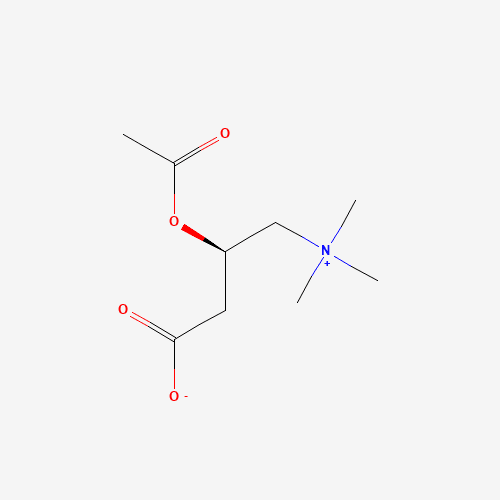
Acetyl-L-carnitine (ALCAR) is the acetyl ester of L-carnitine and the body's main carnitine ester [1]. It is sold as a supplement and, in some countries, as a prescription drug [2]. Meta-analyses find that it eases depressive symptoms, mostly in older adults and across small, inconsistent trials, and that it reduces diabetic nerve pain at doses above 1.5 g a day, on very low-certainty evidence [3][4]. It did not slow Alzheimer's disease in two year-long trials, and it made chemotherapy nerve damage worse in a large one [5][6][7].
A well-tolerated carnitine ester with a real but low-quality signal for depression in older adults and for diabetic nerve pain; it does not slow Alzheimer's disease, it worsened chemotherapy neuropathy in a large trial, and very little of an oral dose is absorbed.
- meta-analysis
- RCT
- trial
- observational
- preclinical / case
- review / patent / other
- retracted
- + Reduced depressive symptoms against placebo in two meta-analyses, most clearly in older adults
- + Matched antidepressants in head-to-head trials, with fewer side effects
- + Reduced diabetic nerve pain at doses above 1.5 g a day
- + Well tolerated across four decades of trials
- − Did not slow Alzheimer's disease in two year-long trials
- − Worsened taxane chemotherapy neuropathy in a 409-patient trial
- − Under 5% of an oral dose is retained, and most of it ends up as TMAO
- − Much of the trial record is small, old and linked to the manufacturer
Acetyl-L-carnitine (ALCAR, also ALC or LAC) is L-carnitine with an acetyl group attached. It is the most abundant carnitine ester in the body [1] and is made in the brain, liver and kidney [8]. It is sold as a supplement for energy, mood and memory, and in some countries it is prescribed for cognitive impairment and diabetic neuropathy, with generic tablets of its own [2]. Much of the clinical record comes from trials run or supported by its Italian manufacturer, Sigma-Tau, from the 1980s onward [4][9].
Depression is where the evidence is most consistent. A 2018 meta-analysis of 12 randomized trials (791 people) found ALCAR reduced depressive symptoms against placebo or no treatment, matched antidepressants in three head-to-head trials with fewer side effects, and worked best in older adults. Most of the trials used 3 g a day for a median of eight weeks, the pool also included people with migraine, fibromyalgia and liver disease, and there was some evidence of publication bias [10]. A 2026 update pooled 10 trials (725 people) and reached the same overall conclusion. The effect was large in trials of older adults and small and non-significant in younger ones, and head-to-head and add-on trials showed smaller differences that were not significant. The trials were small, mostly old and European, very inconsistent with each other and showed signs of publication bias, and the authors judged the certainty low [3]. In a double-blind trial, 80 adults over 65 with dysthymia did as well on ALCAR 3 g a day as on fluoxetine 20 mg over six weeks, and fewer had side effects (6 of 41 against 18 of 39); two of the authors worked for Sigma-Tau [11]. In bipolar depression, ALCAR combined with alpha-lipoic acid for 12 weeks was no better than placebo [12]. Separately, people with major depression had lower blood ALCAR than matched controls at two independent centers, most of all those with treatment-resistant depression [13].
Cognitive decline is mixed. A 2003 meta-analysis of 21 trials in mild cognitive impairment and mild Alzheimer's disease (1,204 people analyzed), built partly on unpublished data from Sigma-Tau, the sponsor of most of them, found a small advantage over placebo [14]. The Cochrane review the same year found benefit only on clinicians' global impressions at 12 and 24 weeks, not at a year and not on any objective measure of cognition, severity or daily function, and said the positive result may be chance [9]. The two largest trials were negative: 431 people with Alzheimer's disease declined at the same rate on ALCAR 3 g a day or placebo over a year, and in a post hoc split those over 65 declined slightly faster on ALCAR [5]. A follow-up trial in 229 people with early-onset disease, the subgroup that had looked promising, also failed; only the completers showed less decline on one screening test, driven by its attention item [6]. Sigma-Tau funded both trials [5][6]. A small Korean trial in dementia with cerebrovascular disease improved one cognitive scale but no other outcome [15]. A 2017 Cochrane review found no eligible trial of ALCAR as a cognitive enhancer in healthy people; the only two that qualified used plain L-carnitine and found no effect [16].
Nerve damage. In diabetic neuropathy, two year-long trials co-authored by Sigma-Tau staff analyzed 1,257 patients. Nerve biopsies showed more fibers and regenerating clusters on 500 mg three times daily but not significantly on 1 g three times daily, vibration sense improved, and nerve conduction did not change. Pain was analyzed only in the 27% for whom it was the main symptom: it fell on 1 g three times daily in the North American trial and in the two trials pooled, but not in the European one [17]. The 2019 Cochrane review judged the pain benefit very uncertain and found it only above 1.5 g a day [4]. A broader meta-analysis of peripheral nerve pain found a moderate effect, larger in diabetic than in other neuropathy [18]. In HIV-related nerve damage, two weeks of injected ALCAR did not significantly reduce pain in the full intention-to-treat population, and did only after eight patients, seven of them taking antiepileptic drugs, were excluded [19], and it did not help nerves recover after carpal tunnel surgery [20]. The clearest result is a harm: in 409 women starting taxane chemotherapy for breast cancer, 3 g a day did not prevent nerve damage at 12 weeks and made it worse by 24 weeks [7], and the difference persisted over two years [21].
Fatigue and other uses. In a single-center trial in 96 people over 70 with fatigue, 2 g twice a day for six months reduced physical and mental fatigue and improved cognitive scores against placebo [22]. In multiple sclerosis fatigue it beat amantadine in a small crossover trial [23], though a Cochrane review found the evidence insufficient [24]. In an open-label chronic fatigue syndrome study it improved mental fatigue [25], and in fibromyalgia it reduced tender points, pain and depression against placebo by week 10 [26]. In cirrhosis with hepatic encephalopathy it lowered blood ammonia, but five small trials from a single team showed no clear effect on quality of life or fatigue [8]. Carnitines (L-carnitine alone or with ALCAR) improved sperm motility and shape in unexplained male infertility, but not pregnancy rates [27]. A psychiatric guideline task force did not recommend ALCAR for ADHD in children, after two trials found no benefit [28].
ALCAR carries two useful pieces. The carnitine part is needed to move long-chain fatty acids into mitochondria for burning, and the acetyl part can be passed on to keep acetyl-CoA levels up [29]. Beyond energy metabolism, it has been reported to affect brain phospholipid metabolism, neurotrophic factors, synapse structure and the release of several neurotransmitters [29]. Its acetyl group can feed acetylcholine synthesis, the original rationale for trying it in dementia [30]. It reaches the brain: in people with Alzheimer's disease, spinal fluid levels rose in step with blood levels after intravenous and oral dosing [31].
Epigenetic action on mGlu2. ALCAR can donate acetyl groups to histones, the proteins that package DNA, and mGlu2 receptors act as a brake on glutamate release [32]. In two rodent models of depression, daily injections of ALCAR acetylated histones at the gene for the mGlu2 receptor and raised mGlu2 levels in the hippocampus and prefrontal cortex. Antidepressant-like behavior appeared within 3 days, against 14 days for clomipramine, and lasted two weeks after the drug was stopped. The effect was absent in mice lacking mGlu2 [33]. The same induction of mGlu2 at nerve terminals is the proposed basis of ALCAR's pain-relieving effect in animal models of neuropathic and inflammatory pain [34].
Ammonia. ALCAR lowered blood ammonia in trials in cirrhosis [8], the basis of its use in hepatic encephalopathy.
- Carnitine shuttle and acetyl-CoA supplyactivatesmoderate
- mGlu2 receptor expression (histone acetylation)activatesin stressed rats and mice it acetylated histones at the mGlu2 gene and raised mGlu2 receptors in the hippocampus and prefrontal cortex, with an antidepressant-like effect within 3 days [33]moderate
- Acetylcholine synthesisactivatesits acetyl group can feed acetylcholine production, the original rationale for trying it in dementia [30]unclear
- Blood ammoniamodulateslowered blood ammonia by about 13 mg/dL against placebo in people with cirrhosis and hepatic encephalopathy [8]moderate
Formulation
how the form changes blood levelsALCAR is usually sold as the hydrochloride: 590 mg of the salt carries 500 mg of ALCAR [7]. In a bioequivalence study of 590 mg tablets, a generic and a branded product both gave peak levels of about 1.7 µg/mL [2].
Absorption is poor. Laboratory studies suggest ALCAR is partly deacetylated in the gut wall, and the little that reaches the blood is quickly converted to carnitine; as of 2004 its bioavailability had never been measured in healthy people [1]. It shares its gut and kidney transporter with L-carnitine. In a 2025 study in healthy adults, single 0.5 g and 1.5 g doses raised blood ALCAR only slightly, with a peak at 4 hours. A 1.5 g dose of plain L-carnitine raised blood ALCAR as much as the same dose of ALCAR did, and raised blood carnitine more. Most of the ALCAR dose was not absorbed: gut bacteria broke it down to trimethylamine, which the liver converts to TMAO, and the authors estimated that under 5% of the dose was retained [35].
| Single dose (healthy adults) | Plasma ALCAR, median | Plasma TMAO, median |
|---|---|---|
| 1.5 g ALCAR | 9.4 → 12.5 µM at 4 h (not significant) | 2.2 → 47 µM at 16 h |
| 1.5 g L-carnitine | 12.1 → 20.9 µM at 4 h | 2.2 → 54.9 µM at 24 h |
The figures in the table are from the same 2025 study [35].
Dosing
as studied or commonly reported; not a recommendationDoses below are what studies used or, where marked, what is commonly reported. None is a recommendation.
Oral
- 1–3 g/daydepressive disorders, mostly in older adults (meta-analysis of 15 trials)daily · 40 days to 12 weekshuman study[3]
- 3 g/daydysthymia in adults over 65, against fluoxetine 20 mg1 g sachet three times daily · 6 weekshuman study[11]
- 1–3 g/day, with alpha-lipoic acid 0.6–1.8 g/daybipolar depression, added to usual treatment (no effect)titrated up to three times daily · 12 weekshuman study[12]
- 1.5–3 g/daymild cognitive impairment and mild Alzheimer's disease (meta-analysis)daily · 3–12 monthshuman study[14]
- 3 g/day
- 1.5 g/daydementia with cerebrovascular disease, alongside donepezil500 mg three times daily · 28 weekshuman study[15]
- 1.5 or 3 g/day
- 1.5 g/day
- 3 g/day
- 3 g/day
- 2 g/day
- 4 g/day
- 2 g/day
- 1–1.5 g/day, plus 500 mg intramuscular daily for the first 2 weeks
- 4 g/day
- 1 g/day, with L-carnitine 2 g/day
- 0.5 or 1.5 g
- 500–2,000 mg/daygeneral use for energy, mood and cognitionsplit into one to three dosescommonly reported, not from trials
Intramuscular injection
- 1 g/dayantiretroviral nerve damage in HIV500 mg twice daily, then 1 g twice daily by mouth for 6 weeks · 14 dayshuman study[19]
Intravenous
- 4 g/day
- Form
- Usually sold as the hydrochloride salt: 590 mg of ALCAR hydrochloride provides 500 mg of ALCAR [7]. A generic and a branded 590 mg tablet gave equivalent blood levels [2]. Trials have also given it by intramuscular injection and intravenous infusion [8][19].
- Timing and food
- Most trials split the daily dose into two or three doses [5][17][23]. One trial had participants take it at least 30 minutes before or 60 minutes after eating [12].
- Time to effect
- In the dementia meta-analysis an advantage showed at the first assessment, three months in, and grew with time [14]. In elderly dysthymia, improvement began after one week, against two weeks for fluoxetine [11]. In diabetic neuropathy, pain relief on the higher dose was present at 26 weeks [17].
- Notes
- In diabetic neuropathy, pain fell more than on placebo only at doses above 1.5 g a day, on very low-certainty evidence [4]. Most dementia trials used 2 g a day, within a range of 1 to 3 g [9]. Taking 3 g a day during taxane chemotherapy worsened nerve damage, and a cancer guideline advises against it for that purpose [7][37].
Pharmacokinetics
what the body does with it| Half-life | After intravenous dosing, plasma levels fell in two phases, with half-lives of about 0.07 and 1.7 hours [31] |
|---|---|
| Time to peak | About 4 hours after a single oral dose of 0.5 or 1.5 g in healthy adults [35] |
| Peak level | A 590 mg ALCAR hydrochloride tablet raised plasma ALCAR from about 1.1–1.2 µg/mL at baseline to a peak of about 1.7 µg/mL [2]; 1.5 g raised the median from 9.4 to 12.5 µM, a rise that was not statistically significant [35] |
| Bioavailability | Low. A 2025 study in healthy adults estimated that under 5% of a 0.5–1.5 g dose was retained, less than for L-carnitine [35]. In older people with Alzheimer's disease, 2 g a day of ALCAR hydrochloride for 50 days raised plasma ALCAR from 7.2 to 10.3 µmol/L, with no change in free carnitine [1]. Spinal fluid levels rose in step with plasma levels, so it reaches the brain [31] |
| Metabolism | Rapidly deacetylated: after an intravenous dose, ALCAR was converted to carnitine about ten times faster than the kidneys cleared it, so much of the acetyl group is used or stored rather than excreted [1]. Unabsorbed carnitine is broken down by gut bacteria to γ-butyrobetaine and trimethylamine, which the liver turns into TMAO [35] |
| Excretion | In urine, mostly as carnitine and TMAO; up to about 90% of a dose left as TMAO [35]. Kidney reabsorption is saturable, so clearance rises as blood levels rise [1], and both baseline levels and urinary elimination track kidney function [38] |
Safety
risks and cautions, not medical adviceALCAR has been well tolerated in trials. In the dementia trials, adverse events were no more common than on placebo; the most frequent possibly drug-related ones were digestive, such as diarrhea, nausea and vomiting [9]. In the year-long Alzheimer's trial of 3 g a day, body odor was more common on ALCAR, and rash and increased appetite nearly so [5]. In the two year-long diabetic neuropathy trials no one stopped for safety reasons, and pain, tingling and oversensitivity were reported less often on 1 g three times daily than on placebo [17]. In a third year-long neuropathy trial, 4.1% stopped because of side effects (headache, facial tingling, digestive upset) against 1.4% on placebo, a difference that was not significant [4]. In depression trials, side effects were fewer than with antidepressants, and serious ones were rare and not attributed to ALCAR [3]. Taken with alpha-lipoic acid, it caused more diarrhea, foul-smelling urine and rash than placebo [12].
Chemotherapy neuropathy. ALCAR 3 g a day, started with taxane chemotherapy, increased nerve damage and reduced functional status at 24 weeks; eight women on ALCAR had grade 3–4 neuropathy against one on placebo [7]. The difference lasted two years [21], and a breast cancer guideline endorsed by ASCO recommends against ALCAR to prevent chemotherapy neuropathy because of possible harm [37].
TMAO. A single 1.5 g dose raised blood TMAO about twentyfold, to levels that have been linked to adverse health outcomes in earlier studies; whether TMAO itself causes cardiometabolic disease is unclear [35].
- Diarrhea, nausea and vomiting, at rates similar to placebo in dementia trials [9]
- Body odor, more common than on placebo at 3 g a day [5]
- Headache, facial tingling and digestive upset leading to withdrawal in a few percent [4]
- Worse chemotherapy neuropathy when taken during taxane treatment [7]
- A large rise in blood TMAO after a single dose [35]
- The depression trials are small, old, mostly European and highly inconsistent, with signs of publication bias; the 2026 meta-analysis rated the certainty low [3]
- The depression benefit was clear in older adults but not in younger ones [3]
- The Cochrane dementia review found no benefit on objective measures, and the two largest Alzheimer's trials were negative [5][6][9]
- Evidence for diabetic nerve pain is of very low certainty, and the trials were funded by or linked to the manufacturer [4]
- In the largest neuropathy trials, pain relief was seen only in a subgroup and only in the North American trial [17]
- Sigma-Tau sponsored most of the dementia trials and supplied unpublished data to the 2003 meta-analysis [14]
- All the hepatic encephalopathy trials came from one research team and were at high risk of bias [8]
- A 2017 Cochrane review found no eligible trial of ALCAR as a cognitive enhancer in healthy people [16]
Interactions
documented pairs only, not exhaustiveThyroid hormone. Most of an ALCAR dose is converted to L-carnitine [35], and L-carnitine is a peripheral antagonist of thyroid hormone: 2–4 g a day reversed and prevented hyperthyroid symptoms in women taking suppressive doses of levothyroxine [39]. That is relevant to anyone taking thyroid hormone.
Chemotherapy. ALCAR worsened taxane neuropathy when taken during chemotherapy [7].
Kidney disease. Baseline blood carnitine and ALCAR levels were highest in people with poor kidney function, and urinary elimination tracked kidney function [38].
- Alpha-lipoic acidcompatibleCombined at up to 3 g ALCAR and 1.8 g alpha-lipoic acid a day for 12 weeks; diarrhea, foul-smelling urine and rash were more common than on placebo [12]
- What is the difference between ALCAR and L-carnitine?
- ALCAR is L-carnitine with an acetyl group attached, and the body converts one into the other [16]. What sets ALCAR apart is the acetyl group it can donate [29]. In an absorption study, plain L-carnitine raised blood ALCAR as much as ALCAR itself and raised blood carnitine more [35].
- Does ALCAR help depression?
- Meta-analyses of small trials find it reduces depressive symptoms against placebo, mainly in older adults, and matches antidepressants with fewer side effects, but the certainty is low [3][10]. Combined with alpha-lipoic acid, it did not help bipolar depression [12].
References
entry last reviewed 2026-10-15- [1]Kinetics, pharmacokinetics, and regulation of L-carnitine and acetyl-L-carnitine metabolism.Rebouche CJAnn N Y Acad Sci 2004reviewPMID 15591001◌ unreviewed
- [2]Pharmacokinetic comparisons of two acetyl-L-carnitine formulations in healthy Korean volunteers.Baek SM, Zheng R, Seo EJ et al.Int J Clin Pharmacol Ther 2015clinical trial · humanPMID 26396135◌ unreviewed
- [3]Current Evidence of Acetyl-L-Carnitine Use in Mood Disorders-: A Systematic Review and Meta-Analysis.Kumar R, Hashempour Z, Shahriarirad S et al.Neuropsychiatr Dis Treat 2026meta-analysis · humanPMID 42261369◌ unreviewed
- [4]Acetyl-L-carnitine for the treatment of diabetic peripheral neuropathy.Rolim LC, da Silva EM, Flumignan RL et al.Cochrane Database Syst Rev 2019meta-analysis · humanPMID 31201734◌ unreviewed
- [5]A 1-year multicenter placebo-controlled study of acetyl-L-carnitine in patients with Alzheimer's disease.Thal LJ, Carta A, Clarke WR et al.Neurology 1996RCT · humanPMID 8797468◌ unreviewed
- [6]A 1-year controlled trial of acetyl-l-carnitine in early-onset AD.Thal LJ, Calvani M, Amato A et al.Neurology 2000RCT · humanPMID 10994000◌ unreviewed
- [7]Randomized double-blind placebo-controlled trial of acetyl-L-carnitine for the prevention of taxane-induced neuropathy in women undergoing adjuvant breast cancer therapy.Hershman DL, Unger JM, Crew KD et al.J Clin Oncol 2013RCT · humanPMID 23733756◌ unreviewed
- [8]Acetyl-L-carnitine for patients with hepatic encephalopathy.Martí-Carvajal AJ, Gluud C, Arevalo-Rodriguez I et al.Cochrane Database Syst Rev 2019meta-analysis · humanPMID 30610762◌ unreviewed
- [9]Acetyl-L-carnitine for dementia.Hudson S, Tabet NCochrane Database Syst Rev 2003meta-analysis · humanPMID 12804452◌ unreviewed
- [10]Acetyl-L-Carnitine Supplementation and the Treatment of Depressive Symptoms: A Systematic Review and Meta-Analysis.Veronese N, Stubbs B, Solmi M et al.Psychosom Med 2018meta-analysis · humanPMID 29076953◌ unreviewed
- [11]L-Acetylcarnitine in dysthymic disorder in elderly patients: a double-blind, multicenter, controlled randomized study vs. fluoxetine.Bersani G, Meco G, Denaro A et al.Eur Neuropsychopharmacol 2013RCT · humanPMID 23428336◌ unreviewed
- [12]A placebo-controlled trial of acetyl-L-carnitine and α-lipoic acid in the treatment of bipolar depression.Brennan BP, Jensen JE, Hudson JI et al.J Clin Psychopharmacol 2013RCT · humanPMID 23948785◌ unreviewed
- [13]Acetyl-l-carnitine deficiency in patients with major depressive disorder.Nasca C, Bigio B, Lee FS et al.Proc Natl Acad Sci U S A 2018observational · humanPMID 30061399◌ unreviewed
- [14]Meta-analysis of double blind randomized controlled clinical trials of acetyl-L-carnitine versus placebo in the treatment of mild cognitive impairment and mild Alzheimer's disease.Montgomery SA, Thal LJ, Amrein RInt Clin Psychopharmacol 2003meta-analysis · humanPMID 12598816◌ unreviewed
- [15]A Multicenter, Randomized, Double-blind, Placebo-controlled Clinical Trial for Efficacy of Acetyl-L-carnitine in Patients with Dementia Associated with Cerebrovascular Disease.Yang Y, Choi H, Lee CN et al.Dement Neurocogn Disord 2018RCT · humanPMID 30906386◌ unreviewed
- [16]L-carnitine for cognitive enhancement in people without cognitive impairment.Chen N, Yang M, Zhou M et al.Cochrane Database Syst Rev 2017meta-analysis · humanPMID 28349514◌ unreviewed
- [17]Acetyl-L-carnitine improves pain, nerve regeneration, and vibratory perception in patients with chronic diabetic neuropathy: an analysis of two randomized placebo-controlled trials.Sima AA, Calvani M, Mehra M et al.Diabetes Care 2005RCT · humanPMID 15616239◌ unreviewed
- [18]Acetyl-L-carnitine in the treatment of peripheral neuropathic pain: a systematic review and meta-analysis of randomized controlled trials.Li S, Li Q, Li Y et al.PLoS One 2015meta-analysis · humanPMID 25751285◌ unreviewed
- [19]A double-blind, parallel-group, placebo-controlled, multicentre study of acetyl L-carnitine in the symptomatic treatment of antiretroviral toxic neuropathy in patients with HIV-1 infection.Youle M, Osio M, ALCAR Study GroupHIV Med 2007RCT · humanPMID 17461852◌ unreviewed
- [20]Acetyl-L-Carnitine to Enhance Nerve Regeneration in Carpal Tunnel Syndrome: A Double-Blind, Randomized, Controlled Trial.Curran MWT, Morhart MJ, Olson JL et al.Plast Reconstr Surg 2019RCT · humanPMID 30589790◌ unreviewed
- [21]Two-Year Trends of Taxane-Induced Neuropathy in Women Enrolled in a Randomized Trial of Acetyl-L-Carnitine (SWOG S0715).Hershman DL, Unger JM, Crew KD et al.J Natl Cancer Inst 2018RCT · humanPMID 29361042◌ unreviewed
- [22]Acetyl L-carnitine (ALC) treatment in elderly patients with fatigue.Malaguarnera M, Gargante MP, Cristaldi E et al.Arch Gerontol Geriatr 2008RCT · humanPMID 17658628◌ unreviewed
- [23]Comparison of the effects of acetyl L-carnitine and amantadine for the treatment of fatigue in multiple sclerosis: results of a pilot, randomised, double-blind, crossover trial.Tomassini V, Pozzilli C, Onesti E et al.J Neurol Sci 2004RCT · humanPMID 14759641◌ unreviewed
- [24]Carnitine for fatigue in multiple sclerosis.Tejani AM, Wasdell M, Spiwak R et al.Cochrane Database Syst Rev 2012meta-analysis · humanPMID 22592719◌ unreviewed
- [25]Exploratory open label, randomized study of acetyl- and propionylcarnitine in chronic fatigue syndrome.Vermeulen RC, Scholte HRPsychosom Med 2004clinical trial · humanPMID 15039515◌ unreviewed
- [26]Double-blind, multicenter trial comparing acetyl l-carnitine with placebo in the treatment of fibromyalgia patients.Rossini M, Di Munno O, Valentini G et al.Clin Exp Rheumatol 2007RCT · humanPMID 17543140◌ unreviewed
- [27]l-carnitine and l-acetylcarnitine supplementation for idiopathic male infertility.Khaw SC, Wong ZZ, Anderson R et al.Reprod Fertil 2020meta-analysis · humanPMID 35128424◌ unreviewed
- [28]Clinician guidelines for the treatment of psychiatric disorders with nutraceuticals and phytoceuticals: The World Federation of Societies of Biological Psychiatry (WFSBP) and Canadian Network for Mood and Anxiety Treatments (CANMAT) Taskforce.Sarris J, Ravindran A, Yatham LN et al.World J Biol Psychiatry 2022reviewPMID 35311615◌ unreviewed
- [29]Acetyl-L-carnitine physical-chemical, metabolic, and therapeutic properties: relevance for its mode of action in Alzheimer's disease and geriatric depression.Pettegrew JW, Levine J, McClure RJMol Psychiatry 2000reviewPMID 11126392◌ unreviewed
- [30]Acetyl-L-Carnitine in Dementia and Other Cognitive Disorders: A Critical Update.Pennisi M, Lanza G, Cantone M et al.Nutrients 2020reviewPMID 32408706◌ unreviewed
- [31]Pharmacokinetics of IV and oral acetyl-L-carnitine in a multiple dose regimen in patients with senile dementia of Alzheimer type.Parnetti L, Gaiti A, Mecocci P et al.Eur J Clin Pharmacol 1992clinical trial · humanPMID 1541322◌ unreviewed
- [32]The neuropsychopharmacology of acetyl-L-carnitine (LAC): basic, translational and therapeutic implications.Bigio B, Azam S, Mathé AA et al.Discov Ment Health 2024reviewPMID 38169018◌ unreviewed
- [33]L-acetylcarnitine causes rapid antidepressant effects through the epigenetic induction of mGlu2 receptors.Nasca C, Xenos D, Barone Y et al.Proc Natl Acad Sci U S A 2013preclinical · animalPMID 23382250◌ unreviewed
- [34]Acetyl-L-carnitine in chronic pain: A narrative review.Sarzi-Puttini P, Giorgi V, Di Lascio S et al.Pharmacol Res 2021reviewPMID 34500063◌ unreviewed
- [35]Low Bioavailability and High TMAO Production: Novel Insights Into Acetylcarnitine and Carnitine Metabolism.Krims-Davis K, Ozola M, Razzivina V et al.Mol Nutr Food Res 2025clinical trial · humanPMID 41243468◌ unreviewed
- [36]Effects of acetyl-L-carnitine and methylcobalamin for diabetic peripheral neuropathy: A multicenter, randomized, double-blind, controlled trial.Li S, Chen X, Li Q et al.J Diabetes Investig 2016RCT · humanPMID 27180954◌ unreviewed
- [37]Integrative Therapies During and After Breast Cancer Treatment: ASCO Endorsement of the SIO Clinical Practice Guideline.Lyman GH, Greenlee H, Bohlke K et al.J Clin Oncol 2018reviewPMID 29889605◌ unreviewed
- [38]Pharmacokinetics of oral acetyl-L-carnitine in renal impairment.Kelly JG, Hunt S, Doyle GD et al.Eur J Clin Pharmacol 1990clinical trial · humanPMID 2340852◌ unreviewed
- [39]Usefulness of L-carnitine, a naturally occurring peripheral antagonist of thyroid hormone action, in iatrogenic hyperthyroidism: a randomized, double-blind, placebo-controlled clinical trial.Benvenga S, Ruggeri RM, Russo A et al.J Clin Endocrinol Metab 2001RCT · humanPMID 11502782◌ unreviewed