Semaglutide
also Rybelsus · Ozempic · Wegovy · NN9535 · NN 9535
Semaglutide is the GLP-1 receptor agonist that turned obesity into a treatable condition in mainstream medicine. In STEP 1, 68 weeks of 2.4 mg weekly produced a mean 14.9% weight loss against 2.4% on placebo, with half of participants losing 15% or more [1]. In SELECT, 17,604 people with obesity and established cardiovascular disease but no diabetes had a 20% reduction in major cardiovascular events over the trial [2] - the result that moved it from a weight drug to a cardiovascular one. The costs are real and well documented: gastrointestinal effects in most people, about 4.5% discontinuing for them in STEP 1 [1], and weight regain when it stops. A year after withdrawal in the STEP 1 extension, participants had regained two-thirds of what they lost [3].
The best-evidenced weight-loss drug ever licensed, with a cardiovascular outcome trial behind it, a heavy gastrointestinal burden, and a weight-regain problem that makes it a long-term treatment rather than a course.
- meta-analysis
- RCT
- trial
- observational
- preclinical / case
- review / patent / other
- retracted
- + Mean 14.9% weight loss at 68 weeks, sustained to 15.2% at two years
- + 20% fewer major cardiovascular events in people with obesity and established cardiovascular disease
- + Improves HbA1c, blood pressure, waist circumference and kidney outcomes
- + Reduced knee osteoarthritis pain and improved heart failure symptoms in dedicated trials
- + Now available as a daily tablet as well as a weekly injection
- − Gastrointestinal adverse events in the large majority of users
- − Two-thirds of lost weight regained within a year of stopping
- − Roughly a third of the weight lost is lean mass, in line with other large weight losses
- − Delayed gastric emptying complicates anaesthesia and sedation
- − Retinopathy complications were more frequent in SUSTAIN-6, and a possible link to optic neuropathy is under investigation
Overview
Semaglutide is a modified version of the gut hormone GLP-1, engineered to last a week in the body instead of minutes. It was approved for type 2 diabetes first and for obesity second, and the obesity trials are what changed the field.
The weight trials. STEP 1 randomised 1961 adults with overweight or obesity and no diabetes. At 68 weeks, mean weight change was -14.9% on semaglutide 2.4 mg against -2.4% on placebo, a difference of 12.4 percentage points; 86.4% lost at least 5%, 69.1% at least 10%, and 50.5% at least 15% [1]. STEP 5 extended that to two years and found it held: -15.2% versus -2.6% at week 104 [4]. STEP 8 compared it head to head with daily liraglutide 3.0 mg and won decisively, -15.8% versus -6.4% [5]. In adolescents with obesity the effect was of the same size [6]. STEP 3 added intensive behavioural therapy on top [7], and STEP 4 showed that continuing the drug after an initial 20-week run-in keeps weight falling while switching to placebo reverses it [8]. STEP UP tested 7.2 mg, above the licensed dose, and got -18.7% against -15.6% for 2.4 mg [9].
The cardiovascular trial. SELECT enrolled 17,604 people with overweight or obesity and established cardiovascular disease but no diabetes. Major adverse cardiovascular events occurred in 6.5% on semaglutide against 8.0% on placebo, a hazard ratio of 0.80 [2]. This is the result that made semaglutide a cardiovascular drug rather than a cosmetic one, and it is the reason obesity treatment is now reimbursed in places it was not. Kidney outcomes moved in the same direction [10][11], and the long-term weight effect in that population held over years [12]. In type 2 diabetes, SUSTAIN-6 had already shown a hazard ratio of 0.74 [13].
Beyond weight and heart. In obesity with knee osteoarthritis, 68 weeks produced -13.7% weight and a large improvement in WOMAC pain score [14]. In obesity-related heart failure with preserved ejection fraction, pooled STEP-HFpEF data showed a 7.5-point gain in the KCCQ symptom score [15].
The tablet. Oral semaglutide at 50 mg daily gave -15.1% at 68 weeks in OASIS 1, essentially matching the injection [16]; a 25 mg dose gave -13.6% at 64 weeks [17]. The catch is the dosing ritual: empty stomach, small sip of water, nothing else for half an hour.
What happens when you stop. The STEP 1 extension followed 327 participants for a year after withdrawal. They had lost 17.3% on drug and regained 11.6 percentage points of it, ending at a net 5.6% below baseline [3]. Cardiometabolic improvements reverted along with the weight. This is the single most important practical fact about the drug: it treats obesity for as long as it is taken.
Mechanism
GLP-1 is released from the gut after a meal and does several things at once: it stimulates glucose-dependent insulin secretion, suppresses glucagon, slows gastric emptying and signals satiety in the hypothalamus and brainstem. Native GLP-1 is destroyed by DPP-4 within minutes.
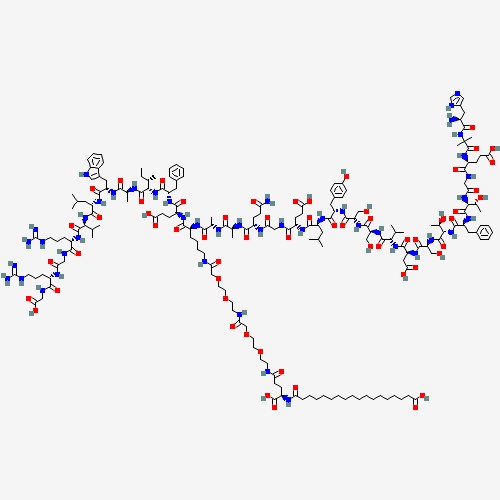
Semaglutide is human GLP-1 with an alanine-to-alpha-aminoisobutyric-acid substitution at position 8 that blocks DPP-4 cleavage, and a C18 fatty diacid attached through a spacer that binds albumin reversibly. Albumin binding is what buys the one-week half-life [18].
For weight, the dominant mechanism is central appetite suppression rather than the slowed stomach - although delayed gastric emptying is real, contributes to early satiety, and is the source of both the nausea and the anaesthetic problem [19]. The glucose-dependent nature of the insulin effect is why semaglutide alone rarely causes hypoglycaemia.
The cardiovascular benefit in SELECT is larger than weight loss alone easily explains, and the mechanism is still argued over: some combination of weight, blood pressure, inflammation and direct vascular effects [2][20].
- GLP-1 receptoractivatesa long-acting acylated analogue of human GLP-1 that activates the receptor continuously rather than in meal-linked pulses, suppressing appetite and slowing gastric emptying [18]strong
- Appetite and energy intakeblocksthe dominant mechanism for weight loss; 2.4 mg weekly produced a 14.9% mean weight reduction over 68 weeks against 2.4% on placebo [1]strong
- Major adverse cardiovascular eventsblocksstrong
- Kidney functionmodulatesthe SELECT kidney composite occurred in 1.8% on semaglutide against 2.2% on placebo (HR 0.78), with an eGFR benefit of 0.75 ml/min/1.73 m2 at 104 weeks, rising to 2.19 in those with impaired function at baseline [10]moderate
- Gastric emptyingblocksresidual gastric content is more common in people on GLP-1 agonists before anaesthesia, which is the basis for the perioperative guidance [19]strong
Formulation
how the form changes blood levelsTwo routes with quite different pharmaceutics. The injection is a weekly subcutaneous dose from a pen, marketed as Wegovy for weight and Ozempic for diabetes; escalation runs from 0.25 mg to 2.4 mg over about 16 weeks.
The tablet is the interesting piece of engineering. Peptides are not absorbed from the gut, so oral semaglutide is co-formulated with sodium N-(8-[2-hydroxybenzoyl]amino) caprylate, which raises local gastric pH and transiently permeabilises the epithelium. Absorption is still poor and highly variable, which is why the daily oral dose is 25-50 mg against 2.4 mg injected weekly, and why the empty-stomach rule is not optional [16][17].
Dosing
as studied or commonly reported; not a recommendationDoses below are what studies used or, where marked, what is commonly reported. None is a recommendation.
Subcutaneous injection
- 2.4 mgadults with overweight or obesity without diabetes (STEP 1)once weekly, after 16 weeks of escalation · 68 weekshuman study[1]
- 2.4 mg
- 7.2 mgadults with obesity (STEP UP), testing a dose above the licensed oneonce weekly · 72 weekshuman study[9]
- up to 2.4 mgobesity with established cardiovascular disease, no diabetes (SELECT); cardiovascular outcomesonce weekly · mean 39.8 monthshuman study[2]
- 0.5 mg or 1.0 mg
Oral
- 50 mg
- 25 mg
- Form
- Weekly subcutaneous injection (Wegovy for obesity, Ozempic for diabetes) and a daily tablet. The oral form needs the absorption enhancer SNAC and a ten-fold higher milligram dose to reach comparable exposure [16][17].
- Timing and food
- The injection is weekly on any fixed day. Oral semaglutide is taken on an empty stomach with a small sip of water and nothing else for at least 30 minutes, because food and fluid destroy absorption [16].
- Time to effect
- Weight loss continues for roughly 60 weeks before plateauing; the 68-week trial endpoints are close to the maximum [1][4].
- Notes
- Escalation is slow and deliberate - typically 16 weeks from 0.25 mg to 2.4 mg - specifically to make the gastrointestinal effects survivable. STEP UP showed 7.2 mg weekly beats 2.4 mg (-18.7% versus -15.6%) but with more nausea (70.8% versus 61.2%) and much more dysaesthesia (22.9% versus 6.0%) [9].
Pharmacokinetics
what the body does with it| Half-life | About one week, which is what allows weekly subcutaneous dosing; achieved by acylation to a C18 fatty diacid that binds albumin, plus substitutions that resist DPP-4 [18] |
|---|---|
| Onset | Appetite effects begin within the first weeks, but dose escalation over 16-20 weeks means the full effect takes months [1] |
| Bioavailability | Oral semaglutide is absorbed with the aid of the permeation enhancer SNAC, at bioavailability low enough that the oral dose is 25-50 mg daily against 2.4 mg weekly injected [16][17] |
| Steady state | Roughly 4-5 weeks at a given dose, given the one-week half-life [18] |
| Metabolism | Proteolytic cleavage of the peptide backbone and beta-oxidation of the fatty acid side chain [18] |
Safety
risks and cautions, not medical adviceGastrointestinal effects are the defining tolerability problem: nausea, vomiting, diarrhoea and constipation, mostly during escalation. In STEP 1, gastrointestinal adverse events led 4.5% to discontinue against 0.8% on placebo [1]; at the higher 7.2 mg dose, nausea reached 70.8% [9]. In SELECT, 16.6% discontinued the drug for adverse events against 8.2% on placebo [2].
Anaesthesia and sedation. Delayed gastric emptying means residual stomach contents after standard fasting. Observational work found more residual gastric content in GLP-1 users before anaesthesia [19]; a systematic review of pulmonary aspiration found the absolute risk small but the association present [21]. Tell an anaesthetist.
Lean mass. Large weight loss takes muscle with it, and GLP-1-based weight loss is no exception: fat-free mass typically accounts for around a quarter to 40% of the total, broadly in line with what diet-induced loss of the same magnitude produces [22][23][24]. Whether it is worse than equivalent dieting is genuinely contested; resistance training and adequate protein are the standard mitigations [22].
Eyes. SUSTAIN-6 found more diabetic retinopathy complications on semaglutide (HR 1.76), attributed at the time to rapid glucose lowering [13]. Separately, a possible association with non-arteritic anterior ischaemic optic neuropathy was raised in 2024. The follow-up evidence is mixed: a multicentre observational study and a multinational population study have reported differing magnitudes, and the question is not settled [25][26].
Tumours. GLP-1 agonists carry a rodent thyroid C-cell tumour warning. A systematic review of once-weekly agents found no clear human signal [27].
Pregnancy. Not for use in pregnancy, and the long half-life means stopping well in advance.
- Nausea, vomiting, diarrhoea and constipation, most intense during dose escalation [1]
- Gastrointestinal adverse events caused 4.5% to discontinue in STEP 1 and 16.6% to discontinue for any adverse event in SELECT [1][2]
- Dysaesthesia in 22.9% at the 7.2 mg dose against 6.0% at 2.4 mg [9]
- More diabetic retinopathy complications in SUSTAIN-6, hazard ratio 1.76 [13]
- Tell an anaesthetist before any procedure: residual gastric content is more common on GLP-1 agonists despite standard fasting [19][21]
- Doses of insulin or sulfonylureas usually need reducing to avoid hypoglycaemia [13]
- A possible association with non-arteritic anterior ischaemic optic neuropathy is under investigation and unresolved [25][26]
- Carries a rodent thyroid C-cell tumour warning, without a clear human signal so far [27]
- Weight returns when the drug stops: two-thirds of the loss regained within a year in the STEP 1 extension [3]
- Gastrointestinal adverse events affect most users and caused 16.6% to stop the drug in SELECT [2]
- A substantial fraction of the weight lost is lean mass [22][24]
- The oral form demands an empty stomach and a 30-minute wait, which is a real adherence burden [16]
Interactions
documented pairs only, not exhaustiveDelayed gastric emptying can slow the absorption of oral drugs taken at the same time, which matters most for narrow-therapeutic-index medicines [19].
With insulin or a sulfonylurea, the risk of hypoglycaemia rises and doses of those usually need reducing; semaglutide alone rarely causes it because its insulin effect is glucose-dependent [13].
Stacking with other GLP-1 or incretin agonists adds nothing except adverse effects. Combining with an amylin analogue is a different matter and is being developed deliberately: cagrilintide plus semaglutide gave -20.4% at 68 weeks in REDEFINE 1 [28]. Network meta-analyses place semaglutide behind tirzepatide and retatrutide and ahead of the older agonists [29][30].
- TirzepatideavoidBoth are GLP-1 receptor agonists; combining them multiplies gastrointestinal effects without adding benefit. In the head-to-head SURMOUNT-5 trial tirzepatide produced more weight loss than semaglutide [31].
- CagrilintidecompatibleDeliberately combined as CagriSema: -20.4% at 68 weeks against -3.0% on placebo, with gastrointestinal events in 79.6% [28].
- ExenatideavoidTwo GLP-1 receptor agonists; no added benefit and additive gastrointestinal effects [18].
- OrforglipronavoidBoth activate the GLP-1 receptor, one as a peptide and one as a small molecule [32].
History
GLP-1 was identified as an incretin in the 1980s; exenatide, from Gila monster venom, was the first agonist on the market [33]. Novo Nordisk's liraglutide followed as a daily injection, and semaglutide - acylated more heavily for a week-long half-life - was approved for type 2 diabetes in 2017.
SUSTAIN-6 showed a cardiovascular benefit in diabetes in 2016 [13]. The STEP programme ran from 2021 and established the obesity indication [1]. SELECT, reported in 2023, demonstrated cardiovascular benefit in people without diabetes and changed how obesity is regarded by regulators and payers [2]. Oral formulations for weight followed in 2023 and 2025 [16][17].
FAQ
- How much weight does semaglutide cause?
- About 15% of body weight at the licensed 2.4 mg dose over 68 weeks, against 2.4% on placebo, and it holds at two years [1][4]. The 7.2 mg dose tested in STEP UP gave 18.7% [9].
- What happens if I stop?
- Most of the weight comes back. A year after withdrawal in the STEP 1 extension, participants had regained 11.6 of the 17.3 percentage points they had lost, and the cardiometabolic improvements reverted with it [3].
- Is the tablet as good as the injection?
- Oral semaglutide 50 mg daily gave -15.1% at 68 weeks, close to the injection's numbers [16]. It requires an empty stomach and a 30-minute wait, which is the trade-off.
- Does it help the heart or only the weight?
- Both. SELECT found 20% fewer major cardiovascular events in people with obesity and established cardiovascular disease and no diabetes [2].
References
entry last reviewed 2026-09-19- [1]Once-Weekly Semaglutide in Adults with Overweight or Obesity.Wilding JPH, Batterham RL, Calanna S et al.N Engl J Med 2021RCT · humanPMID 33567185◌ unreviewed
- [2]Semaglutide and Cardiovascular Outcomes in Obesity without Diabetes.Lincoff AM, Brown-Frandsen K, Colhoun HM et al.N Engl J Med 2023RCT · humanPMID 37952131◌ unreviewed
- [3]Weight regain and cardiometabolic effects after withdrawal of semaglutide: The STEP 1 trial extension.Wilding JPH, Batterham RL, Davies M et al.Diabetes Obes Metab 2022RCT · humanPMID 35441470◌ unreviewed
- [4]Two-year effects of semaglutide in adults with overweight or obesity: the STEP 5 trial.Garvey WT, Batterham RL, Bhatta M et al.Nat Med 2022RCT · humanPMID 36216945◌ unreviewed
- [5]Effect of Weekly Subcutaneous Semaglutide vs Daily Liraglutide on Body Weight in Adults With Overweight or Obesity Without Diabetes: The STEP 8 Randomized Clinical Trial.Rubino DM, Greenway FL, Khalid U et al.JAMA 2022RCT · humanPMID 35015037◌ unreviewed
- [6]Once-Weekly Semaglutide in Adolescents with Obesity.Weghuber D, Barrett T, Barrientos-Pérez M et al.N Engl J Med 2022RCT · humanPMID 36322838◌ unreviewed
- [7]Effect of Subcutaneous Semaglutide vs Placebo as an Adjunct to Intensive Behavioral Therapy on Body Weight in Adults With Overweight or Obesity: The STEP 3 Randomized Clinical Trial.Wadden TA, Bailey TS, Billings LK et al.JAMA 2021RCT · humanPMID 33625476◌ unreviewed
- [8]Effect of Continued Weekly Subcutaneous Semaglutide vs Placebo on Weight Loss Maintenance in Adults With Overweight or Obesity: The STEP 4 Randomized Clinical Trial.Rubino D, Abrahamsson N, Davies M et al.JAMA 2021RCT · humanPMID 33755728◌ unreviewed
- [9]Once-weekly semaglutide 7·2 mg in adults with obesity (STEP UP): a randomised, controlled, phase 3b trial.Wharton S, Freitas P, Hjelmesæth J et al.Lancet Diabetes Endocrinol 2025RCT · humanPMID 40961952◌ unreviewed
- [10]Long-term kidney outcomes of semaglutide in obesity and cardiovascular disease in the SELECT trial.Colhoun HM, Lingvay I, Brown PM et al.Nat Med 2024RCT · humanPMID 38796653◌ unreviewed
- [11]Effect of the Glucagon-Like Peptide-1 Receptor Agonists Semaglutide and Liraglutide on Kidney Outcomes in Patients With Type 2 Diabetes: Pooled Analysis of SUSTAIN 6 and LEADER.Shaman AM, Bain SC, Bakris GL et al.Circulation 2022RCT · humanPMID 34903039◌ unreviewed
- [12]Long-term weight loss effects of semaglutide in obesity without diabetes in the SELECT trial.Ryan DH, Lingvay I, Deanfield J et al.Nat Med 2024RCT · humanPMID 38740993◌ unreviewed
- [13]Semaglutide and Cardiovascular Outcomes in Patients with Type 2 Diabetes.Marso SP, Bain SC, Consoli A et al.N Engl J Med 2016RCT · humanPMID 27633186◌ unreviewed
- [14]Once-Weekly Semaglutide in Persons with Obesity and Knee Osteoarthritis.Bliddal H, Bays H, Czernichow S et al.N Engl J Med 2024RCT · humanPMID 39476339◌ unreviewed
- [15]Semaglutide versus placebo in people with obesity-related heart failure with preserved ejection fraction: a pooled analysis of the STEP-HFpEF and STEP-HFpEF DM randomised trials.Butler J, Shah SJ, Petrie MC et al.Lancet 2024RCT · humanPMID 38599221◌ unreviewed
- [16]Oral semaglutide 50 mg taken once per day in adults with overweight or obesity (OASIS 1): a randomised, double-blind, placebo-controlled, phase 3 trial.Knop FK, Aroda VR, do Vale RD et al.Lancet 2023RCT · humanPMID 37385278◌ unreviewed
- [17]Oral Semaglutide at a Dose of 25 mg in Adults with Overweight or Obesity.Wharton S, Lingvay I, Bogdanski P et al.N Engl J Med 2025RCT · humanPMID 40934115◌ unreviewed
- [18]Novel GLP-1-based Medications for Type 2 Diabetes and Obesity.Son JW, le Roux CW, Blüher M et al.Endocr Rev 2026reviewPMID 41054801◌ unreviewed
- [19]Glucagon-Like Peptide-1 Receptor Agonist Use and Residual Gastric Content Before Anesthesia.Sen S, Potnuru PP, Hernandez N et al.JAMA Surg 2024observational · humanPMID 38446466◌ unreviewed
- [20]Cardiovascular and Kidney Outcomes and Mortality With Long-Acting Injectable and Oral Glucagon-Like Peptide 1 Receptor Agonists in Individuals With Type 2 Diabetes: A Systematic Review and Meta-analysis of Randomized Trials.Lee MMY, Sattar N, Pop-Busui R et al.Diabetes Care 2025meta-analysis · humanPMID 40156846◌ unreviewed
- [21]Association between glucagon-like peptide-1 receptor agonist use and peri-operative pulmonary aspiration: a systematic review and meta-analysis.Elkin J, Rele S, Sumithran P et al.Anaesthesia 2025meta-analysis · humanPMID 40230298◌ unreviewed
- [22]Changes in lean body mass with glucagon-like peptide-1-based therapies and mitigation strategies.Neeland IJ, Linge J, Birkenfeld ALDiabetes Obes Metab 2024reviewPMID 38937282◌ unreviewed
- [23]Effect of GLP-1 receptor agonists on body composition.Bhandarkar A, Bhat S, Kapoor NCurr Opin Endocrinol Diabetes Obes 2025reviewPMID 41076575◌ unreviewed
- [24]Characterizing body composition modifying effects of a glucagon-like peptide 1 receptor-based agonist: A meta-analysis.Jiao R, Lin C, Cai X et al.Diabetes Obes Metab 2025meta-analysis · humanPMID 39431379◌ unreviewed
- [25]Semaglutide and Nonarteritic Anterior Ischemic Optic Neuropathy.Cai CX, Hribar M, Baxter S et al.JAMA Ophthalmol 2025observational · humanPMID 39976940◌ unreviewed
- [26]Association between Semaglutide and Nonarteritic Anterior Ischemic Optic Neuropathy: A Multinational Population-Based Study.Chou CC, Pan SY, Sheen YJ et al.Ophthalmology 2025observational · humanPMID 39491755◌ unreviewed
- [27]Tumour Risk with Once-Weekly Glucagon-Like Peptide-1 Receptor Agonists in Type 2 Diabetes Mellitus Patients: A Systematic Review.Guo X, Yang Q, Dong J et al.Clin Drug Investig 2016meta-analysis · humanPMID 26979594◌ unreviewed
- [28]Coadministered Cagrilintide and Semaglutide in Adults with Overweight or Obesity.Garvey WT, Blüher M, Osorto Contreras CK et al.N Engl J Med 2025RCT · humanPMID 40544433◌ unreviewed
- [29]Efficacy and Safety of GLP-1 Receptor Agonists, Dual Agonists, and Retatrutide for Weight Loss in Adults With Overweight or Obesity: A Bayesian NMA.Sinha B, Ghosal SObesity (Silver Spring) 2025meta-analysis · humanPMID 40685589◌ unreviewed
- [30]Emerging pharmacotherapies for obesity: A systematic review.Kokkorakis M, Chakhtoura M, Rhayem C et al.Pharmacol Rev 2025meta-analysis · humanPMID 39952695◌ unreviewed
- [31]Tirzepatide as Compared with Semaglutide for the Treatment of Obesity.Aronne LJ, Horn DB, le Roux CW et al.N Engl J Med 2025RCT · humanPMID 40353578◌ unreviewed
- [32]Orforglipron, an Oral Small-Molecule GLP-1 Receptor Agonist for Obesity Treatment.Wharton S, Aronne LJ, Stefanski A et al.N Engl J Med 2025RCT · humanPMID 40960239◌ unreviewed
- [33]Discovery and development of exenatide: the first antidiabetic agent to leverage the multiple benefits of the incretin hormone, GLP-1.Parkes DG, Mace KF, Trautmann MEExpert Opin Drug Discov 2013reviewPMID 23231438◌ unreviewed