Exenatide
also Bydureon Pen · Byetta · Bydureon · Exendin 4 · PT302
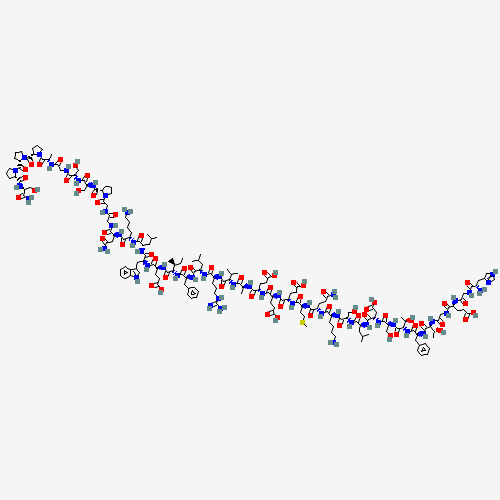
Exenatide is the original GLP-1 receptor agonist, and it came out of a lizard. Exendin-4 was isolated from the venom of the Gila monster, Heloderma suspectum, and turned out to be a full agonist at the human GLP-1 receptor that resists the enzyme which destroys the human hormone [1][2]. It reached the market in 2005 as twice-daily Byetta and later as weekly Bydureon, and everything that followed - liraglutide, semaglutide, tirzepatide - descends from the idea it proved. By modern standards it is weak: roughly 1% of body weight lost, and its cardiovascular outcome trial, EXSCEL, missed superiority at a hazard ratio of 0.91 with a confidence interval touching 1.00 [3]. Its most interesting current life is outside diabetes, and that story ended badly too: a promising phase 2 result in Parkinson's disease [4] was followed by a clean negative phase 3 [5].
The drug that founded the class, now outclassed on its own ground, with a Parkinson's programme that made it through phase 2 and failed convincingly in phase 3.
- meta-analysis
- RCT
- trial
- observational
- preclinical / case
- review / patent / other
- retracted
- + The first GLP-1 receptor agonist, and the proof of concept for the whole class
- + Reliable HbA1c reduction as an add-on in type 2 diabetes
- + Cardiovascular safety established in a 14,752-patient outcome trial
- + Available as a weekly injection as well as twice daily
- − Weight loss is small compared with semaglutide or tirzepatide
- − EXSCEL missed superiority for cardiovascular events
- − The phase 3 Parkinson's trial was negative on every endpoint
- − Twice-daily dosing for the original formulation
- − Injection-site nodules with the extended-release form
Overview
Where it came from. In the early 1990s John Eng found a peptide in the venom of the Gila monster that behaved like GLP-1 but lasted far longer. Exendin-4 is about 53% identical to human GLP-1 and is a full agonist at its receptor; crucially it has glycine at position 2 instead of alanine, which makes it invisible to DPP-4, the enzyme that destroys human GLP-1 in a couple of minutes [1][6]. Synthetic exendin-4 became exenatide, the first incretin drug, approved in 2005 [2].
Diabetes. The DURATION programme established the weekly form: in 1379 patients with a baseline HbA1c of 8.4%, 24-30 weeks of exenatide 2 mg weekly significantly reduced HbA1c, fasting glucose, body weight, blood pressure and triglycerides [7]. Pooled analyses of 20 randomised trials support the same picture at high baseline HbA1c [8]. Weekly dosing is better tolerated than twice daily [9], and a separate randomised trial measured the twice-daily form's effect on BMI directly [10]. In a network comparison of ten GLP-1 agonists added to metformin, exenatide sits at the weaker end [11].
The cardiovascular trial. EXSCEL randomised 14,752 patients with type 2 diabetes. Major adverse cardiovascular events occurred in 11.4% on exenatide against 12.2% on placebo, hazard ratio 0.91, confidence interval 0.83 to 1.00 - noninferior, not superior [3]. Class-wide meta-analyses place GLP-1 agonists as a group in clearly beneficial territory [12][13], and exenatide is one of the reasons the class effect is not uniform.
Parkinson's disease. This is the most scientifically interesting part of exenatide's record and it ends in a negative result. A single-centre randomised phase 2 trial in 62 patients found that after 48 weeks of weekly exenatide, practically defined off-medication motor scores improved by 1.0 point while the placebo group worsened [4]. The finding generated a decade of interest in GLP-1 agonists as disease-modifying therapy. The phase 3 trial, a multicentre double-blind study of 215 enrolled participants over 96 weeks, found no difference; the authors concluded exenatide was safe and well tolerated but did not modify the disease [5].
Other uses. A pilot randomised trial found exenatide alongside nicotine patch improved smoking abstinence and blunted post-cessation weight gain [14], and a small case series explored it in cocaine use disorder [15]. Both are preliminary.
Mechanism
Exenatide activates the GLP-1 receptor, producing glucose-dependent insulin secretion, glucagon suppression, slowed gastric emptying and reduced appetite - the same mechanism as the rest of the class [1].
Its distinguishing feature is structural. Native GLP-1 is cleaved between positions 7 and 8 by DPP-4 within minutes; exendin-4 has glycine in the equivalent position, which the enzyme cannot process, so the venom peptide is intrinsically long-lived without any of the acylation tricks used in later drugs [1]. Its 39-residue sequence also carries a C-terminal extension absent from GLP-1 that contributes to receptor binding.
The rationale for the Parkinson's work was that GLP-1 receptors are expressed on neurons and that agonists have neurotrophic effects in cellular and animal models [5]. The phase 3 result does not disprove the biology; it does show that this drug at this dose does not change the course of the disease.
- GLP-1 receptoractivatesexendin-4 shares about 53% sequence identity with human GLP-1 and is a full agonist at its receptor, with a glycine at position 2 that makes it resistant to DPP-4 cleavage [1]strong
- Glycaemic controlmodulatesin a pooled analysis of the DURATION programme, exenatide once weekly significantly reduced HbA1c, fasting glucose, weight, blood pressure and triglycerides over 24-30 weeks [7]strong
- Major adverse cardiovascular eventsno bindingEXSCEL, in 14,752 patients, found 11.4% versus 12.2% - a hazard ratio of 0.91 with the confidence interval reaching 1.00, so noninferior but not superior [3]moderate
- Dopaminergic neurons in Parkinson's diseaseno bindingmoderate
Formulation
how the form changes blood levelsTwo products. The immediate-release solution is injected twice daily before meals and has a half-life of about 2.4 hours. The extended-release product suspends exenatide in biodegradable poly(D,L-lactide-co-glycolide) microspheres that dissolve over a week; it takes six to seven weeks to reach steady state, and the depot causes injection-site nodules in a minority of users [7].
The tolerability difference between the two is real: continuous weekly exposure produces less nausea than intermittent twice-daily peaks [9].
Dosing
as studied or commonly reported; not a recommendationDoses below are what studies used or, where marked, what is commonly reported. None is a recommendation.
Subcutaneous injection
- 5-10 µg
- 2 mgadults with type 2 diabetes (DURATION programme, 1379 patients)once weekly · 24-30 weekshuman study[7]
- 2 mgtype 2 diabetes with or without cardiovascular disease (EXSCEL, 14,752 patients)once weekly · median 3.2 yearshuman study[3]
- 2 mg
- 2 mg
- 2 mg84 prediabetic or overweight smokers, alongside nicotine patchonce weekly · not stated in the abstracthuman study[14]
- Form
- Immediate-release (Byetta) twice daily, and extended-release microspheres (Bydureon) once weekly.
- Timing and food
- The twice-daily form is given within 60 minutes before the morning and evening meals; the weekly form at any time [7].
Pharmacokinetics
what the body does with it| Half-life | Around 2.4 hours for the immediate-release form, which is why it is dosed twice daily; the extended-release formulation uses biodegradable microspheres to stretch exposure across a week [7] |
|---|---|
| Onset | Glucose-lowering follows each immediate-release dose; the weekly form takes 6-7 weeks to reach steady state because of the microsphere release profile [7] |
| Bioavailability | Subcutaneous only; it is a peptide and is not orally absorbed [1] |
| Metabolism | Resistant to DPP-4 because of the position-2 glycine; cleared largely by the kidney through glomerular filtration and proteolysis [1] |
| Excretion | Renal, which is why it is avoided in severe renal impairment [1] |
Safety
risks and cautions, not medical adviceWell characterised over twenty years and a 14,752-patient outcome trial. Nausea is the commonest adverse effect, more so with the twice-daily form [9]. Injection-site nodules are specific to the extended-release microspheres [7].
In EXSCEL, with a median 3.2 years of exposure, there was no excess of the safety outcomes that had been watched for across the class [3]. A systematic review of tumour risk with once-weekly GLP-1 agonists found no clear human signal [16]. Renal clearance means it is avoided in severe renal impairment [1].
In the phase 3 Parkinson's trial, serious adverse events occurred in 9% on exenatide against 11% on placebo [5] - reassuring for a two-year exposure in a frail population.
The class-wide perioperative concern about residual gastric content applies here too [17][18].
- Weight loss is modest next to semaglutide or tirzepatide [11]
- EXSCEL missed superiority for cardiovascular events, HR 0.91 with the CI touching 1.00 [3]
- The phase 3 Parkinson's trial was negative, after a positive single-centre phase 2 [4][5]
- The immediate-release form requires twice-daily injections before meals
Interactions
documented pairs only, not exhaustiveDelayed gastric emptying slows the absorption of oral drugs taken at the same time, which matters most for antibiotics and narrow-therapeutic-index medicines; the twice-daily product's label advises separating them from the injection.
With insulin or a sulfonylurea, hypoglycaemia risk rises and doses usually need reducing. Combining exenatide with another GLP-1 receptor agonist adds adverse effects without benefit.
- SemaglutideavoidBoth are GLP-1 receptor agonists; there is no added benefit and adverse effects are additive [19].
- TirzepatideavoidOverlapping GLP-1 receptor agonism; tirzepatide is substantially more effective on both HbA1c and weight [11].
History
Exendin-4 was isolated from Gila monster venom and characterised as a GLP-1 receptor agonist in the early 1990s; the precursor cDNAs were later cloned from single venom samples of both Heloderma species [6]. Synthetic exenatide was approved for type 2 diabetes in 2005, the first drug in the class [2]. The extended-release form followed, supported by the DURATION trials [7], and EXSCEL reported in 2017 [3].
The Parkinson's programme ran from the 2017 phase 2 result [4] through a protocol published in 2021 [20] to the negative phase 3 in 2025 [5]. A related GLP-1 agonist, NLY01, also failed in early Parkinson's disease [21].
FAQ
- Is exenatide really from lizard venom?
- Yes. Exendin-4 was isolated from the venom of the Gila monster and is a full agonist at the human GLP-1 receptor, naturally resistant to DPP-4 [1][6].
- Does it work for Parkinson's disease?
- No, on the best evidence. A single-centre phase 2 trial was encouraging [4], but the phase 3 trial over 96 weeks found no difference from placebo [5].
- How does it compare with semaglutide for weight?
- Poorly. Exenatide produces roughly a kilogram or two; semaglutide produces around 15% of body weight [7][22].
- Did it reduce heart attacks?
- Not significantly. EXSCEL gave a hazard ratio of 0.91 with a confidence interval reaching 1.00 - safe, but not proven beneficial [3].
References
entry last reviewed 2026-09-19- [1]Exendin-4 from Heloderma suspectum venom: From discovery to its latest application as type II diabetes combatant.Yap MKK, Misuan NBasic Clin Pharmacol Toxicol 2019reviewPMID 30417596◌ unreviewed
- [2]Discovery and development of exenatide: the first antidiabetic agent to leverage the multiple benefits of the incretin hormone, GLP-1.Parkes DG, Mace KF, Trautmann MEExpert Opin Drug Discov 2013reviewPMID 23231438◌ unreviewed
- [3]Effects of Once-Weekly Exenatide on Cardiovascular Outcomes in Type 2 Diabetes.Holman RR, Bethel MA, Mentz RJ et al.N Engl J Med 2017RCT · humanPMID 28910237◌ unreviewed
- [4]Exenatide once weekly versus placebo in Parkinson's disease: a randomised, double-blind, placebo-controlled trial.Athauda D, Maclagan K, Skene SS et al.Lancet 2017RCT · humanPMID 28781108◌ unreviewed
- [5]Exenatide once a week versus placebo as a potential disease-modifying treatment for people with Parkinson's disease in the UK: a phase 3, multicentre, double-blind, parallel-group, randomised, placebo-controlled trial.Vijiaratnam N, Girges C, Auld G et al.Lancet 2025RCT · humanPMID 39919773◌ unreviewedEXPRESSION OF CONCERN: Lancet. 2026 Jun 27;407(10548):2588. doi: 10.1016/S0140-6736(26)01241-9.42330995
- [6]Isolation and cloning of exendin precursor cDNAs from single samples of venom from the Mexican beaded lizard (Heloderma horridum) and the Gila monster (Heloderma suspectum).Chen T, Kwok H, Ivanyi C et al.Toxicon 2006preclinical · animalPMID 16386282◌ unreviewed
- [7]Efficacy, safety, and tolerability of exenatide once weekly in patients with type 2 diabetes mellitus: an integrated analysis of the DURATION trials.Grimm M, Han J, Weaver C et al.Postgrad Med 2013RCT · humanPMID 23748506◌ unreviewed
- [8]Effects of exenatide twice daily, exenatide once weekly or insulin in patients with type 2 diabetes and baseline HbA1c ≥10.0%: Two pooled analyses including 20 randomised controlled trials.Busch RS, Ruggles J, Han J et al.Int J Clin Pract 2017reviewPMID 29044860◌ unreviewed
- [9]Comparison of safety and tolerability with continuous (exenatide once weekly) or intermittent (exenatide twice daily) GLP-1 receptor agonism in patients with type 2 diabetes.Ridge T, Moretto T, MacConell L et al.Diabetes Obes Metab 2012meta-analysis · humanPMID 22734440◌ unreviewed
- [10]Efficacy of Exenatide Administered Twice Daily in Body Mass Index Reduction in Patients with Type 2 Diabetes Mellitus.Zhang J, Xian TZ, Teng Y et al.Int J Clin Pract 2022RCT · humanPMID 37214201◌ unreviewed
- [11]Comparison of the efficacy and safety of 10 glucagon-like peptide-1 receptor agonists as add-on to metformin in patients with type 2 diabetes: a systematic review.Xie Z, Hu J, Gu H et al.Front Endocrinol (Lausanne) 2023meta-analysis · humanPMID 37701904◌ unreviewed
- [12]Cardiovascular, mortality, and kidney outcomes with GLP-1 receptor agonists in patients with type 2 diabetes: a systematic review and meta-analysis of cardiovascular outcome trials.Kristensen SL, Rørth R, Jhund PS et al.Lancet Diabetes Endocrinol 2019meta-analysis · humanPMID 31422062◌ unreviewed
- [13]Cardiovascular outcomes with glucagon-like peptide-1 receptor agonists in patients with type 2 diabetes: a meta-analysis.Bethel MA, Patel RA, Merrill P et al.Lancet Diabetes Endocrinol 2018meta-analysis · humanPMID 29221659◌ unreviewed
- [14]Exenatide Adjunct to Nicotine Patch Facilitates Smoking Cessation and May Reduce Post-Cessation Weight Gain: A Pilot Randomized Controlled Trial.Yammine L, Green CE, Kosten TR et al.Nicotine Tob Res 2021RCT · humanPMID 33831213◌ unreviewed
- [15]Feasibility of Exenatide, a GLP-1R Agonist, for Treating Cocaine Use Disorder: A Case Series Study.Yammine L, Balderas JC, Weaver MF et al.J Addict Med 2023case report · humanPMID 37579116◌ unreviewed
- [16]Tumour Risk with Once-Weekly Glucagon-Like Peptide-1 Receptor Agonists in Type 2 Diabetes Mellitus Patients: A Systematic Review.Guo X, Yang Q, Dong J et al.Clin Drug Investig 2016meta-analysis · humanPMID 26979594◌ unreviewed
- [17]Glucagon-Like Peptide-1 Receptor Agonist Use and Residual Gastric Content Before Anesthesia.Sen S, Potnuru PP, Hernandez N et al.JAMA Surg 2024observational · humanPMID 38446466◌ unreviewed
- [18]Association between glucagon-like peptide-1 receptor agonist use and peri-operative pulmonary aspiration: a systematic review and meta-analysis.Elkin J, Rele S, Sumithran P et al.Anaesthesia 2025meta-analysis · humanPMID 40230298◌ unreviewed
- [19]Novel GLP-1-based Medications for Type 2 Diabetes and Obesity.Son JW, le Roux CW, Blüher M et al.Endocr Rev 2026reviewPMID 41054801◌ unreviewed
- [20]Exenatide once weekly over 2 years as a potential disease-modifying treatment for Parkinson's disease: protocol for a multicentre, randomised, double blind, parallel group, placebo controlled, phase 3 trial: The 'Exenatide-PD3' study.Vijiaratnam N, Girges C, Auld G et al.BMJ Open 2021clinical trial · humanPMID 34049922◌ unreviewed
- [21]Safety, tolerability, and efficacy of NLY01 in early untreated Parkinson's disease: a randomised, double-blind, placebo-controlled trial.McGarry A, Rosanbalm S, Leinonen M et al.Lancet Neurol 2024RCT · humanPMID 38101901◌ unreviewed
- [22]Once-Weekly Semaglutide in Adults with Overweight or Obesity.Wilding JPH, Batterham RL, Calanna S et al.N Engl J Med 2021RCT · humanPMID 33567185◌ unreviewed