Eloralintide
also AT53786
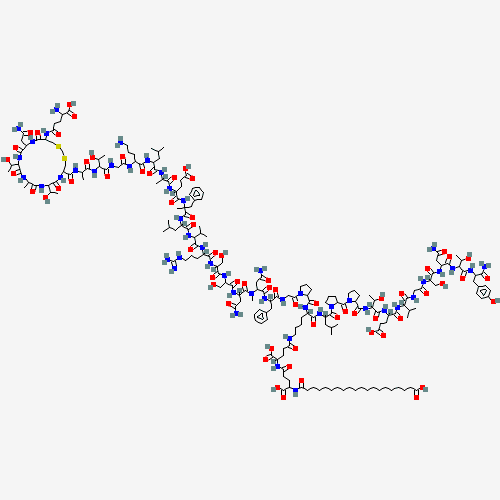
Eloralintide is a selective amylin receptor agonist - selective being the operative word, since amylin signals through receptor complexes built on the calcitonin receptor and earlier analogues hit both. Its phase 2 trial is the reason the amylin class is now taken seriously on its own: 48 weeks of once-weekly dosing produced mean weight reductions of 18% at 6 mg and 20% at 9 mg, against 0.4% on placebo [1]. That is semaglutide territory, reached without touching the GLP-1 receptor at all. The adverse-effect profile is also different rather than simply lighter: nausea peaked at 64% in one dose group, and fatigue - which is not a prominent incretin effect - reached 43-46% at the higher doses. There is no phase 3 data, and no cardiovascular or long-term evidence of any kind.
The trial that showed amylin agonism alone can match incretin-level weight loss, with a distinct side-effect signature and nothing beyond phase 2 behind it.
- meta-analysis
- RCT
- trial
- observational
- preclinical / case
- review / patent / other
- retracted
- + 20% mean weight loss at 48 weeks on amylin agonism alone
- + Clear dose response from 9% at 1 mg to 20% at 9 mg
- + Selective for amylin receptors rather than also hitting the calcitonin receptor
- + A mechanism entirely independent of GLP-1, so it should combine with incretins
- − Phase 2 only; no phase 3, no outcome data, no long-term exposure
- − Nausea up to 64% and fatigue up to 46% in the higher-dose groups
- − Only 263 participants, all in the USA
- − Fatigue is a dose-related effect not typical of incretin drugs
Overview
Why selectivity matters. Amylin signals through receptor complexes formed when the calcitonin receptor associates with receptor activity-modifying proteins. Earlier amylin analogues, including pramlintide and to a degree cagrilintide, engage the calcitonin receptor as well. Eloralintide was designed to be selective for the amylin receptors, and the discovery-to-proof-of-concept paper traces that engineering through in vitro selectivity assays to the first human data [2][3].
The phase 2 result. 263 adults across 46 US research centres, with a mean baseline weight of 109.1 kg and BMI of 39.1, were randomised to placebo or one of six eloralintide regimens for 48 weeks. Mean weight change was -9% at 1 mg, -12% at 3 mg, -18% at 6 mg and -20% at 9 mg, against -0.4% on placebo. The 6-9 mg escalation also reached -20%; the 3-9 mg escalation reached -16% [1].
Twenty percent on a single mechanism that does not touch the GLP-1 receptor is the headline. Semaglutide 2.4 mg gives about 15% over 68 weeks [4]; CagriSema, which combines semaglutide with an amylin analogue, gives 20.4% [5]. Eloralintide alone reached that in 48 weeks.
The side-effect signature is its own. Nausea ran 11% at 1 mg, 13% at 3 mg, 64% at 6 mg, 33% at 9 mg, 54% at 6-9 mg and 25% at 3-9 mg, against 14% on placebo - notably not monotonic in dose, which points to escalation schedule rather than exposure as the driver. Fatigue was the other prominent effect, at 0%, 13%, 29%, 43%, 46% and 21% against 12% on placebo [1]. Fatigue at that rate is not a typical incretin finding and is worth watching.
What does not exist. No phase 3. No cardiovascular outcome data. No exposure beyond 48 weeks. No trial outside the United States. No published data in type 2 diabetes - the phase 2 trial excluded it. The cardiovascular implications of the mechanism have been reviewed [6] and network meta-analyses have started placing the amylin agents against each other [7], but review articles are not evidence of outcomes.
Mechanism
Amylin is co-secreted with insulin after a meal and produces satiation through amylin receptors in the area postrema and nucleus tractus solitarius - brainstem regions that sit outside the blood-brain barrier and sample circulating signals directly. The pathway is distinct from GLP-1's, which is the entire strategic point: two independent satiety signals should add rather than saturate [8][9].
The amylin receptors are heterodimers of the calcitonin receptor with receptor activity-modifying proteins 1, 2 or 3. That shared calcitonin receptor core is what makes selectivity hard, and achieving it is what eloralintide's discovery programme was for [2]. Whether selectivity translates into a better clinical profile than cagrilintide's is not something the existing trials can answer - the two have never been compared.
The fatigue signal is the most mechanistically interesting adverse effect. It is dose-related, it was absent at the lowest dose and reached 43-46% at the highest, and it is not a prominent feature of incretin therapy. Nothing in the published work explains it.
- Amylin receptorsactivatesstrong
- Body weightblocksdose-dependent at 48 weeks: -9% (1 mg), -12% (3 mg), -18% (6 mg), -20% (9 mg), -20% (6-9 mg escalation) and -16% (3-9 mg escalation), against -0.4% on placebo [1]strong
- Appetite and satiationblocksstrong
- Cardiometabolic risk markersmodulatesthe cardiovascular implications of selective amylin agonism have been reviewed, but no outcome trial exists and the phase 2 trial was not designed to test them [6]weak
Formulation
how the form changes blood levelsA once-weekly subcutaneous injection. The discovery paper describes the translational work from in vitro receptor assays through to clinical proof of concept [2]; no formulation details beyond subcutaneous weekly dosing have been published.
Dosing
as studied or commonly reported; not a recommendationDoses below are what studies used or, where marked, what is commonly reported. None is a recommendation.
Subcutaneous injection
- 1 mg, 3 mg, 6 mg or 9 mg263 US adults with obesity, or overweight with a weight-related condition, without type 2 diabetesonce weekly · 48 weekshuman study[1]
- escalation 6-9 mg or 3-9 mgthe same trial, testing whether escalation improves tolerability without losing effectonce weekly · 48 weekshuman study[1]
- single and multiple ascending doses
- Notes
- Only phase 2 doses exist. The trial deliberately compared fixed dosing against two escalation schemes: 9 mg fixed and 6-9 mg escalation both reached 20%, while 3-9 mg escalation reached 16%, so escalation did not cost effect when it started high enough [1]. Nausea did not rise monotonically with dose - it was 64% at 6 mg and 33% at 9 mg - which suggests the escalation schedule mattered more than the final dose.
Pharmacokinetics
what the body does with it| Half-life | Long enough for once-weekly subcutaneous dosing; described as long-acting in the phase 1 proof-of-concept work, which did not publish a figure in its abstract [3] |
|---|---|
| Onset | Dose escalation schemes were tested explicitly in phase 2; weight loss accumulated across the full 48 weeks [1] |
| Bioavailability | Subcutaneous only; a peptide |
| Metabolism | Not characterised in the published abstracts beyond the discovery and phase 1 reports [2] |
Safety
risks and cautions, not medical adviceOnly 48 weeks of phase 2 data in 263 people exist, which frames everything below.
Nausea peaked at 64% in the 6 mg group and was 33% at 9 mg, against 14% on placebo - a non-monotonic pattern that implicates the escalation schedule [1]. Fatigue reached 43% at 9 mg and 46% on the 6-9 mg escalation against 12% on placebo. The trial describes the drug as generally well tolerated; at those rates that description depends heavily on what participants chose to endure for 20% weight loss, and the abstract does not report discontinuation rates.
Everything else is unknown. No cardiovascular outcome data. No data on lean mass, bone or long-term metabolic adaptation - the last of which matters more for a brainstem-acting satiety drug than for most. Amylin agonism has far less cumulative human exposure than GLP-1 agonism, with pramlintide the main precedent [8].
The class perioperative gastric-emptying precaution should be assumed to apply [10][11].
Interactions
documented pairs only, not exhaustiveNo interaction studies have been published. The combination the mechanism invites, amylin plus incretin, has been demonstrated for cagrilintide with semaglutide [5] but not for eloralintide with anything. Network meta-analyses comparing the amylin-based agents have begun to appear [7], but these are indirect comparisons, not trials.
- CagrilintideavoidBoth are amylin receptor agonists; there is no rationale for combining them [8].
- SemaglutidecautionAmylin and GLP-1 agonism act through different pathways and the cagrilintide-semaglutide combination shows they add [5]. Eloralintide has not been combined with anything in a published trial.
History
Eloralintide (LY3841136) came out of Eli Lilly. The discovery-to-clinical-proof-of-concept paper and the phase 1 results were published in 2025 and 2026 [2][3], and the 48-week phase 2 trial appeared in the Lancet in December 2025 [1]. It arrived into a field that had just been opened by cagrilintide and CagriSema [5], and the reviews that followed treat amylin as the next major class in weight-loss therapy [9][12].
FAQ
- How much weight did eloralintide produce?
- 20% at 9 mg over 48 weeks, against 0.4% on placebo, in phase 2 [1].
- Is that better than semaglutide?
- On the face of the numbers, yes - semaglutide 2.4 mg gives about 15% over 68 weeks [4]. But these are different trials in different populations and eloralintide has no phase 3 data at all.
- What does selective mean here?
- Amylin receptors are built on the calcitonin receptor, and earlier amylin analogues engaged both. Eloralintide was engineered for selectivity over the calcitonin receptor [2].
- Why does it cause fatigue?
- Nobody has explained it. It was dose-related, absent at 1 mg and present in 43-46% at the highest doses, and it is not a prominent effect of incretin drugs [1].
References
entry last reviewed 2026-09-19- [1]Eloralintide, a selective amylin receptor agonist for the treatment of obesity: a 48-week phase 2, multicentre, double-blind, randomised, placebo-controlled trial.Billings LK, Hsia S, Bays H et al.Lancet 2025RCT · humanPMID 41207310◌ unreviewed
- [2]Eloralintide (LY3841136), a novel amylin receptor agonist for the treatment of obesity: From discovery to clinical proof of concept.Briere DA, Qu H, Lansu K et al.Mol Metab 2025RCT · humanPMID 41109426◌ unreviewed
- [3]Eloralintide, a selective, long-acting amylin receptor agonist for treatment of obesity: Phase 1 proof of concept.Bhattachar S, Tham LS, Tidemann-Miller B et al.Diabetes Obes Metab 2026RCT · humanPMID 41559929◌ unreviewed
- [4]Once-Weekly Semaglutide in Adults with Overweight or Obesity.Wilding JPH, Batterham RL, Calanna S et al.N Engl J Med 2021RCT · humanPMID 33567185◌ unreviewed
- [5]Coadministered Cagrilintide and Semaglutide in Adults with Overweight or Obesity.Garvey WT, Blüher M, Osorto Contreras CK et al.N Engl J Med 2025RCT · humanPMID 40544433◌ unreviewed
- [6]Cardiometabolic Risk Reduction Through Selective Amylin Receptor Agonism: Emerging Cardiovascular Implications of Eloralintide.Sigalov A, Frishman WHCardiol Rev 2026reviewPMID 42745233◌ unreviewed
- [7]Novel Amylin-Based Therapies for Weight Management in Adults With Overweight or Obesity Without Diabetes: A Network Meta-Analysis.Kamrul-Hasan ABM, Khalil I, Mahajan K et al.Endocrinol Diabetes Metab 2026reviewPMID 42175595◌ unreviewed
- [8]Long-acting amylin-related peptides as therapies for obesity and type 2 diabetes.Bailey CJ, Flatt PR, Conlon JMPeptides 2026reviewPMID 41747885◌ unreviewed
- [9]Amylin Analogs: The Next Major Class of Weight Loss Therapy: A Review of Experimental Data and Early-Phase Clinical Trials.Alhazmi A, le Roux CWDiabetes Obes Metab 2026reviewPMID 42452898◌ unreviewed
- [10]Glucagon-Like Peptide-1 Receptor Agonist Use and Residual Gastric Content Before Anesthesia.Sen S, Potnuru PP, Hernandez N et al.JAMA Surg 2024observational · humanPMID 38446466◌ unreviewed
- [11]Association between glucagon-like peptide-1 receptor agonist use and peri-operative pulmonary aspiration: a systematic review and meta-analysis.Elkin J, Rele S, Sumithran P et al.Anaesthesia 2025meta-analysis · humanPMID 40230298◌ unreviewed
- [12]Beyond GLP-1: Amylin-based pharmacotherapy and the search for better-tolerated weight-loss drugs.Fischer SL, Borner TPharmacol Res 2026reviewPMID 42586227◌ unreviewed