Survodutide
also BI-456906 · GLXC-27923
Survodutide activates the glucagon receptor as well as the GLP-1 receptor. Adding glucagon agonism to an incretin is counterintuitive - glucagon raises blood sugar - but it also raises energy expenditure and acts directly on the liver, and in a weight-losing context the GLP-1 arm covers the glycaemic downside. The phase 2 obesity trial gave 14.9% weight loss at 4.8 mg over 46 weeks against 2.8% on placebo [1]. The more striking result is hepatic: in a phase 2 trial in MASH, 48 weeks improved histological steatohepatitis without worsening fibrosis in 47-62% of participants against 14% on placebo [2], and a phase 3 trial in MASLD found 84.2% achieved a 30% or greater reduction in liver fat against 24.3% [3]. The tolerability cost is high: vomiting in 41% against 4% on placebo in the MASH trial.
A glucagon/GLP-1 dual agonist whose weight numbers are competitive and whose liver data are the real story, bought with some of the heaviest gastrointestinal burden in the class.
- meta-analysis
- RCT
- trial
- observational
- preclinical / case
- review / patent / other
- retracted
- + 14.9% weight loss at 46 weeks at the highest phase 2 dose
- + Histological improvement in MASH without worsening fibrosis, dose-dependently
- + 84.2% achieved at least 30% liver fat reduction in a phase 3 MASLD trial
- + Glucagon agonism raises energy expenditure and acts directly on hepatic fat
- − Vomiting in 41% and nausea in 66% in the MASH trial
- − Only 60.4% completed the 46-week phase 2 obesity trial
- − Glucagon receptor agonism raises theoretical concerns about glycaemia and heart rate
- − No cardiovascular outcome trial has reported
Overview
The design logic. Glucagon and GLP-1 come from the same precursor and have opposite effects on blood glucose. Deliberately agonising the glucagon receptor sounds like a mistake until you look at what else glucagon does: it raises energy expenditure, promotes hepatic fat oxidation and reduces liver fat. Pair it with a GLP-1 agonist strong enough to control glycaemia and you get weight loss driven from both ends - less intake and more expenditure - plus a direct action on the liver that pure incretins do not have [4].
Obesity. The phase 2 dose-finding trial randomised 386 adults to survodutide 0.6, 2.4, 3.6 or 4.8 mg weekly or placebo for 46 weeks. Mean weight changes were -6.2%, -12.5%, -13.2% and -14.9% respectively; the placebo group changed -2.8%. Adverse events affected 91% of survodutide recipients against 75% on placebo, primarily gastrointestinal [1]. A phase 3 obesity programme is underway [5][6].
Diabetes. In 413 people with type 2 diabetes over 16 weeks, survodutide reduced HbA1c by around 1.5-1.7 percentage points, comparable to open-label semaglutide 1.0 mg in the same trial - and produced greater weight loss than semaglutide at doses of 1.8 mg weekly and above [7].
The liver, which is the point. In 293 adults with biopsy-confirmed MASH and fibrosis, 48 weeks of survodutide produced improvement in steatohepatitis without worsening fibrosis in 47% at 2.4 mg, 62% at 4.8 mg and 43% at 6.0 mg, against 14% on placebo. Liver fat fell by at least 30% in 57-67% against 14%, and fibrosis improved by at least one stage in 34-36% against 22% [2]. A phase 3 trial in obesity with MASLD found 84.2% reached a 30% or greater liver fat reduction against 24.3% on placebo, with 12.2% weight loss against 1.0% [3]. Mediation analysis of the phase 2 data has since tried to separate the weight-dependent from the weight-independent liver effects [8].
A phase 1 study specifically in people with cirrhosis established tolerability and pharmacokinetics in that population [9], which matters because MASH patients are exactly who would receive it.
Mechanism
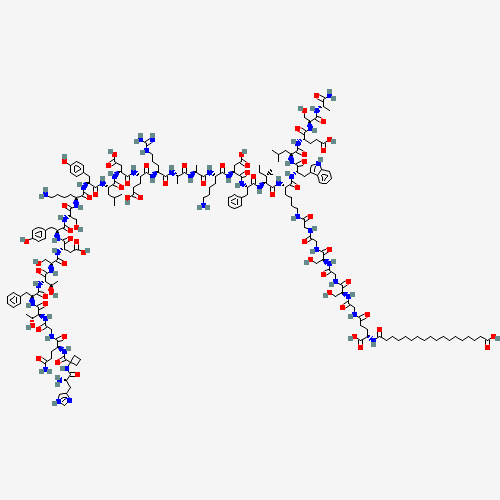
Survodutide is an acylated peptide agonist at both the glucagon receptor and the GLP-1 receptor, with a fatty diacid for albumin binding and weekly dosing [4]. The preclinical characterisation work set out to find a balance of the two activities that gave the metabolic benefit of glucagon without the glycaemic penalty [4].
Two arms, two mechanisms. GLP-1 reduces intake and secures glycaemic control. Glucagon raises resting energy expenditure and drives hepatic fatty acid oxidation and lipolysis. In a compound where weight is falling, the glucagon arm's tendency to raise glucose is more than offset by the GLP-1 arm and by the weight loss itself - which is why HbA1c fell rather than rose in the diabetes trial [7].
The liver effect is where the design pays off. GLP-1 agonists reduce liver fat largely through weight loss; glucagon acts on hepatocytes directly. Whether survodutide's histological benefit is more than a weight effect is the question the mediation analysis addresses [8], and the phase 3 MASLD trial's separation of liver fat reduction (84.2% versus 24.3%) from body weight change (-12.2% versus -1.0%) is at least suggestive that it is [3].
- GLP-1 receptoractivatessupplies the appetite suppression and glucose-dependent insulin secretion, and offsets the hyperglycaemic tendency of the glucagon arm [4]strong
- Glucagon receptoractivatesstrong
- Liver fat and steatohepatitisblocksstrong
- Body weightblocksstrong
- HbA1cblocksreductions of about 1.5-1.7 percentage points at 16 weeks in type 2 diabetes, comparable to semaglutide 1.0 mg in the same trial, with greater weight loss than semaglutide at doses of 1.8 mg weekly and above [7]strong
Formulation
how the form changes blood levelsA once-weekly subcutaneous injection. Acylation to a C18 fatty diacid gives albumin binding and the weekly half-life, the same strategy used in semaglutide [4].
Dosing
as studied or commonly reported; not a recommendationDoses below are what studies used or, where marked, what is commonly reported. None is a recommendation.
Subcutaneous injection
- 0.6, 2.4, 3.6 or 4.8 mg
- up to 2.7 mg weekly or 1.8 mg twice weekly413 adults with type 2 diabetes, against placebo and open-label semaglutideonce or twice weekly · 16 weekshuman study[7]
- 2.4, 4.8 or 6.0 mg
- 6.0 mgadults with obesity and MASLD, phase 3 (SYNCHRONIZE-MASLD)once weekly · not stated in the abstracthuman study[3]
- from 0.3 mg, escalatingpeople with cirrhosis; pharmacokinetics and tolerabilitysingle and repeated doses · phase 1human study[9]
- Notes
- Escalation is long and the completion rates show why: only 233 of 386 participants (60.4%) finished the 46-week phase 2 obesity trial, though dropout was similar on placebo [1]. The phase 3 obesity programme (SYNCHRONIZE) is ongoing; baseline characteristics for the type 2 diabetes arm have been published [5].
Pharmacokinetics
what the body does with it| Half-life | Supports once-weekly subcutaneous dosing; the molecule is acylated to a fatty diacid for albumin binding in the same way as semaglutide [4] |
|---|---|
| Onset | Dose escalation over months; weight loss was still accumulating at 46 weeks in phase 2 [1] |
| Metabolism | Peptide catabolism plus beta-oxidation of the acyl chain. A dedicated phase 1 trial characterised pharmacokinetics in people with cirrhosis and found the drug tolerable in that population [9] |
Safety
risks and cautions, not medical adviceThe gastrointestinal burden is at the high end of the class. In the MASH trial, nausea occurred in 66% against 23% on placebo, diarrhoea in 49% against 23%, and vomiting in 41% against 4%; serious adverse events were 8% against 7% [2]. In the phase 2 obesity trial, adverse events affected 91% of survodutide recipients against 75% on placebo, primarily gastrointestinal in 75% against 42% [1]. Completion of that 46-week trial was 61% on drug and 60% on placebo - so the dropout was not obviously drug-driven, but the numbers are low on both arms.
The glucagon question. Glucagon receptor agonism raises the theoretical possibility of worse glycaemia and a higher heart rate. In the trials to date, HbA1c fell rather than rose [7]. Heart rate effects have not been a headline finding in the published abstracts, but this is a mechanism that warrants long-term cardiovascular data, and none exists: no cardiovascular outcome trial has reported.
A phase 1 trial in cirrhosis found the drug tolerable in people with impaired liver function [9], which is reassuring for the population it is aimed at.
Class-wide precautions - perioperative gastric emptying, hypoglycaemia with insulin or sulfonylureas - should be assumed [10][11].
- Vomiting in 41% and nausea in 66% in the MASH trial [2]
- Only 60.4% completed the 46-week phase 2 obesity trial, on drug and placebo alike [1]
- No cardiovascular outcome trial has reported, and glucagon agonism is a mechanism that warrants one
- The 6.0 mg dose performed no better than 4.8 mg on MASH histology [2]
Interactions
documented pairs only, not exhaustiveNo dedicated interaction studies have been published. In the phase 2 diabetes trial, semaglutide was an open-label comparator rather than a combination [7].
Class considerations apply: delayed gastric emptying slows oral drug absorption, and combination with insulin or a sulfonylurea raises hypoglycaemia risk.
- SemaglutideavoidOverlapping GLP-1 receptor agonism; semaglutide was an open-label comparator in the phase 2 diabetes trial, not a combination partner [7].
- RetatrutideavoidBoth agonise the glucagon and GLP-1 receptors; retatrutide adds GIP. Combining them stacks the same mechanisms [4].
History
Survodutide (BI 456906) was developed by Boehringer Ingelheim with Zealand Pharma. The preclinical candidate-selection work was published in 2024 [4], alongside phase 2 results in obesity [1] and type 2 diabetes [7], and the phase 2 MASH trial in the New England Journal of Medicine [2]. Phase 3 trials in obesity (SYNCHRONIZE) and MASLD followed [3][5][6].
FAQ
- Why add glucagon agonism to a weight-loss drug?
- Glucagon raises energy expenditure and drives hepatic fat oxidation. The GLP-1 arm offsets its tendency to raise blood glucose, so HbA1c fell rather than rose in the diabetes trial [4][7].
- How much weight does it cause?
- 14.9% at 4.8 mg over 46 weeks in phase 2, against 2.8% on placebo [1].
- What is the liver result?
- In biopsy-confirmed MASH, 48 weeks improved steatohepatitis without worsening fibrosis in up to 62% against 14% on placebo, and fibrosis improved by a stage in 34-36% against 22% [2].
- Is it tolerable?
- Less so than semaglutide, on the published numbers: vomiting in 41% against 4% on placebo in the MASH trial [2].
References
entry last reviewed 2026-09-19- [1]Glucagon and GLP-1 receptor dual agonist survodutide for obesity: a randomised, double-blind, placebo-controlled, dose-finding phase 2 trial.le Roux CW, Steen O, Lucas KJ et al.Lancet Diabetes Endocrinol 2024RCT · humanPMID 38330987◌ unreviewed
- [2]A Phase 2 Randomized Trial of Survodutide in MASH and Fibrosis.Sanyal AJ, Bedossa P, Fraessdorf M et al.N Engl J Med 2024RCT · humanPMID 38847460◌ unreviewed
- [3]Survodutide in adults with obesity and metabolic dysfunction-associated steatotic liver disease: SYNCHRONIZE-MASLD, a randomized, double-blind, placebo-controlled phase 3 trial.Kaplan LM, Startseva E, le Roux CW et al.Nat Med 2026RCT · humanPMID 42252333◌ unreviewed
- [4]The dual GCGR/GLP-1R agonist survodutide: Biomarkers and pharmacological profiling for clinical candidate selection.Thomas L, Martel E, Rist W et al.Diabetes Obes Metab 2024preclinical · animalPMID 38560764◌ unreviewed
- [5]Baseline characteristics in the SYNCHRONIZE™-2 randomized phase 3 trial of survodutide, a glucagon receptor/GLP-1 receptor dual agonist, for obesity in people with type 2 diabetes.Wharton S, le Roux CW, Bozkurt B et al.Diabetes Obes Metab 2026RCT · humanPMID 41216778◌ unreviewed
- [6]Survodutide Once Weekly for the Treatment of Adults with Obesity.le Roux CW, Wharton S, Startseva E et al.N Engl J Med 2026RCT · humanPMID 42253238◌ unreviewed
- [7]Dose-response effects on HbA1c and bodyweight reduction of survodutide, a dual glucagon/GLP-1 receptor agonist, compared with placebo and open-label semaglutide in people with type 2 diabetes: a randomised clinical trial.Blüher M, Rosenstock J, Hoefler J et al.Diabetologia 2024RCT · humanPMID 38095657◌ unreviewed
- [8]Weight reduction-dependent/-independent effects of survodutide on liver endpoints: Mediation analysis of a phase 2 trial in MASH.Noureddin M, Sanyal AJ, Bedossa P et al.Hepatology 2026clinical trial · humanPMID 42545725◌ unreviewed
- [9]Efficacy, tolerability and pharmacokinetics of survodutide, a glucagon/glucagon-like peptide-1 receptor dual agonist, in cirrhosis.Lawitz EJ, Fraessdorf M, Neff GW et al.J Hepatol 2024clinical trial · humanPMID 38857788◌ unreviewed
- [10]Glucagon-Like Peptide-1 Receptor Agonist Use and Residual Gastric Content Before Anesthesia.Sen S, Potnuru PP, Hernandez N et al.JAMA Surg 2024observational · humanPMID 38446466◌ unreviewed
- [11]Association between glucagon-like peptide-1 receptor agonist use and peri-operative pulmonary aspiration: a systematic review and meta-analysis.Elkin J, Rele S, Sumithran P et al.Anaesthesia 2025meta-analysis · humanPMID 40230298◌ unreviewed