Retatrutide
also LY3437943 · Triple G · GTPL13769
Retatrutide is an experimental once-weekly injected peptide from Eli Lilly that activates three hormone receptors: GIP, GLP-1 and glucagon [1]. In a 48-week phase 2 trial in adults with obesity, the 12 mg dose lowered body weight by 24.2%, against 2.1% on placebo [2]. The first phase 3 trial, in type 2 diabetes, confirmed large falls in HbA1c and weight [3]. It is not approved; in the cited literature its phase 3 obesity trials are still under way [4].
Very large weight losses in phase 2 and confirmed glucose effects in phase 3, but the obesity phase 3 results, long-term safety data and any approval are still to come.
- meta-analysis
- RCT
- trial
- observational
- preclinical / case
- review / patent / other
- retracted
- + About 24% average weight loss at 48 weeks on the top dose in phase 2
- + Large HbA1c reductions in type 2 diabetes, confirmed in phase 3
- + Liver fat fell by more than 80% on higher doses in people with fatty liver
- − Dose-related nausea, vomiting and diarrhoea, reduced by starting at a lower dose
- − Heart rate rises with dose
- − Not approved; long-term safety data are not yet published
Overview
Retatrutide (LY3437943) is a single peptide that activates the glucagon, GIP and GLP-1 receptors. In a phase 1 study its pharmacokinetics supported once-weekly dosing, and weight was still reduced 43 days after a single dose [1]. It is in development for type 2 diabetes, obesity and related complications [3].
Obesity. In a 48-week phase 2 trial, 338 adults with obesity or overweight took 1, 4, 8 or 12 mg or placebo. Weight fell by 8.7%, 17.1%, 22.8% and 24.2%, against 2.1% on placebo. On 12 mg, 83% lost at least 15% of their weight [2]. A meta-analysis of the three randomised trials then available (878 people) put the extra weight reduction over placebo at 14.3%, with systolic blood pressure 9.9 mmHg lower [5]. The phase 3 TRIUMPH programme, with more than 5,800 participants, is testing it for obesity, sleep apnoea and knee osteoarthritis [4].
Type 2 diabetes. In a 36-week phase 2 trial, HbA1c fell by up to 2.02 points on 12 mg, against 1.41 on dulaglutide, and weight fell by up to 16.9% [6]. In the first phase 3 trial (537 people on diet and exercise alone), HbA1c fell by 1.69–1.94 points against 0.81 on placebo, and weight by 11.5–15.3% against 2.6% over 40 weeks [3].
Body composition and liver. In a substudy, total fat mass fell by 23–26% on 8 or 12 mg. The share of weight lost as lean mass was similar to other obesity treatments [7]. In participants with fatty liver, liver fat fell by 81–82% on 8 or 12 mg at 24 weeks, and 79–86% reached normal liver fat, against none on placebo [8].
Mechanism
Retatrutide combines three hormone signals in one molecule. In cell assays it acts more strongly at the GIP receptor than at the glucagon and GLP-1 receptors [1]. It is less potent than the body's own glucagon and GLP-1 (0.3 and 0.4 times as active) and 8.9 times as potent as native GIP [8].
In obese mice, GIP and GLP-1 receptor activity cut food intake, and glucagon receptor activity added a rise in energy expenditure. Together they caused more weight loss [1]. In the fatty-liver substudy, the drop in liver fat tracked weight loss and improvements in insulin sensitivity and fat metabolism [8].
- GIP receptoractivatesabout 8.9 times as potent as native GIP in cell assays [8]strong
- GLP-1 receptoractivatesstrong
- Glucagon receptoractivatesmoderate
Dosing
as studied or commonly reported; not a recommendationDoses below are what studies used or, where marked, what is commonly reported. None is a recommendation.
Subcutaneous injection
- 1, 4, 8 or 12 mg (starting at 2 or 4 mg)
- 0.5, 4, 8 or 12 mg (starting at 2 or 4 mg)
- 4, 9 or 12 mg
- 0.5 mg up to 12 mg by stepwise escalation
- Timing and food
- Once weekly. In phase 2, gastrointestinal side effects were partly reduced by starting at 2 mg rather than 4 mg [2]. The phase 3 obesity trials reach 4, 9 or 12 mg through a fixed escalation, and allow a permanent dose reduction for side effects [4].
- Time to effect
- Weight was still falling at 48 weeks on the higher doses (22.8–24.2%, against 17.3–17.5% at 24 weeks) [2].
- Notes
- No approved dose exists. Retatrutide sold online is not the trial product.
Pharmacokinetics
what the body does with it| Half-life | About 6 days [9] |
|---|---|
| Steady state | Exposure rises in proportion to dose [9] |
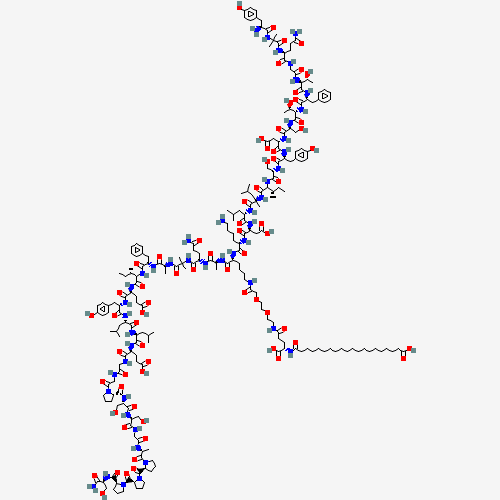
| Metabolism | The peptide is joined to a fatty diacid chain, and its long half-life suits once-weekly dosing [8] |
Safety
risks and cautions, not medical adviceSide effects are mainly gastrointestinal and dose-related. They are mostly mild to moderate, and a lower starting dose partly reduced them [2]. In type 2 diabetes, 35% of retatrutide users had gastrointestinal events, ranging from 13% on 0.5 mg to 50% on the fastest 8 mg escalation [6]. In phase 3, 2–5% stopped because of side effects, against none on placebo, and no severe hypoglycaemia occurred [3].
Heart rate rose with dose, peaked at 24 weeks and then declined [2]. The fatty-liver substudy found no signs of liver toxicity through 48 weeks [8]. The phase 3 programme monitors ECGs, pancreatic markers, calcitonin, and depression and suicidal thoughts [4]. Long-term outcome data have not been published.
- Not approved for any use; it is still in phase 3 trials [4]
- Products sold online as retatrutide are unregulated and their content is unverified
Interactions
documented pairs only, not exhaustive- Tirzepatideavoid
FAQ
- Is retatrutide approved?
- No. It is still being tested in phase 3 trials for obesity, sleep apnoea, knee osteoarthritis and type 2 diabetes [3][4].
- How is it different from tirzepatide?
- It also activates the glucagon receptor. In mice this added a rise in energy expenditure on top of reduced food intake [1].
- How much weight did people lose?
- In the phase 2 obesity trial, 24.2% on average after 48 weeks on 12 mg, against 2.1% on placebo [2].
References
entry last reviewed 2026-09-19- [1]LY3437943, a novel triple glucagon, GIP, and GLP-1 receptor agonist for glycemic control and weight loss: From discovery to clinical proof of concept.Coskun T, Urva S, Roell WC et al.Cell Metab 2022clinical trial · humanPMID 35985340◌ unreviewed
- [2]Triple-Hormone-Receptor Agonist Retatrutide for Obesity - A Phase 2 Trial.Jastreboff AM, Kaplan LM, Frías JP et al.N Engl J Med 2023RCT · humanPMID 37366315◌ unreviewed
- [3]Efficacy and safety of retatrutide, a GIP, GLP-1, and glucagon receptor agonist, in people with type 2 diabetes and inadequate glycaemic control with diet and exercise (TRANSCEND-T2D-1): a double-blind, randomised, phase 3 trial.Bajaj HS, Welch M, Shah P et al.Lancet 2026RCT · humanPMID 42250575◌ unreviewed
- [4]Retatrutide for the treatment of obesity, obstructive sleep apnea and knee osteoarthritis: Rationale and design of the TRIUMPH registrational clinical trials.Giblin K, Kaplan LM, Somers VK et al.Diabetes Obes Metab 2026otherPMID 41090431◌ unreviewed
- [5]Efficacy and safety of retatrutide, a novel GLP-1, GIP, and glucagon receptor agonist for obesity treatment: a systematic review and meta-analysis of randomized controlled trials.Abdrabou Abouelmagd A, Abdelrehim AM, Bashir MN et al.Proc (Bayl Univ Med Cent) 2025meta-analysis · humanPMID 40291085◌ unreviewed
- [6]Retatrutide, a GIP, GLP-1 and glucagon receptor agonist, for people with type 2 diabetes: a randomised, double-blind, placebo and active-controlled, parallel-group, phase 2 trial conducted in the USA.Rosenstock J, Frias J, Jastreboff AM et al.Lancet 2023RCT · humanPMID 37385280◌ unreviewed
- [7]Effects of retatrutide on body composition in people with type 2 diabetes: a substudy of a phase 2, double-blind, parallel-group, placebo-controlled, randomised trial.Coskun T, Wu Q, Schloot NC et al.Lancet Diabetes Endocrinol 2025RCT · humanPMID 40609566◌ unreviewed
- [8]Triple hormone receptor agonist retatrutide for metabolic dysfunction-associated steatotic liver disease: a randomized phase 2a trial.Sanyal AJ, Kaplan LM, Frias JP et al.Nat Med 2024RCT · humanPMID 38858523◌ unreviewed
- [9]LY3437943, a novel triple GIP, GLP-1, and glucagon receptor agonist in people with type 2 diabetes: a phase 1b, multicentre, double-blind, placebo-controlled, randomised, multiple-ascending dose trial.Urva S, Coskun T, Loh MT et al.Lancet 2022RCT · humanPMID 36354040◌ unreviewed
- [10]Tirzepatide is an imbalanced and biased dual GIP and GLP-1 receptor agonist.Willard FS, Douros JD, Gabe MB et al.JCI Insight 2020preclinical · cellPMID 32730231◌ unreviewed