BPC-157
also Body Protection Compound 157 · Bepecin · PL 14736 · PL-10 · PLD-116
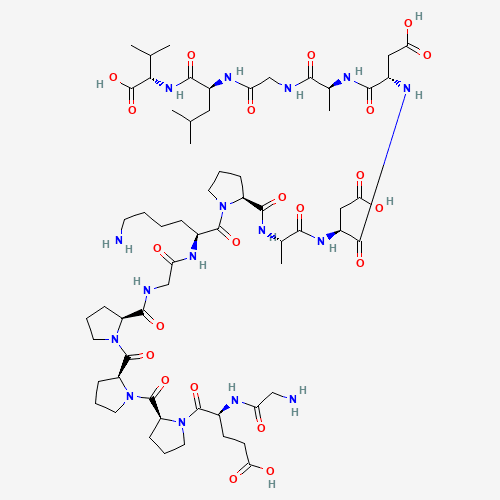
BPC-157 is a synthetic 15-amino-acid peptide, a fragment of a protein found in human gastric juice [1]. Clinicians and athletes increasingly use it for musculoskeletal injuries [2]. In rats it consistently speeds healing of many tissues [3]. Human data amount to three small, uncontrolled pilot reports [4], all by the same first author. It is not approved by the FDA and is banned in professional sport [2].
A large and consistently positive rodent literature, from a small number of research groups, with almost nothing in humans to show that it works or that it is safe.
- meta-analysis
- RCT
- trial
- observational
- preclinical / case
- review / patent / other
- retracted
- + Faster healing of tendon, ligament, muscle and bone injuries in rodents
- + Promotes blood-vessel growth and tendon-cell migration in lab studies
- + No adverse events reported in three small human pilot reports
- − Human evidence is three small uncontrolled reports by one author
- − No clinical safety data
- − Unregulated products; banned in sport
Overview
BPC-157 is a pentadecapeptide, a 15-amino-acid stretch of a larger "body protection compound" first isolated from human gastric juice [1]. Its sequence is GEPPPGKPADDAGLV [5]. A 2006 review lists the development codes PL 10, PLD 116 and PL 14736 and describes it as safe in trials for inflammatory bowel disease, but gives no trial data [6].
Animal evidence. A 2025 systematic review from an orthopaedic sports medicine perspective found 36 studies: 35 preclinical and one clinical. In animals, BPC-157 improved functional, structural and biomechanical outcomes after muscle, tendon, ligament and bone injuries [2]. An earlier review noted that every study had been positive, but that most used small rodents and came from only a handful of research groups [3].
Human evidence. Three pilot reports exist. All share a first author and were done in private clinics [7][8][9]:
- A retrospective phone survey of 16 people who had had knee injections: 11 of 12 given BPC-157 alone reported significant pain relief. No standard measures of pain or function were used [7].
- Twelve women with interstitial cystitis who had not responded to pentosan polysulfate had BPC-157 injected into the bladder wall. Ten reported complete resolution of symptoms. There was no control group [8].
- Two adults received intravenous infusions of 10 mg and 20 mg on consecutive days, with no changes in heart, liver, kidney, thyroid or glucose markers [9].
It is not approved by the US FDA and is banned in professional sport, yet clinicians and athletes increasingly use it [2].
Mechanism
Lab and rodent studies point to several pathways. BPC-157 increased the density of new blood vessels in chick embryo and endothelial tube assays. In human endothelial cells it raised VEGFR2 levels and activated the VEGFR2-Akt-eNOS pathway, and in rats with blocked leg arteries it sped the return of blood flow [10].
In rat tendon cultures it did not make fibroblasts divide faster. It sped their outgrowth from tendon explants, their migration and spreading, and their survival under oxidative stress. These effects involved activation of FAK and paxillin [1]. It also raised growth hormone receptor levels in the same cells, so that added growth hormone made them proliferate more [11]. Reviews also describe effects on nitric oxide signalling and inflammatory cytokines [2][4].
- VEGFR2activatesraised VEGFR2 expression and internalisation and switched on VEGFR2-Akt-eNOS signalling; more blood vessels in ischaemic rat hind limbs [10]moderate
Dosing
as studied or commonly reported; not a recommendationDoses below are what studies used or, where marked, what is commonly reported. None is a recommendation.
Intravenous
- 10 mg, then 20 mg the next daysafety pilot in 2 adults who had used IV BPC-157 beforeone-hour infusion on each of 2 days · 2 dayshuman study[9]
Intramuscular injection
- 20, 100 or 500 µg/kg (human equivalent ≈3.2, 16 or 81 µg/kg, or ≈0.19, 0.97 or 4.9 mg at 60 kg)
- 6, 30 or 150 µg/kg (human equivalent ≈3.2, 16 or 81 µg/kg, or ≈0.19, 0.97 or 4.9 mg at 60 kg)
Subcutaneous injection
- 200–500 µgtendon, ligament and muscle injuriesonce or twice daily · several weekscommonly reported, not from trials
- Notes
- In the interstitial cystitis pilot, 10 mg in total was injected around the inflamed area of the bladder wall during cystoscopy [8]. The knee-pain report injected it into the joint, but its abstract gives no dose and the full text is not on PubMed Central [7]. In animal studies, effective doses ranged from 6 to 50 µg/kg [12]. Animal doses do not translate into human doses. Animal rows show human equivalents; these are body-surface-area estimates [13][14], not doses tested in people.
Pharmacokinetics
what the body does with it| Half-life | Under 30 minutes in rats and dogs [12]; no human data |
|---|---|
| Bioavailability | After intramuscular injection, 14–19% in rats and 45–51% in dogs [12] |
| Metabolism | Rapidly broken into small peptide fragments, then single amino acids [12]. In plasma it forms a stable metabolite that can be detected in urine [5] |
| Excretion | Mainly in urine and bile, in rats [12] |
Safety
risks and cautions, not medical adviceThere are no clinical safety data beyond the pilot reports. Preclinical safety studies found no adverse effects across several organ systems [2]. The three human reports recorded no adverse events, but they involved 2 to 16 people, with no control groups and short or informal follow-up [7][8][9].
BPC-157 is widely available from unregulated sources, and reviewers warn of harm from unregulated manufacture and contamination, as well as from its unknown clinical safety [2][4]. Anti-doping labs have a urine test for it [5].
Interactions
documented pairs only, not exhaustive- Thymosin beta-4 (TB-4)compatibleThe two were injected together into the knee in 4 people in one retrospective report, and no interaction was described [7]. Nothing else is known.
- TB-500compatibleNo study has tested this pair. The one report that combined BPC-157 with thymosin beta-4 used the full protein, not TB-500 [7].
FAQ
- Has BPC-157 been tested in people?
- Only in three small, uncontrolled reports by the same first author, covering knee pain, interstitial cystitis and intravenous safety [7][8][9].
- How long does it last in the body?
- In rats and dogs its half-life is under 30 minutes [12]. It has not been measured in humans.
References
entry last reviewed 2026-09-19- [1]The promoting effect of pentadecapeptide BPC 157 on tendon healing involves tendon outgrowth, cell survival, and cell migration.Chang CH, Tsai WC, Lin MS et al.J Appl Physiol (1985) 2011preclinical · cellPMID 21030672◌ unreviewed
- [2]Emerging Use of BPC-157 in Orthopaedic Sports Medicine: A Systematic Review.Vasireddi N, Hahamyan H, Salata MJ et al.HSS J 2025reviewPMID 40756949◌ unreviewed
- [3]Gastric pentadecapeptide body protection compound BPC 157 and its role in accelerating musculoskeletal soft tissue healing.Gwyer D, Wragg NM, Wilson SLCell Tissue Res 2019reviewPMID 30915550◌ unreviewed
- [4]Regeneration or Risk? A Narrative Review of BPC-157 for Musculoskeletal Healing.McGuire FP, Martinez R, Lenz A et al.Curr Rev Musculoskelet Med 2025reviewPMID 40789979◌ unreviewed
- [5]Detection and in vitro metabolism of the confiscated peptides BPC 157 and MGF R23H.Cox HD, Miller GD, Eichner DDrug Test Anal 2017otherPMID 28035768◌ unreviewed
- [6]Stable gastric pentadecapeptide BPC 157 in trials for inflammatory bowel disease (PL-10, PLD-116, PL 14736, Pliva, Croatia). Full and distended stomach, and vascular response.Sikiric P, Seiwerth S, Brcic L et al.Inflammopharmacology 2006reviewPMID 17186181◌ unreviewed
- [7]Intra-Articular Injection of BPC 157 for Multiple Types of Knee Pain.Lee E, Padgett BAltern Ther Health Med 2021observational · humanPMID 34324435◌ unreviewed
- [8]Effect of BPC-157 on Symptoms in Patients with Interstitial Cystitis: A Pilot Study.Lee E, Walker C, Ayadi BAltern Ther Health Med 2024clinical trial · humanPMID 39325560◌ unreviewed
- [9]Safety of Intravenous Infusion of BPC157 in Humans: A Pilot Study.Lee E, Burgess KAltern Ther Health Med 2025clinical trial · humanPMID 40131143◌ unreviewed
- [10]Therapeutic potential of pro-angiogenic BPC157 is associated with VEGFR2 activation and up-regulation.Hsieh MJ, Liu HT, Wang CN et al.J Mol Med (Berl) 2017preclinical · animalPMID 27847966◌ unreviewed
- [11]Pentadecapeptide BPC 157 enhances the growth hormone receptor expression in tendon fibroblasts.Chang CH, Tsai WC, Hsu YH et al.Molecules 2014preclinical · cellPMID 25415472◌ unreviewed
- [12]Pharmacokinetics, distribution, metabolism, and excretion of body-protective compound 157, a potential drug for treating various wounds, in rats and dogs.He L, Feng D, Guo H et al.Front Pharmacol 2022preclinical · animalPMID 36588717◌ unreviewed
- [13]A simple practice guide for dose conversion between animals and human.Nair AB, Jacob SJ Basic Clin Pharm 2016reviewPMID 27057123◌ unreviewed
- [14]Dose translation from animal to human studies revisited.Reagan-Shaw S, Nihal M, Ahmad NFASEB J 2008reviewPMID 17942826◌ unreviewed