Larazotide
also Larazotida · Larazotide [USAN:INN] · AT-2347 · AT 2347 · larazotidum
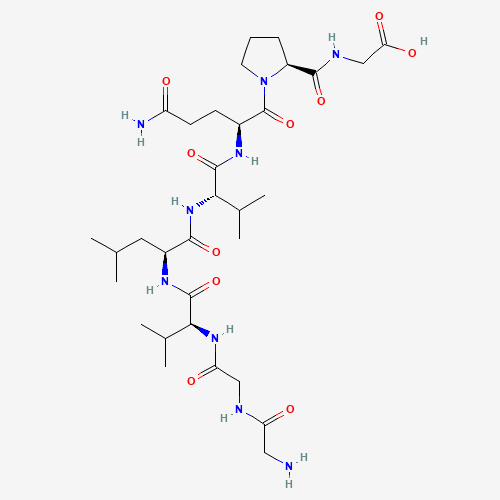
Larazotide is an eight-amino-acid peptide that tightens the junctions between intestinal cells. The logic for coeliac disease is specific: gluten peptides reach the lamina propria partly by passing between enterocytes through junctions that gluten itself loosens, so a drug that keeps those junctions shut should blunt the reaction [1]. It is the most clinically advanced non-dietary coeliac treatment there has been, and it has an unusual record: the trial that met its primary endpoint did so at the lowest of three doses, with 1 mg and 2 mg no different from placebo [2]. Earlier gluten-challenge trials failed on permeability, their actual primary endpoint, while showing symptom benefit [3][4]. A phase 3 programme followed and has not delivered an approved drug.
The furthest any non-dietary coeliac treatment has got, with a genuinely odd inverted dose response and no approval to show for two decades of trials.
- meta-analysis
- RCT
- trial
- observational
- preclinical / case
- review / patent / other
- retracted
- + Reduced symptoms in coeliac patients still symptomatic on a gluten-free diet, meeting the primary endpoint
- + Reduced gluten-induced symptom worsening during gluten challenge in several trials
- + Reduced gluten-related diarrhoea during gluten challenge in meta-analysis
- + Acts locally in the gut lumen with minimal systemic absorption, and safety comparable to placebo throughout
- − Effective only at the lowest dose tested; higher doses were no different from placebo
- − Failed its permeability endpoint in the gluten-challenge trials
- − Meta-analysis found no effect on the lactulose-to-mannitol ratio regardless of gluten status
- − No approved product, after phase 3
Overview
The mechanism, and why it is specific to coeliac disease. In coeliac disease, gluten peptides have to reach the lamina propria to be deamidated by tissue transglutaminase and trigger the T-cell response that damages the mucosa. One route is paracellular - between the epithelial cells, through tight junctions that gluten itself loosens via zonulin signalling. Larazotide acetate (AT-1001) is an eight-residue peptide that prevents those junctions from opening [1][3]. It is not an immunosuppressant and it does not degrade gluten; it is trying to keep the antigen out.
Gluten challenge trials. In 86 diet-controlled coeliac patients given 2.4 g of gluten daily for 14 days, the primary endpoint was the urinary lactulose/mannitol ratio - a measure of intestinal permeability. It failed. The measurement was highly variable in outpatients, the gluten challenge did not significantly raise it above the gluten-free control, and larazotide did not significantly change it. What the trial did find was that larazotide limited gluten-induced worsening of symptoms at some lower doses but not the higher dose, and that 2.4 g of gluten daily reliably produces symptoms [3]. A second gluten-challenge trial reported similarly [4].
The largest trial, and its strange result. 342 adults with coeliac disease who remained symptomatic after at least 12 months on a gluten-free diet were randomised to larazotide 0.5, 1 or 2 mg three times daily or placebo, with a placebo run-in and run-out. The primary endpoint - average on-treatment coeliac gastrointestinal symptom score - was met by the 0.5 mg dose (P = 0.022 by ANCOVA, P = 0.005 by mixed model). That dose also gave 26% fewer symptomatic days, 31% more improved days, and reduced headache and tiredness. The 1 mg and 2 mg doses were no different from placebo for any endpoint. Safety was comparable with placebo [2].
An inverted dose response is not impossible - a peptide that self-associates at higher concentration, or a receptor that desensitises, could produce it - but no mechanism has been published, and a result that appears only at the lowest of three doses is the kind of result that needs independent replication before it is believed.
Meta-analysis. Four RCTs comprising 626 patients: no significant effect on the lactulose/mannitol ratio regardless of gluten status; significant symptomatic improvement on both the total and coeliac-specific GSRS in the gluten-challenge subgroup but not in those on a gluten-free diet; and reduced gluten-related diarrhoea. The authors concluded larazotide is well tolerated and "seems somehow superior to placebo" in the gluten challenge setting, with more RCTs needed [5].
Where it stands. Larazotide went into a phase 3 programme and there is still no approved non-dietary treatment for coeliac disease [6]. It remains the most clinically advanced attempt.
Mechanism
Tight junctions seal the space between adjacent enterocytes and are dynamically regulated. Zonulin, the mammalian analogue of a Vibrio cholerae toxin, opens them; gluten triggers zonulin release in coeliac disease, and the resulting paracellular leak lets gluten peptides reach the immune cells beneath [1].
Larazotide is a peptide antagonist of that process, acting from the luminal side to prevent junction disassembly. Because it works in the lumen, systemic absorption is unnecessary and undesirable, and the single-dose study confirmed the local mode of action [7].
The trials expose a gap between the mechanism and the clinical effect. If the drug works by keeping junctions shut, permeability should fall - and permeability, measured as the lactulose/mannitol ratio, did not change in any trial or in the pooled analysis [3][5]. Symptoms improved anyway. Either the permeability assay is too noisy to detect the effect - which the 2012 trial explicitly found in outpatients [3] - or the symptom benefit is coming from something other than the stated mechanism. Nobody has resolved which.
- Intestinal tight junctionsblocksmoderate
- Intestinal permeability (lactulose/mannitol ratio)no bindingthe designated primary endpoint in the gluten-challenge trials, and it failed: the difference between larazotide and placebo was not statistically significant, and outpatient measurements were highly variable [3]; meta-analysis of four RCTs found no significant effect irrespective of gluten status [5]moderate
- Gastrointestinal symptomsblocks0.5 mg three times daily met the primary endpoint for symptom relief in 342 patients symptomatic despite a gluten-free diet, with 26% fewer symptomatic days and 31% more improved days; 1 mg and 2 mg were no different from placebo [2]moderate
- Anti-tissue transglutaminase antibodiesmodulatesweak
Formulation
how the form changes blood levelsAn oral capsule taken three times daily before meals. It is designed to be poorly absorbed and to act in the gut lumen, which the proof-of-concept pharmacokinetic study confirmed [1][7]. No marketed product exists.
Dosing
as studied or commonly reported; not a recommendationDoses below are what studies used or, where marked, what is commonly reported. None is a recommendation.
Oral
- 0.5 mg, 1 mg or 2 mg342 adults with coeliac disease symptomatic despite 12 months or more on a gluten-free dietthree times daily · 12 weekshuman study[2]
- dose-ranging86 diet-controlled coeliac patients undergoing 2.4 g/day gluten challengethree times daily · 14 dayshuman study[3]
- dose-rangingcoeliac patients undergoing gluten challenge, randomised placebo-controlledthree times daily · gluten challenge periodhuman study[4]
- single dosescoeliac subjects; safety, tolerance, pharmacokinetics and pharmacodynamics (AT-1001 proof of concept)single dose · single dosehuman study[7]
- Form
- An oral capsule taken before meals, designed to act in the gut lumen rather than systemically [1].
- Notes
- The dose response is inverted and unexplained: in the largest trial, 0.5 mg three times daily met the primary endpoint while 1 mg and 2 mg were no different from placebo on any endpoint [2]. The earlier gluten-challenge trial also found symptom benefit at some lower doses but not at the higher dose [3]. Larazotide is not approved anywhere; it is an investigational drug and no marketed product exists.
Pharmacokinetics
what the body does with it| Half-life | Acts locally in the gut lumen; systemic absorption is minimal, which is the design intent [7] |
|---|---|
| Onset | Symptom effects were measured over 12 weeks of dosing in the largest trial [2] |
| Bioavailability | Deliberately low. The single-dose proof-of-concept study characterised pharmacokinetics and pharmacodynamics in coeliac subjects and established the local mode of action [7] |
| Metabolism | Degraded by gut proteases; it is not intended to reach the circulation [1] |
Safety
risks and cautions, not medical adviceConsistently unremarkable, which for a chronic oral therapy is a genuine advantage. In the 342-patient 12-week trial, safety was comparable with placebo [2]. The meta-analysis of four RCTs found adverse events comparable between larazotide and placebo, and in fact fewer episodes of gluten-related diarrhoea on larazotide during gluten challenge [5]. The single-dose study established tolerability and the local mode of action [7].
The minimal systemic absorption is the reason for this: a drug that stays in the gut lumen has few opportunities to cause systemic harm [1].
What the safety record does not cover is long-term use. The longest published exposure is 12 weeks [2]. Coeliac disease is lifelong, so a treatment would be taken for decades, and nothing in the published literature speaks to that.
- Effective only at the lowest of three doses; 1 mg and 2 mg were no different from placebo on any endpoint [2]
- Failed its permeability primary endpoint in the gluten-challenge trials [3]
- Pooled analysis of four RCTs found no significant effect on the lactulose/mannitol ratio [5]
- No approved product, after a phase 3 programme [6]
- Longest published exposure is 12 weeks, for a lifelong disease [2]
Interactions
documented pairs only, not exhaustiveNo interaction studies have been published, and minimal systemic absorption makes pharmacokinetic interactions unlikely [7].
The relevant practical point is not an interaction but a caveat: larazotide was tested as an adjunct to a gluten-free diet, never as a replacement for one. Every trial maintained participants on their diet [2], and in the challenge trials the gluten exposure was deliberate and controlled at 2.4 g per day [3].
History
Larazotide acetate began as AT-1001 at Alba Therapeutics, derived from work by Alessio Fasano on zonulin and intestinal permeability. The first-in-coeliac proof-of-concept study was published in 2007 [7].
The gluten-challenge trials followed in 2012 and 2013 [3][4], and the largest trial - in patients symptomatic despite a gluten-free diet - in 2015 [2]. A review of tight junction regulation in coeliac disease appeared in 2016 [1] and a meta-analysis of the four RCTs in 2022 [5]. Reviews of non-dietary coeliac treatment continue to list it as the most advanced candidate without an approval [6].
FAQ
- Does larazotide let coeliacs eat gluten?
- No. Every trial kept participants on a gluten-free diet; it was tested as an adjunct, and in the challenge trials the gluten dose was controlled at 2.4 g a day [2][3].
- Why did only the lowest dose work?
- Nobody has published an explanation. In the 342-patient trial, 0.5 mg three times daily met the primary endpoint while 1 mg and 2 mg were no different from placebo on any endpoint [2].
- Does it actually reduce intestinal permeability?
- Not measurably. The lactulose/mannitol ratio did not change significantly in the trials or in the pooled analysis of four RCTs, even where symptoms improved [3][5].
- Can I get it?
- No. It remains investigational; there is no approved non-dietary treatment for coeliac disease [6].
References
entry last reviewed 2026-09-19- [1]The potential utility of tight junction regulation in celiac disease: focus on larazotide acetate.Khaleghi S, Ju JM, Lamba A et al.Ther Adv Gastroenterol 2016reviewPMID 26770266◌ unreviewed
- [2]Larazotide acetate for persistent symptoms of celiac disease despite a gluten-free diet: a randomized controlled trial.Leffler DA, Kelly CP, Green PH et al.Gastroenterology 2015RCT · humanPMID 25683116◌ unreviewed
- [3]A randomized, double-blind study of larazotide acetate to prevent the activation of celiac disease during gluten challenge.Leffler DA, Kelly CP, Abdallah HZ et al.Am J Gastroenterol 2012RCT · humanPMID 22825365◌ unreviewed
- [4]Larazotide acetate in patients with coeliac disease undergoing a gluten challenge: a randomised placebo-controlled study.Kelly CP, Green PH, Murray JA et al.Aliment Pharmacol Ther 2013RCT · humanPMID 23163616◌ unreviewed
- [5]Larazotide acetate for treatment of celiac disease: A systematic review and meta-analysis of randomized controlled trials.Hoilat GJ, Altowairqi AK, Ayas MF et al.Clin Res Hepatol Gastroenterol 2022meta-analysis · humanPMID 34339872◌ unreviewed
- [6]Therapeutic options for coeliac disease: What else beyond gluten-free diet?Caio G, Ciccocioppo R, Zoli G et al.Dig Liver Dis 2020reviewPMID 31831308◌ unreviewed
- [7]The safety, tolerance, pharmacokinetic and pharmacodynamic effects of single doses of AT-1001 in coeliac disease subjects: a proof of concept study.Paterson BM, Lammers KM, Arrieta MC et al.Aliment Pharmacol Ther 2007RCT · humanPMID 17697209◌ unreviewed