ARA-290
also Cibinetide · ARA290 · PHBSP · PH-BSP · ARA 290
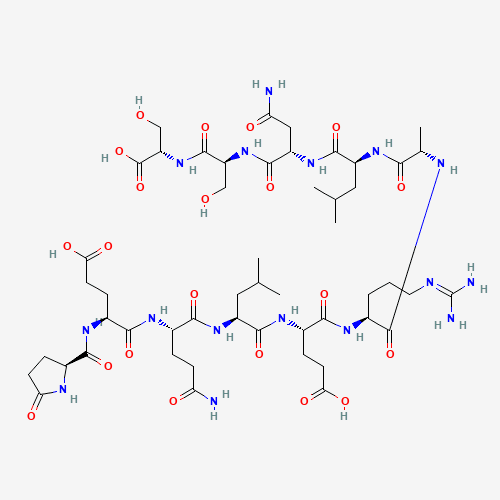
ARA-290, also called cibinetide, is an 11-amino-acid peptide carved from the three-dimensional structure of erythropoietin - specifically from the face of the molecule that activates tissue repair rather than the face that makes red blood cells [1]. That separation is the whole idea: erythropoietin protects injured tissue in animal models, but raising haematocrit in patients who do not need it causes thrombosis and strokes. ARA-290 has been through several small randomised trials in small fibre neuropathy, where it improved symptoms and increased corneal nerve fibre density [2][3], and one in type 2 diabetes where it improved both neuropathic symptoms and HbA1c [4]. The trials are genuinely positive and genuinely small - a few dozen patients each, mostly from one group - and nothing has progressed to a confirmatory phase 3.
A well-designed peptide with a coherent mechanism and several small positive randomised trials in a condition with few options, stalled short of the trial that would settle it.
- meta-analysis
- RCT
- trial
- observational
- preclinical / case
- review / patent / other
- retracted
- + Improved neuropathic symptoms in randomised trials in sarcoidosis-associated small fibre neuropathy
- + Increased corneal nerve fibre density, an objective structural measure rather than a questionnaire
- + Improved HbA1c and lipid profile alongside neuropathic symptoms in type 2 diabetes
- + Carries erythropoietin's tissue-protective activity without raising haematocrit
- − Every trial is small - 22 to about 60 patients
- − No phase 3 trial has been published, more than a decade after the first positive results
- − Most of the clinical work comes from one group
- − Not approved for anything, anywhere
Overview
The design problem it solves. Erythropoietin is strongly tissue-protective in models of nerve, kidney, heart and brain injury. It is also the hormone that makes red blood cells, and giving it to people who are not anaemic raises haematocrit and causes clots. The structural insight behind ARA-290 is that these two activities live on different faces of the molecule and run through different receptors: erythropoiesis through the homodimeric erythropoietin receptor, tissue protection through a heterocomplex of that receptor with the beta common receptor, CD131 - the so-called innate repair receptor. ARA-290 is an 11-residue peptide mimicking helix B's surface, which engages the second receptor and not the first [1].
The trials. A randomised double-blind pilot gave 22 sarcoidosis patients with small fibre neuropathy symptoms 2 mg intravenously three times weekly for four weeks; it was safe and reduced symptoms [5]. A larger blinded placebo-controlled trial used 28 days of daily subcutaneous dosing and found significantly improved neuropathic symptoms, increased corneal small nerve fibre density, changed cutaneous temperature sensitivity and increased 6-minute walk distance [2]. A multicentre dose-ranging trial compared 1, 4 and 8 mg daily against placebo: the placebo-corrected change in corneal nerve fibre abundance was significant at 4 mg (697 µm², 95% CI 159-1236, P = 0.012) but not at 1 mg or 8 mg, and intraepidermal GAP-43-positive fibres increased in the 4 mg group. Pain intensity fell in the 4 mg group but did not reach significance (P = 0.157) [3].
In type 2 diabetes with painful neuropathy, 28 days of self-administered 4 mg daily improved HbA1c and lipid profiles across a 56-day observation period, significantly improved PainDetect scores, and increased corneal nerve fibre density in those who started most impaired [4].
Why small fibre neuropathy matters here. It is a condition where almost nothing works; current treatment of the sarcoidosis-associated form is immune suppression and symptomatic relief, and is described in the literature as typically unsatisfactory [2]. Corneal confocal microscopy gives an objective structural readout, which is more than most neuropathy trials have [6].
What has not happened. No phase 3. The first positive randomised result was published in 2012 [5]; reviews were describing it as a promising investigational drug in 2014 [7] and diabetic neuropathy reviews were still waiting in 2021 [8]. Preclinical work has continued across diabetic wound healing [9], colitis [10], retinal ischaemia [11], cisplatin nephrotoxicity [12], doxorubicin genotoxicity [13] and haemolytic-uraemic syndrome [14]. That is a lot of preclinical breadth and not much clinical depth.
Mechanism
Erythropoietin's tissue-protective effects require a receptor complex distinct from the erythropoietic one: the erythropoietin receptor paired with CD131, the beta common receptor shared by the IL-3, IL-5 and GM-CSF receptors. This heterocomplex is expressed on injured and stressed tissue rather than on erythroid precursors [1][9].
ARA-290 reproduces the relevant surface of helix B and activates that complex selectively. Downstream it dampens innate immune activation [10] and promotes repair - in genetically diabetic mice it restored impaired wound healing through EPOR-beta common receptor activation [9], and it enhanced the vasoreparative capacity of endothelial colony-forming cells in ischaemic retina [11]. A TRPV1-mediated route has been proposed for its analgesic action, which would connect the immune and nociceptive arms [15].
The most unusual feature is temporal. The peptide is cleared quickly, but the review literature describes long-lasting effects from brief exposure - the switch metaphor [1]. That is consistent with the trials, which dosed for 28 days and measured structural nerve changes, but it also means pharmacokinetics tell you very little about how to dose it, and no study has systematically tested duration.
- Innate repair receptor (EPOR-beta common receptor heterocomplex)activatesstrong
- TRPV1 channelmodulatesproposed as a route by which ARA-290 relieves pathophysiological pain, linking immune signalling to nociception, in preclinical work [15]weak
- Small nerve fibresactivates28 days of daily subcutaneous dosing increased corneal small nerve fibre density and improved symptoms, temperature sensitivity and 6-minute walk distance in sarcoidosis-associated small nerve fibre loss [2]; a later multicentre trial found the 4 mg dose significantly increased corneal nerve fibre abundance [3]moderate
- Innate immune cells and inflammationblocksmoderate
- Erythropoiesisno bindingby design it does not raise haematocrit, which is what makes it usable where erythropoietin is not [1]strong
Formulation
how the form changes blood levelsAn 11-residue peptide given by subcutaneous injection in the later trials and intravenously in the first [2][5]. Cibinetide is the international nonproprietary name; ARA-290 is the development code. It is sometimes referred to in the mechanistic literature as pyroglutamate helix B surface peptide, pHBSP [14].
Dosing
as studied or commonly reported; not a recommendationDoses below are what studies used or, where marked, what is commonly reported. None is a recommendation.
Intravenous
- 2 mg22 patients with sarcoidosis and symptoms of small fibre neuropathy, randomised double-blind pilotthree times weekly · 4 weekshuman study[5]
Subcutaneous injection
- not stated in the abstractpatients with sarcoidosis-associated small nerve fibre loss; symptoms and corneal nerve fibre densityonce daily · 28 dayshuman study[2]
- 1 mg, 4 mg or 8 mgmulticentre randomised trial in sarcoidosis-associated small nerve fibre loss and neuropathic painonce daily · 28 dayshuman study[3]
- 4 mgphase 2 in type 2 diabetes with painful neuropathyonce daily, self-administered · 28 days, followed 28 days morehuman study[4]
- Notes
- The 4 mg daily subcutaneous dose is the one the programme converged on: in the multicentre dose-ranging trial, 4 mg significantly increased corneal nerve fibre abundance while 1 mg and 8 mg did not reach significance [3] - a non-monotonic dose response that the trial did not explain. All published dosing is short-course, 28 days.
Pharmacokinetics
what the body does with it| Half-life | Short in circulation - the peptide is small and unprotected - but the pharmacological effect long outlasts exposure, which the developers describe as flipping a molecular switch rather than occupying a receptor continuously [1] |
|---|---|
| Onset | Symptomatic improvement was measured over 28 days of daily dosing [2] |
| Bioavailability | Subcutaneous and intravenous only; a peptide [2][5] |
| Metabolism | Peptide catabolism. No detailed human pharmacokinetic study was found for this entry |
Safety
risks and cautions, not medical adviceThe trials consistently report it as safe over 28-day courses. The pilot trial concluded ARA-290 appears safe in sarcoidosis patients [5]; the phase 2 in type 2 diabetes identified no potential safety issues [4].
The central safety argument is structural: because it does not activate the erythropoietic receptor, it does not raise haematocrit, and therefore does not carry the thrombotic risk that limits erythropoietin in non-anaemic patients [1]. That is a designed-in property supported by the animal and clinical data, not an incidental observation.
What that safety record does not cover: total exposure across all published trials is on the order of a hundred patients for 28 days each. There is no long-term data, no data on repeated courses, and no post-marketing surveillance because it has never been marketed. A peptide that dampens innate immune function [10] is one where long-term immune consequences would be worth measuring, and nobody has.
- Not approved for any indication anywhere
- Total published human exposure is around a hundred patients for 28 days each; nothing is known about long-term use
- It dampens innate immune cell function [10], and the immune consequences of prolonged use have not been studied
- Every randomised trial is small: 22 patients in the pilot, a few dozen in the others [2][5]
- No phase 3 trial has been published, more than a decade after the first positive result
- The dose response was non-monotonic - 4 mg worked where 1 mg and 8 mg did not - and was not explained [3]
- Pain intensity did not reach significance in the multicentre trial even at the effective dose [3]
- Most of the clinical work comes from a single group
Interactions
documented pairs only, not exhaustiveNo interaction studies have been published. In the type 2 diabetes trial participants continued their usual diabetes medication and HbA1c improved [4], which is the closest thing to a combination result in the literature.
Mechanistically it does not overlap with erythropoietin-stimulating agents in the way the shared name might suggest - it deliberately avoids the receptor those act on [1].
History
ARA-290 came out of Araim Pharmaceuticals, founded by Anthony Cerami and Michael Brines, who had done much of the original work on erythropoietin's tissue-protective actions. The structural separation of the two activities and the design of helix B-derived peptides is set out in their 2015 review [1].
The first randomised pilot in sarcoidosis appeared in 2012 [5], followed by a larger blinded trial in 2013 [2], the type 2 diabetes phase 2 in 2015 [4] and a multicentre dose-ranging trial in 2017 [3]. Reviews treated it as a promising investigational drug for small fibre neuropathy [7]. No confirmatory trial has followed.
FAQ
- Is ARA-290 the same as EPO?
- No. It is an 11-residue peptide copying one face of erythropoietin, chosen because it activates the tissue-repair receptor complex and not the one that makes red blood cells [1].
- Does it raise haematocrit?
- No, by design. That separation is the entire reason the molecule exists [1].
References
entry last reviewed 2026-09-19- [1]Flipping the molecular switch for innate protection and repair of tissues: Long-lasting effects of a non-erythropoietic small peptide engineered from erythropoietin.Collino M, Thiemermann C, Cerami A et al.Pharmacol Ther 2015reviewPMID 25728128◌ unreviewed
- [2]ARA 290 improves symptoms in patients with sarcoidosis-associated small nerve fiber loss and increases corneal nerve fiber density.Dahan A, Dunne A, Swartjes M et al.Mol Med 2013RCT · humanPMID 24136731◌ unreviewed
- [3]Cibinetide Improves Corneal Nerve Fiber Abundance in Patients With Sarcoidosis-Associated Small Nerve Fiber Loss and Neuropathic Pain.Culver DA, Dahan A, Bajorunas D et al.Invest Ophthalmol Vis Sci 2017RCT · humanPMID 28475703◌ unreviewed
- [4]ARA 290, a nonerythropoietic peptide engineered from erythropoietin, improves metabolic control and neuropathic symptoms in patients with type 2 diabetes.Brines M, Dunne AN, van Velzen M et al.Mol Med 2015clinical trial · humanPMID 25387363◌ unreviewed
- [5]Safety and efficacy of ARA 290 in sarcoidosis patients with symptoms of small fiber neuropathy: a randomized, double-blind pilot study.Heij L, Niesters M, Swartjes M et al.Mol Med 2012RCT · humanPMID 23168581◌ unreviewed
- [6]Corneal nerve fiber size adds utility to the diagnosis and assessment of therapeutic response in patients with small fiber neuropathy.Brines M, Culver DA, Ferdousi M et al.Sci Rep 2018observational · humanPMID 29549285◌ unreviewed
- [7]ARA 290 for treatment of small fiber neuropathy in sarcoidosis.van Velzen M, Heij L, Niesters M et al.Expert Opin Investig Drugs 2014reviewPMID 24555851◌ unreviewed
- [8]The time to develop treatments for diabetic neuropathy.Rendell MSExpert Opin Investig Drugs 2021meta-analysis · humanPMID 33423557◌ unreviewed
- [9]Activation of the EPOR-β common receptor complex by cibinetide ameliorates impaired wound healing in mice with genetic diabetes.Bitto A, Irrera N, Pizzino G et al.Biochim Biophys Acta Mol Basis Dis 2018preclinical · animalPMID 29223734◌ unreviewed
- [10]Cibinetide dampens innate immune cell functions thus ameliorating the course of experimental colitis.Nairz M, Haschka D, Dichtl S et al.Sci Rep 2017preclinical · animalPMID 29026145◌ unreviewed
- [11]The vasoreparative potential of endothelial colony-forming cells in the ischemic retina is enhanced by cibinetide, a non-hematopoietic erythropoietin mimetic.O'Leary OE, Canning P, Reid E et al.Exp Eye Res 2019preclinical · cellPMID 30876881◌ unreviewed
- [12]Mechanistic Approach for Protective Effect of ARA290, a Specific Ligand for the Erythropoietin/CD131 Heteroreceptor, against Cisplatin-Induced Nephrotoxicity, the Involvement of Apoptosis and Inflammation Pathways.Ghassemi-Barghi N, Ehsanfar Z, Mohammadrezakhani O et al.Inflammation 2023preclinical · animalPMID 36085231◌ unreviewed
- [13]An engineered non-erythropoietic erythropoietin-derived peptide, ARA290, attenuates doxorubicin induced genotoxicity and oxidative stress.Shokrzadeh M, Etebari M, Ghassemi-Barghi NToxicol In Vitro 2020preclinical · cellPMID 32335150◌ unreviewed
- [14]Targeting the innate repair receptor axis via erythropoietin or pyroglutamate helix B surface peptide attenuates hemolytic-uremic syndrome in mice.Dennhardt S, Pirschel W, Wissuwa B et al.Front Immunol 2022preclinical · animalPMID 36211426◌ unreviewed
- [15]ARA 290 relieves pathophysiological pain by targeting TRPV1 channel: Integration between immune system and nociception.Zhang W, Yu G, Zhang MPeptides 2016preclinical · animalPMID 26774587◌ unreviewed