Thymosin beta-4 (TB-4)
also TB-4 · TB4 · Tβ4 · Thymosin β4 · RGN-259
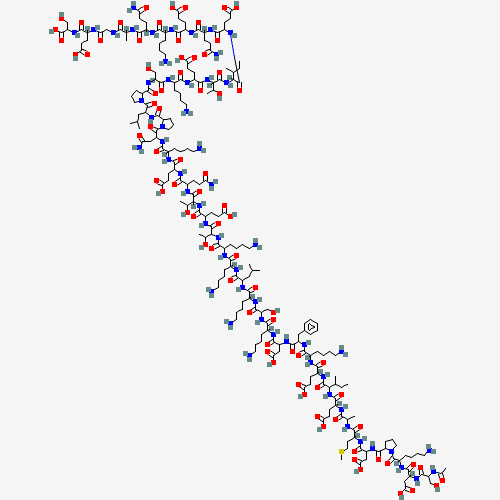
Thymosin beta-4 (Tβ4) is a 43-amino-acid protein found in almost every cell, where it is the main store of unused actin, the building block of the cell skeleton [1]. After injury it promotes cell migration, new blood vessels and repair in animal models [2]. In people it has been tested as eye drops for dry eye, in small phase 2 trials with mixed results [3][4], and as an intravenous drug in safety studies [5][6]. It is not approved as a medicine [7].
A real repair protein with solid biology and a few small human trials, mostly eye drops; there is no controlled evidence for the injections people use for injuries.
- meta-analysis
- RCT
- trial
- observational
- preclinical / case
- review / patent / other
- retracted
- + Promotes cell migration, blood-vessel growth and heart repair in animal models
- + Eye drops improved some signs and symptoms of dry eye in small phase 2 trials
- + Intravenous doses up to 1,260 mg a day for 14 days were well tolerated in healthy volunteers
- − No controlled human trials for injuries or tendons
- − The larger dry-eye trial missed both primary endpoints
- − Raised levels are found in some cancers
- − Banned in sport
Overview
Thymosin beta-4 is a small, naturally occurring protein of 43 amino acids. It is present in essentially all cells and body fluids [1]. After an injury it is released by platelets, macrophages and many other cells, and it has been studied for healing skin, eye, heart and brain tissue [2]. It is also the parent of TB-500, a veterinary product built on a synthetic fragment of it and promoted for healing [8].
Eye. As 0.1% eye drops (RGN-259), it was tested in two small phase 2 trials in dry eye. In 9 patients with severe dry eye, it reduced discomfort by 35% and corneal staining by 59% compared with vehicle [3]. In a 72-person trial it missed both primary endpoints, discomfort and inferior corneal staining. Some secondary measures improved, and no adverse events were reported [4].
Intravenous safety. Synthetic Tβ4 was given to 40 healthy volunteers in single doses of 42–1,260 mg, then daily for 14 days. Side effects were infrequent and mild to moderate, with no dose-limiting toxicity [5]. A recombinant version was well tolerated in 84 healthy Chinese volunteers, and both studies were aimed at future use in heart attacks [5][6].
There are no controlled human trials of injected Tβ4 for tendon, muscle or joint injuries. The only related report is a retrospective phone survey in which 4 people received it with BPC-157 in the knee [9].
Mechanism
Tβ4 binds single actin molecules (G-actin) and stops them joining into filaments. In resting human neutrophils it is present at about 149 µM and holds most of the unpolymerised actin. It releases actin quickly when the cells are stimulated to move [10].
Different parts of the molecule seem to do different things. The N-terminal four amino acids (Ac-SDKP) mainly block inflammation and fibrosis. The central actin-binding stretch LKKTETQ (amino acids 17–23) promotes angiogenesis, wound healing and cell migration [1]. In the heart, Tβ4 formed a complex with PINCH and integrin-linked kinase and activated the survival kinase Akt. After coronary artery ligation in mice, treatment improved early heart-muscle survival and heart function [11]. Reviews also describe fewer myofibroblasts in wounds, which means less scarring [2].
- G-actin (monomeric actin)blocksbinds actin monomers and stops them polymerising; holds most of the free actin in resting human white blood cells [10]strong
- ILK-PINCH-Aktactivatesformed a complex with PINCH and integrin-linked kinase, activating Akt; heart-muscle cells survived better and heart function improved after infarction in mice [11]moderate
- Cell migration and angiogenesisactivatesthe LKKTETQ actin-binding region (amino acids 17–23) promotes angiogenesis, wound healing and cell migration [1]moderate
Dosing
as studied or commonly reported; not a recommendationDoses below are what studies used or, where marked, what is commonly reported. None is a recommendation.
Topical
- 0.1% eye dropssevere dry eye, including graft-versus-host disease (9 patients)6 times a day · 28 dayshuman study[3]
- 0.1% eye drops, 1–2 drops per eye
Intravenous
- 42, 140, 420 or 1,260 mg
- 0.05–25 µg/kg single; 0.5–5 µg/kg dailysafety study in healthy Chinese volunteers (recombinant Tβ4)single dose, or once daily · 10 dayshuman study[6]
- Notes
- The two intravenous safety studies used very different doses: up to 1,260 mg in one, and up to 25 µg/kg (under 2 mg for a 70 kg adult) in the other [5][6]. Neither was testing injury healing. One retrospective knee-pain report injected Tβ4 with BPC-157 into the joint in 4 people, but the abstract gives no dose [9].
Pharmacokinetics
what the body does with it| Half-life | 0.5–2.1 hours after an intravenous dose of the recombinant protein in healthy volunteers [6]. With synthetic Tβ4, half-life rose with dose [5] |
|---|---|
| Time to peak | At the end of an intravenous injection [6] |
| Peak level | About 230 ng/mL after 25 µg/kg intravenously [6] |
| Steady state | No obvious build-up after 10 daily intravenous doses [6] |
Safety
risks and cautions, not medical adviceIn the intravenous studies, adverse events were infrequent and mild to moderate, with no dose-limiting toxicity or serious adverse events [5][6]. Anti-drug antibodies were rare with the recombinant version [6]. The dry-eye trials reported the drops as safe and well tolerated [3][4].
Because Tβ4 promotes cell migration and blood-vessel growth, its link with cancer is worth knowing. It is expressed in most colorectal cancers, most strongly at the invasive front [12]. Pancreatic cancer cells make more of it than normal cells, and added Tβ4 raised their inflammatory cytokine output [13]. These are associations and lab findings, not evidence that taking Tβ4 causes cancer.
It is prohibited by the World Anti-Doping Agency, and products claiming to contain Tβ4 or a fragment of it are sold online [7].
Interactions
documented pairs only, not exhaustive- BPC-157compatibleThe two were injected together into the knee in 4 people in one retrospective report, and no interaction was described [9]. Nothing else is known.
FAQ
References
entry last reviewed 2026-09-19- [1]Biological activities of thymosin beta4 defined by active sites in short peptide sequences.Sosne G, Qiu P, Goldstein AL et al.FASEB J 2010reviewPMID 20179146◌ unreviewed
- [2]Thymosin β4: a multi-functional regenerative peptide. Basic properties and clinical applications.Goldstein AL, Hannappel E, Sosne G et al.Expert Opin Biol Ther 2012reviewPMID 22074294◌ unreviewed
- [3]Thymosin β4 significantly improves signs and symptoms of severe dry eye in a phase 2 randomized trial.Sosne G, Dunn SP, Kim CCornea 2015RCT · humanPMID 25826322◌ unreviewed
- [4]Thymosin beta 4 ophthalmic solution for dry eye: a randomized, placebo-controlled, Phase II clinical trial conducted using the controlled adverse environment (CAE™) model.Sosne G, Ousler GWClin Ophthalmol 2015RCT · humanPMID 26056426◌ unreviewed
- [5]A randomized, placebo-controlled, single and multiple dose study of intravenous thymosin beta4 in healthy volunteers.Ruff D, Crockford D, Girardi G et al.Ann N Y Acad Sci 2010RCT · humanPMID 20536472◌ unreviewed
- [6]A first-in-human, randomized, double-blind, single- and multiple-dose, phase I study of recombinant human thymosin β4 in healthy Chinese volunteers.Wang X, Liu L, Qi L et al.J Cell Mol Med 2021RCT · humanPMID 34346165◌ unreviewed
- [7]Equine Doping Controls of Thymosin β 4: A Population Study and Strategy for Misuse Detection.Delcourt V, Garcia P, Chabot B et al.Drug Test Anal 2025other · animalPMID 39314109◌ unreviewed
- [8]Doping control analysis of TB-500, a synthetic version of an active region of thymosin β₄, in equine urine and plasma by liquid chromatography-mass spectrometry.Ho EN, Kwok WH, Lau MY et al.J Chromatogr A 2012other · animalPMID 23084823◌ unreviewed
- [9]Intra-Articular Injection of BPC 157 for Multiple Types of Knee Pain.Lee E, Padgett BAltern Ther Health Med 2021observational · humanPMID 34324435◌ unreviewed
- [10]Thymosin beta 4 sequesters the majority of G-actin in resting human polymorphonuclear leukocytes.Cassimeris L, Safer D, Nachmias VT et al.J Cell Biol 1992preclinical · cellPMID 1447300◌ unreviewed
- [11]Thymosin beta4 activates integrin-linked kinase and promotes cardiac cell migration, survival and cardiac repair.Bock-Marquette I, Saxena A, White MD et al.Nature 2004preclinical · animalPMID 15565145◌ unreviewed
- [12]Thymosin β 4 in colorectal cancer is localized predominantly at the invasion front in tumor cells undergoing epithelial mesenchymal transition.Nemolato S, Restivo A, Cabras T et al.Cancer Biol Ther 2012observational · humanPMID 22233609◌ unreviewed
- [13]Thymosin Beta 4 is overexpressed in human pancreatic cancer cells and stimulates proinflammatory cytokine secretion and JNK activation.Zhang Y, Feurino LW, Zhai Q et al.Cancer Biol Ther 2008preclinical · cellPMID 18094619◌ unreviewed
- [14]Synthesis and characterization of the N-terminal acetylated 17-23 fragment of thymosin beta 4 identified in TB-500, a product suspected to possess doping potential.Esposito S, Deventer K, Goeman J et al.Drug Test Anal 2012otherPMID 22962027◌ unreviewed