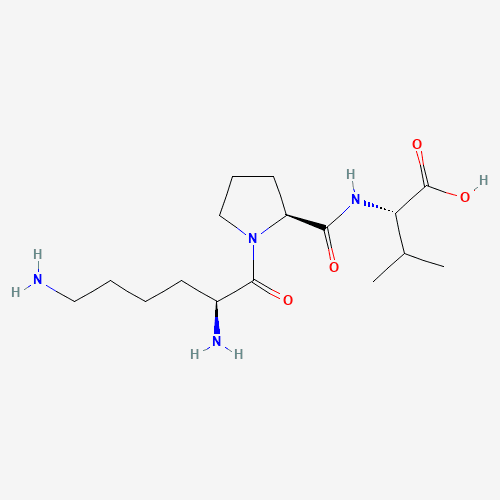
KPV
also Lys-Pro-Val · L-Lysyl-L-prolyl-L-valine · alpha-MSH (11-13) · α-MSH(11–13)
KPV (lysine-proline-valine) is the last three amino acids of α-melanocyte-stimulating hormone (α-MSH). It keeps the hormone's anti-inflammatory action without its effect on skin pigment [1]. In mice, KPV in the drinking water eased chemically induced colitis [2][3], and it cut colitis-associated tumours [4]. It is taken up by PepT1, a peptide transporter that is switched on in the inflamed colon [2]. No human study of KPV has been published.
An interesting anti-inflammatory tripeptide with consistent results in mouse colitis, mostly from one research group; there is no human dosing, safety or efficacy data.
- meta-analysis
- RCT
- trial
- observational
- preclinical / case
- review / patent / other
- retracted
- + Reduced inflammation in several mouse models of colitis
- + Active by mouth in mice, through the PepT1 peptide transporter
- + No pigmentary effect, unlike full-length α-MSH
- − No human studies of any kind
- − Most of the colitis work comes from one laboratory
- − Did not reduce tumours in a non-inflammatory genetic mouse model
- − Does not pass through intact human skin on its own
Overview
KPV is a tripeptide (lysine-proline-valine) matching positions 11–13 of α-MSH, a hormone with strong anti-inflammatory effects in animals. Full-length α-MSH also darkens skin, which limits its use. KPV keeps the anti-inflammatory action without the pigmentary one, so it has been proposed for inflammatory skin, bowel, lung, eye and joint disease [1][5].
Colitis. In human intestinal cells, nanomolar KPV damped inflammatory signalling. Given in the drinking water, it reduced colitis caused by two different chemicals in mice [2]. A separate group in Germany found that KPV sped recovery in both chemical and T-cell transfer colitis, and it saved every KPV-treated mouse lacking a functional MC1R from death during colitis [3]. Packaging KPV in hyaluronic-acid nanoparticles inside a hydrogel improved its effect in mouse colitis [6].
Tumours. In a mouse model of colitis-associated cancer, KPV reduced inflammation and tumour numbers. It did not work in mice without PepT1. It also did not reduce tumours in APCMin/+ mice, which develop intestinal tumours without colitis [4].
Bacteria. In the lab, acetylated and amidated forms of KPV had antibacterial activity against Staphylococcus aureus and E. coli, about as potently as α-MSH [7].
No clinical trial of KPV was found. The oral colitis studies from Atlanta all come from one research group [2][4][6].
Mechanism
KPV enters intestinal epithelial cells and T cells through PepT1, a transporter for small peptides. PepT1 is normally found in the small intestine and appears in the colon during inflammatory bowel disease. Once inside, KPV blocks NF-κB and MAP kinase activation and lowers pro-inflammatory cytokine output [2]. In the same intestinal cells, α-MSH itself had no such effect and melanocortin receptors did not appear to be working, which points to a receptor-independent route [2]. In mice lacking a functional melanocortin-1 receptor, KPV still worked [3].
- PepT1 (SLC15A1) peptide transporterno bindingstrong
- Melanocortin-1 receptorno bindingKPV still protected mice lacking a functional MC1R, so its effect is at least partly independent of this receptor [3]unclear
- NF-κB and MAP kinase signallingblocksnanomolar KPV inhibited NF-κB and MAP kinase activation and cut pro-inflammatory cytokine release in human intestinal and T cells [2]moderate
Formulation
how the form changes blood levelsPlain KPV was given in drinking water in the mouse colitis studies [2][4]. To deliver more of it to the colon, one group loaded KPV into hyaluronic-acid-coated nanoparticles inside a chitosan and alginate hydrogel. This worked better in mouse colitis than uncoated nanoparticles [6]. On human skin in the lab, KPV did not pass through by passive diffusion. Microneedles let 4.4 µg/cm² per hour through, and adding an electric current (iontophoresis) raised that about 35-fold [8].
Dosing
as studied or commonly reported; not a recommendationDoses below are what studies used or, where marked, what is commonly reported. None is a recommendation.No peer-reviewed human dosing data. The doses below come from animal studies or company filings; animal doses do not translate directly to people.
Oral
- 100 µM in drinking water
- 100 µM in drinking water
- 100 µM in drinking water
- Notes
- Animal data only. The 100 µM dose was chosen from earlier α-MSH colitis studies [2]. No human dose has been studied.
Pharmacokinetics
what the body does with it| Bioavailability | No human data. KPV is transported by PepT1, which is expressed in the small intestine and induced in the colon during inflammatory bowel disease [2]. It did not cross dermatomed human skin by passive diffusion in the lab; microneedles and iontophoresis got it through [8] |
|---|
Safety
risks and cautions, not medical adviceKPV has no human safety data. In the mouse studies it was given for up to 13 weeks [4], and the KPV-loaded nanoparticles were not toxic to intestinal cells [6]. Products sold for injection or oral use are unregulated research chemicals.
- No human safety or dosing data exist
- Sold as an unregulated research chemical
FAQ
- Is KPV the same as α-MSH?
- No. It is the last three amino acids of α-MSH; it keeps the anti-inflammatory action but not the tanning effect [1].
- Has KPV been tested in people with colitis?
- No published human trial was found; the colitis evidence is from mice.
References
entry last reviewed 2026-09-19- [1]Alpha-melanocyte-stimulating hormone and related tripeptides: biochemistry, antiinflammatory and protective effects in vitro and in vivo, and future perspectives for the treatment of immune-mediated inflammatory diseases.Brzoska T, Luger TA, Maaser C et al.Endocr Rev 2008reviewPMID 18612139◌ unreviewed
- [2]PepT1-mediated tripeptide KPV uptake reduces intestinal inflammation.Dalmasso G, Charrier-Hisamuddin L, Nguyen HT et al.Gastroenterology 2008preclinical · animalPMID 18061177◌ unreviewed
- [3]Melanocortin-derived tripeptide KPV has anti-inflammatory potential in murine models of inflammatory bowel disease.Kannengiesser K, Maaser C, Heidemann J et al.Inflamm Bowel Dis 2008preclinical · animalPMID 18092346◌ unreviewed
- [4]Critical role of PepT1 in promoting colitis-associated cancer and therapeutic benefits of the anti-inflammatory PepT1-mediated tripeptide KPV in a murine model.Viennois E, Ingersoll SA, Ayyadurai S et al.Cell Mol Gastroenterol Hepatol 2016preclinical · animalPMID 27458604◌ unreviewed
- [5]alpha-MSH related peptides: a new class of anti-inflammatory and immunomodulating drugs.Luger TA, Brzoska TAnn Rheum Dis 2007reviewPMID 17934097◌ unreviewed
- [6]Orally Targeted Delivery of Tripeptide KPV via Hyaluronic Acid-Functionalized Nanoparticles Efficiently Alleviates Ulcerative Colitis.Xiao B, Xu Z, Viennois E et al.Mol Ther 2017preclinical · animalPMID 28143741◌ unreviewed
- [7]Anti-microbial action of melanocortin peptides and identification of a novel X-Pro-D/L-Val sequence in Gram-positive and Gram-negative bacteria.Charnley M, Moir AJ, Douglas CW et al.Peptides 2008preclinical · cellPMID 18355945◌ unreviewed
- [8]Transdermal Iontophoretic Delivery of Lysine-Proline-Valine (KPV) Peptide Across Microporated Human Skin.Pawar K, Kolli CS, Rangari VK et al.J Pharm Sci 2017preclinical · cellPMID 28343991◌ unreviewed