Cartalax
also AED · Ala-Glu-Asp · H-Ala-Glu-Asp-OH · Kartalax · T-31
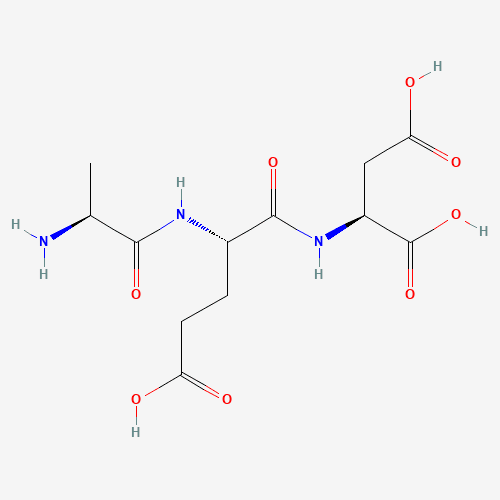
Cartalax is the tripeptide Ala-Glu-Asp (AED), one of the short "peptide bioregulators" developed by Vladimir Khavinson's group in St Petersburg and promoted for cartilage [1][2]. In cell cultures it switched on cartilage-forming genes in ageing human stem cells [3] and lowered markers of ageing in chondrocytes [4]. There are no published human trials, and almost every study comes from the developers' own group.
A cartilage peptide with in-house cell and rat data only; the claim that it helps older people with osteoarthritis rests on a review by its developers, not on a published trial.
- meta-analysis
- RCT
- trial
- observational
- preclinical / case
- review / patent / other
- retracted
- + Switched on cartilage-forming genes in ageing human stem cells in culture
- + Reduced markers of cell ageing in chondrocytes and kidney cells in culture
- + No kidney toxicity seen in old rats
- − No published human trials
- − Nearly all research comes from the developer's own group
- − Several papers are in Russian only, with short English abstracts
Overview
Cartalax is the synthetic tripeptide alanine–glutamic acid–aspartic acid (AED). It belongs to the "peptide bioregulators", a family of two- to four-amino-acid peptides developed by Vladimir Khavinson's group. The developers say these peptides enter cell nuclei and regulate gene expression in specific tissues [1]. Its sister peptides include Epitalon (AEDG) [1]. In older papers it appears under the code T-31 [5].
Cartilage. The case for Cartalax as a joint peptide rests on cell work from the developers' group:
- In human mesenchymal stem cells ageing in culture, 200 ng/mL of AED raised the genes and proteins of cartilage formation (SOX9, aggrecan, type II collagen and COMP). A cartilage extract needed a tenfold higher concentration for the same effect [3].
- In chondrocyte cultures, AED and the same cartilage extract normalised markers of the ageing, inflammatory "secretory phenotype" [4].
- In rats with osteoporosis after ovary removal, T-31 prevented and partly reversed bone loss. A cartilage-extract product worked significantly better [6].
A 2023 review by the same group says AED worked in animal models of osteoarthritis and when taken by mouth by older patients [2]. No such patient trial could be found on PubMed.
Other tissues.
- It slowed signs of ageing in skin fibroblast cultures, where it also reduced cell death [7].
- It raised proliferation and lowered ageing markers in kidney cell cultures [5][8][9].
- It raised IGF1 gene expression in ageing stem cells [10].
- In rats it reduced protein in the urine, both in cisplatin kidney injury and in old age [11][12].
Not every result was positive. In ageing thymus cells, T-31 had no protective effect, while a different peptide did [13]. In human dental stem cells, the western-blot evidence of a shift towards nerve cells held for a peptide mix and for KED, but not for AED on its own [14]. In the cisplatin study, a sister peptide (EDL) protected the kidneys more strongly than AED [11].
Who did the research. Almost every paper includes Khavinson or his close collaborators, and several are published in Russian with short English abstracts [2][3][9]. No independent group has replicated the cartilage findings.
Mechanism
The developers propose that short peptides like AED pass through cell and nuclear membranes and bind DNA or histones directly, switching particular genes on or off [1]. For AED, the evidence for DNA binding comes from computer docking models, not from measurements [9][15].
Downstream, the reported effects in cell culture are more cartilage-forming gene activity in stem cells [3], normalised ageing and inflammation markers (p16, p21, p53, TNF-α, IL-1α, SIRT1) in chondrocytes [4] and higher IGF1 and NF-κB gene expression in ageing stem cells [10].
- DNA bindingmodulatesunclear
- Chondrogenic genes (SOX9, aggrecan, type II collagen, COMP)activatesincreased gene expression and protein synthesis at 200 ng/mL in human mesenchymal stem cells ageing in culture [3]weak
- Senescence markers (p16, p21, p53) and SIRT1modulatesnormalised age-related rises in p16, p21, p53, TNF-α and IL-1α, and the fall in SIRT1, in chondrocyte cultures [4]weak
Dosing
as studied or commonly reported; not a recommendationDoses below are what studies used or, where marked, what is commonly reported. None is a recommendation.No peer-reviewed human dosing data. The doses below come from animal studies or company filings; animal doses do not translate directly to people.
Oral
- 1–2 capsules (commercial Cartalax capsules)anecdotal user reports; joint and cartilage support1–2 times a day with meals · 10–30 day courses, repeated a few times a yearcommonly reported, not from trials
Subcutaneous injection
- 1–2 mganecdotal user reports of research-peptide vials; joint and cartilage supportonce daily · 10–20 day coursescommonly reported, not from trials
Safety
risks and cautions, not medical adviceThere are no published human safety data. In old rats, kidney tissue showed no sign of toxicity after AED and related peptides [12]. AED is made of three common dietary amino acids, but that does not show a synthetic product is safe. Products sold online are unregulated.
- Not studied in humans
- Not an approved medicine; products sold online are unregulated and unverified
- No published human trials; the claim of benefit in older patients with osteoarthritis comes from a review by the developers [2]
- Nearly all studies come from one research group, and several are in Russian [3][9]
- The DNA-binding mechanism rests on computer models [15]
- In some cell studies AED did nothing, or did less than related peptides [13][14]
FAQ
- Is Cartalax the same as AED or T-31?
- Yes. The developers use Cartalax for the tripeptide AED [1], and older papers use the code T-31 [5].
- Has it been tested for osteoarthritis in people?
- The developers say so in a review [2], but no patient trial has been published on PubMed.
References
entry last reviewed 2026-09-19- [1]Peptide Regulation of Gene Expression: A Systematic Review.Khavinson VK, Popovich IG, Linkova NS et al.Molecules 2021reviewPMID 34834147◌ unreviewed
- [2][Chondrocytes secretory phenotype associated with aging: role in the pathogenesis of osteoarthritis and prospects for peptide bioregulation.].Myakisheva SN, Linkova NS, Kozhevnikova EO et al.Adv Gerontol 2023reviewPMID 37782637in Russian◌ unreviewed
- [3][The influence of peptides on the chondrogenic differentiation of human mesenchymal stem cells during replicative aging.].Myakisheva SN, Linkova NS, Diatlova AS et al.Adv Gerontol 2023preclinical · cellPMID 37782646in Russian◌ unreviewed
- [4][Peptides prevent the forming of secretory phenotype of chondrocytes associated with the aging.].Myakisheva SN, Linkova NS, Kozhevnikova EO et al.Adv Gerontol 2023preclinical · cellPMID 37356100in Russian◌ unreviewed
- [5]Peptide Regulation of Cells Renewal Processes in Kidney Tissue Cultures from Young and Old Animals.Chalisova NI, Lin'kova NS, Nichik TE et al.Bull Exp Biol Med 2015preclinical · cellPMID 26033601◌ unreviewed
- [6][Effect of peptide regulators on the structural and functional status of bone tissue in ageing rats].Povorozniuk VV, Khavinson VKh, Makogonchuk AV et al.Adv Gerontol 2007preclinical · animalPMID 18306703in Russian◌ unreviewed
- [7]Peptide Regulation of Skin Fibroblast Functions during Their Aging In Vitro.Lin'kova NS, Drobintseva AO, Orlova OA et al.Bull Exp Biol Med 2016preclinical · cellPMID 27259496◌ unreviewed
- [8]Peptides regulate expression of signaling molecules in kidney cell cultures during in vitro aging.Khavinson VKh, Lin'kova NS, Polyakova VO et al.Bull Exp Biol Med 2014preclinical · cellPMID 24958378◌ unreviewed
- [9][Tripeptides slow down aging process in renal cell culture].Khavinson VKh, Tarnovskaia SI, Lin'kova NS et al.Adv Gerontol 2014preclinical · cellPMID 25946838in Russian◌ unreviewed
- [10]Gene expression in human mesenchymal stem cell aging cultures: modulation by short peptides.Ashapkin V, Khavinson V, Shilovsky G et al.Mol Biol Rep 2020preclinical · cellPMID 32399807◌ unreviewed
- [11]Peptides Restore Functional State of the Kidneys During Cisplatin-Induced Acute Renal Failure.Zamorskii II, Shchudrova TS, Lin'kova NS et al.Bull Exp Biol Med 2015preclinical · animalPMID 26515176◌ unreviewed
- [12][The influence of peptides on the morphofunctional state of old rats kidneys.].Zamorskii II, Shchudrova TS, Zeleniuk VG et al.Adv Gerontol 2018preclinical · animalPMID 30607912in Russian◌ unreviewed
- [13]Peptidergic regulation of thymocyte differentiation, proliferation, and apoptosis during aging of the thymus.Lin'kova NS, Polyakova VO, Trofimov AV et al.Bull Exp Biol Med 2011preclinical · cellPMID 22238759◌ unreviewed
- [14]Effect of short peptides on neuronal differentiation of stem cells.Caputi S, Trubiani O, Sinjari B et al.Int J Immunopathol Pharmacol 2019preclinical · cellPMID 30791821◌ unreviewed
- [15]Short Peptides Regulate Gene Expression.Khavinson VK, Lin'kova NS, Tarnovskaya SIBull Exp Biol Med 2016preclinicalPMID 27909961◌ unreviewed