Trazodone
also Trazodone hydrochloride · Desyrel · Oleptro · Trazodon · Trazodona
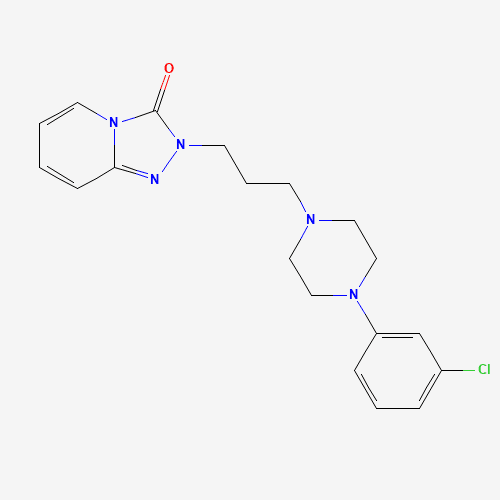
Trazodone is an antidepressant licensed for major depression in adults [1] that is now prescribed in the United States mainly at low doses as an off-label sleep aid [2]. It blocks 5-HT2A serotonin and alpha-1 adrenergic receptors strongly and the serotonin transporter weakly [3]. Across 44 randomized trials it improved sleep quality and cut night-time awakenings without lengthening how long people felt they slept, at the cost of more side effects [4], and the American Academy of Sleep Medicine advises against it for chronic insomnia [5]. In depression it beat placebo but ranks among the less effective and less well tolerated antidepressants [6][7].
An established antidepressant whose more common use in the United States, as a sleep aid, rests on small, short trials showing better sleep quality and fewer awakenings, little faster sleep onset, and next-day grogginess, dizziness and impaired balance as the price; the hope that it protects against dementia rests on mice and one small retrospective cohort.
- meta-analysis
- RCT
- trial
- observational
- preclinical / case
- review / patent / other
- retracted
- + Better self-rated sleep quality, fewer awakenings and about 28 more minutes of measured sleep across 44 randomized trials
- + Increases deep (slow-wave) sleep on polysomnography, in healthy men and in people with insomnia
- + In 30 people with Alzheimer's disease, 50 mg at night added about 42 minutes of night-time sleep over two weeks without daytime sleepiness
- + Not a controlled substance, and no drug-seeking behavior was seen in its clinical trials
- + The once-daily form beat placebo in adult depression from the first week of a 412-patient trial
- + In overdose reports from its first four years on the US market, the deaths involved alcohol or other drugs taken with it
- − Drowsiness, dizziness, dry mouth and headache are common; in sleep trials people dropped out for side effects at about twice the placebo rate
- − At 50 mg it caused small next-day impairments of memory, balance and arm endurance in people with insomnia
- − Orthostatic hypotension and fainting, linked to alpha-1 receptor blockade
- − Prolongs the QT interval; torsade de pointes has been reported at doses of 100 mg or less
- − Priapism is rare but can cause permanent damage
- − In nursing homes, new low-dose users had as many fall injuries as new benzodiazepine users
- − After alcohol detoxification it improved sleep but was followed by more drinking
Trazodone is a triazolopyridine antidepressant, the first of the serotonin antagonist and reuptake inhibitors (SARIs) [2]. It was approved in the United States in 1981 and is licensed only for major depression in adults [1], yet by 2012 insomnia was the most common reason it was prescribed there, and it was the second most prescribed treatment for insomnia [2].
Insomnia. The trials are small and short. A 2024 meta-analysis of 44 randomized trials against placebo that reported sleep outcomes (3,935 participants) found that trazodone did not change how long people thought they slept but improved rated sleep quality (standardized mean difference −0.58), cut awakenings and time awake after sleep onset by about 13 minutes, and added about 28 minutes of sleep and 3 percentage points of sleep efficiency on polysomnography, with minor effects on sleep latency [4]. An earlier meta-analysis of seven placebo-controlled trials found better perceived sleep quality and fewer awakenings but no change in sleep efficiency, latency or total sleep time [8], and a Cochrane review judged that there may be a small short-term improvement, from low-quality evidence [9]. The American Academy of Sleep Medicine found only one eligible trial: 50 mg for 14 nights shortened self-reported sleep latency by about 10 minutes and added about 22 minutes of sleep, neither clinically significant, and it suggested that clinicians not use trazodone for insomnia [5]. A 2022 network meta-analysis of 154 trials counted trazodone among drugs that can work in the short term but have poor tolerability or no long-term data; it found no long-term trazodone trials [10]. In 16 people with primary insomnia, 50 mg a night reduced awakenings and light sleep and raised deep sleep after a week, without shortening sleep onset [11].
Particular groups. In 30 people with Alzheimer's disease and sleep problems, 50 mg at 10 pm added about 42 minutes of night-time sleep over two weeks without daytime napping or any change in cognition [12]; the Cochrane review of sleep drugs in dementia rated this low-certainty evidence from a single trial [13]. After alcohol detoxification, 50–150 mg improved sleep quality over three months but people taking it improved less in days abstinent and drank more per drinking day once it was stopped [14]. In people on methadone it did not improve sleep [15], whereas in men on buprenorphine 82% reached a normal sleep-quality score against 16% on placebo [16]. In depression with insomnia, a 2026 meta-analysis of ten trials found large improvements in sleep quality and smaller ones in depressive symptoms, with much more somnolence and blurred vision than placebo [17].
Depression. In 412 adults with major depression, the once-daily form at a mean 310 mg lowered Hamilton scores by 11.4 points against 9.3 on placebo, a difference present from the first week [6]. Against venlafaxine XR in 324 adults it acted faster at day 7 but was slightly less effective at week 8 (1.6 points); the difference was not significant in those who completed the protocol [18]. Both trials were run by the makers of the once-daily form [6][18]. In the 522-trial network meta-analysis of 21 antidepressants every drug beat placebo, but in head-to-head trials trazodone was among the least effective and had among the highest dropout rates [7].
Cognition and dementia. Trazodone came to dementia research from a screen of 1,040 licensed drugs: it reversed the shutdown of protein synthesis caused by the eIF2α-P branch of the unfolded protein response, and at 40 mg/kg a day it prevented neurological disease in 12 of 15 prion-infected mice and reduced hippocampal atrophy and tau pathology in a tauopathy model [19]. In people the evidence is observational. Among 50 older adults with sleep complaints matched for diagnosis and baseline scores, 25 regular users (median 50 mg at bedtime) lost 0.27 Mini-Mental State points a year against 0.70 in non-users over about four years; the difference was not significant among people also taking cholinesterase inhibitors, and the secondary cognitive tests were not significant after correction [20]. A 2021 systematic review of 16 human studies found no effect on cognition in seven, benefit in five and impairment in four, with acute use tending to impair and long-term use possibly protecting, and no clinical evidence that it treats neurodegenerative disease [21]. A crossover trial of 50 mg in 100 older adults with amnestic mild cognitive impairment (REST) published its design in 2024 [22].
Other uses. In 26 people with frontotemporal dementia, trazodone up to 300 mg a day lowered Neuropsychiatric Inventory scores, with 10 improving by more than half, and did not change cognition [21][23]; a Cochrane review combining that trial with one in Alzheimer's disease found no statistically significant benefit on behavior [24]. For erectile dysfunction, six small trials showed a non-significant advantage over placebo (37% against 20% responding), possibly larger at 150–200 mg and in psychogenic cases [25]. In obstructive sleep apnea, a single 100 mg dose let people tolerate more carbon dioxide before waking [26], and it did not change the apnea–hypopnea index in pooled trials [27].
A dose-dependent mix of receptors. Trazodone binds most tightly to 5-HT2A serotonin receptors and to alpha-1 adrenergic receptors, with Ki values of 14–27 nM at 5-HT2A, α1B and α1D, and much more weakly to the histamine H1 receptor (190 nM) and the serotonin transporter (280 nM) [3]. The prescribing information gives a similar order: 5-HT2A 35.6 nM, 5-HT2B 78.4 nM, 5-HT1A 118 nM (as a partial agonist), α1A 153 nM, α2C 155 nM, 5-HT2C 224 nM and the transporter 367 nM [1]. Because the gap between targets is wide, which ones are engaged depends on dose. A 2018 occupancy model concluded that about 50 mg a day should block the receptors behind the hypnotic effect, while antidepressant effects need higher doses [28]; a 2022 physiologically based model predicted that a single 30 mg dose occupies over 90% of 5-HT2A and α1B receptors but only 43% of H1 receptors and 34% of transporters, rising to 75% and 68% at 300 mg a day of the once-daily form [3]. These are model estimates, not imaging measurements.
Sleep. Reviewers attribute the hypnotic effect to blocking 5-HT2A, H1 and alpha-1 receptors together [2][10]. It deepens sleep: it increased slow-wave sleep in eight healthy men, whereas imipramine suppressed REM sleep [29], 50 mg increased slow-wave sleep in people with insomnia after a week [11], and pooled polysomnography trials showed more stage N3 sleep and less stage N1 sleep, with no change in REM [27].
Depression. The prescribing information describes trazodone as both a serotonin reuptake inhibitor and a 5-HT2 antagonist and states that how these produce its antidepressant effect is unknown [1]. The usual rationale is that blocking 5-HT2A and 5-HT2C while inhibiting reuptake avoids the insomnia, anxiety and sexual side effects of SSRIs [2].
Unfolded protein response. In cells and mice, trazodone acts downstream of eIF2α phosphorylation: it lowered ATF4 and restored protein synthesis in diseased hippocampus without changing eIF2α-P, and it did not reduce the misfolded prion protein itself, so the protection seen was against the cell's stress response rather than the disease protein [19]. Whether this happens at human doses has not been tested.
Metabolite. CYP3A4 converts trazodone to m-chlorophenylpiperazine (mCPP), which is pharmacologically active [1][30].
- 5-HT2A serotonin receptorblocksstrong
- Alpha-1 adrenergic receptorsblocksstrong
- Histamine H1 receptorblocksmoderate
- Serotonin transporter (SERT)blocksmoderate
- 5-HT1A serotonin receptoractivatesmoderate
- 5-HT2B and 5-HT2C serotonin receptorsblocksantagonist at 5-HT2B (Ki 78.4 nM) and 5-HT2C (Ki 224 nM) [1]moderate
- Integrated stress response (eIF2α-P / ATF4 translational repression)modulatespicked out of a 1,040-drug screen because it reversed eIF2α-P-driven shutdown of protein synthesis; in prion-infected and tauopathy mice it lowered ATF4 and partly restored protein synthesis without changing eIF2α-P itself; not shown in people [19]unclear
- m-Chlorophenylpiperazine (mCPP), active metabolitemodulatesunclear
Formulation
how the form changes blood levelsImmediate release. Tablets peak about an hour after a fasting dose, or two hours with food, and food increases the amount absorbed [1]. Their high, early peak may contribute to drowsiness and hypotension in the first week, which led to the development of prolonged-release forms [2].
Once-daily extended release. At steady state, 300 mg once daily gave the same total exposure as 100 mg three times a day with a 43% lower peak; a single 300 mg dose gave about 20% less exposure and a 60% lower peak than three 100 mg doses eight hours apart; and a high-fat meal raised the peak by 86% without changing total exposure [32]. The manufacturer's data cited in the 412-patient trial gave a similar 42% reduction in peak level [6].
Body size and age. Its volume of distribution rises with body weight, so its half-life in obese adults was more than twice that in normal-weight adults, and older men cleared it more slowly than younger men [33].
Dosing
as studied or commonly reported; not a recommendationDoses below are what studies used or, where marked, what is commonly reported. None is a recommendation.
Oral
- 50 mg16 adults with primary insomnia; fewer awakenings and less light sleep, more deep sleep by day 7, and small next-day deficits in memory, balance and arm enduranceonce nightly, 30 minutes before bed · 7 days, crossed over with placebohuman study[11]
- 50 mgadults with sleep-onset insomnia, against placebo (the Walsh trial, as analyzed by the American Academy of Sleep Medicine); none of the sleep changes reached clinical significanceonce nightly · 14 nightsstudy[5]
- 50 mg30 people with Alzheimer's disease and sleep disturbance; about 42 more minutes of night-time sleep on actigraphy, with no change in cognitiononce daily at 10 pm · 2 weekshuman study[12]
- 50 mgthe REST trial in 100 older adults with amnestic mild cognitive impairment and sleep complaints; design published in 2024, results not yet reportedat bedtime · two 4-week phases with a 4-week washout (crossover)human study[22]
- 50–150 mg173 adults after alcohol detoxification with disturbed sleep; better sleep while taking it, fewer days abstinent, and more drinks per drinking day after stoppingat bedtime · 12 weeks, followed to 6 monthshuman study[14]
- 50–150 mg137 people on methadone maintenance with poor sleep; no improvement in subjective or polysomnographic sleep1–3 capsules of 50 mg at bedtime, self-titrated · followed to 6 monthshuman study[15]
- 50–150 mg/day (mean about 102 mg)100 men stabilized on buprenorphine with poor sleep; 82% reached a normal sleep-quality score against 16% on placebo6 weekshuman study[16]
- 150–375 mg/day (once-daily extended release; mean about 310 mg)412 adults with major depression; Hamilton scores fell 11.4 points against 9.3 on placebo, separating from the first weekonce daily, titrated by 75 mg every 3–4 days from 150 mg over 2 weeks · 8 weekshuman study[6]
- 300 mg/day (once-daily form; 150 mg in the first week, up to 450 mg)324 adults with major depression, against venlafaxine XR; faster improvement at day 7, slightly less by week 8once daily · 8 weekshuman study[18]
- 50–300 mg/day, raised in steps
- 100 mg9 people with obstructive sleep apnea, crossover against placebo; it raised the level of breathing effort and carbon dioxide needed to wake themsingle dose at nighthuman study[26]
Intraperitoneal (animals)
- 40 mg/kg (human equivalent ≈3.3 mg/kg)
- Form
- Trazodone hydrochloride tablets of 50, 100 and 150 mg, scored so they can be broken [1], and a once-daily extended-release caplet of 150 and 300 mg built on Contramid technology and approved in the United States as Oleptro [2][32]. An older prolonged-release tablet was developed to blunt the early peak of the immediate-release form [2]. The identity fields above describe trazodone itself, not its hydrochloride salt.
- Timing and food
- The prescribing information says to take it shortly after a meal or light snack, and to move most of the daily dose to bedtime if drowsiness is a problem [1]. In the insomnia trials it was taken 30 minutes before bed or at 10 pm [11][12]; the authors of the first suggested that taking it earlier might have shortened time to fall asleep, which their trial did not [11].
- Time to effect
- In insomnia, fewer awakenings from the first night but more deep sleep only after a week at 50 mg [11]. In depression, the once-daily form separated from placebo at week 1 and from venlafaxine at day 7 [6][18].
- Notes
- For depression the prescribing information starts at 150 mg a day in divided doses, rising by 50 mg every 3–4 days, usually to no more than 400 mg a day in outpatients and 600 mg in hospital [1]. Doses of 25–100 mg are used as a hypnotic [2]; that is off-label use, and the insomnia trials mostly tested 50 mg [5][11][12]. In a meta-analysis of polysomnography trials, 100 mg a day or more raised deep sleep and shortened sleep onset more than 50 mg or less [27]. The prescribing information advises tapering rather than stopping abruptly, and a lower dose alongside strong CYP3A4 inhibitors [1]. No dose has been tested for preventing dementia in people; the mouse dose in the rows above was chosen to match about 194 mg a day in humans [19].
Pharmacokinetics
what the body does with it| Half-life | After single doses, 4.7 hours in young men against 8.2 hours in elderly men, 5.9 against 7.6 hours in young and elderly women, and 13.3 hours in obese adults against 5.9 hours in matched normal-weight adults, the differences driven by a larger volume of distribution and, in older men, lower clearance [33]. A 2012 review gives 6.6 hours after a single 100 mg immediate-release dose [2]. |
|---|---|
| Onset | In people with insomnia, 50 mg reduced awakenings and light sleep from the first night [11]. |
| Time to peak | About 1 hour after an immediate-release tablet taken fasting and about 2 hours when taken with food [1]; about 4 hours for the older prolonged-release tablet [2]. |
| Peak level | About 1.2 µg/mL after a single 100 mg immediate-release dose [2]. At steady state, 300 mg once daily of the once-daily form gave a 43% lower peak than 100 mg three times a day, with the same total exposure [32]. |
| Bioavailability | 70–90% by mouth, unaffected by age or sex [33]. Food increases the amount absorbed and lowers and delays the peak of the immediate-release tablet [1]; a high-fat meal raised the once-daily form's peak by 86% without changing total exposure [32]. 89–95% is bound to plasma proteins [1]. |
| Steady state | Exposure after a single dose of the once-daily form matched exposure at steady state [32]; the prescribing information notes that it may accumulate in some patients [1]. |
| Metabolism | Extensively metabolized in the liver; CYP3A4 cleaves it to the active metabolite m-chlorophenylpiperazine (mCPP), a step that ketoconazole and ritonavir strongly inhibited in human liver microsomes [1][30]. In 36 healthy volunteers, CYP3A and CYP2D6 variants did not change trazodone levels but ABCB1 transporter variants did, and women cleared it faster than men [31]. |
| Excretion | Less than 1% of an oral dose is excreted unchanged in urine [1]. |
Safety
risks and cautions, not medical adviceCommon effects. In the placebo-controlled trials summarized in the prescribing information, drowsiness affected 41% of outpatients on trazodone against 20% on placebo, dizziness or light-headedness 28% against 15%, and dry mouth 34% against 20% [1]. In the 412-patient depression trial 12.4% stopped because of side effects against 2.9% on placebo, most often for dizziness or sedation [6]. In sleep trials, dropouts for side effects were 2.3 times as common as on placebo [4], and in the AASM's single trial 30% on 50 mg had headache (19% on placebo) and 23% somnolence (8%) [5].
Next-day function and falls. After a week of 50 mg, people with insomnia showed small but measurable deficits in short-term memory, verbal learning, balance and arm endurance the next morning, though not in simulated driving; only the short-term memory deficit passed the trial's correction for multiple outcomes, and the balance effect was about a third of that of a 0.05% breath alcohol level [11]. In Ontario nursing homes, residents newly given low-dose trazodone had the same rate of fall-related injury over 90 days as matched residents newly given a benzodiazepine (5.7% against 6.0%) [35].
Heart and blood pressure. Trazodone blocks the hERG potassium channel (IC50 0.69 µM) and lengthened the QT interval in isolated rabbit hearts at clinically relevant concentrations [36]. A single 100 mg dose lowered blood pressure and prolonged the corrected QT interval in healthy volunteers [31]. The prescribing information warns of arrhythmias, including torsade de pointes reported at 100 mg or less, advises avoiding it in people with QT prolongation or recent heart attack, and warns of orthostatic hypotension and fainting [1].
Priapism and other warnings. Prolonged painful erections have been reported and can cause permanent damage; an erection lasting more than four hours needs emergency treatment [1]. Like other antidepressants it carries a boxed warning about suicidal thoughts in people under 25, and the label also lists serotonin syndrome, bleeding with anticoagulants, mania in bipolar disorder, low sodium, angle-closure glaucoma and discontinuation symptoms [1]. Pregnancy studies have not linked it to birth defects, but they are small [1].
Overdose. Among 206 overdose exposures reported to US poison centers and drug-abuse surveillance by 1986 there were no deaths, against 16 deaths among 2,263 tricyclic and tetracyclic overdoses; the nine deaths reported to the manufacturer all involved other drugs or alcohol [37]. The prescribing information lists priapism, respiratory arrest, seizures and QT prolongation as the most severe effects of overdose alone [1].
Alcohol recovery. In the post-detoxification trial, trazodone improved sleep while it was taken but was associated with fewer days abstinent and, after it was stopped, more drinks per drinking day [14].
- Drowsiness, dizziness, dry mouth, headache, blurred vision, nausea and fatigue [1][6]
- Next-day impairment of memory, balance and muscle endurance at 50 mg [11]
- Orthostatic hypotension and fainting [1]
- QT prolongation and arrhythmia, including torsade de pointes [1][36]
- Priapism [1]
- Thirst or dry mouth and decreased appetite more often than placebo in methadone patients [15]
- Boxed warning: antidepressants raised suicidal thoughts and behavior in people under 25 in short-term trials [1]
- Avoid with QT prolongation, a history of arrhythmia or recent heart attack, and with other QT-prolonging drugs [1]
- An erection lasting over four hours is a medical emergency; extra caution in sickle cell anemia, myeloma, leukemia or penile deformity [1]
- Older adults: falls were as common as with benzodiazepines in nursing homes, and older men clear it more slowly [33][35]
- Do not drive or operate machinery until its effects are known [1]
- Taper rather than stop abruptly [1]
- After alcohol detoxification it was linked to worse drinking outcomes [14]
- The insomnia evidence is mostly small, short trials in mixed populations: the AASM guideline found only one eligible trial, and the 2022 network meta-analysis found no long-term trazodone data [5][10]
- Objective and subjective results diverge: polysomnography shows more sleep and fewer awakenings, but people did not report sleeping longer [4]
- The evidence quality in the polysomnography meta-analysis was very low to moderate [27]
- The dementia-protection hypothesis rests on mouse models and a retrospective cohort of 50 people; no randomized trial has tested it, and a systematic review found no clinical evidence that it treats neurodegeneration [19][20][21]
- Both placebo-controlled and comparative trials of the once-daily form were sponsored by its makers [6][18]
- Receptor occupancies are model predictions, not PET measurements [3][28]
- The two insomnia meta-analyses, the Alzheimer's sleep trial, the frontotemporal dementia trial, the falls cohort, the buprenorphine trial and the pharmacokinetic studies were read from their abstracts, because the full texts are paywalled; the Walsh insomnia trial was read through the AASM guideline's analysis
Interactions
documented pairs only, not exhaustiveTrazodone must not be combined with MAO inhibitors, including linezolid and intravenous methylene blue, or started within 14 days of one, because of serotonin syndrome; triptans, other antidepressants, lithium, tramadol, fentanyl, tryptophan, buspirone and St John's wort add to that risk [1]. Strong CYP3A4 inhibitors such as ketoconazole, itraconazole, clarithromycin and ritonavir raise its levels, and inducers such as rifampin, carbamazepine and phenytoin lower them [1][30]. It adds to the effects of alcohol and other sedatives, can raise digoxin and phenytoin levels, adds to bleeding risk with anticoagulants and antiplatelet drugs, should not be combined with other QT-prolonging drugs, and may require a lower dose of blood-pressure medicines [1].
- any mao inhibitoravoidContraindicated with MAO inhibitors, or within 14 days of stopping one, because of the risk of serotonin syndrome [1]
- Other serotonergic drugs, including SSRIs, tricyclics, tramadol and tryptophan, raise the risk of serotonin syndrome; the label advises watching for it, particularly when starting trazodone [1]
Trazodone was approved in the United States in 1981 [1] and was a popular antidepressant there in the 1980s before guidelines came to describe it as more often used at low doses as a sedative [2]. Clinical trials, including the 2009 placebo-controlled study, led to US approval of the once-daily Contramid formulation as Oleptro [2][6]. Interest in it as a possible treatment for dementia followed the 2017 mouse study [19][28].
- Is trazodone addictive?
- It is not a controlled substance, and no drug-seeking was seen in its clinical trials, though its abuse potential has not been studied systematically [1]. Stopping abruptly can cause discontinuation symptoms such as anxiety, insomnia and dizziness, so the label advises tapering [1].
- What dose is used for sleep?
- Doses of 25–100 mg are used as a hypnotic, below the 150–400 mg antidepressant range [1][2], and most insomnia trials used 50 mg [5][11]. This is off-label use.
- Does it help you fall asleep faster?
- Not much. Pooled trials found minor effects on sleep latency [4], the AASM's trial found about 10 minutes, below clinical significance [5], and a week of 50 mg did not shorten sleep onset in people with insomnia [11]. Its clearer effects are on awakenings and deep sleep [27].
- Does trazodone protect against dementia?
- That has not been shown. It protected neurons in two mouse models [19], and in a retrospective cohort of 50 older adults users declined more slowly on one test [20], but no randomized trial has tested it for this and a systematic review found no clinical evidence that it treats neurodegenerative disease [21].
References
entry last reviewed 2026-10-16- [1]TRAZODONE HYDROCHLORIDE tablets, for oral use Initial U.S. Approval: 1981DailyMed prescribing information 2025other◌ unreviewed
- [2]Rediscovering trazodone for the treatment of major depressive disorder.Fagiolini A, Comandini A, Catena Dell'Osso M et al.CNS Drugs 2012reviewPMID 23192413◌ unreviewed
- [3]Estimation of brain receptor occupancy for trazodone immediate release and once a day formulations.Oggianu L, Di Dato G, Mangano G et al.Clin Transl Sci 2022otherPMID 35233913◌ unreviewed
- [4]Effects of Trazodone on Sleep: A Systematic Review and Meta-analysis.Kokkali M, Pinioti E, Lappas AS et al.CNS Drugs 2024meta-analysis · humanPMID 39123094◌ unreviewed
- [5]Clinical Practice Guideline for the Pharmacologic Treatment of Chronic Insomnia in Adults: An American Academy of Sleep Medicine Clinical Practice Guideline.Sateia MJ, Buysse DJ, Krystal AD et al.J Clin Sleep Med 2017reviewPMID 27998379◌ unreviewed
- [6]Extended-release Trazodone in Major Depressive Disorder: A Randomized, Double-blind, Placebo-controlled Study.Sheehan DV, Croft HA, Gossen ER et al.Psychiatry (Edgmont) 2009RCT · humanPMID 19724732◌ unreviewed
- [7]Comparative efficacy and acceptability of 21 antidepressant drugs for the acute treatment of adults with major depressive disorder: a systematic review and network meta-analysis.Cipriani A, Furukawa TA, Salanti G et al.Lancet 2018meta-analysis · humanPMID 29477251◌ unreviewed
- [8]Trazodone for the treatment of insomnia: a meta-analysis of randomized placebo-controlled trials.Yi XY, Ni SF, Ghadami MR et al.Sleep Med 2018meta-analysis · humanPMID 29680424◌ unreviewed
- [9]Antidepressants for insomnia in adults.Everitt H, Baldwin DS, Stuart B et al.Cochrane Database Syst Rev 2018meta-analysis · humanPMID 29761479◌ unreviewed
- [10]Comparative effects of pharmacological interventions for the acute and long-term management of insomnia disorder in adults: a systematic review and network meta-analysis.De Crescenzo F, D'Alò GL, Ostinelli EG et al.Lancet 2022meta-analysis · humanPMID 35843245◌ unreviewed
- [11]Cognitive, psychomotor and polysomnographic effects of trazodone in primary insomniacs.Roth AJ, McCall WV, Liguori AJ Sleep Res 2011RCT · humanPMID 21623982◌ unreviewed
- [12]Trazodone improves sleep parameters in Alzheimer disease patients: a randomized, double-blind, and placebo-controlled study.Camargos EF, Louzada LL, Quintas JL et al.Am J Geriatr Psychiatry 2014RCT · humanPMID 24495406◌ unreviewed
- [13]Pharmacotherapies for sleep disturbances in dementia.McCleery J, Sharpley ALCochrane Database Syst Rev 2020meta-analysis · humanPMID 33189083◌ unreviewed
- [14]Trazodone for sleep disturbance after alcohol detoxification: a double-blind, placebo-controlled trial.Friedmann PD, Rose JS, Swift R et al.Alcohol Clin Exp Res 2008RCT · humanPMID 18616688◌ unreviewed
- [15]Trazodone for sleep disturbance during methadone maintenance: a double-blind, placebo-controlled trial.Stein MD, Kurth ME, Sharkey KM et al.Drug Alcohol Depend 2012RCT · humanPMID 21798674◌ unreviewed
- [16]Trazodone for sleep disturbance in opioid dependent patients maintained on buprenorphine: A double blind, placebo-controlled trial.Goyal P, Kattula D, Rao R et al.Drug Alcohol Depend 2023RCT · humanPMID 37478501◌ unreviewed
- [17]The efficacy and safety of trazodone for sleep problems in depressive patients: a GRADE-assessed systematic review and meta-analysis of clinical trials.Hameed AK, Asiri M, Fedwi MM et al.Psychopharmacology (Berl) 2026meta-analysis · humanPMID 41081841◌ unreviewed
- [18]A randomized, double-blind study comparing the efficacy and safety of trazodone once-a-day and venlafaxine extended-release for the treatment of patients with major depressive disorder.Fagiolini A, Albert U, Ferrando L et al.Int Clin Psychopharmacol 2020RCT · humanPMID 31972628◌ unreviewed
- [19]Repurposed drugs targeting eIF2α-P-mediated translational repression prevent neurodegeneration in mice.Halliday M, Radford H, Zents KAM et al.Brain 2017preclinical · animalPMID 28430857◌ unreviewed
- [20]Long-Term Trazodone Use and Cognition: A Potential Therapeutic Role for Slow-Wave Sleep Enhancers.La AL, Walsh CM, Neylan TC et al.J Alzheimers Dis 2019observational · humanPMID 30689583◌ unreviewed
- [21]The effects of trazodone on human cognition: a systematic review.Gonçalo AMG, Vieira-Coelho MAEur J Clin Pharmacol 2021meta-analysisPMID 34097124◌ unreviewed
- [22]A Randomized-Controlled Trial Targeting Cognition in Early Alzheimer's Disease by Improving Sleep with Trazodone (REST).Eyob E, Shaw JS, Bakker A et al.J Alzheimers Dis 2024other · humanPMID 39422935◌ unreviewed
- [23]Frontotemporal dementia: a randomised, controlled trial with trazodone.Lebert F, Stekke W, Hasenbroekx C et al.Dement Geriatr Cogn Disord 2004RCT · humanPMID 15178953◌ unreviewed
- [24]Trazodone for agitation in dementia.Martinon-Torres G, Fioravanti M, Grimley EJCochrane Database Syst Rev 2004meta-analysis · humanPMID 15495135◌ unreviewed
- [25]Trazodone for erectile dysfunction: a systematic review and meta-analysis.Fink HA, MacDonald R, Rutks IR et al.BJU Int 2003meta-analysis · humanPMID 12930437◌ unreviewed
- [26]Trazodone increases arousal threshold in obstructive sleep apnoea.Heinzer RC, White DP, Jordan AS et al.Eur Respir J 2008RCT · humanPMID 18256066◌ unreviewed
- [27]Trazodone changed the polysomnographic sleep architecture in insomnia disorder: a systematic review and meta-analysis.Zheng Y, Lv T, Wu J et al.Sci Rep 2022meta-analysis · humanPMID 36002579◌ unreviewed
- [28]Evaluating the dose-dependent mechanism of action of trazodone by estimation of occupancies for different brain neurotransmitter targets.Settimo L, Taylor DJ Psychopharmacol 2018otherPMID 29332554◌ unreviewed
- [29]Effects of trazodone hydrochloride and imipramine on polysomnography in healthy subjects.Yamadera H, Nakamura S, Suzuki H et al.Psychiatry Clin Neurosci 1998clinical trial · humanPMID 9766695◌ unreviewed
- [30]In vitro metabolism of trazodone by CYP3A: inhibition by ketoconazole and human immunodeficiency viral protease inhibitors.Zalma A, von Moltke LL, Granda BW et al.Biol Psychiatry 2000preclinical · cellPMID 10745059◌ unreviewed
- [31]Pharmacogenetics of trazodone in healthy volunteers: association with pharmacokinetics, pharmacodynamics and safety.Saiz-Rodríguez M, Belmonte C, Derqui-Fernández N et al.Pharmacogenomics 2017clinical trial · humanPMID 29061081◌ unreviewed
- [32]Safety, tolerability, and pharmacokinetics of once-daily trazodone extended-release caplets in healthy subjects.Karhu D, Gossen ER, Mostert A et al.Int J Clin Pharmacol Ther 2011clinical trial · humanPMID 22122815◌ unreviewed
- [33]Trazodone kinetics: effect of age, gender, and obesity.Greenblatt DJ, Friedman H, Burstein ES et al.Clin Pharmacol Ther 1987clinical trial · humanPMID 3608351◌ unreviewed
- [34]A simple practice guide for dose conversion between animals and human.Nair AB, Jacob SJ Basic Clin Pharm 2016reviewPMID 27057123◌ unreviewed
- [35]Low-Dose Trazodone, Benzodiazepines, and Fall-Related Injuries in Nursing Homes: A Matched-Cohort Study.Bronskill SE, Campitelli MA, Iaboni A et al.J Am Geriatr Soc 2018observational · humanPMID 30247773◌ unreviewed
- [36]Effect of trazodone on hERG channel current and QT-interval.Tarantino P, Appleton N, Lansdell KEur J Pharmacol 2005preclinical · animalPMID 15740727◌ unreviewed
- [37]Trazodone overdose: four years of experience from voluntary reports.Gamble DE, Peterson LGJ Clin Psychiatry 1986observational · humanPMID 3771499◌ unreviewed
- [38]INTUNIV (guanfacine) extended-release tablets, for oral use Initial U.S. Approval: 1986DailyMed prescribing information 2025other◌ unreviewed