Guanfacine
also Guanfacine hydrochloride · Intuniv · Tenex · Estulic · Guanfacina
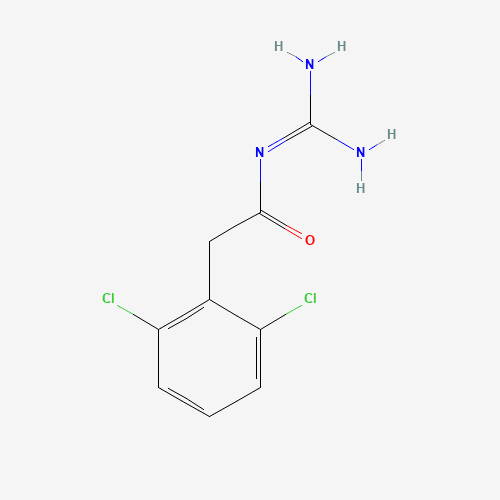
Guanfacine is a selective alpha-2A adrenergic agonist, first used to lower blood pressure, whose extended-release form (Intuniv) is approved for ADHD in children and adolescents, alone or added to a stimulant [1]; Japan approved it for adults in 2019 [2]. In pediatric trials it reduced ADHD symptoms by a moderate amount, at the cost of sleepiness and lower blood pressure and pulse [3][4]. Its reputation as a cognitive enhancer comes from monkey studies showing that it strengthens prefrontal working-memory circuits [5][6], but it did not improve memory or executive function in healthy young men or in healthy adults over 75 [7][8].
An established non-stimulant for childhood ADHD with a moderate effect and sedation and lower blood pressure as the price; the prefrontal mechanism behind its nootropic reputation is well worked out in monkeys but has mostly not translated into better cognition in healthy people.
- meta-analysis
- RCT
- trial
- observational
- preclinical / case
- review / patent / other
- retracted
- + Moderate reductions in ADHD symptoms in children and adolescents across a dozen placebo-controlled trials, alone or added to a stimulant
- + Fewer treatment failures than placebo over 26 weeks in a randomized-withdrawal trial
- + Not a stimulant and not a controlled substance, with no known potential for abuse
- + Improved ADHD symptoms in Japanese adults over 10 weeks, with gains holding in a year-long extension
- + In hypertension it lowered blood pressure as well as clonidine with less sleepiness, and blood pressure rose more gradually when it was stopped
- + Cut hyperactivity scores by 44% (13% on placebo) in children with autism over 8 weeks
- + Taken once a day; its half-life is about 13–18 hours
- − Sleepiness is the commonest effect, reported by half of children on 4 mg a day, along with fatigue and headache
- − Lowers blood pressure and pulse; fainting and orthostatic hypotension have been reported
- − Stopping abruptly can cause rebound hypertension, so doses are tapered
- − More trial dropouts than placebo in children and in adults
- − Did not improve memory or executive function in healthy young men or healthy adults over 75
- − No benefit over placebo in two PTSD trials or for tics alone
- − CYP3A4 inhibitors and inducers change its levels enough to need dose adjustment
Guanfacine was approved in the United States as an antihypertensive in 1986 [1], and its extended-release form was approved for ADHD in 2009 as Intuniv [9]. It is now approved for ADHD in the United States, Canada, Europe and Japan, and in Japan for adults too [2][9]. The ADHD use grew out of Arnsten's monkey research on the prefrontal cortex [9].
ADHD in children and adolescents. In fixed-dose trials, 2, 3 and 4 mg a day each lowered ADHD Rating Scale scores by about 16–19 points against 8.5 on placebo [10], with effect sizes of 0.43–0.62 [11]. Added to a stimulant in 461 children with a partial response, it improved symptoms further [12]. In adolescents, flexible doses of 1–7 mg improved symptoms (effect size 0.52) but not school or family functioning [13], and in a randomized-withdrawal trial 49.3% of responders kept on guanfacine relapsed over 26 weeks against 64.9% switched to placebo [14]. Pooling nine monotherapy trials, alpha-2 agonists reduced symptoms with a standardized mean difference of −0.59, and as add-ons −0.36 [3]; in a 2023 meta-analysis of 12 guanfacine trials, 58.5% responded against 29.4% on placebo in trials under 10 weeks [15]. The 2018 network meta-analysis put guanfacine's effect on clinician-rated symptoms at −0.67, similar to methylphenidate, but found no significant effect on teachers' or parents' ratings and more dropouts for side effects than placebo [16].
Tics and autism. In children with both tic disorders and ADHD, guanfacine improved teacher-rated ADHD scores by 37% against 8% and tic severity by 31% against none [17], but in a later trial in children with tics alone it was no better than placebo [18]. In 62 children with autism and hyperactivity, the extended-release form cut hyperactivity scores by 43.6% against 13.2%, with no change on a brief working-memory battery [19].
Adults with ADHD. The 2018 network meta-analysis found no adult trials [16]. In 201 Japanese adults, 4–6 mg a day improved symptoms with an effect size of 0.52, but 19.8% stopped for side effects against 3.0% on placebo [20], and the gains held in a 50-week open extension [2]. A 2023 meta-analysis of two adult trials found an effect size of −0.66 [21], whereas a 2025 network meta-analysis of adult treatments found guanfacine markedly less acceptable than placebo (odds ratio of stopping 3.70) and counted only stimulants and atomoxetine as effective on both self- and clinician-rated symptoms [22].
Cognition in healthy people. In aged monkeys, low doses improved working memory without lowering blood pressure or causing sedation [6]. In healthy young volunteers, a single 29 µg/kg dose improved paired-associates learning but not short-term recognition memory [23], and unlike clonidine it did not slow responses on a demanding attention test [24]. In 60 healthy young men, 1 or 2 mg had no effect on any memory or executive-function test, with trends toward worse backward digit span and slower reactions [7], and in 123 healthy adults over 75, 0.1 or 0.5 mg a day for 12 weeks did not improve executive function, quality of life or global function [8]. In an early comparison in healthy young men, 2–4 mg lowered systolic blood pressure without changing objective performance, its side effects such as tiredness came later and were milder than clonidine's, and 1 mg at night left REM sleep unchanged where clonidine reduced it [25]. Arnsten's group suggests that healthy prefrontal circuits may already work near their ceiling [9]. One month after mild traumatic brain injury, a 2 mg dose improved working memory in injured people but not controls [26].
Stress, craving and other uses. In 33 smokers, 3 mg a day removed the effect of stress on how long they could resist smoking in the laboratory and reduced cigarettes per day during a quit attempt, though no one stayed fully abstinent [27]. In 29 people abstinent from cocaine, up to 3 mg a day lowered cue-induced craving, anxiety and arousal [28]. In veterans with chronic PTSD, two placebo-controlled trials found no benefit [29][30]. Reports of guanfacine for delirium in hospital are case reports and retrospective cohorts, with no randomized trial [31]; Arnsten's group notes that it is being studied in large delirium trials and in open-label studies of cognitive symptoms after COVID-19 [32].
Hypertension. Added to a diuretic, 1 mg at bedtime lowered blood pressure by 14/13 mmHg, while 2–3 mg added side effects without further benefit [33]. Against clonidine it controlled blood pressure about as often (55% against 59% of patients) with less somnolence (21% against 35%) [34].
Alpha-2A selectivity. Guanfacine binds the alpha-2A receptor with 15–20 times the affinity it has for the alpha-2B and alpha-2C subtypes [1]. Clonidine is less selective; Jäkälä's group attributed clonidine's worse effects on attention to its lower alpha-2A/2C selectivity and its affinity for alpha-1 receptors [24]. In aged monkeys the two drugs had opposite dose–response profiles: low doses of guanfacine improved working memory without hypotension or sedation, which appeared only at higher doses, whereas low doses of clonidine impaired memory [6].
Prefrontal working-memory circuits. In the dorsolateral prefrontal cortex, information is held in mind by networks of neurons that keep firing through a delay. Alpha-2A receptors sit on the dendritic spines of these neurons next to HCN channels. Stimulating the receptors lowers cAMP, closing the channels and strengthening the connections between neurons; guanfacine applied to single prefrontal neurons enhanced their delay-period firing, and blocking or knocking down HCN1 channels in the prefrontal cortex improved working memory [5][9]. Guanfacine improved working memory in mice but not in mice whose alpha-2A receptors cannot bind agonists, and infusions into the prefrontal cortex of monkeys and aged rats improved working memory [9]. Arnsten's group argues that these effects are larger in primates because the prefrontal cortex is more developed [9].
Blood pressure. Acting on central alpha-2A receptors, it reduces sympathetic outflow from the brainstem, lowering vascular resistance and heart rate [1]. In hypertensive patients, plasma and urinary norepinephrine and plasma renin activity fell in step with blood pressure [35].
Stress and inflammation. Arnsten's reviews add actions outside the prefrontal cortex: weakening amygdala plasticity, reducing norepinephrine release from the locus coeruleus, and deactivating microglia [9][32]. These are proposed mechanisms for its use in stress-related and neuroinflammatory disorders, drawn mostly from animal work.
The prescribing information states that how guanfacine works in ADHD is not known and that it is not a stimulant [1].
- Alpha-2A adrenergic receptoractivatesstrong
- cAMP–HCN channel signaling in prefrontal dendritic spinesblocksmoderate
- Central sympathetic outflowblocksstrong
- Microglia and inflammatory signalingmodulatesunclear
Formulation
how the form changes blood levelsImmediate release against Intuniv. In adults, 1 mg of Intuniv gave a 60% lower peak (1.0 against 2.5 ng/mL), 43% less total exposure, a peak 3 hours later and a similar half-life (18 against 16 hours) compared with 1 mg of immediate release; the label therefore says not to switch milligram for milligram [1]. In five adult smokers, 3 mg a day of immediate release and 4 mg a day of extended release gave the same trough level [36].
Food and handling. A high-fat breakfast raised Intuniv's peak by about 75% and exposure by about 40%, and crushing, chewing or breaking the tablet speeds release [1].
Age and weight. Children had higher levels than adolescents on the same dose (peaks of 10.1 against 7.0 ng/mL at 4 mg a day), which the authors attributed to body weight [37]; the label therefore targets a weight-based range [1].
Dosing
as studied or commonly reported; not a recommendationDoses below are what studies used or, where marked, what is commonly reported. None is a recommendation.
Oral
- 2, 3 or 4 mg/day (extended release)
- 1, 2, 3 or 4 mg/day (extended release)
- 1–4 mg/day (extended release)
- 1–7 mg/day (extended release)314 adolescents aged 13–17 with ADHD; effect size 0.52, with almost half needing more than 4 mgonce daily, dose optimized · 13 weekshuman study[13]
- 1–7 mg/day (extended release)children and adolescents with ADHD who had responded; treatment failure in 49.3% kept on guanfacine against 64.9% switched to placeboonce daily · 13 weeks open-label, then 26 weeks randomized withdrawalhuman study[14]
- 4–6 mg/day (extended release)
- 1–4 mg/day (extended release; modal 3 mg)62 children with autism and hyperactivity; hyperactivity scores fell 43.6% against 13.2% on placebo8 weekshuman study[19]
- 1 mg/day362 adults with mild to moderate hypertension; lowered blood pressure by 14/13 mmHg, and 2–3 mg added side effects but no further benefitat bedtime, with chlorthalidone · 12 weekshuman study[33]
- 7 or 29 µg/kg
- 1 or 2 mg60 healthy young men; no effect on any memory or executive-function testsingle dose, testing 2–4 hours laterhuman study[7]
- 0.1 or 0.5 mg/day123 cognitively normal adults aged 75 and over; no improvement in prefrontal executive function, quality of life or global functionat bedtime · 12 weekshuman study[8]
- 2 mg13 people one month after mild traumatic brain injury and 14 controls; working memory improved in the injured group onlysingle dose, crossed over with placebohuman study[26]
- 3 mg/day33 daily smokers; fewer cigarettes and better retention than placebo, but no one stayed fully abstinenttitrated over about 3 weeks · 4 weeks after a quit datehuman study[27]
- up to 3 mg/day29 people in early abstinence from cocaine; lower cue-induced craving and anxiety in laboratory tests4 weekshuman study[28]
- Form
- Intuniv is a matrix tablet of guanfacine hydrochloride containing 1, 2, 3 or 4 mg of guanfacine base; it must be swallowed whole, because crushing or chewing speeds release, and it is not interchangeable milligram for milligram with immediate-release guanfacine [1]. The identity fields above describe guanfacine itself, not its hydrochloride salt.
- Timing and food
- Intuniv is taken once a day at about the same time, morning or evening, and not with a high-fat meal [1]. Added to a stimulant, morning and evening dosing both worked [12]. In the hypertension and older-adult trials it was taken at bedtime [8][33].
- Time to effect
- The ADHD trials titrated over several weeks and measured benefit at 5–13 weeks [1][13]. Sleepiness, sedation and fatigue appear within the first two weeks and mostly fade [11]; in a two-year study sedative effects peaked in week 3 [38].
- Notes
- These rows report trial regimens, not dosing advice. The US label covers children and adolescents: start at 1 mg a day and raise by no more than 1 mg a week toward 0.05–0.12 mg/kg a day (1–7 mg); doses above 4 mg a day have not been studied in 6–12-year-olds, nor above 7 mg in adolescents [1]. Across pediatric trials benefit rose up to about 4 mg a day with no clear gain above that [39]. Strong and moderate CYP3A4 inhibitors call for half the dose and inducers up to double [1]. To stop, the label tapers by no more than 1 mg every 3–7 days, monitoring blood pressure and pulse, because abrupt withdrawal can cause rebound hypertension [1]. Delirium has been treated in hospital with a median 1.5 mg a day, mostly as immediate release, in case reports and retrospective cohorts, not trials [31].
Pharmacokinetics
what the body does with it| Half-life | About 17 hours after a radiolabeled oral or intravenous dose [40], 13.8 hours in another crossover study [41], and 16 hours for immediate release against 18 hours for Intuniv in adults [1]. After a 2 mg extended-release dose it was 14.4 hours in children and 17.9 hours in adolescents [37]. |
|---|---|
| Time to peak | About 3 hours for immediate release and 6 hours for Intuniv in adults, and about 5 hours for Intuniv in children and adolescents [1]. |
| Peak level | 1.0 ng/mL after 1 mg of Intuniv against 2.5 ng/mL after 1 mg of immediate release in adults [1]. At 4 mg a day of the extended-release form, peaks averaged 10.1 ng/mL in children and 7.0 ng/mL in adolescents [37]. In adult smokers, trough levels were 3.4 ng/mL on 3 mg a day of immediate release and 3.5 ng/mL on 4 mg a day of extended release [36]. |
| Bioavailability | 81% for an oral immediate-release dose [41], close to 100% in a radiolabeled study [40]. Intuniv delivers 43% less exposure than the same dose of immediate release, and a high-fat meal raises its peak by about 75% and exposure by about 40% [1]. About 70% is bound to plasma proteins [1][41]. |
| Steady state | Steady-state levels matched single-dose predictions and rose in proportion to dose [40]; the extended-release form also has linear pharmacokinetics [37]. |
| Metabolism | Mainly by CYP3A4, so CYP3A4 inhibitors and inducers change its levels markedly; it does not inhibit or induce the major CYP enzymes itself [1]. The main metabolite is 3-hydroxy-guanfacine, conjugated as a glucuronide or sulfate [40]. |
| Excretion | About 80% of a dose is excreted in urine, roughly 30% of it unchanged [40]; renal clearance is about half of total clearance [41]. In severe kidney failure the half-life rose by at most 1.5–2-fold, because liver metabolism takes over [42]. |
Safety
risks and cautions, not medical adviceSedation. In the fixed-dose pediatric trials, somnolence (including sedation) was reported by 28–51% on 1–4 mg a day against 11% on placebo, rising with dose, along with fatigue (14% against 3%) and hypotension (7% against 3%) [1]. Across pediatric trials of alpha-2 agonists, one extra child had somnolence for every four treated as monotherapy [3]. In a two-year open study in 214 children, 36% reported somnolence, sedative effects peaked in week 3, and 3.3% stopped because of side effects [38].
Blood pressure and heart rate. In a 2025 network meta-analysis, stimulants, atomoxetine and viloxazine raised blood pressure and pulse, whereas guanfacine lowered them, by about 3/2 mmHg and 4 beats per minute in children and adolescents and by about 10/8 mmHg and 7 beats per minute in adults (mostly low or very low confidence) [4]. In the Japanese adult extension, 20% had a fall in blood pressure and 17% bradycardia [2]. The label warns of hypotension, bradycardia, fainting and worsening of heart-block or sinus-node disease, especially with other drugs that slow the heart [1].
QT interval. A meta-analysis flagged QTc prolongation with the extended-release form in pediatric trials [3], but a thorough QT study in 83 healthy adults found no clinically relevant prolongation at 4 or 8 mg of immediate release, after individual heart-rate correction [43].
Withdrawal. The label reports clinically significant, persistent rebound hypertension, and hypertensive encephalopathy, after abrupt discontinuation, often of high doses alongside a stimulant [1]. In 1980s hypertension trials, stopping clonidine abruptly raised blood pressure rapidly whereas stopping guanfacine raised it more gradually [34], and in five patients blood pressure returned to pre-treatment levels over four days without overshoot [35].
Overdose. Overdose causes drowsiness, lethargy, bradycardia and hypotension, sometimes after an initial rise in blood pressure, and the label advises observing children for up to 24 hours because hypotension can be delayed [1]. A 16-year-old who took 25 mg had early hypertension, then orthostatic hypotension and a QTc of 593 ms 30 hours later, and recovered with fluids [44].
Pregnancy. Decades of use have not identified a risk of birth defects, but use in pregnancy has been infrequent [1].
- Taper by no more than 1 mg every 3–7 days; abrupt withdrawal can cause rebound hypertension [1]
- Monitor blood pressure and heart rate, especially with heart block, bradycardia, cardiovascular disease or other drugs that lower blood pressure [1]
- Avoid alcohol, and do not drive until its sedative effect is known [1]
- CYP3A4 inhibitors and inducers call for dose changes [1]
- After an overdose, children should be watched for up to 24 hours for delayed hypotension [1]
- Most efficacy data are short pediatric trials of the extended-release form; in the 2018 network meta-analysis, teacher and parent ratings did not show a significant effect [16]
- Adult evidence is thin: two randomized trials, both in Japan for the extended-release form, and lower acceptability than placebo [21][22]
- The cognitive-enhancement rationale is strongest in monkeys; in healthy humans one small single-dose study found better paired-associates learning, while larger studies in young men and in adults over 75 found nothing [7][8][23]
- The smoking, cocaine and brain-injury studies are small and mostly laboratory-based, and delirium use rests on case series [26][27][28][31]
- The pediatric efficacy and safety trials, the meta-analyses, the hypertension trials, the healthy-volunteer studies and the PTSD trials were read from their abstracts, because the full texts are paywalled; the 1988 aged-monkey study's publisher page was behind a bot check
Interactions
documented pairs only, not exhaustiveStrong and moderate CYP3A4 inhibitors such as ketoconazole and fluconazole raise guanfacine levels, and inducers such as rifampin and efavirenz lower them; the label halves or doubles the dose accordingly [1]. Antihypertensives, other sympatholytic drugs and drugs that slow the heart add to its effects on blood pressure and conduction, and alcohol and other sedatives add to its sedation [1]. It did not change exposure to methylphenidate or lisdexamfetamine [1], and it has been studied added to long-acting stimulants without new safety signals [12]; rebound hypertension after stopping it has been reported in people also taking a stimulant [1].
- AdderallcautionAdded to a long-acting stimulant in children with a partial response, guanfacine improved symptoms with no new safety signals, and it does not change methylphenidate or lisdexamfetamine exposure; rebound hypertension after stopping guanfacine has been reported in people also taking a stimulant, so it is tapered [1][12]
- VyvansecautionAdded to a long-acting stimulant in children with a partial response, guanfacine improved symptoms with no new safety signals, and it does not change methylphenidate or lisdexamfetamine exposure; rebound hypertension after stopping guanfacine has been reported in people also taking a stimulant, so it is tapered [1][12]
- ConcertacautionAdded to a long-acting stimulant in children with a partial response, guanfacine improved symptoms with no new safety signals, and it does not change methylphenidate or lisdexamfetamine exposure; rebound hypertension after stopping guanfacine has been reported in people also taking a stimulant, so it is tapered [1][12]
- RitalincautionAdded to a long-acting stimulant in children with a partial response, guanfacine improved symptoms with no new safety signals, and it does not change methylphenidate or lisdexamfetamine exposure; rebound hypertension after stopping guanfacine has been reported in people also taking a stimulant, so it is tapered [1][12]
- Another sympatholytic adds to guanfacine's lowering of blood pressure and heart rate and can worsen sinus-node dysfunction or heart block; the label advises slow titration and frequent monitoring [1]
- Trazodonecaution
Arnsten and colleagues reported in 1988 that guanfacine improved working memory in aged monkeys without the sedation and hypotension of clonidine [6], and the extended-release form for ADHD followed that line of research [9]. The FDA approved Intuniv in 2009 [9], and Japan approved it for adults in June 2019 [2].
- Is guanfacine a stimulant?
- No. It is a central alpha-2A adrenergic agonist, not a stimulant, and it is not a controlled substance [1].
- Does guanfacine improve focus or memory in healthy people?
- Mostly not. One single-dose study in young volunteers found better paired-associates learning [23], but 1–2 mg did nothing for memory or executive function in 60 healthy young men [7], and 12 weeks did not improve executive function in adults over 75 [8]. The strong working-memory effects come from monkeys [5][6].
- How is it different from clonidine?
- Guanfacine is more selective for the alpha-2A receptor [1][24]. In hypertension trials it caused less somnolence and a slower rise in blood pressure after abrupt withdrawal [34], and in healthy volunteers clonidine, but not guanfacine, slowed responses on a demanding attention task at doses that sedated equally [24].
- Can it be stopped suddenly?
- It should not be. Abrupt withdrawal has caused rebound hypertension, so the label tapers the dose by no more than 1 mg every 3–7 days [1].
References
entry last reviewed 2026-10-16- [1]INTUNIV (guanfacine) extended-release tablets, for oral use Initial U.S. Approval: 1986DailyMed prescribing information 2025other◌ unreviewed
- [2]Safety and efficacy of guanfacine extended-release in adults with attention-deficit/hyperactivity disorder: an open-label, long-term, phase 3 extension study.Iwanami A, Saito K, Fujiwara M et al.BMC Psychiatry 2020clinical trial · humanPMID 33008345◌ unreviewed
- [3]Alpha-2 agonists for attention-deficit/hyperactivity disorder in youth: a systematic review and meta-analysis of monotherapy and add-on trials to stimulant therapy.Hirota T, Schwartz S, Correll CUJ Am Acad Child Adolesc Psychiatry 2014meta-analysis · humanPMID 24472251◌ unreviewed
- [4]Comparative cardiovascular safety of medications for attention-deficit hyperactivity disorder in children, adolescents, and adults: a systematic review and network meta-analysis.Farhat LC, Lannes A, Del Giovane C et al.Lancet Psychiatry 2025meta-analysis · humanPMID 40203844◌ unreviewed
- [5]Alpha2A-adrenoceptors strengthen working memory networks by inhibiting cAMP-HCN channel signaling in prefrontal cortex.Wang M, Ramos BP, Paspalas CD et al.Cell 2007preclinical · animalPMID 17448997◌ unreviewed
- [6]The alpha-2 adrenergic agonist guanfacine improves memory in aged monkeys without sedative or hypotensive side effects: evidence for alpha-2 receptor subtypes.Arnsten AF, Cai JX, Goldman-Rakic PSJ Neurosci 1988preclinical · animalPMID 2903226◌ unreviewed
- [7]Lack of effects of guanfacine on executive and memory functions in healthy male volunteers.Müller U, Clark L, Lam ML et al.Psychopharmacology (Berl) 2005RCT · humanPMID 16078088◌ unreviewed
- [8]Guanfacine treatment for prefrontal cognitive dysfunction in older participants: a randomized clinical trial.Barcelos NM, Van Ness PH, Wagner AF et al.Neurobiol Aging 2018RCT · humanPMID 30007160◌ unreviewed
- [9]Guanfacine's mechanism of action in treating prefrontal cortical disorders: Successful translation across species.Arnsten AFTNeurobiol Learn Mem 2020reviewPMID 33075480◌ unreviewed
- [10]A randomized, double-blind, placebo-controlled study of guanfacine extended release in children and adolescents with attention-deficit/hyperactivity disorder.Biederman J, Melmed RD, Patel A et al.Pediatrics 2008RCT · humanPMID 18166547◌ unreviewed
- [11]Guanfacine extended release in children and adolescents with attention-deficit/hyperactivity disorder: a placebo-controlled trial.Sallee FR, McGough J, Wigal T et al.J Am Acad Child Adolesc Psychiatry 2009RCT · humanPMID 19106767◌ unreviewed
- [12]A controlled trial of extended-release guanfacine and psychostimulants for attention-deficit/hyperactivity disorder.Wilens TE, Bukstein O, Brams M et al.J Am Acad Child Adolesc Psychiatry 2012RCT · humanPMID 22176941◌ unreviewed
- [13]A Randomized, Placebo-Controlled Trial of Guanfacine Extended Release in Adolescents With Attention-Deficit/Hyperactivity Disorder.Wilens TE, Robertson B, Sikirica V et al.J Am Acad Child Adolesc Psychiatry 2015RCT · humanPMID 26506582◌ unreviewed
- [14]Extended-release guanfacine hydrochloride in 6-17-year olds with ADHD: a randomised-withdrawal maintenance of efficacy study.Newcorn JH, Harpin V, Huss M et al.J Child Psychol Psychiatry 2016RCT · humanPMID 26871297◌ unreviewed
- [15]Guanfacine for the Treatment of Attention-Deficit Hyperactivity Disorder: An Updated Systematic Review and Meta-Analysis.Yu S, Shen S, Tao MJ Child Adolesc Psychopharmacol 2023meta-analysis · humanPMID 36944092◌ unreviewed
- [16]Comparative efficacy and tolerability of medications for attention-deficit hyperactivity disorder in children, adolescents, and adults: a systematic review and network meta-analysis.Cortese S, Adamo N, Del Giovane C et al.Lancet Psychiatry 2018meta-analysis · humanPMID 30097390◌ unreviewed
- [17]A placebo-controlled study of guanfacine in the treatment of children with tic disorders and attention deficit hyperactivity disorder.Scahill L, Chappell PB, Kim YS et al.Am J Psychiatry 2001RCT · humanPMID 11431228◌ unreviewed
- [18]Extended-Release Guanfacine Does Not Show a Large Effect on Tic Severity in Children with Chronic Tic Disorders.Murphy TK, Fernandez TV, Coffey BJ et al.J Child Adolesc Psychopharmacol 2017RCT · humanPMID 28723227◌ unreviewed
- [19]Extended-Release Guanfacine for Hyperactivity in Children With Autism Spectrum Disorder.Scahill L, McCracken JT, King BH et al.Am J Psychiatry 2015RCT · humanPMID 26315981◌ unreviewed
- [20]Efficacy and Safety of Guanfacine Extended-Release in the Treatment of Attention-Deficit/Hyperactivity Disorder in Adults: Results of a Randomized, Double-Blind, Placebo-Controlled Study.Iwanami A, Saito K, Fujiwara M et al.J Clin Psychiatry 2020RCT · humanPMID 32297719◌ unreviewed
- [21]Nonstimulant Medications for Attention-Deficit/Hyperactivity Disorder (ADHD) in Adults: Systematic Review and Meta-analysis.Radonjić NV, Bellato A, Khoury NM et al.CNS Drugs 2023meta-analysis · humanPMID 37166701◌ unreviewed
- [22]Comparative efficacy and acceptability of pharmacological, psychological, and neurostimulatory interventions for ADHD in adults: a systematic review and component network meta-analysis.Ostinelli EG, Schulze M, Zangani C et al.Lancet Psychiatry 2025meta-analysis · humanPMID 39701638◌ unreviewed
- [23]Guanfacine and clonidine, alpha 2-agonists, improve paired associates learning, but not delayed matching to sample, in humans.Jäkälä P, Sirviö J, Riekkinen M et al.Neuropsychopharmacology 1999RCT · humanPMID 9885792◌ unreviewed
- [24]Clonidine, but not guanfacine, impairs choice reaction time performance in young healthy volunteers.Jäkälä P, Riekkinen M, Sirviö J et al.Neuropsychopharmacology 1999RCT · humanPMID 10481832◌ unreviewed
- [25]Central effects of guanfacine and clonidine during wakefulness and sleep in healthy subjects.Spiegel R, DeVos JEBr J Clin Pharmacol 1980RCT · humanPMID 6994771◌ unreviewed
- [26]Alpha-2 adrenergic challenge with guanfacine one month after mild traumatic brain injury: altered working memory and BOLD response.McAllister TW, McDonald BC, Flashman LA et al.Int J Psychophysiol 2011RCT · humanPMID 21767584◌ unreviewed
- [27]A translational investigation targeting stress-reactivity and prefrontal cognitive control with guanfacine for smoking cessation.McKee SA, Potenza MN, Kober H et al.J Psychopharmacol 2015RCT · humanPMID 25516371◌ unreviewed
- [28]Guanfacine effects on stress, drug craving and prefrontal activation in cocaine dependent individuals: preliminary findings.Fox HC, Seo D, Tuit K et al.J Psychopharmacol 2012RCT · humanPMID 22234929◌ unreviewed
- [29]No improvement of posttraumatic stress disorder symptoms with guanfacine treatment.Neylan TC, Lenoci M, Samuelson KW et al.Am J Psychiatry 2006RCT · humanPMID 17151174◌ unreviewed
- [30]A placebo-controlled trial of guanfacine for the treatment of posttraumatic stress disorder in veterans.Davis LL, Ward C, Rasmusson A et al.Psychopharmacol Bull 2008RCT · humanPMID 18362867◌ unreviewed
- [31]Efficacy and safety of guanfacine in hospitalized patients with delirium: A scoping review.Pattamin N, Phongphithakchai A, Spano S et al.Crit Care Resusc 2024reviewPMID 39781496◌ unreviewed
- [32]Scientific rationale for the use of α2A-adrenoceptor agonists in treating neuroinflammatory cognitive disorders.Arnsten AFT, Ishizawa Y, Xie ZMol Psychiatry 2023reviewPMID 37029295◌ unreviewed
- [33]A multicenter, randomized, double-blind dose-response evaluation of step-2 guanfacine versus placebo in mild to moderate hypertension.Materson BJ, Kessler WB, Alderman MH et al.Am J Cardiol 1986RCT · humanPMID 3513528◌ unreviewed
- [34]Comparison of guanfacine versus clonidine for efficacy, safety and occurrence of withdrawal syndrome in step-2 treatment of mild to moderate essential hypertension.Wilson MF, Haring O, Lewin A et al.Am J Cardiol 1986RCT · humanPMID 3513530◌ unreviewed
- [35]Blood pressure, heart rate, catecholamines and plasma renin activity following institution and withdrawal of guanfacine treatment in moderate hypertension.Manhem P, Hökfelt BBr J Clin Pharmacol 1980clinical trial · humanPMID 6994763◌ unreviewed
- [36]Pharmacokinetics and Pharmacodynamics of Immediate-Release Versus Extended-Release Guanfacine in Adult Daily Smokers.Verplaetse TL, Roberts W, Moore KE et al.J Clin Psychopharmacol 2019clinical trial · humanPMID 30707118◌ unreviewed
- [37]Pharmacokinetics of a guanfacine extended-release formulation in children and adolescents with attention-deficit-hyperactivity disorder.Boellner SW, Pennick M, Fiske K et al.Pharmacotherapy 2007clinical trial · humanPMID 17723079◌ unreviewed
- [38]Long-term safety and efficacy of guanfacine extended release in children and adolescents with ADHD.Huss M, Dirks B, Gu J et al.Eur Child Adolesc Psychiatry 2018clinical trial · humanPMID 29442229◌ unreviewed
- [39]Pharmacological interventions for ADHD: a systematic review and dose-effect network meta-analysis.Nourredine M, Jurek L, Hamza T et al.Lancet Psychiatry 2026meta-analysis · humanPMID 42134365◌ unreviewed
- [40]Pharmacokinetics and metabolism of guanfacine in man: a review.Kiechel JRBr J Clin Pharmacol 1980clinical trial · humanPMID 6994775◌ unreviewed
- [41]The bioavailability and pharmacokinetics of guanfacine after oral and intravenous administration to healthy volunteers.Carchman SH, Crowe JT, Wright GJJ Clin Pharmacol 1987clinical trial · humanPMID 3323255◌ unreviewed
- [42]Pharmacokinetics of guanfacine in patients with impaired renal function and in some elderly patients.Kiechel JRAm J Cardiol 1986clinical trial · humanPMID 3513525◌ unreviewed
- [43]A thorough QT study of guanfacine.Martin P, Satin L, Kahn RS et al.Int J Clin Pharmacol Ther 2015RCT · humanPMID 25109412◌ unreviewed
- [44]Guanfacine overdose resulting in initial hypertension and subsequent delayed, persistent orthostatic hypotension.Minns AB, Clark RF, Schneir AClin Toxicol (Phila) 2010case report · humanPMID 20136479◌ unreviewed
- [45]TRAZODONE HYDROCHLORIDE tablets, for oral use Initial U.S. Approval: 1981DailyMed prescribing information 2025other◌ unreviewed