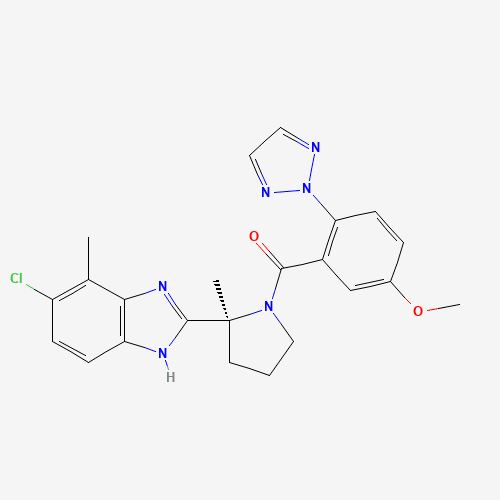
Daridorexant
also Quviviq · ACT-541468 · Nemorexant
Daridorexant (Quviviq) is a dual orexin receptor antagonist from Idorsia, approved for adult insomnia in the United States and the European Union in 2022 [1][2]. With a half-life of about 8 hours it is the shortest-acting of the three licensed orexin antagonists [1][3][4]. In two 3-month phase 3 trials in 1,854 adults, 50 mg cut time awake during the night by 18–23 minutes and time to fall asleep by about 11 minutes compared with placebo, and improved self-rated daytime sleepiness; 25 mg did less and 10 mg had no effect on measured sleep [5]. Benefits held over a further 9 months with no withdrawal or rebound insomnia [6].
An established orexin antagonist with a short half-life and the clearest trial evidence in its class for better self-rated daytime functioning at 50 mg; the gains are modest, and next-morning driving was impaired after the first dose.
- meta-analysis
- RCT
- trial
- observational
- preclinical / case
- review / patent / other
- retracted
- + At 50 mg, 18–23 fewer minutes awake during the night and about 11 minutes faster sleep onset than placebo over 3 months
- + 50 mg also improved self-rated daytime sleepiness, a secondary endpoint in the phase 3 trial
- + The shortest half-life of the licensed orexin antagonists, about 8 hours
- + Up to a year of treatment without withdrawal symptoms or rebound insomnia
- + In adults aged 65 and over, somnolence, dizziness and falls on 50 mg were no more common than on placebo
- + Over 5 nights it did not worsen breathing in mild, moderate or severe sleep apnea or in moderate COPD
- + At 50 mg, recreational users liked it less than high doses of suvorexant and zolpidem
- − Headache and somnolence or fatigue are the commonest side effects
- − Next-morning simulated driving was impaired after the first 50 mg dose, though not after four nights
- − Balance and memory were worse than on placebo when people were woken 4 hours after a dose
- − Sleep paralysis and hallucinations at sleep onset or waking in under 1%
- − Time awake during the night rose by 19–25 minutes on the first night after stopping, as the benefit wore off
- − At two and three times the top dose, recreational users liked it as much as zolpidem and suvorexant; Schedule IV in the United States
- − Allergic reactions including angioedema have been reported since marketing
Daridorexant (ACT-541468) is a dual orexin receptor antagonist (DORA) developed by Idorsia [5]. It was approved in 2022 by the US Food and Drug Administration and the European Medicines Agency [2] for adults with difficulty falling asleep, staying asleep or both [1].
Dose-finding. In 359 adults up to 64 years old, 5–50 mg for 30 days reduced wake after sleep onset and time to fall asleep in a dose-dependent way, sustained to the end of treatment [7]. In 58 adults aged 65–85, doses of 10, 25 and 50 mg cut wake after sleep onset by 32, 45 and 61 minutes against placebo over two nights each [8].
Phase 3. Two trials at 156 sites in 17 countries randomized 1,854 adults to 3 months of 50 mg, 25 mg or placebo (study 1) or 25 mg, 10 mg or placebo (study 2) [5]. On 50 mg, wake after sleep onset fell 23 and 18 minutes more than on placebo at months 1 and 3, latency to persistent sleep 11 and 12 minutes more, and self-reported total sleep rose 22 and 20 minutes more; self-rated daytime sleepiness also improved [5]. On 25 mg the effects were smaller and daytime sleepiness did not improve significantly; in study 2, 25 mg did not significantly shorten sleep onset after correction for multiple testing, and 10 mg had no effect on measured sleep [5]. People aged 65 and over, 39% of study 1, improved as much as younger adults, with a smaller placebo response [9]. Phase 3 trials in Japan (490 adults, 4 weeks) and China (206 adults, 1 month) found similar gains in self-reported and measured sleep [10][11].
Long term. Of the 1,684 people who finished the 3-month trials, 804 entered a 40-week placebo-controlled extension [6]. Adverse events were similar across groups, there was no withdrawal or rebound, and gains in self-rated daytime functioning on 50 mg stayed significant at weeks 12, 24 and 36, while the gain in total sleep was 20 minutes at week 12 and just missed significance afterward [6].
How it compares. In a 2025 network meta-analysis of the three licensed DORAs, 50 mg had the largest effect on self-reported total sleep at month 1, larger than 25 mg and lemborexant 5 mg, while 25 mg was the only daridorexant dose with more somnolence than placebo in the sensitivity analysis [12]. The 2022 Lancet network meta-analysis grouped daridorexant with licensed drugs that work acutely but have poor tolerability or no long-term data, though dropouts for side effects were more likely on zopiclone (odds ratio 3.45) [13]. A 2026 meta-analysis in people aged 65 and over found its adverse-event rate similar to placebo [14].
Other groups. In 60 people aged 55 and over with insomnia and nocturia, 50 mg added about 21 minutes of self-reported sleep over 4 weeks and reduced night-time voids in the first week, though not significantly by week 4 [15].
Orexin and hyperarousal. Orexin neurons fire during wakefulness and fall silent during sleep, and their loss causes narcolepsy [16][17]. Insomnia is associated with a state of hyperarousal, and orexin is a key promoter of arousal; orexin antagonists block this pathway temporarily rather than acting on GABA-A receptors [18].
Binding and design. Daridorexant blocks OX1 and OX2 receptors with Ki values of 0.47 and 0.93 nM [1]. It was chosen from a series of related DORAs by physiology-based modeling of how long each would occupy brain OX2 receptors in humans; the active dose of 25 mg was predicted from an occupancy threshold of about 65% derived from almorexant and suvorexant, and the predictions largely held in the first human trial [19][20].
Effect on the sleeping brain. In pooled phase 3 recordings from 1,466 patients, 50 mg reduced wake-to-wake transitions, made transitions from wake into N1, N2 and REM sleep more likely, and lowered high-frequency beta power during wake and light sleep, which the authors read as reduced hyperarousal; EEG spectra in N2, N3 and REM sleep and sleep spindles did not change, and 25 mg had weaker effects [21].
Metabolites. Its three major metabolites keep some affinity for orexin receptors but do not reach high enough brain concentrations to contribute to its effect [22].
Mechanism-based effects. Dogs given 30 mg/kg a day or more showed cataplexy-like behavior when stimulated, with no effect at 20 mg/kg [1], and the label lists sleep paralysis, hallucinations and cataplexy-like symptoms as class effects [1].
- Cortical hyperarousal during the nightblocksin pooled phase 3 recordings, 50 mg reduced wake-to-wake transitions, increased transitions from wake into sleep and lowered beta-band EEG power during wake and light sleep, without changing deep or REM sleep spectra [21]moderate
Formulation
how the form changes blood levelsSalt and tablets. Quviviq tablets contain daridorexant hydrochloride, which is very slightly soluble in water; each 25 or 50 mg tablet holds 27 or 54 mg of the salt [1].
Absorption. Solubility depends on stomach pH, so famotidine lowered the peak by 39%, though total exposure did not change [23]. A heavy meal slows absorption without reducing exposure [1][2]. Body composition, age and alkaline phosphatase changed exposure by less than 20% in pooled modeling, and kidney impairment did not change it [1][2]. Moderate liver impairment may raise exposure enough to cap the dose at 25 mg [1].
Dosing
as studied or commonly reported; not a recommendationDoses below are what studies used or, where marked, what is commonly reported. None is a recommendation.
Oral
- 25 or 50 mg
- 10 or 25 mgphase 3 study 2: 924 adults with insomnia disorder; 10 mg did not improve measured sleepevery evening · 3 monthshuman study[5]
- 10, 25 or 50 mgextension study in 801 adults; no withdrawal or rebound insomniaevery evening · 40 weeks, after the 3-month trialshuman study[6]
- 5, 10, 25 or 50 mgphase 2 dose-finding trial in 359 adults aged up to 64, against placebo and zolpidem 10 mgonce daily · 30 dayshuman study[7]
- 5, 10, 25 or 50 mg58 adults aged 65–85 with insomnia; doses of 10 mg and above shortened waking and sleep onsettwo nights per dose · five crossover periodshuman study[8]
- 25 or 50 mg
- 50 mg
- 50 mg60 adults aged 55 and over with insomnia and at least three night-time voids; more sleep and briefly fewer voidsonce nightly · 4 weeks, crossed over with placebohuman study[15]
- 50 mg
- 50 or 100 mg60 healthy adults aged 50–79 in a driving simulator 9 hours after dosingat bedtime · 4 nightshuman study[27]
- Form
- Film-coated tablets of 25 and 50 mg of daridorexant, present as the hydrochloride salt (27 and 54 mg of daridorexant hydrochloride) [1]. The identity fields above describe daridorexant itself.
- Timing and food
- Taken no more than once a night, within 30 minutes of going to bed and with at least 7 hours before waking; taking it with or soon after a meal may delay sleep onset [1].
- Time to effect
- Sleep improved from the first nights in the phase 2 trial [7]. In phase 3 the effects were present at month 1 and maintained to month 3 [1], and self-rated daytime functioning on 50 mg improved from the first week [9].
- Notes
- The label's range is 25–50 mg; it recommends 25 mg with moderate CYP3A4 inhibitors and in moderate liver impairment, and advises against strong CYP3A4 inhibitors, strong or moderate inducers and use in severe liver impairment [1]. A pooled analysis of 2,153 participants found efficacy rising steadily with dose without a rise in adverse events, supporting 50 mg as the preferred dose [28]. The 10 mg dose was not effective on measured sleep and is not approved [1][5].
Pharmacokinetics
what the body does with it| Half-life | About 8 hours [1]. |
|---|---|
| Onset | In the phase 2 dose-finding trial, wake after sleep onset and time to fall asleep fell from the first two nights [7]. Taking it with or soon after a meal may delay sleep onset [1]. |
| Time to peak | Within 1–2 hours [1]. A high-fat, high-calorie meal delayed the peak by 1.3 hours and lowered it by 16% without changing total exposure [1]; absorption lag time was modeled at 15 minutes fasting, 25 minutes after a light meal and 46 minutes after a high-fat meal [2]. |
| Peak level | Exposure is proportional to dose from 25 to 50 mg [1]; bioavailability falls and elimination saturates above 50 mg [2]. Raising stomach pH with famotidine lowered the peak by 39% without changing total exposure [23]. |
| Bioavailability | 62%, measured with an intravenous microdose [1][2]; 99.7% bound to plasma proteins, with a volume of distribution of 31 L [1]. |
| Steady state | No accumulation: the profile after repeated doses is similar to that after a single dose [1]. |
| Metabolism | Extensive, 89% by CYP3A4 [1], along seven pathways to three major metabolites that keep some affinity for orexin receptors but reach too little in the brain to contribute [22]. The moderate CYP3A4 inducer efavirenz cut exposure by 61% [23]; by modeling, itraconazole raises it more than 4-fold and rifampin halves it or more [1]. Age, lean body mass, fat mass and alkaline phosphatase changed exposure by less than 20% [2]. |
| Excretion | About 57% in feces and 28% in urine, mostly as metabolites; only traces of unchanged drug [1]. |
Safety
risks and cautions, not medical adviceCommon effects. In phase 3 study 1, adverse events affected 38% on 50 mg and 25 mg against 34% on placebo, most often nasopharyngitis and headache [5]. Headache occurred in 7% on 50 mg against 5% on placebo, somnolence or fatigue in 5–6% against 4%, and nausea in 3% against 2% [1]. In the Japanese trial somnolence rose with dose, to 6.8% on 50 mg against 1.8% on placebo [10]. In people aged 65 and over, somnolence, dizziness and falls on 50 mg each occurred in one person, against one, one and four on placebo [9]. One death from cardiac arrest on 25 mg was judged unrelated [5].
Narcolepsy-like effects. Sleep paralysis occurred in 0.3–0.5% and hallucinations at sleep onset or waking in 0.6% on 25 mg, with none on placebo [1]; no cataplexy or complex sleep behavior was reported in the 40-week extension [6]. Sleep paralysis was its strongest signal in US adverse-event reports [29].
Next-day effects and driving. In a simulator study in 60 healthy adults aged 50–79, the morning after the first dose of 50 mg lane weaving rose by 2.19 cm, and its upper confidence limit crossed the 2.6 cm threshold matched to an alcohol effect; 44% were impaired against 15% improved, and people rated their own driving worse [27]. After four nights the effect was 0.26 cm and not different from placebo [27]. A network meta-analysis of driving studies found daridorexant 100 mg worse than placebo after a single dose [30]. When healthy adults were woken 4 hours after 25 or 50 mg, body sway increased and memory was worse than on placebo, but they woke to sound as readily [1]. In the extension study, morning sleepiness scores did not worsen [6].
Stopping. No withdrawal symptoms appeared after up to a year [1][6], and sleep did not fall below its pre-treatment level [6]. The benefit faded quickly, though: on the first night off 50 mg, wake after sleep onset was 25 minutes longer than on the last treated night [1].
Breathing. Over 5 nights of 50 mg, the apnea–hypopnea index did not rise in mild-to-moderate sleep apnea (difference 0.74 events an hour) [24] or severe sleep apnea (−3.7) [25], and oxygen saturation did not fall in moderate COPD [26]; total sleep time rose in each study [24][25][26]. It has not been studied in mild or severe COPD [1].
Abuse and overdose. In 63 recreational sedative users, drug liking for 50 mg (73 out of 100) was higher than for placebo but lower than for suvorexant 150 mg and zolpidem 30 mg, while 100 and 150 mg were liked about as much as those comparators [31]; daridorexant is in Schedule IV [1]. Among 51 overdoses reported to French poison centers, with a median dose of 200 mg, those taking daridorexant alone mainly became drowsy; severe cases, including coma, involved other drugs or alcohol, and nobody died [32].
Other findings. It is contraindicated after hypersensitivity, as angioedema involving the throat has been reported [1]. At 4 times the top dose it did not prolong the QTc interval [1]. Animal studies found no fetal harm at 8–10 times human exposure, and breast milk carried less than 0.22% of the mother's dose [1][33].
- Headache, somnolence or fatigue, dizziness and nausea [1]
- Next-morning impairment of driving after the first dose [27]
- Sleep paralysis and hypnagogic or hypnopompic hallucinations [1]
- Nightmares or abnormal dreams, and hypersensitivity including angioedema, rash and hives, reported after marketing [1]
- Unsteadiness and poorer memory if woken during the night [1]
- Contraindicated in narcolepsy and after hypersensitivity to daridorexant [1]
- Allow at least 7 hours before waking, and be cautious about driving the next morning, especially early in treatment [1][27]
- Avoid alcohol, strong CYP3A4 inhibitors and strong or moderate inducers; 25 mg with moderate inhibitors or moderate liver impairment [1]
- Older adults are at higher risk of falls from drowsiness [1]
- Use with care in depression and monitor for suicidal thoughts [1]
- Not studied in mild or severe COPD; respiratory effects in sleep apnea cannot be excluded over the long term [1]
- The phase 3 trials were funded by Idorsia [5]
- Effects are modest: at 25 mg sleep onset was not significantly improved in one of the two phase 3 trials, and network meta-analysis rated confidence in DORA comparisons low or very low [5][12]
- Only 48% of those finishing the 3-month trials entered the extension, so the long-term data come from a self-selected group [6]
- The sleep-architecture findings come from a post hoc analysis [21]
- The phase 3 report, the two phase 2 trials, the Japanese and Chinese trials, the abuse, mild-to-moderate sleep apnea, COPD, metabolism and drug-interaction studies, the dose-response analysis and the poison-center series were read from their abstracts, most of them paywalled; the prescribing information supplied adverse-event, middle-of-the-night and discontinuation data
Interactions
documented pairs only, not exhaustiveDaridorexant is cleared mainly by CYP3A4: the label advises against strong inhibitors, recommends 25 mg with moderate inhibitors, and advises against strong or moderate inducers [1]. The moderate inducer efavirenz cut its exposure by 61% [23]. Famotidine lowered its peak level but not total exposure, so acid-reducing drugs need no dose change [23]. Alcohol at 0.6 g/L added to its effects on balance and alertness, and citalopram did not [1]. It raises exposure to drugs cleared by CYP3A4 and P-glycoprotein, so narrow-margin drugs in those pathways need care [1].
The selection of daridorexant (then ACT-541468) from a series of dual orexin antagonists by pharmacokinetic modeling was described in 2017, and the medicinal chemistry behind it in 2020 [19][20]. Phase 3 results were published in 2022 [5], and the FDA and the European Medicines Agency approved it that year [2].
- How is daridorexant different from suvorexant and lemborexant?
- Its half-life is about 8 hours, against about 12 for suvorexant and 17–19 for lemborexant [1][3][4]. In network meta-analysis 50 mg had the largest effect on total sleep and lemborexant the largest on falling asleep, with low confidence in the comparisons [12].
References
entry last reviewed 2026-10-16- [1]QUVIVIQ (daridorexant) tablets, for oral use, CIV Initial U.S. Approval: 2022DailyMed prescribing information 2026other◌ unreviewed
- [2]Population pharmacokinetic modeling of daridorexant, a novel dual orexin receptor antagonist.Krause A, Lott D, Brussee JM et al.CPT Pharmacometrics Syst Pharmacol 2023other · humanPMID 36309969◌ unreviewed
- [3]BELSOMRA (suvorexant) tablets, for oral use, C-IV Initial U.S. Approval: 2014DailyMed prescribing information 2025other◌ unreviewed
- [4]DAYVIGO (lemborexant) tablets, for oral use, CIV Initial U.S. Approval: 2019DailyMed prescribing information 2025other◌ unreviewed
- [5]Safety and efficacy of daridorexant in patients with insomnia disorder: results from two multicentre, randomised, double-blind, placebo-controlled, phase 3 trials.Mignot E, Mayleben D, Fietze I et al.Lancet Neurol 2022RCT · humanPMID 35065036◌ unreviewed
- [6]Long-Term Safety and Tolerability of Daridorexant in Patients with Insomnia Disorder.Kunz D, Dauvilliers Y, Benes H et al.CNS Drugs 2023RCT · humanPMID 36484969◌ unreviewed
- [7]Daridorexant, a New Dual Orexin Receptor Antagonist to Treat Insomnia Disorder.Dauvilliers Y, Zammit G, Fietze I et al.Ann Neurol 2020RCT · humanPMID 31953863◌ unreviewed
- [8]Daridorexant, a new dual orexin receptor antagonist, in elderly subjects with insomnia disorder.Zammit G, Dauvilliers Y, Pain S et al.Neurology 2020RCT · humanPMID 32341187◌ unreviewed
- [9]Efficacy and Safety of Daridorexant in Older and Younger Adults with Insomnia Disorder: A Secondary Analysis of a Randomised Placebo-Controlled Trial.Fietze I, Bassetti CLA, Mayleben DW et al.Drugs Aging 2022RCT · humanPMID 36098936◌ unreviewed
- [10]Daridorexant in Japanese patients with insomnia disorder: A phase 3, randomized, double-blind, placebo-controlled study.Uchimura N, Taniguchi M, Ariyoshi Y et al.Sleep Med 2024RCT · humanPMID 39116704◌ unreviewed
- [11]Efficacy and safety of daridorexant in Chinese patients with insomnia disorder: a multicenter, randomized, double-blind, placebo-controlled phase III clinical trial.Huang Z, Wang H, Zhang B et al.Sleep 2025RCT · humanPMID 40557879◌ unreviewed
- [12]Comparative efficacy and safety of daridorexant, lemborexant, and suvorexant for insomnia: a systematic review and network meta-analysis.Kishi T, Ikuta T, Citrome L et al.Transl Psychiatry 2025meta-analysis · humanPMID 40555730◌ unreviewed
- [13]Comparative effects of pharmacological interventions for the acute and long-term management of insomnia disorder in adults: a systematic review and network meta-analysis.De Crescenzo F, D'Alò GL, Ostinelli EG et al.Lancet 2022meta-analysis · humanPMID 35843245◌ unreviewed
- [14]Treatment of chronic insomnia in elderly adults with dual orexin receptor antagonists: a systematic review and meta-analysis.Rollo E, Antonioni A, Manzoli L et al.Sleep 2026meta-analysis · humanPMID 42143581◌ unreviewed
- [15]A randomised crossover trial of daridorexant for the treatment of chronic insomnia and nocturia.Lederer K, Benes H, Fine A et al.J Sleep Res 2025RCT · humanPMID 40083090◌ unreviewed
- [16]International Union of Basic and Clinical Pharmacology. LXXXVI. Orexin receptor function, nomenclature and pharmacology.Gotter AL, Webber AL, Coleman PJ et al.Pharmacol Rev 2012reviewPMID 22759794◌ unreviewed
- [17]Narcolepsy in orexin knockout mice: molecular genetics of sleep regulation.Chemelli RM, Willie JT, Sinton CM et al.Cell 1999preclinical · animalPMID 10481909◌ unreviewed
- [18]The orexin story and orexin receptor antagonists for the treatment of insomnia.Muehlan C, Roch C, Vaillant C et al.J Sleep Res 2023reviewPMID 37086045◌ unreviewed
- [19]The Use of Physiology-Based Pharmacokinetic and Pharmacodynamic Modeling in the Discovery of the Dual Orexin Receptor Antagonist ACT-541468.Treiber A, de Kanter R, Roch C et al.J Pharmacol Exp Ther 2017other · humanPMID 28663311◌ unreviewed
- [20]The Quest for the Best Dual Orexin Receptor Antagonist (Daridorexant) for the Treatment of Insomnia Disorders.Boss C, Gatfield J, Brotschi C et al.ChemMedChem 2020preclinical · animalPMID 32937014◌ unreviewed
- [21]Effect of daridorexant on sleep architecture in patients with chronic insomnia disorder: a pooled post hoc analysis of two randomized phase 3 clinical studies.Di Marco T, Djonlagic I, Dauvilliers Y et al.Sleep 2024RCT · humanPMID 38644625◌ unreviewed
- [22]The metabolism of the dual orexin receptor antagonist daridorexant.Treiber A, Delahaye S, Weigel A et al.Xenobiotica 2023other · humanPMID 36809238◌ unreviewed
- [23]Effect of gastric pH and of a moderate CYP3A4 inducer on the pharmacokinetics of daridorexant, a dual orexin receptor antagonist.Gehin M, Wierdak J, Sabattini G et al.Br J Clin Pharmacol 2022clinical trial · humanPMID 34371524◌ unreviewed
- [24]Effect of the new dual orexin receptor antagonist daridorexant on nighttime respiratory function and sleep in patients with mild and moderate obstructive sleep apnea.Boof ML, Dingemanse J, Lederer K et al.Sleep 2021RCT · humanPMID 33305817◌ unreviewed
- [25]Daridorexant in severe obstructive sleep apnea: effects on sleep-disordered breathing and sleep.Fietze I, Boof ML, Lederer K et al.Sleep 2026RCT · humanPMID 42171662◌ unreviewed
- [26]Effect of the novel dual orexin receptor antagonist daridorexant on night-time respiratory function and sleep in patients with moderate chronic obstructive pulmonary disease.Boof ML, Dingemanse J, Brunke M et al.J Sleep Res 2021RCT · humanPMID 33417730◌ unreviewed
- [27]Driving Performance after Bedtime Administration of Daridorexant, Assessed in a Sensitive Simulator.Muehlan C, Brooks S, Vaillant C et al.Clin Pharmacol Ther 2022RCT · humanPMID 35426136◌ unreviewed
- [28]Dose-response of daridorexant in insomnia disorder: An analysis of Phase 2 and 3 studies.Luyet PP, McCall WV, Bassetti CLA et al.Sleep Med 2024meta-analysis · humanPMID 39047305◌ unreviewed
- [29]Safety of dual orexin receptor antagonists: a real-world pharmacovigilance study.Sun Y, Xu T, Xu HExpert Opin Drug Saf 2026observational · humanPMID 39985333◌ unreviewed
- [30]Residual effects of medications for sleep disorders on driving performance: A systematic review and network meta-analysis of randomized controlled trials: NMA driving and hypnotics.Fornaro M, Caiazza C, Rossano F et al.Eur Neuropsychopharmacol 2024meta-analysis · humanPMID 38401406◌ unreviewed
- [31]Abuse potential assessment of the new dual orexin receptor antagonist daridorexant in recreational sedative drug users as compared to suvorexant and zolpidem.Ufer M, Kelsh D, Schoedel KA et al.Sleep 2022RCT · humanPMID 34480579◌ unreviewed
- [32]Clinical toxicity of daridorexant: a retrospective analysis of poison centre data.von Fabeck K, Boudsocq JP, Boye M et al.Clin Toxicol (Phila) 2026observational · humanPMID 41700897◌ unreviewed
- [33]Transfer of the Dual Orexin Receptor Antagonist Daridorexant into Breast Milk of Healthy Lactating Women.Kaufmann P, Muehlan C, Anliker-Ort M et al.J Clin Pharmacol 2024clinical trial · humanPMID 38736033◌ unreviewed
- [34]TRAZODONE HYDROCHLORIDE tablets, for oral use Initial U.S. Approval: 1981DailyMed prescribing information 2025other◌ unreviewed
- [35]INTUNIV (guanfacine) extended-release tablets, for oral use Initial U.S. Approval: 1986DailyMed prescribing information 2025other◌ unreviewed