Seltorexant
also JNJ-42847922 · MIN-202
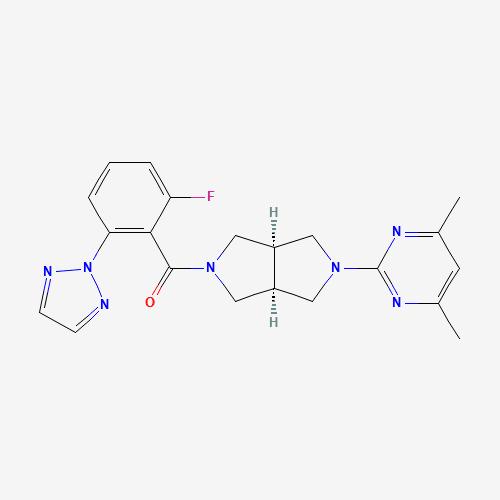
Seltorexant (JNJ-42847922, MIN-202) is an investigational selective orexin-2 receptor antagonist from Janssen, developed with Minerva Neurosciences as an add-on treatment for major depression with insomnia symptoms [1]. Unlike the licensed dual orexin antagonists it binds the OX2 receptor about 100 times more tightly than OX1, and its half-life is only 2–3 hours [1][2]. Added to an antidepressant, 20 mg at bedtime lowered depression scores by about 3 points more than placebo in a phase 2 trial, mostly in people with marked insomnia [3], and a 586-patient phase 3 trial reported a 2.6-point advantage [4]; a head-to-head phase 3 trial against quetiapine missed its primary endpoint, and as of mid-2026 it was not approved anywhere [1].
A promising but unapproved selective orexin-2 blocker with a small, reproducible antidepressant effect at 20 mg in depression with insomnia; the main phase 3 result is not yet published in full, one phase 3 trial failed its primary endpoint, and 40 mg works worse than 20 mg.
- meta-analysis
- RCT
- trial
- observational
- preclinical / case
- review / patent / other
- retracted
- + Added to an antidepressant, 20 mg lowered depression scores more than placebo, most clearly in people with significant insomnia
- + The antidepressant effect remained when the sleep items were removed from the rating scales
- + A short half-life of 2–3 hours, with few residual central effects in healthy volunteers
- + In insomnia without psychiatric illness, 10–20 mg shortened the time to fall asleep by 36–49% against placebo on the first night
- + Fewer adverse events than quetiapine extended release over 24 weeks
- + Did not release dopamine in the reward circuit or produce place preference in rodents, unlike zolpidem
- − Somnolence, headache and nausea are the commonest side effects
- − 40 mg worked no better than placebo in two depression trials and caused more nightmares, abnormal dreams and sleep paralysis
- − The antidepressant effect is modest, about 2.6–3.1 points on the MADRS depression scale against placebo
- − A phase 3 trial against quetiapine extended release missed its primary endpoint
- − Long-term safety beyond 6 months, abuse potential and drug interactions have not been reported
- − Rises in liver enzymes led two people on 20 mg to stop in a monotherapy trial
Seltorexant came out of a Janssen medicinal-chemistry program and has been developed with Minerva Neurosciences [1]. It was first tested as an insomnia drug [5] and is now being developed as an add-on to antidepressants for major depression with insomnia symptoms [1]. As of June 2026 it had no marketing authorization anywhere [1].
Depression, early trials. In 47 people with depression, 20 mg at bedtime for 10 days lowered depression scores more than placebo (adjusted Hamilton score difference −2.2), the effect lasted to 28 days, and the sedating antihistamine diphenhydramine did not help, which argues against simple sedation as the explanation [6]. In a monotherapy trial, after a placebo lead-in, Hamilton scores fell 7.0 points on 20 mg, 5.5 on 40 mg and 4.4 on placebo; only 20 mg beat placebo, the effect was larger with worse baseline insomnia, and it stayed significant with the sleep items removed [7].
Add-on treatment. In a phase 2b adaptive trial in 287 people who had not responded adequately to 1–3 SSRIs or SNRIs, 20 mg added to their antidepressant lowered MADRS scores by 4.5 points more than placebo at week 3 and 3.1 points at week 6 (P = .083, judged against prespecified 90% confidence intervals); in people with an Insomnia Severity Index of 15 or more the week-6 difference was 4.9 points, against 0.7 in those with milder insomnia [3]. Response rates were 41.0% on 20 mg against 28.5% on placebo, and 40 mg was dropped at the interim analysis [3]. In the phase 3 trial MDD3001, 586 adults were randomized to 20 mg or placebo added to their antidepressant, about 70% with moderate-to-severe insomnia; MADRS scores improved 2.6 points more on seltorexant (P = .007), 2.0 points with the sleep item removed, and sleep disturbance scores 3.7 points more [4]. Those results were reported in press releases and posters rather than a full peer-reviewed paper [1][4]. A second phase 3 trial against quetiapine extended release over 26 weeks was reported at meetings as missing its primary endpoint of response rate, and a third, with a maintenance design, was due to finish in late 2026 [1].
Against quetiapine. In an exploratory 24-week trial in 107 people, time to stopping treatment for any reason did not differ between seltorexant and quetiapine extended release (41.2% against 47.1% stopped), MADRS scores improved numerically more in people mostly taking 20 mg, and adverse events were less common (65.4% against 80.8%) [8].
Pooled evidence. A 2026 meta-analysis of add-on orexin antagonists in depression found small improvements in MADRS scores (mean difference −1.96) and in sleep disturbance (PROMIS mean difference −3.39), with no clear excess of adverse events [9]. A 2026 review summarizing a separate meta-analysis attributes the class signal almost entirely to seltorexant 20 mg (standardized mean difference −0.36), with 40 mg and the non-selective antagonists showing no antidepressant effect [1]. A 2025 systematic review likewise found larger antidepressant effects in people with severe sleep disturbance and called for phase 3 confirmation [10].
Insomnia. In 27 people with insomnia, 40 mg for 5 nights raised sleep efficiency by 6–8 points and total sleep by 28–38 minutes and shortened sleep onset by 19–30 minutes against placebo [5]. In 364 adults with insomnia and no psychiatric illness, 10 and 20 mg shortened the time to persistent sleep on the first night by 36% and 49% against placebo, 20 mg beat zolpidem on this measure, and the gains held at night 13; the trial ran in 2017–2019 but was published in 2025 because of internal strategic decisions [11]. The 2022 Lancet network meta-analysis counted seltorexant among drugs that improved sleep quality and were well tolerated, but with too little data for firm conclusions [12].
Why orexin-2. Orexin neurons in the lateral hypothalamus drive wakefulness, and their loss causes narcolepsy [13][14]. The two receptors are spread differently: OX2 predominates in the histamine neurons of the tuberomammillary nucleus and in the hypothalamic paraventricular nucleus that drives the stress hormone axis, whereas OX1 is more prominent in the locus coeruleus [1]. Seltorexant blocks OX2 with about 100-fold selectivity over OX1 [1][2], a profile proposed to promote sleep while preserving normal sleep architecture [2].
In animals. Given to rats by mouth in the light phase, 3–30 mg/kg shortened the time to non-REM sleep and lengthened non-REM sleep in the first 2 hours with little effect on REM sleep; the effect held over 7 days of dosing and sleep returned to baseline after stopping [2]. It did not promote sleep in mice lacking the OX2 receptor, and it neither raised dopamine in the nucleus accumbens nor produced conditioned place preference, unlike zolpidem [2].
Depression and arousal. The rationale for depression is that excess arousal, linked to activation of the stress hormone axis, contributes to depressive symptoms and insomnia [6]. OX2 blockade blunted stress-induced ACTH release in rodents, and the daily rhythm of orexin-A in spinal fluid is flattened in depressed patients [1]. In depressed patients, 20 mg increased delta and reduced faster EEG activity in stage 2 sleep without obvious changes in the hypnogram [6], and lowered the cortisol awakening response [7]. A dual antagonist, filorexant, and a selective OX1 antagonist, tebideutorexant, failed to show antidepressant effects in their own trials, which is consistent with, though it does not prove, an OX2-specific effect [1].
An inverted dose–response. In depression trials 40 mg has repeatedly done worse than 20 mg [3][7]. In the monotherapy trial 40 mg increased total sleep more but also shortened the time to REM sleep and increased light N1 sleep, changes not seen at 20 mg, which the authors suggest may explain the curve [7].
- Orexin 2 receptor (OX2R, HCRTR2)blocksstrong
- weak
- Stress axis (HPA) activationblocksunclear
- Mesolimbic dopamine releaseno bindingdid not raise dopamine in the rat nucleus accumbens or produce conditioned place preference in mice, unlike zolpidem [2]unclear
Formulation
how the form changes blood levelsNo marketed product. Seltorexant has been given as oral capsules in trials [6][7].
Short-acting by design. It is absorbed within about 1.5 hours and eliminated with a half-life of 2–3 hours [15]. In healthy volunteers dosed in the morning for 10 days, 20 mg and above caused somnolence on every study day, while only a mild drop in attention at 4 hours appeared on other central tests [15]. No human receptor-occupancy study has been published [1].
Dosing
as studied or commonly reported; not a recommendationDoses below are what studies used or, where marked, what is commonly reported. None is a recommendation.
Oral
- 20 mg
- 10, 20 or 40 mgphase 2b trial in 287 adults with depression and an inadequate response to 1–3 antidepressants; only 20 mg showed benefitonce daily at bedtime, added to an SSRI or SNRI · 6 weekshuman study[3]
- 20 or 40 mgmonotherapy trial in depression; 86 placebo non-responders analyzed, 20 mg better than placebo15 minutes before bedtime · 5 weeks, after a placebo lead-inhuman study[7]
- 20 mg47 adults with depression, against diphenhydramine 25 mg and placeboonce nightly at bedtime · 10–28 dayshuman study[6]
- 20 or 40 mg, flexibly dosed107 adults with depression, against quetiapine extended release 150–300 mgonce daily, added to an SSRI or SNRI · 24 weekshuman study[8]
- 5, 10 or 20 mg364 adults aged 18–85 with insomnia and no psychiatric illness, against placebo and zolpidemonce nightly, 15 minutes before lights out · 14 nightshuman study[11]
- 40 mg27 adults with insomnia and no psychiatric illnessonce nightly · 5 nights, crossed over with placebohuman study[5]
- 10, 20 or 40 mg20 people with depression and insomnia persisting on antidepressantssingle doses, crossed over with placebohuman study[16]
- 5–60 mg
- 3–30 mg/kg (human equivalent ≈0.48–4.8 mg/kg)
- Form
- Not marketed. Trials used oral capsules, with 20 mg given as two 10 mg capsules in the monotherapy trial [6][7].
- Timing and food
- Taken at bedtime in the depression trials, about 3 hours after the last meal in the phase 2b trial [3], and 15 minutes before lights out in the insomnia trial [11].
- Time to effect
- In the phase 2b trial the antidepressant effect of 20 mg was largest at week 3 and smaller, and not statistically significant at the conventional level, by week 6 [3]. In a smaller trial it was present by day 10 [6]. Sleep onset improved from the first night [11].
- Notes
- No dose is approved. The development program settled on 20 mg: 40 mg was dropped at the interim analysis of the phase 2b trial [3], did not separate from placebo as monotherapy [7], and caused more nightmares and abnormal dreams [1]. The 20 mg dose was originally chosen from predicted OX2 receptor occupancy and earlier sleep studies [6].
Pharmacokinetics
what the body does with it| Half-life | About 2–3 hours [1][15]. |
|---|---|
| Onset | In people with insomnia, 10 and 20 mg shortened the time to persistent sleep on the first night [11]; healthy volunteers became drowsy after morning doses of 20 mg or more [15]. |
| Time to peak | Median 0.5–1.5 hours after a morning dose in healthy volunteers [15]; reviews give 0.3–1.5 hours [1]. |
| Peak level | Peak level and exposure rise less than in proportion to dose at 20 mg and above [15]. |
| Metabolism | Mainly by CYP3A4; no formal drug-interaction studies have been published [1]. In animals it is a P-glycoprotein substrate at the blood–brain barrier [1]. |
Safety
risks and cautions, not medical adviceCommon effects. Across the phase 2 add-on trials the most common adverse events were somnolence, headache and nausea [3]. In the monotherapy trial adverse events affected 45.2% on 20 mg, 61.0% on 40 mg and 47.7% on placebo; abnormal dreams, sleep paralysis and nightmares affected 24.4% on 40 mg against 7.1% on 20 mg and 4.5% on placebo, and two people on 20 mg stopped because of raised liver enzymes [1]. In the insomnia trial adverse events were less common on seltorexant (33.8%) than on placebo (49.3%) or zolpidem (42.5%), and somnolence affected 5.6% on 20 mg [11].
Serious events. In the insomnia trial one person on 20 mg had a brain hemorrhage, and heart-rhythm problems (atrial fibrillation, PR prolongation and an arrhythmia) led four people on 5 or 20 mg to stop [11]. No clinically significant cataplexy has been reported at 20 mg, and suicidal ideation and behavior did not differ from comparators [1].
Next-day effects. In the insomnia trial next-day sleepiness rose slightly and similarly in all groups, and the largest loss of balance on waking at night was with zolpidem [11]. Healthy volunteers showed no clinically relevant residual central effects beyond mild attention changes at 4 hours [15].
What is unknown. No human abuse-potential study has been published, safety beyond 6 months has not been reported, and falls, driving and reproductive safety have not been formally studied [1].
- The main phase 3 trial, MDD3001, has been reported only through press releases, posters and reviews, and the failed head-to-head trial only at meetings [1][4]
- Almost all trials were run by the developer, and the antidepressant effect at 20 mg is modest [1]
- The phase 2b primary result was judged against 90% confidence intervals and was not significant at week 6 by the usual standard [3]
- The monotherapy trial analyzed only people who did not respond to a placebo lead-in, which can inflate the apparent effect [1][7]
- The insomnia dose-finding trial tested significance at a one-sided 5% level, as is common in early-phase trials [11]
- The characterization paper, the healthy-volunteer, insomnia crossover and single-dose depression studies were read from their abstracts, because their full texts are paywalled; the 2026 add-on meta-analysis was read from its abstract
Interactions
documented pairs only, not exhaustiveSeltorexant is metabolized mainly by CYP3A4, so strong inhibitors would be expected to raise its levels and inducers to lower them, but no dedicated interaction studies have been published [1]. In its depression trials it was given on top of SSRIs or SNRIs [3][4].
Seltorexant was characterized as a clinical candidate for insomnia in 2015 [2] and tested in insomnia in 2018, when it was already being developed for depression as well [5]. Its development for depression with insomnia symptoms has continued through phase 3, with a regulatory filing depending on further positive pivotal results [1][4].
- How is seltorexant different from suvorexant and the other licensed orexin antagonists?
- Those block both orexin receptors and are licensed for insomnia [18][19][20], whereas seltorexant blocks mainly the OX2 receptor, has a half-life of 2–3 hours, and is being developed as an add-on treatment for depression [1][15].
- Does it treat depression or just help people sleep?
- Both, on current evidence. In trials the antidepressant effect remained when sleep items were removed from the rating scales [4][7], and the sedating antihistamine diphenhydramine did not reproduce it [6]. The effect is largest in people with marked insomnia [3].
- Is seltorexant available?
- No. As of mid-2026 it was investigational everywhere, with one positive and one failed phase 3 trial and a third still running [1].
References
entry last reviewed 2026-10-16- [1]Evaluating seltorexant as a treatment option for major depressive disorder.Di Nicola M, Pepe M, Marcelli I et al.Expert Rev Neurother 2026reviewPMID 42668390◌ unreviewed
- [2]Characterization of JNJ-42847922, a Selective Orexin-2 Receptor Antagonist, as a Clinical Candidate for the Treatment of Insomnia.Bonaventure P, Shelton J, Yun S et al.J Pharmacol Exp Ther 2015preclinical · animalPMID 26177655◌ unreviewed
- [3]Efficacy and Safety of Seltorexant as Adjunctive Therapy in Major Depressive Disorder: A Phase 2b, Randomized, Placebo-Controlled, Adaptive Dose-Finding Study.Savitz A, Wajs E, Zhang Y et al.Int J Neuropsychopharmacol 2021RCT · humanPMID 34324636◌ unreviewed
- [4]A new direction for adjunctive therapy of difficult-to-treat depression: examining the role of orexin receptor antagonists.Thase MEEur Arch Psychiatry Clin Neurosci 2025reviewPMID 40434499◌ unreviewed
- [5]A randomized Phase 2 study to evaluate the orexin-2 receptor antagonist seltorexant in individuals with insomnia without psychiatric comorbidity.De Boer P, Drevets WC, Rofael H et al.J Psychopharmacol 2018RCT · humanPMID 29848147◌ unreviewed
- [6]The selective orexin-2 antagonist seltorexant (JNJ-42847922/MIN-202) shows antidepressant and sleep-promoting effects in patients with major depressive disorder.Recourt K, de Boer P, Zuiker R et al.Transl Psychiatry 2019RCT · humanPMID 31481683◌ unreviewed
- [7]Treatment effect and safety of seltorexant as monotherapy for patients with major depressive disorder: a randomized, placebo-controlled clinical trial.Mesens S, Kezic I, Van Der Ark P et al.Mol Psychiatry 2025RCT · humanPMID 39663378◌ unreviewed
- [8]Safety, tolerability, and preliminary efficacy of seltorexant versus quetiapine extended release as adjunctive therapy in major depressive disorder: a randomized, flexible-dose, 6-month, parallel-group, exploratory study.Pinter C, Thase ME, McIntyre RS et al.Int J Neuropsychopharmacol 2026RCT · humanPMID 41795948◌ unreviewed
- [9]Efficacy and safety of adjunctive orexin receptor antagonist therapy in major depressive disorder: A systematic review and meta-analysis of randomized controlled trials.Pereira SIDS, Kotochinsky M, Amador WFO et al.J Affect Disord 2026meta-analysis · humanPMID 42309189◌ unreviewed
- [10]Seltorexant for major depressive disorder.Valentino K, Teopiz KM, Wong S et al.Expert Opin Emerg Drugs 2025reviewPMID 39791866◌ unreviewed
- [11]Efficacy and Safety of Seltorexant in Insomnia Disorder: A Randomized Clinical Trial.Mesens S, Krystal AD, Melkote R et al.JAMA Psychiatry 2025RCT · humanPMID 40802194◌ unreviewed
- [12]Comparative effects of pharmacological interventions for the acute and long-term management of insomnia disorder in adults: a systematic review and network meta-analysis.De Crescenzo F, D'Alò GL, Ostinelli EG et al.Lancet 2022meta-analysis · humanPMID 35843245◌ unreviewed
- [13]Narcolepsy in orexin knockout mice: molecular genetics of sleep regulation.Chemelli RM, Willie JT, Sinton CM et al.Cell 1999preclinical · animalPMID 10481909◌ unreviewed
- [14]International Union of Basic and Clinical Pharmacology. LXXXVI. Orexin receptor function, nomenclature and pharmacology.Gotter AL, Webber AL, Coleman PJ et al.Pharmacol Rev 2012reviewPMID 22759794◌ unreviewed
- [15]Multiple daytime administration of the selective orexin-2 receptor antagonist JNJ-42847922 induces somnolence in healthy subjects without residual central effects.van der Ark PD, Golor G, van Nueten L et al.J Psychopharmacol 2018RCT · humanPMID 30182786◌ unreviewed
- [16]The selective orexin-2 receptor antagonist seltorexant improves sleep: An exploratory double-blind, placebo controlled, crossover study in antidepressant-treated major depressive disorder patients with persistent insomnia.Brooks S, Jacobs GE, de Boer P et al.J Psychopharmacol 2019RCT · humanPMID 30644312◌ unreviewed
- [17]A simple practice guide for dose conversion between animals and human.Nair AB, Jacob SJ Basic Clin Pharm 2016reviewPMID 27057123◌ unreviewed
- [18]BELSOMRA (suvorexant) tablets, for oral use, C-IV Initial U.S. Approval: 2014DailyMed prescribing information 2025other◌ unreviewed
- [19]DAYVIGO (lemborexant) tablets, for oral use, CIV Initial U.S. Approval: 2019DailyMed prescribing information 2025other◌ unreviewed
- [20]QUVIVIQ (daridorexant) tablets, for oral use, CIV Initial U.S. Approval: 2022DailyMed prescribing information 2026other◌ unreviewed