Doxepin
also Doxepin hydrochloride · Silenor · Sinequan · Doxepina · Doxepine
Doxepin is a tricyclic antidepressant first approved in the United States in 1969 [1] that is now also licensed there, at 3 and 6 mg, for insomnia marked by trouble staying asleep: doses 10 to 100 times lower than antidepressant ones [2]. At those doses it acts almost only as a histamine H1 blocker [3]. In industry-funded trials of up to 12 weeks it cut time awake during the night by about 22–23 minutes, with little effect on how quickly people fell asleep, and the American Academy of Sleep Medicine gives it a weak recommendation for sleep maintenance on evidence it rates as very low quality [4]. At 75–300 mg a day it is a sedating antidepressant with the anticholinergic side effects and overdose toxicity of its class [1][5].
A licensed, non-controlled sleep drug whose 3–6 mg dose works mainly by blocking histamine and modestly lengthens sleep through the night in short industry-funded trials, without helping much with falling asleep; at antidepressant doses it carries the anticholinergic burden and overdose danger of a tricyclic.
- meta-analysis
- RCT
- trial
- observational
- preclinical / case
- review / patent / other
- retracted
- + At 3–6 mg, about 22–23 fewer minutes awake during the night on polysomnography in the licensing trials
- + In 240 adults aged 65 and over the effect held for 12 weeks, including in the last hours of the night
- + The published low-dose trials found no next-day impairment on psychomotor tests, no rebound insomnia and no withdrawal syndrome
- + Not a controlled substance, with no abuse potential reported on its label
- + A thorough QT study found no effect on heart rhythm at 6 or 50 mg a day
- + As a 5% cream it relieved eczema itch within a day in most patients, and as a mouthwash it eased radiotherapy mouth pain for a few hours
- − Daytime sleepiness: 9% on 6 mg against 4% on placebo in the longer trials, and the label reports small next-day test decrements at 6 mg
- − Does little for falling asleep, about 6 minutes faster at 3 mg and only on the first night
- − At antidepressant doses, drowsiness, dry mouth, dizziness, constipation, blurred vision and weight gain
- − Like other tricyclics, dangerous in overdose
- − Blood levels differ more than tenfold with CYP2D6 genotype
- − Breastfed infants have become drowsy and floppy, and the cream sedates about a fifth of users and can sensitize the skin
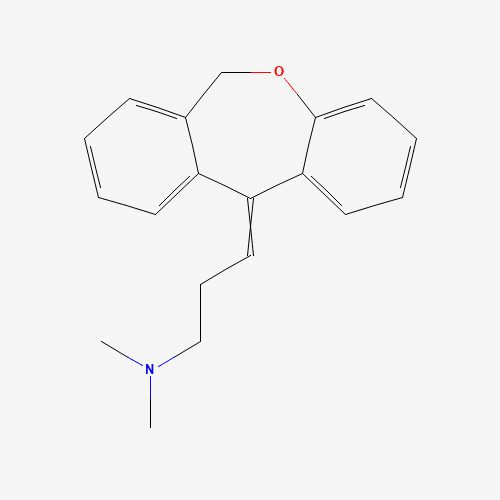
Doxepin is a dibenzoxepin tricyclic antidepressant, sold as a mixture of E and Z isomers in a ratio of about 85:15 [2][6]. It was first approved in the United States in 1969, and its capsule label now covers major depression in adults at 75–150 mg a day, up to 300 mg [1]. A low-dose tablet (Silenor) is licensed there for insomnia characterized by difficulty staying asleep, at 6 mg (3 mg to start at 65 and over) [2]; a 2018 Cochrane review noted that it was not licensed for insomnia in Europe [3]. A 5% cream is licensed for up to 8 days of itch in atopic dermatitis and lichen simplex chronicus [7].
Insomnia at 1–6 mg. The trials behind the low-dose product were funded by its developer, Somaxon [8][9]. In 240 adults aged 65 and over, 3 mg nightly for 12 weeks cut time awake after sleep onset from about 109 minutes on placebo to 75 on the first night and 76 at week 12, added 30–43 minutes of sleep, and improved sleep in the last quarter of the night; it did not shorten measured time to fall asleep, though people reported falling asleep faster [9]. In 221 adults under 65 given 3 or 6 mg for 35 nights, average wake time after sleep onset was 62.5 minutes on placebo, 44.4 on 3 mg and 39.5 on 6 mg (effect sizes 0.58 and 0.72), and measured sleep onset was faster on the first night only [10]. Two-night crossover trials of 1, 3 and 6 mg in 67 younger and 76 older adults showed the same pattern [8][11], a 4-week outpatient trial of 6 mg in 254 older adults improved reported sleep time but not reported time to fall asleep [12], and in 565 healthy adults put through a model of transient insomnia, a single 6 mg dose shortened sleep onset by 13 minutes and added 51 minutes of sleep [13]. A 2025 pooled reanalysis of the two longer 3 mg trials found sleep onset 6.4 minutes faster on the first night and no faster after 2 or 4 weeks, below the 10-minute threshold the AASM treats as clinically significant [14].
Pooled evidence. The AASM guideline pooled four trials of 3 mg and three of 6 mg: time awake after sleep onset fell by about 22 and 23 minutes and sleep efficiency rose by about 7 percentage points, while gains in sleep onset fell below clinical significance; it rated the overall evidence very low because of industry sponsorship, imprecision and possible publication bias, and made a weak recommendation for doxepin in sleep-maintenance insomnia [4]. A Cochrane review pooling four doxepin trials found a moderate gain in self-rated sleep quality (standardized mean difference −0.39), about 23 more minutes of sleep and little or no change in sleep onset, and no evidence on long-term use [3]. A 2015 review of nine trials reached the same split between sleep maintenance and sleep onset and noted that all the low-dose trials were industry-sponsored [15]. A 2017 meta-analysis of nine polysomnography trials of tricyclics for insomnia, most using very low doses of doxepin, found more total sleep (standardized mean difference 0.61) and more somnolence (6.1% against 3.2%) than placebo, with no more dropouts [16]. In a network meta-analysis of hypnotics in older adults, low-dose doxepin ranked first for reported total sleep time (about 28 minutes over placebo) and measured sleep efficiency [17]; a larger 2022 network meta-analysis of 154 trials in adults found it well tolerated but judged its efficacy data too scarce for firm conclusions [18].
Higher sleep doses and particular groups. Before the low-dose product, 25–50 mg for 4 weeks improved sleep efficiency, rated sleep quality and working ability in 47 adults with primary insomnia, but severe rebound insomnia was more common in the doxepin group in the first nights after stopping [19]. In a three-arm pilot of 18 people with Parkinson's disease, 10 mg a day for 6 weeks improved insomnia severity, fatigue and Montreal Cognitive Assessment scores against placebo [20]. Against zolpidem in 120 adults over 8 weeks, 6 mg gave more sleep and less time awake, zolpidem gave faster sleep onset, and adverse events were more common on doxepin (23% against 13%) [21].
Depression and anxiety. In 579 outpatients with major depression, 150 mg nightly for 10 weeks beat placebo on depression, associated anxiety and sleep, as did dothiepin, which caused less drowsiness, weight gain and appetite increase [22]. A 1977 review judged its mood effect similar to amitriptyline's and probably smaller than imipramine's, and its sedation an advantage in depression with insomnia or anxiety [23]. In 35 mildly depressed people on methadone maintenance, doxepin improved depression more than placebo [24].
Itch, hives and mouth pain. The 5% cream relieved itch in 85% of 270 people with atopic dermatitis against 57% on vehicle cream within 7 days, mostly within the first 24 hours [25], and in a second trial of 309 people with other eczemas, 84% of those on doxepin had relief by the end of the week [26]. Taken by mouth at 25 mg three times a day, it reduced lesions, itch and angioedema in 16 adults with chronic idiopathic urticaria [27], and in a 24-patient crossover it matched the antihistamine mequitazine, both beating placebo [28]. As a 25 mg mouth rinse it reduced radiotherapy-induced mucositis pain over 4 hours in two phase 3 trials, by an amount the second trial found smaller than its threshold for a clinically important difference [29][30].
Cognition. In the low-dose trials no memory impairment or cognitive disorder was reported [9][10]. The zolpidem comparison found larger improvements on the Wisconsin Card Sorting Test with doxepin [21]. In 1-year-old rats, 1 and 5 mg/kg a day for 21 days lengthened retention in a passive-avoidance memory test while 10 mg/kg did not [31]. At antidepressant doses its anticholinergic action points the other way (see Safety).
Histamine H1 blockade. Doxepin is among the most potent H1 antagonists known. In post-mortem human brain it bound the H1 receptor with a KD of 0.24 nM, the tightest of 25 antidepressants tested [32], no antihistamine in a later panel of ten bound more tightly [33], and the low-dose label gives a Ki below 1 nM [2]. Its affinity is roughly seven times that of mepyramine, the reference H1 antagonist [8]. In 2011 the first crystal structure of the human H1 receptor was solved with doxepin bound: it sits deep in a largely hydrophobic pocket, its amine anchored to Asp107 and in direct contact with Trp428, a conserved residue involved in receptor activation. Antihistamines act as inverse agonists that reduce the receptor's basal activity, and the conserved pocket explains why first-generation antihistamines such as doxepin also bind other amine receptors [34].
Dose decides which targets are hit. At antidepressant doses of 75–300 mg a day doxepin inhibits reuptake of norepinephrine and serotonin, which is probably how it treats depression; at 1–6 mg it blocks histamine receptors with very little action elsewhere [3]. Its side effects are attributed to blocking H2, 5-HT2, alpha-1 adrenergic and muscarinic receptors as well as to reuptake inhibition [34]; its alpha-1 KD of 24 nM was the most potent of the antidepressants tested [32]. Stahl argued that the next-day sedation, tolerance and weight gain blamed on antihistamine hypnotics may come from these other actions, and that H1-selective dosing could avoid them [35]. The labels are cautious: the low-dose label calls the mechanism in sleep maintenance unclear but possibly H1 antagonism [2], and the capsule label says its antidepressant mechanism is not well understood [1].
Effects on sleep. Low-dose doxepin shortens time awake after an arousal without reducing the number of arousals, and its effect persists into the last hours of the night [8][9]; the AASM analysis likewise found no fall in the number of awakenings [4]. The authors of the 12-week trial suggest it blocks one of several parallel wake-promoting systems rather than damping the brain globally as GABAergic hypnotics do [9], and Roth and colleagues that the morning rise in histamine release overcomes the blockade, which might explain the lack of measured next-day sedation [8]. Sleep architecture changed little: more stage 2 sleep, slightly less REM as a percentage at 3–6 mg, and no change in deep sleep [8][10]. In 10 people with insomnia, 25 mg lowered evening and nocturnal cortisol along with improving sleep, which the authors read as a normalization of the stress axis [36].
Isomers and metabolite. The Z isomer and Z-nordoxepin are considered the more active antidepressants; plasma doxepin stays near the 85:15 E:Z ratio of the drug, but nordoxepin levels shift toward the Z form [6][37]. Nordoxepin is pharmacologically active and outlasts the parent drug [1].
Skin and mouth. The cream label attributes doxepin's antipruritic effect to H1 and H2 blockade without settling the mechanism, and notes that drowsiness may itself reduce awareness of itch [7]. Taken by mouth it suppressed histamine- and codeine-induced skin wheals [27]. Its anesthetic effect as a rinse may come from sodium channel blockade, and the drowsiness it caused suggests absorption through damaged mucosa [29].
- Histamine H1 receptorblocksits highest-affinity target: KD 0.24 nM in post-mortem human brain, the most potent of 25 antidepressants tested, and none of ten antihistamines tested bound more tightly; the low-dose label gives Ki below 1 nM [2][32][33]. The first crystal structure of the human H1 receptor was solved with doxepin bound deep in its ligand pocket [34]strong
- Serotonin and norepinephrine transportersblocksreuptake inhibition at the antidepressant doses of 75–300 mg a day, which probably underlies its antidepressant action; at 1–6 mg it has very little action on reuptake [3]moderate
- Alpha-1 adrenergic receptorsblocksKD 24 nM in human brain, the most potent alpha-1 binding among the antidepressants tested, though about 100 times weaker than at H1 [32]moderate
- Muscarinic acetylcholine receptorsblocksmoderate
- Histamine H2 and 5-HT2 serotonin receptorsblocksunclear
- Voltage-gated sodium channelsblocksproposed by trial authors to explain the local anesthetic and analgesic effect of doxepin mouth rinse; not measured [29]unclear
- Nordoxepin (N-desmethyldoxepin), active metabolitemodulatesunclear
- Nocturnal cortisol (HPA axis)modulates25 mg lowered mean evening and nocturnal plasma cortisol in 10 people with insomnia, alongside better sleep [36]unclear
Formulation
how the form changes blood levelsLow-dose tablets. The 3 and 6 mg tablets are immediate release [2]. A high-fat meal raised total exposure by 41% and peak by 15% and delayed the peak by about 3 hours, which is why the label advises against taking it within 3 hours of a meal [2].
Capsules. Capsules of 10–100 mg are the antidepressant form; a single 75 mg dose peaks at 2–4 hours [1]. The 10–50 mg doses used in some insomnia studies fall in this range rather than in that of the licensed sleep product [19][20].
Cream. Doxepin crosses the skin: plasma levels from the 5% cream reached 47 ng/mL in eczema patients, levels that can match oral therapy, and drowsiness was more common when more than 10% of the body was treated; occlusive dressings are not to be used [7]. Serum doxepin was detectable in 9 of 24 people with atopic dermatitis after a week of four-times-daily use [38].
Mouth rinse. The rinse is a compounded preparation, swished for a minute and spat out [29][30].
Dosing
as studied or commonly reported; not a recommendationDoses below are what studies used or, where marked, what is commonly reported. None is a recommendation.
Oral
- 1, 3 and 6 mg67 adults aged 18–64 with primary insomnia; 3 and 6 mg cut time awake by about 23 minutes and added 25–29 minutes of sleep, with no change in measured sleep onset at the prespecified analysisonce nightly, about 30 minutes before habitual bedtime · 2 nights per dose, crossover with placebohuman study[8]
- 1, 3 and 6 mg76 older adults with primary insomnia; dose-related gains in sleep maintenance, with reported sleep onset faster only at 6 mgonce nightly · 2 nights per dose, crossover with placebohuman study[11]
- 1 or 3 mg240 adults aged 65 and over with chronic primary insomnia; at 3 mg about 33 fewer minutes awake after sleep onset at week 12, no change in measured sleep onsetonce nightly, 30 minutes before bedtime · 12 weekshuman study[9]
- 3 or 6 mg221 adults aged 18–64 with chronic primary insomnia; 18–23 fewer minutes awake on average, with no rebound insomnia or withdrawal on stoppingonce nightly · 35 nights, then 2 nights of placebohuman study[10]
- 6 mg254 older adults with chronic primary insomnia, outpatients; more reported sleep and less reported wake time, no change in reported time to fall asleeponce nightly · 4 weekshuman study[12]
- 6 mg565 healthy adults in a transient-insomnia model (first night in a sleep laboratory plus a 3-hour phase advance); 13 minutes faster sleep onset and 51 minutes more sleep than placebosingle dose at nighthuman study[13]
- 6 mg/day120 adults with primary insomnia, against zolpidem 5–10 mg; better sleep maintenance and executive-function gains on doxepin, faster sleep onset on zolpidem8 weekshuman study[21]
- 10 mg18 people with Parkinson's disease and insomnia in a three-arm pilot (6 per arm); Insomnia Severity Index fell 9 points against 2 on placeboonce daily · 6 weekshuman study[20]
- 25–50 mg47 adults with primary insomnia; better sleep efficiency and rated sleep quality, but severe rebound insomnia was more frequent in the first nights after stoppingonce nightly · 4 weeks, then 2 weeks of placebohuman study[19]
- 25 mg10 adults with chronic primary insomnia; better sleep and lower nocturnal cortisolonce nightly · 3 weeks, open-label, after single 25 mg infusions crossed over with placebohuman study[36]
- 6 mg or 50 mg/day206 healthy adults in a thorough QT study, 50 mg being a supratherapeutic exposure for the insomnia product; no QTc prolongationonce daily · 7 dayshuman study[39]
- 150 mg579 outpatients with major depression, against dothiepin and placebo; both drugs beat placebo on depression, anxiety and sleeponce nightly · 10 weekshuman study[22]
- 25 mg three times daily16 adults with chronic idiopathic urticaria who had not responded to usual antihistamines; fewer lesions, less itch and swelling, and less rescue antihistaminestarted at one capsule at bedtime, raised over 2–3 days · 4 weeks, crossed over with placebohuman study[27]
- 25 mg in 5 mL water, as a mouth rinseadults with painful oral mucositis during head and neck radiotherapy (155 and 275 patients); pain fell more than with placebo over 4 hoursrinse for 1 minute, gargle and spit; single dose, optionally repeated every 4 hours · single dose in the randomized phase, up to 7 days optional
Topical
- 5% cream
Intraperitoneal (animals)
- 1 or 5 mg/kg (human equivalent ≈0.16–0.81 mg/kg); 10 mg/kg had no effect
- Form
- The insomnia product (Silenor) is an unscored immediate-release tablet of 3 or 6 mg doxepin, made from 3.39 or 6.78 mg of doxepin hydrochloride [2]. Antidepressant capsules come in 10, 25, 50, 75 and 100 mg strengths [1]. The 5% cream contains 50 mg of doxepin hydrochloride per gram [7]. The mouth rinse in the oncology trials was compounded from a 10 mg/mL solution diluted to 25 mg in 5 mL [29]. All forms are a mixture of geometric isomers, about 85% E and 15% Z [6][37]. The identity fields above describe doxepin itself, not its hydrochloride salt.
- Timing and food
- The low-dose label says to take it within 30 minutes of bedtime and not within 3 hours of a meal, because food raises and delays its peak and could carry its effect into the next day [2]. The licensing trials gave it 30 minutes before bedtime; the authors of the pooled sleep-onset analysis note that with a peak 3.5 hours after dosing, that timing may not have been ideal for testing sleep onset [14]. Antidepressant doses may be given once daily or divided [1]. The cream is applied four times a day at least 3–4 hours apart [7].
- Time to effect
- For sleep maintenance, from the first night, sustained to 12 weeks in older adults [9][10]. For itch, most of the response to the cream came in the first 24 hours [25][26]. For urticaria, the controlled comparison ran 4 weeks [27]. An older review found its antidepressant effect in some studies slower to appear than imipramine's [23].
- Notes
- For insomnia the label gives 6 mg once daily in adults (3 mg for some), a starting dose of 3 mg at 65 and over and in hepatic impairment, a maximum of 6 mg a day, and no more than 3 mg alongside cimetidine [2]. For major depression the capsule label starts at 25 mg three times daily or 75 mg once daily, targets 75–150 mg a day and allows up to 300 mg, with lower doses in CYP2D6 or CYP2C19 poor metabolizers and with strong CYP2D6 inhibitors, and a gradual taper on stopping [1]. Neither label covers the 10–50 mg doses used in some insomnia studies [1][2]. The cream is limited to 8 days because longer use raises systemic levels and the risk of contact sensitization [7]. No trial has tested doxepin as a cognitive enhancer in healthy people; the rat dose in the rows above is a body-surface-area conversion, not a dose tested in people [31][40].
Pharmacokinetics
what the body does with it| Half-life | 15.3 hours for doxepin and 31 hours for nordoxepin after a 6 mg dose [2]; 8–24 hours (mean 17) for doxepin and 33–80 hours (mean 51) for nordoxepin after a 75 mg capsule [1]. Both isomers have large volumes of distribution and relatively short plasma half-lives, suggesting extensive tissue binding [6]. |
|---|---|
| Onset | In the low-dose trials, time awake during the night fell from the first night of treatment [9][10]; any shortening of sleep onset was confined to the first night [10][14]. The cream relieved itch within 24 hours in 60% of patients with eczematous dermatitis [26], and a single mouth rinse reduced mucositis pain over the following 4 hours [30]. |
| Time to peak | Median 3.5 hours after 6 mg taken fasting, delayed by about 3 hours by a high-fat meal [2]. After a 75 mg capsule, 2–4 hours (mean 2.9) for doxepin and 2–10 hours for nordoxepin [1]. |
| Peak level | Peak levels rose roughly in proportion to dose between 3 and 6 mg [2]. A single 75 mg capsule gave 8.8–45.8 ng/mL of doxepin (mean 26.1) and a mean 9.7 ng/mL of nordoxepin [1]. In 19 eczema patients using the 5% cream, plasma doxepin ranged from undetectable to 47 ng/mL [7]. |
| Bioavailability | In 12 men given intravenous and oral doses, the mean oral bioavailability of each isomer was 0.29 [6]; the capsule label puts first-pass metabolism at 55–87% [1]. CYP2D6 poor metabolizers had about twice the bioavailability of E-doxepin of extensive metabolizers [41]. A high-fat meal raised exposure to the 6 mg tablet by 41% and its peak by 15% [2]. About 76–80% is bound to plasma proteins [1][2], and in 21 patients levels in spinal fluid tracked those in plasma for both doxepin and nordoxepin [42]. |
| Steady state | No study cited here reports the time to steady state. In the 12-week trial of 1 and 3 mg, next-day test scores were the same at the start and the end, which the authors read as no clinical sign of accumulation [9]. |
| Metabolism | Mainly by CYP2C19 and CYP2D6, with CYP1A2 and CYP2C9 contributing less; doxepin does not inhibit CYP enzymes at therapeutic levels [2]. Pathways are demethylation to nordoxepin, N-oxidation, hydroxylation and glucuronidation [1]. The steps are stereoselective: in volunteers given 75 mg, E-doxepin clearance was 406 L/h in extensive and 127 L/h in poor CYP2D6 metabolizers, while CYP2C19 governed the Z isomer (191 against 73 L/h) [41], and exposure differed more than tenfold between CYP2D6 genotype groups [43]. Plasma doxepin stays near the 85:15 E:Z ratio of the drug, but nordoxepin drifts toward 1:1 or toward the more active Z form [6][37]. |
| Excretion | Mostly in urine as glucuronide conjugates, with less than 3% of a dose excreted as doxepin or nordoxepin [2]; renal clearance of the parent isomers is very low [6]. It passes into breast milk at roughly plasma concentrations [44]. |
Safety
risks and cautions, not medical adviceAt 1–6 mg. In the label's long-term trials, somnolence or sedation affected 4% on placebo, 6% on 3 mg and 9% on 6 mg, and hypertension 3% on 3 mg against none on placebo; 0.4–1.0% stopped for adverse reactions against 0.6% on placebo [2]. The published trials reported no anticholinergic effects, memory impairment, complex sleep behaviors or weight gain [9][10], and found no difference from placebo on next-morning psychomotor tests [4][8][9][10]. The label is less clean: it reports modest next-day decrements on symbol copying and sleepiness ratings after 6 mg in the transient insomnia study, and small decreases in digit-symbol and symbol-copying scores at 6 mg in the 35-day trial [2]. After 35 nights, stopping caused no rebound insomnia (1%, 1% and 4% met the criteria on placebo, 3 mg and 6 mg) or withdrawal syndrome [10], though 5% on 6 mg had nausea or vomiting in the discontinuation nights [2]. Like other hypnotics, its label warns about sleep-driving and other complex behaviors, worsening depression and suicidal thoughts, and alcohol, and advises against it in severe sleep apnea, where it has not been studied [2].
At antidepressant doses. Among 1,635 patients with depression, somnolence affected 17%, dry mouth 15%, dizziness 6%, constipation and fatigue 5% each, and blurred vision, tachycardia and hypotension 3% each [1]. The capsule label carries a boxed warning about suicidal thoughts in people under 25, warns of serotonin syndrome, angle-closure glaucoma, lowered seizure threshold and mania, contraindicates it in glaucoma and current or past urinary retention, and reports withdrawal symptoms after abrupt stopping and, after marketing, blood-cell disorders, arrhythmias and jaundice [1]. At 25–50 mg for insomnia, two of 47 patients left the trial with raised liver enzymes or low white cell and platelet counts [19].
Heart. In a thorough QT study of 206 healthy adults, neither 6 mg nor 50 mg a day for a week lengthened the QTc interval, while the positive control did [39]. In a 2024 review of observational studies, doxepin's risk of sudden death or ventricular arrhythmia in normal use was no greater than paroxetine's in one study, while some studies linked it with stroke or transient ischemic attack [5].
Overdose. The same review found the fatal toxicity of doxepin in overdose broadly similar to that of amitriptyline, clomipramine, dosulepin, imipramine and trimipramine; of the tricyclics, only lofepramine was clearly less dangerous [5]. In an animal overdose model doxepin was less arrhythmogenic than amitriptyline at similar blood levels [45], but an early review already warned that its cardiotoxicity in overdose is that of any tricyclic [23]. Overdose causes arrhythmias, severe hypotension, seizures and coma; a QRS duration of 0.10 seconds or more signals severity, and dialysis does not help [1].
Anticholinergic burden. Two large UK case-control studies linked long-term prescription of strongly anticholinergic antidepressants with a higher later risk of dementia; in the first, amitriptyline and dosulepin were the most prescribed strongly anticholinergic drugs, and its authors noted that the drugs might have been prescribed for early symptoms of dementia [46][47]. Neither reports doxepin separately, and the 1–6 mg doses caused no anticholinergic effects in trials [9][10].
Genetics. CYP2D6 poor metabolizers clear E-doxepin about three times more slowly than extensive metabolizers and carry four times as much nordoxepin [41]; the capsule label advises lower doses in CYP2D6 and CYP2C19 poor metabolizers [1], and genotype-based dosing guidance for tricyclics is considered applicable to doxepin, though with fewer data than for amitriptyline [48].
Pregnancy and breastfeeding. Epidemiological studies have not established a link with birth defects or miscarriage, but newborns exposed late in pregnancy have needed respiratory support and tube feeding [1]. Doxepin and nordoxepin reach breast milk at about plasma levels, and nordoxepin was measurable in a breastfed infant [44]; a 9-day-old breastfed by a mother taking 35 mg a day was admitted drowsy, floppy and feeding poorly, and recovered within 48 hours of stopping breastfeeding [49]. Both labels advise against breastfeeding [1][2].
Cream. In controlled trials 22% of cream users were drowsy against 2% on vehicle, 23% had burning or stinging, and 10% dry mouth; contact allergy has been confirmed by patch test, and a 2.5-year-old who had 27 g applied over three days had a seizure and fell into a coma before recovering [7].
- Somnolence or sedation, nausea and upper respiratory infection at 3–6 mg [2]
- Drowsiness, dry mouth, dizziness, constipation, fatigue, blurred vision, tachycardia and hypotension at antidepressant doses [1]
- Weight gain and increased appetite at 150 mg a day [22]
- Rebound insomnia in some patients after stopping 25–50 mg [19]
- Withdrawal symptoms after abrupt stopping of antidepressant doses [1]
- Burning or stinging, drowsiness, dry mouth and contact allergy from the cream [7][25]
- Stinging, unpleasant taste and drowsiness from the mouth rinse [29][30]
- Boxed warning: antidepressants raised suicidal thoughts and behavior in people under 25 [1]
- Contraindicated with MAO inhibitors, untreated narrow-angle glaucoma and severe or past urinary retention [1][2]
- Avoid alcohol and driving after a dose; start at 3 mg at 65 and over or with liver impairment [2]
- Not recommended in severe sleep apnea [2]
- CYP2D6 or CYP2C19 poor metabolizers and users of cimetidine or strong CYP2D6 inhibitors need lower doses [1][2]
- Breastfeeding is not recommended: breastfed infants have become sedated and hypotonic [2][49]
- Dangerous in overdose, like other tricyclics [1][5]
- Do not use the cream for more than 8 days, under occlusion, or in children [7]
- Every low-dose insomnia trial was industry-sponsored, and the AASM rated the overall evidence very low quality [4][15]
- The longest placebo-controlled trial lasted 12 weeks, and the Cochrane review found no evidence on long-term use [3][9]
- The published trial reports and the label disagree about next-day effects at 6 mg: the papers found none, the label lists small test decrements [2][10]
- The 2025 pooled sleep-onset analysis was written mainly by employees of the consumer-health company Haleon [14]
- The cognitive signals come from a single comparison with zolpidem, a Parkinson's pilot with six people per arm and one rat study [20][21][31]
- The dementia association is for anticholinergic antidepressants as a class, not doxepin specifically [46][47]
- Several papers were read from their abstracts because the full texts are paywalled: the older-adult crossover and outpatient trials, the transient-insomnia trial, the 25–50 mg trial and the cortisol study, the Parkinson's and zolpidem trials, three meta-analyses, the QT study, the pharmacokinetic and receptor-binding studies, the depression and dermatology trials and the breastfeeding case report
Interactions
documented pairs only, not exhaustiveDoxepin must not be combined with MAO inhibitors, including linezolid and intravenous methylene blue, or started within 14 days of one, because of serotonin syndrome; SSRIs, SNRIs, other tricyclics, triptans, opioids, lithium, tryptophan, buspirone and St John's wort add to that risk [1][2]. Cimetidine doubled exposure to a 6 mg dose, so the low-dose label caps the dose at 3 mg with it; sertraline raised exposure by 21% and peak by 32% and worsened psychomotor performance 2–4 hours after dosing [2]. Strong CYP2D6 inhibitors call for a lower dose, and carbamazepine cut doxepin and nordoxepin exposure by 55% [1]. Alcohol, sedating antihistamines and other central nervous system depressants add to its sedation, and one patient on tolazamide developed severe hypoglycemia after doxepin 75 mg a day was added [2].
- any mao inhibitoravoid
- Both are hypnotics; the doxepin label warns that other central nervous system depressants add to its sedation and to the risk of complex sleep behaviors [2]
Doxepin was first approved in the United States in 1969 [1]. A 1977 review described it as more useful than imipramine in depression with insomnia or anxiety [23]. Low doses of sedating tricyclics, doxepin among them, were used for insomnia for decades, particularly in the United Kingdom [3]. After trials of 1–6 mg in the 2000s, 3 and 6 mg tablets were approved in the United States for sleep maintenance [2][8][39]. In 2011 doxepin was the ligand in the first crystal structure of the human H1 receptor [34].
- Is low-dose doxepin the same drug as the antidepressant?
- The same molecule at a different dose. The sleep tablets are 3 and 6 mg, 10 to 100 times below antidepressant doses [2]; at 1–6 mg it blocks histamine receptors with little other action, while at 75–300 mg it also inhibits serotonin and norepinephrine reuptake [3].
- Does doxepin help you fall asleep?
- Not much. It is licensed for trouble staying asleep [2], and the AASM found its effect on sleep onset below clinical significance [4]. Pooling two 3 mg trials, sleep onset was 6.4 minutes faster on the first night and no faster later [14].
- Is doxepin addictive?
- It is not a controlled substance and its label reports no abuse potential [2]. After 35 nights of 3 or 6 mg, stopping caused no rebound insomnia or withdrawal syndrome [10]; at 25–50 mg some patients had severe rebound insomnia [19], and abrupt stopping of antidepressant doses can cause withdrawal symptoms [1].
- Does it affect memory or next-day alertness?
- At 1–6 mg the published trials found no memory impairment and no next-day impairment on psychomotor tests [9][10], though the label reports small next-day decrements at 6 mg [2]. At antidepressant doses its anticholinergic action is a concern: long-term use of anticholinergic antidepressants has been linked with dementia, though doxepin was not studied separately [46][47].
References
entry last reviewed 2026-10-18- [1]DOXEPIN HYDROCHLORIDE capsules, for oral use Initial U.S. Approval: 1969DailyMed prescribing information 2025other◌ unreviewed
- [2]SILENOR (doxepin) tablets for oral use Initial U.S. Approval: 1969DailyMed prescribing information 2026other◌ unreviewed
- [3]Antidepressants for insomnia in adults.Everitt H, Baldwin DS, Stuart B et al.Cochrane Database Syst Rev 2018meta-analysis · humanPMID 29761479◌ unreviewed
- [4]Clinical Practice Guideline for the Pharmacologic Treatment of Chronic Insomnia in Adults: An American Academy of Sleep Medicine Clinical Practice Guideline.Sateia MJ, Buysse DJ, Krystal AD et al.J Clin Sleep Med 2017reviewPMID 27998379◌ unreviewed
- [5]The cardiovascular safety of tricyclic antidepressants in overdose and in clinical use.Taylor D, Poulou S, Clark ITher Adv Psychopharmacol 2024reviewPMID 38827015◌ unreviewed
- [6]Absolute bioavailability and stereoselective pharmacokinetics of doxepin.Yan JH, Hubbard JW, McKay G et al.Xenobiotica 2002clinical trial · humanPMID 12162857◌ unreviewed
- [7]Doxepin Hydrochloride Cream, 5%DailyMed prescribing information 2026other◌ unreviewed
- [8]Efficacy and safety of doxepin 1 mg, 3 mg, and 6 mg in adults with primary insomnia.Roth T, Rogowski R, Hull S et al.Sleep 2007RCT · humanPMID 18041488◌ unreviewed
- [9]Efficacy and Safety of Doxepin 1 mg and 3 mg in a 12-week Sleep Laboratory and Outpatient Trial of Elderly Subjects with Chronic Primary Insomnia.Krystal AD, Durrence HH, Scharf M et al.Sleep 2010RCT · humanPMID 21102997◌ unreviewed
- [10]Efficacy and safety of doxepin 3 and 6 mg in a 35-day sleep laboratory trial in adults with chronic primary insomnia.Krystal AD, Lankford A, Durrence HH et al.Sleep 2011RCT · humanPMID 21966075◌ unreviewed
- [11]Efficacy and safety of doxepin 1 mg, 3 mg, and 6 mg in elderly patients with primary insomnia: a randomized, double-blind, placebo-controlled crossover study.Scharf M, Rogowski R, Hull S et al.J Clin Psychiatry 2008RCT · humanPMID 19192438◌ unreviewed
- [12]Efficacy and safety of doxepin 6 mg in a four-week outpatient trial of elderly adults with chronic primary insomnia.Lankford A, Rogowski R, Essink B et al.Sleep Med 2012RCT · humanPMID 22197474◌ unreviewed
- [13]Efficacy and safety of doxepin 6 mg in a model of transient insomnia.Roth T, Heith Durrence H, Jochelson P et al.Sleep Med 2010RCT · humanPMID 20817598◌ unreviewed
- [14]The effect of doxepin 3 mg on sleep latency: a pooled analysis of two phase 3 trials.Fisher M, Araga M, Franks B et al.Sleep Breath 2025meta-analysis · humanPMID 40229607◌ unreviewed
- [15]Doxepin for insomnia: a systematic review of randomized placebo-controlled trials.Yeung WF, Chung KF, Yung KP et al.Sleep Med Rev 2015meta-analysis · humanPMID 25047681◌ unreviewed
- [16]Treatment of insomnia with tricyclic antidepressants: a meta-analysis of polysomnographic randomized controlled trials.Liu Y, Xu X, Dong M et al.Sleep Med 2017meta-analysis · humanPMID 28522080◌ unreviewed
- [17]Comparative efficacy and safety of hypnotics for insomnia in older adults: a systematic review and network meta-analysis.Chiu HY, Lee HC, Liu JW et al.Sleep 2021meta-analysis · humanPMID 33249496◌ unreviewed
- [18]Comparative effects of pharmacological interventions for the acute and long-term management of insomnia disorder in adults: a systematic review and network meta-analysis.De Crescenzo F, D'Alò GL, Ostinelli EG et al.Lancet 2022meta-analysis · humanPMID 35843245◌ unreviewed
- [19]Doxepin in the treatment of primary insomnia: a placebo-controlled, double-blind, polysomnographic study.Hajak G, Rodenbeck A, Voderholzer U et al.J Clin Psychiatry 2001RCT · humanPMID 11465523◌ unreviewed
- [20]Doxepin and cognitive behavioural therapy for insomnia in patients with Parkinson's disease -- a randomized study.Rios Romenets S, Creti L, Fichten C et al.Parkinsonism Relat Disord 2013RCT · humanPMID 23561946◌ unreviewed
- [21]Doxepin is more effective than zolpidem in improving executive function in patients with insomnia disorder.Yu Z, Han L, Yan P et al.Sleep Breath 2024RCT · humanPMID 38123719◌ unreviewed
- [22]Dothiepin versus doxepin in major depression: results of a multicenter, placebo-controlled trial. Prothiaden Collaborative Study Group.Ferguson JM, Mendels J, Manowitz NRJ Clin Psychiatry 1994RCT · humanPMID 8071282◌ unreviewed
- [23]Doxepin up-to-date: a review of its pharmacological properties and therapeutic efficacy with particular reference to depression.Pinder RM, Brogden RN, Speight TM et al.Drugs 1977reviewPMID 321205◌ unreviewed
- [24]Depression and anxiety in heroin addicts: a placebo-controlled study of doxepin in combination with methadone.Woody GE, O'Brien CP, Rickels KAm J Psychiatry 1975clinical trial · humanPMID 1091161◌ unreviewed
- [25]Relief of pruritus in patients with atopic dermatitis after treatment with topical doxepin cream. The Doxepin Study Group.Drake LA, Fallon JD, Sober AJ Am Acad Dermatol 1994RCT · humanPMID 8089287◌ unreviewed
- [26]The antipruritic effect of 5% doxepin cream in patients with eczematous dermatitis. Doxepin Study Group.Drake LA, Millikan LEArch Dermatol 1995RCT · humanPMID 7492129◌ unreviewed
- [27]Efficacy of doxepin in the treatment of chronic idiopathic urticaria.Goldsobel AB, Rohr AS, Siegel SC et al.J Allergy Clin Immunol 1986RCT · humanPMID 3782654◌ unreviewed
- [28]Doxepin in the treatment of chronic urticaria.Harto A, Sendagorta E, Ledo ADermatologica 1985clinical trial · humanPMID 2858420◌ unreviewed
- [29]Doxepin rinse versus placebo in the treatment of acute oral mucositis pain in patients receiving head and neck radiotherapy with or without chemotherapy: a phase III, randomized, double-blind trial (NCCTG-N09C6 [Alliance]).Leenstra JL, Miller RC, Qin R et al.J Clin Oncol 2014RCT · humanPMID 24733799◌ unreviewed
- [30]Effect of Doxepin Mouthwash or Diphenhydramine-Lidocaine-Antacid Mouthwash vs Placebo on Radiotherapy-Related Oral Mucositis Pain: The Alliance A221304 Randomized Clinical Trial.Sio TT, Le-Rademacher JG, Leenstra JL et al.JAMA 2019RCT · humanPMID 30990550◌ unreviewed
- [31]Effects of different doses of doxepin on passive avoidance learning in rats.Gharzi M, Dolatabadi HR, Reisi P et al.Adv Biomed Res 2013preclinical · animalPMID 24223381◌ unreviewed
- [32]Antagonism by antidepressants of neurotransmitter receptors of normal human brain in vitro.Richelson E, Nelson AJ Pharmacol Exp Ther 1984preclinical · cellPMID 6086881◌ unreviewed
- [33]Binding of antidepressants to human brain receptors: focus on newer generation compounds.Cusack B, Nelson A, Richelson EPsychopharmacology (Berl) 1994preclinical · cellPMID 7855217◌ unreviewed
- [34]Structure of the human histamine H1 receptor complex with doxepin.Shimamura T, Shiroishi M, Weyand S et al.Nature 2011preclinical · cellPMID 21697825◌ unreviewed
- [35]Selective histamine H1 antagonism: novel hypnotic and pharmacologic actions challenge classical notions of antihistamines.Stahl SMCNS Spectr 2008reviewPMID 19179941◌ unreviewed
- [36]The sleep-improving effects of doxepin are paralleled by a normalized plasma cortisol secretion in primary insomnia. A placebo-controlled, double-blind, randomized, cross-over study followed by an open treatment over 3 weeks.Rodenbeck A, Cohrs S, Jordan W et al.Psychopharmacology (Berl) 2003RCT · humanPMID 13680082◌ unreviewed
- [37]Stereoselective pharmacokinetics of doxepin isomers.Midha KK, Hubbard JW, McKay G et al.Eur J Clin Pharmacol 1992clinical trial · humanPMID 1607001◌ unreviewed
- [38]Pharmacokinetics of doxepin in subjects with pruritic atopic dermatitis.Drake LA, Cohen L, Gillies R et al.J Am Acad Dermatol 1999RCT · humanPMID 10426891◌ unreviewed
- [39]A placebo- and active-controlled assessment of 6- and 50-mg oral doxepin on cardiac repolarization in healthy volunteers: a thorough QT evaluation.Mansbach RS, Ludington E, Rogowski R et al.Clin Ther 2011RCT · humanPMID 21722958◌ unreviewed
- [40]A simple practice guide for dose conversion between animals and human.Nair AB, Jacob SJ Basic Clin Pharm 2016reviewPMID 27057123◌ unreviewed
- [41]Contributions of CYP2D6, CYP2C9 and CYP2C19 to the biotransformation of E- and Z-doxepin in healthy volunteers.Kirchheiner J, Meineke I, Müller G et al.Pharmacogenetics 2002clinical trial · humanPMID 12360109◌ unreviewed
- [42]Doxepin concentrations in plasma and cerebrospinal fluid.Schomburg R, Remane D, Fassbender K et al.J Neural Transm (Vienna) 2011observational · humanPMID 21350940◌ unreviewed
- [43]Impact of the CYP2D6 ultra-rapid metabolizer genotype on doxepin pharmacokinetics and serotonin in platelets.Kirchheiner J, Henckel HB, Franke L et al.Pharmacogenet Genomics 2005clinical trial · humanPMID 16007002◌ unreviewed
- [44]Excretion of doxepin and N-desmethyldoxepin in human milk.Kemp J, Ilett KF, Booth J et al.Br J Clin Pharmacol 1985case report · humanPMID 4074620◌ unreviewed
- [45]Cardiotoxicity of amitriptyline and doxepin.Tobis JM, Aronow WSClin Pharmacol Ther 1981preclinical · animalPMID 6162597◌ unreviewed
- [46]Anticholinergic drugs and risk of dementia: case-control study.Richardson K, Fox C, Maidment I et al.BMJ 2018observational · humanPMID 29695481◌ unreviewed
- [47]Anticholinergic Drug Exposure and the Risk of Dementia: A Nested Case-Control Study.Coupland CAC, Hill T, Dening T et al.JAMA Intern Med 2019observational · humanPMID 31233095◌ unreviewed
- [48]Clinical pharmacogenetics implementation consortium guideline (CPIC) for CYP2D6 and CYP2C19 genotypes and dosing of tricyclic antidepressants: 2016 update.Hicks JK, Sangkuhl K, Swen JJ et al.Clin Pharmacol Ther 2017reviewPMID 27997040◌ unreviewed
- [49]Adverse effects in a newborn infant breast-fed by a mother treated with doxepin.Frey OR, Scheidt P, von Brenndorff AIAnn Pharmacother 1999case report · humanPMID 10410181◌ unreviewed
- [50]INTUNIV (guanfacine) extended-release tablets, for oral use Initial U.S. Approval: 1986DailyMed prescribing information 2025other◌ unreviewed