J-147
also J147 · J 147 · Nootropic J147 · J147 E-isomer
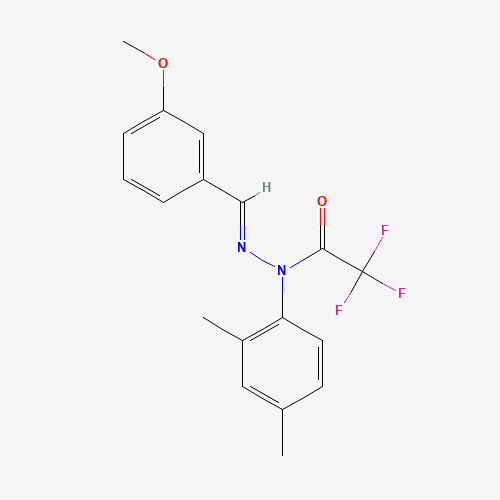
J147 is a synthetic small molecule from the Salk Institute. It descends from curcumin through a series of hybrid compounds and was chosen because it protected neurons in six different cell models of brain ageing [1]. Fed to mice, it improved memory in normal animals, in Alzheimer's-model mice treated late in the disease and in rapidly ageing SAMP8 mice [1][2][3]. Its target turned out to be the mitochondrial ATP synthase, which it partly inhibits, switching on AMPK [4]. A phase 1 trial in healthy volunteers finished in 2020 and has never reported results, so there is no published human data at any dose [5][6].
A well-characterised preclinical drug candidate with a named target and consistent mouse results, almost all from its inventors' laboratory, and not a single published human result.
- meta-analysis
- RCT
- trial
- observational
- preclinical / case
- review / patent / other
- retracted
- + Improved several kinds of memory in young healthy rats and mice after a single dose or a few weeks in the diet
- + Restored memory in 20-month-old Alzheimer's-model mice treated for three months after pathology was already advanced
- + Prevented parts of the cognitive, inflammatory, vascular and metabolic decline of rapidly ageing SAMP8 mice
- + Has a molecular target, the α-subunit of mitochondrial ATP synthase, supported by three binding methods and by knockdown experiments
- + Reduced damage in rodent models of stroke, traumatic brain injury and diabetic neuropathy run by other groups
- − No human efficacy, safety or pharmacokinetic data has been published; the completed phase 1 trial never reported
- − The Alzheimer's, ageing and target papers all come from the Salk group that invented the compound
- − In mice it is cleared fast, with a plasma half-life of about 1.5 hours, and human liver microsomes break it down in minutes
- − Screens found it also inhibits the dopamine transporter and MAO-B in the low micromolar range
- − When treatment started late in SAMP8 mice, it did not improve spatial learning in the Barnes maze
J147 came out of a drug-discovery programme at the Salk Institute that deliberately skipped the usual step of choosing a molecular target. Because age is the largest risk factor for Alzheimer's disease, the group built a panel of cell assays for the insults an ageing neuron faces — loss of growth-factor support, glutathione-depleting oxidative stress, energy failure and amyloid toxicity — and required a candidate to work in all of them before it went into animals [1]. The starting point was curcumin. Hybrids with cyclohexyl-bisphenol A gave CNB-001, which was more stable and more potent; stripping its hydroxyl groups gave CNB-023; and J147 was then isolated from a deliberately messy reaction between 2,4-dimethylphenylhydrazine and m-anisaldehyde, as the one HPLC peak active in all three primary assays [1]. Despite the family tree it is not a curcuminoid; a later paper put it plainly that the two are not chemically related [7].
In culture it protected neurons at 10–200 nM across six assays, where curcumin was weak or inactive [1]. In healthy young animals, single oral doses of 1–5 mg/kg improved object recognition in rats. Mice fed it did better in object-location and Y-maze tests, with only a trend in Barnes maze learning that became significant in a retention test six weeks later [1]. It helped long-term potentiation form in rat hippocampal slices; an analogue with the two nitrogens replaced by carbons did nothing, in slices or in behaviour [1].
In Alzheimer's-model APPswe/PS1ΔE9 mice it was tested two ways. Fed from 3 to 10 months of age, it prevented the water maze deficit, lowered soluble Aβ and restored synaptic proteins [1]. More demandingly, mice already 20 months old with advanced pathology were fed it for three months. Spatial and contextual memory recovered, soluble Aβ and BACE fell and NGF and BDNF rose, while plaque counts did not change [2]. In the same paper, against scopolamine-induced amnesia it matched donepezil for working memory and beat it for spatial memory, and the combination was best for fear memory [2].
Rapidly ageing SAMP8 mice fed J147 from 3 to 10 months kept their object recognition and reversal learning. They also avoided the rises in hippocampal Aβ1-40, tau phosphorylation, vascular inflammation and plasma acylcarnitines seen in untreated old mice [3]. Started later, from 9 to 13 months, it prevented disinhibition and the rise in plasma creatinine but did not improve Barnes maze reversal learning, and it changed only 34 hippocampal genes against 684 for a sister compound [8][9]. Very old wild-type mice fed it from 24 to 30 months had more dendritic spines and more dividing cells in the dentate gyrus and noticed smaller object movements; exploratory activity, in the authors' words, was negatively affected [10]. It also extended median lifespan in male fruit flies by roughly 10–13% [4][9].
Other groups have since tried it well beyond dementia. In rat stroke, 10–30 mg/kg IV shrank infarcts after a suture occlusion but did nothing on its own after an embolic clot; given with late tPA it reduced both infarct size and tPA-induced bleeding [7]. In mouse brain injury, daily oral doses improved recovery over 35 days [11]. In type 1 diabetic mice, 20 weeks of twice-daily gavage preserved nerve conduction velocity and blunted allodynia, and single doses relieved established allodynia within an hour [12]. Mouse antidepressant screens were positive after one to three days [13][14][15], as was an LPS model of sepsis-associated depression, where it also reduced deaths [16]. In obese Zucker rats after abdominal surgery, chronic dosing in food reduced anxiety and protected spatial memory, a single IV dose helped different measures, and neither affected inflammation [17].
What is missing is people. A phase 1 trial finished in February 2020 and its results have never appeared [5][6]. The developer has moved the compound into acute stroke, with an intravenous phase 2 trial that began recruiting in 2026 [18].
The target is ATP synthase, and the inhibition is deliberately incomplete. Three methods converged on the α-subunit of mitochondrial ATP synthase (ATP5A): drug affinity responsive target stability, pull-down with a biotin-tagged J147 that unlabelled drug competed off, and localisation of the tagged compound to mitochondria within ten minutes [4]. In isolated bovine heart mitochondria J147 inhibited the enzyme with an EC50 of 20 nM, but never by more than about a quarter, even at saturating concentrations [4]. That ceiling matters: complete blockers such as oligomycin are poisons. Knocking ATP5A down with siRNA, or over-expressing the enzyme's natural inhibitor IF1, reproduced J147's protection against amyloid, oxidative and energy-failure toxicity, and J147 added nothing on top of the knockdown [4].
Counter-intuitively, cells end up with more ATP. J147 raised mitochondrial membrane potential and mitochondrial superoxide, and lifted whole-cell ATP within 4–6 hours without changing glycolysis [4]. It also raised cytosolic calcium, and AMPK was activated through the calcium-sensing kinase CAMKK2 rather than through an energy shortage; the CAMKK2 inhibitor STO-609 blocked it [4]. Downstream, AMPK phosphorylated raptor to damp mTOR and phosphorylated ACC1, and in AMPK-knockout cells J147's protection was much weaker [4]. Modest ATP synthase inhibition feeding into AMPK and mTOR is a known lifespan mechanism from worms to mammals, which is why the same paper went on to test fly lifespan [4][19].
ACC1 links the target to metabolism and memory. Inhibiting ACC1 stops acetyl-CoA being spent on fatty acid synthesis. In neurons that raised acetyl-CoA, protected against oxidative death and increased acetylation of histone H3 at lysine 9, a mark linked to memory formation, which was also higher in treated mouse cortex [8]. In liver the same switch lowered plasma free fatty acids in three separate rodent studies, which the Salk group has proposed as a blood marker that the drug has reached its target [20].
Calcium handling is the other thread. J147 and ATP5A knockdown both dampened store-operated calcium entry after the endoplasmic reticulum was emptied, and J147 kept the expression of ion-transport genes in old SAMP8 hippocampus closer to that of younger mice [21].
The neurotrophic signature is downstream. J147 raises BDNF and NGF in rodent hippocampus and switches on BDNF-responsive proteins such as Homer-1, Egr3 and phosphorylated PSD95 [1][2]. It does not act like BDNF itself: it protected HT22 cells equally well with or without the BDNF receptor TrkB [1]. It is not an acetylcholinesterase or phosphodiesterase inhibitor, and unlike its parent compounds it does not directly stop amyloid aggregating [1].
Other groups describe other pathways. In microglia, anti-inflammatory reprogramming after LPS depended on CAMKK2/AMPK [22], and TLR4/NF-κB activation was reduced [16]. After brain injury, endoplasmic-reticulum stress markers fell alongside changes in AMPK and SREBP-1 [11]. In the stroke model, J147 with tPA lowered MMP-9, 15-lipoxygenase-1 and PAI in ischaemic endothelium and reduced platelet activation [7]. In melanocytes it activated ERK and degraded the pigment transcription factor MITF [23]. Most of these fit an AMPK-centred picture; none has been tested against the ATP5A mechanism directly.
Off-target activity is real. The inventors' contract screen at 10 µM found reproducible inhibition of only two targets: the dopamine transporter (IC50 0.649 µM) and MAO-B (IC50 1.88 µM) [2]. The reported mouse peak plasma level of about 0.6 µM after 20 mg/kg is in the same range as the transporter figure [12]. A Wenzhou group later reported MAO-A inhibition with higher cortical serotonin and noradrenaline in mice [15], and a sub-nanomolar affinity for the 5-HT1A receptor (Ki 0.42 nM) whose blockade abolished J147's antidepressant-like effect [14]. That 5-HT1A figure is hard to square with the original screen of over 60 CNS receptors and transporters, which found nothing at 10 µM [1][2], and it has not been replicated.
- Mitochondrial ATP synthase α-subunit (ATP5A)blocksidentified by drug affinity responsive target stability and by pull-downs with biotin-tagged J147 that unlabelled J147 competed off; in isolated bovine heart mitochondria it inhibited ATP synthase with an EC50 of 20 nM, but only partly, levelling off at about 24% [4]moderate
- Dopamine transporterblocksIC50 0.649 µM in a contract off-target screen, one of only two reproducible hits among the receptors, transporters and enzymes tested at 10 µM [2]weak
- Monoamine oxidase B and Ablocksweak
- 5-HT1A receptormodulatesa Wenzhou radioligand assay reported a Ki of 0.42 nM, and 5-HT1A antagonists abolished J147's effect in mouse despair tests [13][14]; the inventors' screen of over 60 CNS receptors and transporters at 10 µM found no reproducible hit other than MAO-B and the dopamine transporter, so the binding claim is unreconciled [1][2]unclear
- CAMKK2 → AMPK → mTOR signallingactivatesraised cytosolic calcium, which activated AMPK through CAMKK2 (blocked by STO-609) rather than through an energy shortage; AMPK then phosphorylated raptor and ACC1 and lowered S6 activity. ATP5A knockdown reproduced the effect, and J147's protection was weaker in AMPK-knockout cells [4]moderate
- Acetyl-CoA carboxylase 1 (ACC1)blocksmoderate
- BDNF and NGF expressionactivatesmoderate
- Store-operated calcium entryblocksdampened calcium influx after endoplasmic reticulum stores were emptied in HT22 cells, as ATP5A knockdown did, and kept age-altered ion-transport gene expression in SAMP8 hippocampus closer to that of younger mice [21]weak
- Microglial inflammatory signallingblocksweak
Formulation
how the form changes blood levelsJ147 is a single defined small molecule — an N-aryl trifluoroacetyl hydrazone of 350 Da with a cLogP of 4.5 and a polar surface area of 41.9, numbers chosen to suit a brain-penetrant oral drug [1]. It crystallises as the E isomer. The crystal conformation matches the lowest-energy one calculated in the gas phase, but the barriers between its main rotamers are low, and a different conformer appears to dominate in chloroform solution [24]. It is fat-soluble enough that animal studies dissolved it in corn oil, ethanol with Solutol HS15, or DMSO with polyethylene glycol [1][7][12], yet it stayed soluble up to 300 µM in serum-containing culture medium [25].
Oral bioavailability in mice was 28% [2], against under 1% for curcumin in rats [6]. The developer's clinical products are an oral dose in the phase 1 trial, whose placebo was corn oil, and an intravenous emulsion at 20 mg/mL for stroke [5][18].
Dosing
as studied or commonly reported; not a recommendationDoses below are what studies used or, where marked, what is commonly reported. None is a recommendation.No peer-reviewed human dosing data. The doses below come from animal studies or company filings; animal doses do not translate directly to people.
Oral
- 200 ppm in food, ≈10 mg/kg/day (human equivalent ≈0.81 mg/kg/day)
- 1–5 mg/kg (human equivalent ≈0.16–0.81 mg/kg)
- 3–9 mg/kg (human equivalent ≈0.24–0.73 mg/kg)
- 10 mg/kg (human equivalent ≈0.81 mg/kg)
Intravenous
- 10 mg/kg (human equivalent ≈1.6 mg/kg)
Intraperitoneal (animals)
- 10–50 mg/kg (human equivalent ≈0.81–4.1 mg/kg)
- Form
- Not a supplement and not an approved drug. In animal work it was mixed into chow, given by gavage in corn oil or in an ethanol–Solutol–saline vehicle, or injected intravenously in DMSO–PEG200–saline [1][7][12]. The phase 1 trial used corn oil as its placebo [5], and the phase 2 stroke trial uses a 20 mg/mL emulsion for injection [18].
- Timing and food
- Single oral doses improved memory when given an hour before training in rats [1], and single doses relieved allodynia within an hour in diabetic mice, wearing off by 2–3 hours [12]. The phase 1 trial dosed after an overnight fast [5].
- Time to effect
- Acute effects in animals appeared within 1–3 hours [1][13]. The disease-model effects on memory and pathology followed months of continuous feeding [2][3].
- Notes
- No human dose has been studied in any published paper. A phase 1 single-ascending-dose trial in 64 healthy young and elderly volunteers ran from January 2019 to February 2020; the registry lists no dose levels and no results, and as of 2023 the results had not been published [5][6]. A phase 2 stroke trial registered in 2026 is testing single intravenous doses of 1.6 and 2.5 mg/kg after thrombectomy [18]; those are planned doses, not tested ones. The lower one equals the body-surface-area human equivalent of the 10 mg/kg that worked in the rat stroke study. The human equivalents in the rows above are arithmetic from animal doses, never doses given to a person. The one animal dose-finding result ran the expected way: in rat stroke, 10–30 mg/kg IV reduced infarcts and 1 mg/kg did not [7].
Pharmacokinetics
what the body does with it| Half-life | In mice after 20 mg/kg by mouth, 1.5 hours in plasma and 2.5 hours in brain [2]. In rats after 10 mg/kg intravenously, 6.3 hours, with a mean residence time of 1.7 hours [7]. No human value has been published. |
|---|---|
| Time to peak | About 2 hours after 20 mg/kg by mouth in mice [12]. |
| Peak level | 203 ng/mL (about 0.6 µM) after 20 mg/kg by mouth in mice [12]. |
| Bioavailability | 28% by mouth in mice; brain penetration was classed as high in an MDR1-MDCK transport assay [2]. In rats, brain and plasma levels after 10 mg/kg IV were reported to exceed the concentrations expected to be effective [7]. |
| Metabolism | Fast oxidative metabolism of the aromatic rings: half-life 4.5 minutes in human liver microsomes and under 4 minutes in mouse microsomes. The hydrazone bridge stays intact, no aromatic amines or hydrazines were found, and the main metabolites were themselves neuroprotective in cells [27]. Only 12% of the parent remained after 30 minutes with rat liver microsomes [25]. After an IV tracer dose of [11C]J147 in mice, a polar metabolite appeared in plasma within 5 minutes and no parent compound remained in plasma at 30 minutes [28]. |
Safety
risks and cautions, not medical adviceThere is no published human safety data. The phase 1 trial measured adverse events, ECGs and blood and urine chemistry for a week after single oral doses in young and elderly volunteers [5], but nothing from it has been posted or published [6].
The animal toxicology that exists is mostly reported in summary by the inventors, with the data available on request. Single doses of 2 g/kg caused no acute toxicity in rats or mice; hERG, CYP3A4 and Ames tests were negative; and mice fed 10 mg/kg/day through pregnancy had normal offspring [2]. An independent in-vitro panel in rat liver cells found cell death only at very high concentrations (TC50 293 µM). ATP, MTT reduction and glutathione fell at 210–228 µM and cell proliferation slowed at 20–100 µM, with no effect on caspase-3 or lipid peroxidation and no mutagenicity in two Ames strains up to 0.36 mM [25]. The panel's estimate of the sustained concentration that would be toxic in a 14-day rat study was 90 µM [25]. None of this is a formal repeat-dose, reproductive or carcinogenicity programme.
Two chemical concerns were examined directly. As a phenyl hydrazide, J147 could in principle break down to aromatic amines or hydrazines, which are carcinogenic; in human and mouse microsomes and mouse plasma it did not — metabolism oxidised the rings and left the hydrazone intact [27]. And because it inhibits the dopamine transporter, the inventors looked for addiction in mice and report finding none, though that study has not been published [2].
Over months of feeding, body weight did not differ from controls in SAMP8 mice [3][8]. In healthy mice, 20 weeks of dosing left glucose, insulin, HbA1c, nerve conduction and rotarod performance unchanged [12]. It did raise paw heat-withdrawal thresholds in healthy as well as diabetic mice, an analgesic effect on normal pain sensing [12]. The monoamine activity — dopamine transporter and MAO-B inhibition in vitro, MAO-A inhibition in mouse brain [2][15] — is the most plausible route to drug interactions, and none has been tested.
- No adverse effect in humans has been published, because no human results have been published
- In healthy mice it raised the threshold for withdrawing a paw from heat, an analgesic effect on normal pain sensing [12]
- In very old wild-type mice, exploratory activity was lower with J147 and time on the open arms of the elevated plus maze was higher [10]
- Inhibits the dopamine transporter and MAO-B in the low micromolar range, and MAO-A in mouse brain, so monoamine interactions are possible [2][15]
- Partly inhibits mitochondrial ATP synthase and raises mitochondrial superoxide in cells; the long-term consequences in people are unknown [4]
- Changes liver fatty acid synthesis and lowers plasma free fatty acids in rodents [20]
- Inhibited melanin synthesis and melanosome transport in melanocytes, zebrafish and guinea pig skin [23]
- The only pregnancy data is a single unpublished mouse observation [2]
- No published human study of any kind; the completed phase 1 trial has posted no results [5][6]
- The Alzheimer's, ageing and target-identification work comes almost entirely from the inventors' laboratory at the Salk Institute
- Rodent groups were small, typically 6–16 animals, and several behavioural results were single positive tests within a larger battery
- Started late in SAMP8 mice it failed the Barnes maze reversal test and changed very few hippocampal genes [8]
- On its own it did not reduce infarcts in the embolic stroke model, the one closest to human stroke [7]
- Much of the safety package (acute toxicity, hERG, pregnancy, addiction) is reported in summary without published data [2]
- Human liver microsomes metabolise it within minutes, and no human half-life has been published [27]
- The 5-HT1A affinity claimed by one group conflicts with the inventors' receptor screen and has not been replicated [2][14]
- The stroke study was funded by the developer, with company employees among the authors [7]
Interactions
documented pairs only, not exhaustive- any mao inhibitorcaution
- any dopaminergiccautiondopamine transporter and MAO-B inhibition both raise dopamine signalling; no combination has been studied [2]
- any ampk activatorcaution
- any mitochondrial uncouplercautionJ147 partly inhibits ATP synthase while uncouplers bypass it; how the two interact on mitochondrial energy output has not been tested [4]
J147 was made in David Schubert's laboratory at the Salk Institute and described in 2011, when no target was known [1]. A carbon-11 version for PET imaging of Alzheimer's disease was synthesised in 2013 [29], the same year as the aged-mouse reversal study, the metabolism study and an independent in-vitro toxicity panel [2][25][27]. The SAMP8 ageing work followed in 2015 and the ATP synthase target in 2018 [3][4]; a 2020 review of ATP synthase in Alzheimer's disease presented J147 as one of two ways to modulate the enzyme pharmacologically, and the one then in clinical trials [30]. The group also used J147 as the parent of a follow-on candidate, CAD-31, selected for making human neural precursor cells divide [10][31].
Development passed to Abrexa Pharmaceuticals, which sponsored the phase 1 trial [5] and funded the rat stroke study, whose authors included Abrexa employees [7]. An Abrexa scientist was also an author on the Zucker rat surgery study [17]. The phase 2 trial in acute ischaemic stroke was registered in February 2026 [18]. The PET tracer, meanwhile, has found a second use imaging brown fat in mice, where ATP synthase is abundant [28].
Reputation
how it is regarded elsewhere, not this wiki's readingJ147 is sold online as a research-chemical nootropic and usually described as a super-curcumin or an anti-ageing drug. The anti-ageing label is the inventors' own framing, and it rests on real but narrow data: suppression of age-related gene-expression and metabolic drift in SAMP8 mice, protection of kidney markers, and a 10–13% lifespan gain in male flies [4][9]. No mammalian lifespan study has been published.
The curcumin comparison flatters it in one way and misleads in another. It is far more potent and far better absorbed than curcumin in cells and mice [1][2], but it is not a curcuminoid, and none of curcumin's human literature carries over [7]. Being curcumin-derived also says nothing about safety: its safety file is that of a new chemical entity whose phase 1 results are unpublished.
What makes the preclinical case more persuasive than most is that independent groups — in stroke, brain injury, diabetic neuropathy, depression and post-operative recovery — have reported broadly positive results [7][11][12][14][17]. What makes it less persuasive is that the memory and ageing results, the ones most people take it for, come almost entirely from the laboratory that invented it. Not every independent paper is solid, either: one small rat neuropathy study reported lower pain thresholds — ordinarily a worsening — as an improvement, and gave its doses as micromolar solutions [32].
- Has J147 been tested in humans?
- A phase 1 single-ascending-dose trial in 64 healthy young and elderly volunteers finished in February 2020, but its results have not been posted or published [5][6]. A phase 2 trial of intravenous J147 in acute stroke began recruiting in 2026 [18].
- Is J147 just a stronger curcumin?
- No. It was developed from curcumin through a series of hybrid molecules, but the final compound is a hydrazone and not a curcuminoid [1][7]. It is far more potent in cell assays and far better absorbed in mice [1][2].
- What does it actually bind?
- The α-subunit of mitochondrial ATP synthase, which it inhibits by at most about a quarter, leading to calcium-driven AMPK activation [4]. It also inhibits the dopamine transporter and MAO-B at low micromolar concentrations [2].
- Does it reverse Alzheimer's disease?
- In one mouse model, three months of treatment starting at 20 months of age restored memory and lowered soluble Aβ without changing plaque counts [2]. Nothing comparable has been shown in a person.
References
entry last reviewed 2026-09-27- [1]A novel neurotrophic drug for cognitive enhancement and Alzheimer's disease.Chen Q, Prior M, Dargusch R et al.PLoS One 2011preclinical · animalPMID 22194796◌ unreviewed
- [2]The neurotrophic compound J147 reverses cognitive impairment in aged Alzheimer's disease mice.Prior M, Dargusch R, Ehren JL et al.Alzheimers Res Ther 2013preclinical · animalPMID 23673233◌ unreviewed
- [3]A comprehensive multiomics approach toward understanding the relationship between aging and dementia.Currais A, Goldberg J, Farrokhi C et al.Aging (Albany NY) 2015preclinical · animalPMID 26564964◌ unreviewed
- [4]The mitochondrial ATP synthase is a shared drug target for aging and dementia.Goldberg J, Currais A, Prior M et al.Aging Cell 2018preclinical · animalPMID 29316249◌ unreviewed
- [5]A Phase I, Randomized, Double-Blind, Placebo-Controlled Study to Assess the Safety, Tolerability and Pharmacokinetics of Single Ascending Oral Doses of J147 in Healthy Young Volunteers and Healthy Elderly VolunteersAbrexa Pharmaceuticals, Inc.ClinicalTrials.gov registry record NCT03838185 2019other◌ unreviewed
- [6]Current evidence for J147 as a potential therapeutic agent in nervous system disease: a narrative review.Qiu F, Wang Y, Du Y et al.BMC Neurol 2023reviewPMID 37674139◌ unreviewed
- [7]J147 Reduces tPA-Induced Brain Hemorrhage in Acute Experimental Stroke in Rats.Jin R, Wang M, Zhong W et al.Front Neurol 2022preclinical · animalPMID 35309561◌ unreviewed
- [8]Elevating acetyl-CoA levels reduces aspects of brain aging.Currais A, Huang L, Goldberg J et al.Elife 2019preclinical · animalPMID 31742554◌ unreviewed
- [9]Geroprotective effects of Alzheimer's disease drug candidates.Kepchia D, Currais A, Dargusch R et al.Aging (Albany NY) 2021preclinical · animalPMID 33550278◌ unreviewed
- [10]Selecting for neurogenic potential as an alternative for Alzheimer's disease drug discovery.Prior M, Goldberg J, Chiruta C et al.Alzheimers Dement 2016preclinical · animalPMID 27149904◌ unreviewed
- [11]J147 treatment protects against traumatic brain injury by inhibiting neuronal endoplasmic reticulum stress potentially via the AMPK/SREBP-1 pathway.Jin R, Wang M, Shukla M et al.Transl Res 2024preclinical · animalPMID 39245209◌ unreviewed
- [12]A novel curcumin derivative for the treatment of diabetic neuropathy.Daugherty DJ, Marquez A, Calcutt NA et al.Neuropharmacology 2018preclinical · animalPMID 29122628◌ unreviewed
- [13]Antidepressant-like effects of a novel curcumin derivative J147: Involvement of 5-HT1A receptor.Lian L, Xu Y, Zhang J et al.Neuropharmacology 2018preclinical · animalPMID 29626566◌ unreviewed
- [14]Sub-Acute Treatment of Curcumin Derivative J147 Ameliorates Depression-Like Behavior Through 5-HT1A-Mediated cAMP Signaling.Li J, Chen L, Li G et al.Front Neurosci 2020preclinical · animalPMID 32733195◌ unreviewed
- [15]Activation of monoaminergic system contributes to the antidepressant- and anxiolytic-like effects of J147.Pan X, Chen L, Xu W et al.Behav Brain Res 2021preclinical · animalPMID 34023306◌ unreviewed
- [16]J147 ameliorates sepsis-induced depressive-like behaviors in mice by attenuating neuroinflammation through regulating the TLR4/NF-κB signaling pathway.Qiu F, Zeng C, Liu Y et al.J Mol Histol 2023preclinical · animalPMID 37676534◌ unreviewed
- [17]J147 affects cognition and anxiety after surgery in Zucker rats.Oberman K, van Leeuwen BL, Nabben M et al.Physiol Behav 2024preclinical · animalPMID 37989448◌ unreviewed
- [18]A Phase II, Randomized, Placebo-Controlled, Double-Blind, Adaptive Study to Assess the Safety and Efficacy of Intravenous J147 Combined With Endovascular Therapy in Patients With Acute Ischemic StrokeAbrexa Pharmaceuticals, Inc.ClinicalTrials.gov registry record NCT07430917 2026other◌ unreviewed
- [19]ATP Synthase, a Target for Dementia and Aging?Larrick JW, Larrick JW, Mendelsohn ARRejuvenation Res 2018reviewPMID 29461942◌ unreviewed
- [20]The Alzheimer's disease drug candidate J147 decreases blood plasma fatty acid levels via modulation of AMPK/ACC1 signaling in the liver.Kepchia D, Huang L, Currais A et al.Biomed Pharmacother 2022preclinical · animalPMID 35051863◌ unreviewed
- [21]Targeting of intracellular Ca2+ stores as a therapeutic strategy against age-related neurotoxicities.Goldberg J, Currais A, Ates G et al.NPJ Aging Mech Dis 2020preclinical · cellPMID 32884834◌ unreviewed
- [22]J147 modulates microglial polarization via CAMKK2/AMPK signaling to ameliorate neuroinflammation.He L, Ali T, Wei T et al.Biochem Biophys Res Commun 2025preclinical · animalPMID 40712391◌ unreviewed
- [23]The Inhibitory Effect of Curcumin Derivative J147 on Melanogenesis and Melanosome Transport by Facilitating ERK-Mediated MITF Degradation.Lv J, Yang Y, Jia B et al.Front Pharmacol 2021preclinical · animalPMID 34887767◌ unreviewed
- [24]The structure of the anti-aging agent J147 used for treating Alzheimer's disease.Clarkson GJ, Farrán MÁ, Claramunt RM et al.Acta Crystallogr C Struct Chem 2019otherPMID 30833521◌ unreviewed
- [25]J-147 a Novel Hydrazide Lead Compound to Treat Neurodegeneration: CeeTox™ Safety and Genotoxicity Analysis.Lapchak PA, Bombien R, Rajput PSJ Neurol Neurophysiol 2013preclinical · cellPMID 25364619◌ unreviewed
- [26]A simple practice guide for dose conversion between animals and human.Nair AB, Jacob SJ Basic Clin Pharm 2016reviewPMID 27057123◌ unreviewed
- [27]Metabolism of a potent neuroprotective hydrazide.Chiruta C, Zhao Y, Tang F et al.Bioorg Med Chem 2013preclinical · cellPMID 23582448◌ unreviewed
- [28]ATP synthase is a promising target for identifying activated and non-activated adipose tissues.Jie CVML, Delparente A, Wang T et al.Nat Commun 2026preclinical · animalPMID 41986300◌ unreviewed
- [29]The first synthesis of [11C]J147, a new potential PET agent for imaging of Alzheimer's disease.Wang M, Gao M, Zheng QHBioorg Med Chem Lett 2013otherPMID 23237833◌ unreviewed
- [30]ATP synthase and Alzheimer's disease: putting a spin on the mitochondrial hypothesis.Ebanks B, Ingram TL, Chakrabarti LAging (Albany NY) 2020reviewPMID 32853175◌ unreviewed
- [31]A novel Alzheimer's disease drug candidate targeting inflammation and fatty acid metabolism.Daugherty D, Goldberg J, Fischer W et al.Alzheimers Res Ther 2017preclinical · animalPMID 28709449◌ unreviewed
- [32]A curcumin derivative J147 ameliorates diabetic peripheral neuropathy in streptozotocin (STZ)-induced DPN rat models through negative regulation AMPK on TRPA1.Lv J, Cao L, Zhang R et al.Acta Cir Bras 2018preclinical · animalPMID 30020315◌ unreviewed