NSI-189
also NSI189
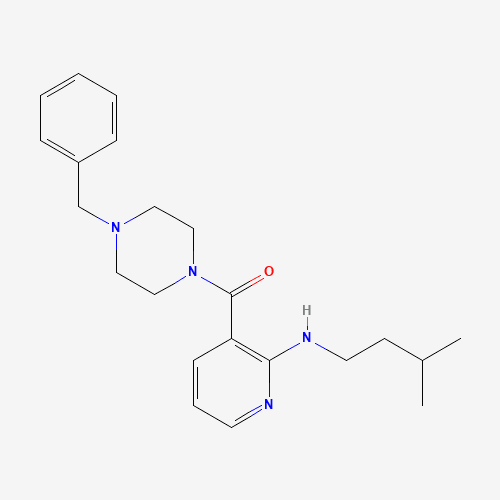
NSI-189 is an investigational benzylpiperazine-aminopyridine selected for neurogenic activity rather than for a known receptor target. A 24-person phase 1b study produced exploratory mood and self-rated cognitive signals [1], but the 220-person phase 2 trial missed its primary depression endpoint at both 40 and 80 mg a day; some self-rated and CogScreen measures favoured 40 mg, while Cogstate did not [2]. Its strongest mechanistic findings remain in cell and rat injury models [3][4].
A genuinely unusual neuroplasticity candidate with human safety data, but its phase 2 primary result was negative and no cognitive indication is established.
- meta-analysis
- RCT
- trial
- observational
- preclinical / case
- review / patent / other
- retracted
- + Reached phase 2 with once-daily oral dosing
- + Some self-rated and objective cognitive measures favoured 40 mg in the phase 2 depression trial
- + Improved behaviour and neurostructural markers in rat radiation and stroke models
- − Failed the phase 2 primary depression endpoint at both tested doses
- − Molecular binding target remains unknown
- − Human studies were short and sponsored by the developer
Overview
NSI-189 came from a phenotypic screen: researchers looked for small molecules that made human hippocampus-derived neural stem cells proliferate, then advanced the hit without first identifying a conventional receptor or enzyme target [1][5]. That origin explains both the interest and the uncertainty. It is not a monoamine reuptake inhibitor, but "neurogenic" describes an observed laboratory phenotype rather than a complete mechanism.
Phase 1b randomised 24 adults with recurrent major depressive disorder to placebo or 40 mg once, twice or three times daily for 28 days. The active groups improved on a self-rated depression questionnaire and the Cognitive and Physical Functioning Questionnaire, while differences on MADRS and the clinician global rating were not statistically significant. The active groups contained only six people each and all were pooled for the efficacy analysis [1].
The 220-person phase 2 trial is the result that should govern the verdict. Neither 40 mg nor 80 mg daily beat placebo on the primary MADRS endpoint (pooled differences −1.8 and −1.4 points; p=0.22 and p=0.34). Forty milligrams did favour NSI-189 on two self-rated scales and selected CogScreen tasks, but not on the Cogstate battery [2]. A later post-hoc paper found an 80 mg MADRS-6 signal after dividing patients by baseline severity, but that unplanned subgroup cannot reverse the negative primary analysis [6].
Mechanism
The binding target is unknown. The initial human paper says explicitly that the preclinical mouse neurogenesis, hippocampal-volume and behavioural results were company data on file [1]. A review reports activity in human hippocampal stem cells and mouse hippocampus, but still does not identify a receptor [5].
Peer-reviewed injury models give the most concrete downstream picture. In rats given fractionated cranial irradiation, four weeks of oral NSI-189 restored performance on four spontaneous-exploration tasks, increased the number of newly born granule neurons by 55% and reduced activated microglia by 56% versus irradiated controls. It did not change hippocampal volume, and the fear-conditioning result was not significant [3].
In stroke rats, 30 mg/kg daily for 12 weeks improved motor and neurological scores from day 3 through six months. It increased MAP2 staining in hippocampus and peri-infarct cortex but did not shrink the primary infarct and did not increase Ki67 in the canonical subgranular or subventricular neurogenic niches [4]. In oxygen-glucose deprived hippocampal cultures, the compound increased BDNF and stem cell factor; neutralising either signal reduced the survival effect [4]. That supports a remodelling and trophic account, but not a single direct target.
- Defined molecular receptor or enzymeno bindingunclear
- Hippocampal neurogenesisactivatesmoderate
- BDNF and stem cell factor signallingactivatesraised BDNF and stem cell factor in oxygen-glucose-deprived rat hippocampal cultures; neutralising either factor reduced the cell-survival effect [4]moderate
- Neurite and tissue remodelling after strokeactivatesincreased MAP2 staining in hippocampus and peri-infarct cortex without reducing the primary infarct in stroke rats [4]moderate
- Activated microglia after cranial irradiationblocksreduced activated hippocampal microglia by 56% versus irradiated controls in rats [3]moderate
Formulation
how the form changes blood levelsNSI-189 phosphate is the development form used in the human trials. The free base has molecular weight 366.5; the phosphate material in the stroke paper is listed at 464.5, and the authors report animal doses as free-base equivalent [4].
Dosing
as studied or commonly reported; not a recommendationDoses below are what studies used or, where marked, what is commonly reported. None is a recommendation.
Oral
- 40 mgphase 1b dose escalation in 24 adults with major depressive disorderonce, twice or three times daily · 28 dayshuman study[1]
- 40 or 80 mgphase 2 monotherapy in 220 outpatients with major depressive disorderonce daily · 12 weekshuman study[2]
- 30 mg/kgfunctional recovery and tissue remodelling after middle cerebral artery occlusion in ratsonce daily by gavage · 12 weeksanimal study[4]
- Form
- The identity and structure on this page are the 366.5-Da free base. Human and animal development studies used NSI-189 phosphate; the stroke study explicitly calculated its 30 mg/kg dose as free-base active ingredient rather than total salt mass [4].
- Timing and food
- The phase 1b trial split higher total daily exposure into two or three 40 mg doses because preclinical central nervous system findings appeared related to peak concentration [1]. Phase 2 used once-daily dosing [2].
- Time to effect
- Phase 1b outcomes were assessed after 28 days; phase 2 ran two six-week stages and found no significant advantage on its clinician-rated primary endpoint over 12 weeks [1][2].
- Notes
- These are investigational trial doses, not a recommendation. The larger phase 2 trial did not separate from placebo on MADRS at either dose [2].
Pharmacokinetics
what the body does with it| Half-life | 17.4–20.5 hours after repeated 40 mg doses in the phase 1b depression study [1]. |
|---|---|
| Time to peak | Mean peak time was 1–2 hours on days 1 and 28 [1]. |
| Steady state | Reached after 96–120 hours, consistent with the measured half-life [1]. |
| Metabolism | The phase 1b report describes limited oxidative metabolism with some glucuronide conjugation, but those experiments were company data on file rather than a separately published study [1]. Urinary disposition was not measured. |
Safety
risks and cautions, not medical adviceIn phase 1b, dose escalation to 40 mg three times daily produced no serious adverse event. Headache occurred in half of active and placebo participants; dizziness occurred in 28% of active participants and 17% of placebo, and nausea in 11% and 0%, respectively [1]. The sample was far too small to define uncommon risks.
Phase 2 reported no serious adverse event among NSI-189 recipients and no intolerance discontinuations in either active arm during its first six-week stage [2]. That supports short-term tolerability, not long-term safety: only 220 patients were randomised, treatment lasted 12 weeks, and the compound has no established clinical use.
- Headache, dizziness and nausea occurred in the small phase 1b study [1]
- Long-term safety and clinically important drug interactions have not been established
- It is an investigational compound, not an approved treatment
- The 220-person phase 2 trial failed its clinician-rated primary depression endpoint at both 40 and 80 mg daily [2]
- Positive phase 2 findings were secondary, exploratory or post-hoc and were inconsistent across cognitive batteries [2][6]
- The phase 1b efficacy analysis pooled only 18 treated patients against six placebo patients [1]
- No direct molecular target has been identified [1][5]
- The strongest neurogenesis, inflammation and stroke-recovery findings are from rats or cultured cells [3][4]
- The published human studies were sponsored by the developer and lasted no more than 12 weeks [1][2]
FAQ
- Did NSI-189 work for depression in phase 2?
- Not on the prespecified primary MADRS endpoint. Some self-rated scales and selected CogScreen measures favoured 40 mg, and a later subgroup analysis reported a signal, but those are secondary or post-hoc findings [2][6].
References
entry last reviewed 2026-09-20- [1]A Phase 1B, randomized, double blind, placebo controlled, multiple-dose escalation study of NSI-189 phosphate, a neurogenic compound, in depressed patients.Fava M, Johe K, Ereshefsky L et al.Mol Psychiatry 2016RCT · humanPMID 26643541◌ unreviewed
- [2]A phase 2, double-blind, placebo-controlled study of NSI-189 phosphate, a neurogenic compound, among outpatients with major depressive disorder.Papakostas GI, Johe K, Hand H et al.Mol Psychiatry 2020RCT · humanPMID 30626911◌ unreviewed
- [3]Remediation of Radiation-Induced Cognitive Dysfunction through Oral Administration of the Neuroprotective Compound NSI-189.Allen BD, Acharya MM, Lu C et al.Radiat Res 2018preclinical · animalPMID 29351056◌ unreviewed
- [4]NSI-189, a small molecule with neurogenic properties, exerts behavioral, and neurostructural benefits in stroke rats.Tajiri N, Quach DM, Kaneko Y et al.J Cell Physiol 2017preclinical · animalPMID 28181668◌ unreviewed
- [5]The neurogenic compound, NSI-189 phosphate: a novel multi-domain treatment capable of pro-cognitive and antidepressant effects.McIntyre RS, Johe K, Rong C et al.Expert Opin Investig Drugs 2017reviewPMID 28460574◌ unreviewed
- [6]NSI-189 phosphate, a novel neurogenic compound, selectively benefits moderately depressed patients: A post-hoc analysis of a phase 2 study of major depressive disorder.Johe KK, Kay G, Kumar S et al.Ann Clin Psychiatry 2020clinical trial · humanPMID 32722729◌ unreviewed