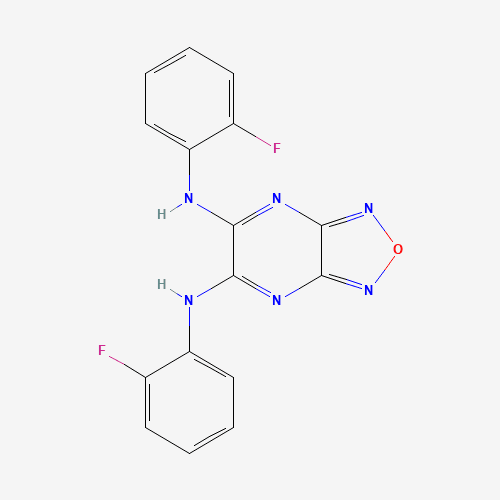
BAM15
also N5,N6-bis(2-fluorophenyl)-[1,2,5]oxadiazolo[3,4-b]pyrazine-5,6-diamine
BAM15 is a mitochondrial uncoupler. It lets protons leak back into mitochondria so fuel is burned without making ATP, and unlike older uncouplers it does not depolarise the cell's outer membrane [1]. In obese mice it reduced fat mass and improved insulin sensitivity without changing food intake, lean mass or body temperature [2]. It has not been tested in humans.
The most promising of the modern uncouplers in mice; uncouplers as a class have a lethal human history, and BAM15 has no human data.
- meta-analysis
- RCT
- trial
- observational
- preclinical / case
- review / patent / other
- retracted
- + Reduced fat mass in obese mice without cutting food intake
- + Improved insulin sensitivity and glucose control in mice
- + Best overall profile of 15 uncouplers compared head to head
- − No human studies of any kind
- − Uncouplers as a class can cause dangerous overheating
- − Not approved; research-chemical supply only
Overview
Mitochondrial uncouplers turn fuel into heat instead of ATP. The classic one, 2,4-dinitrophenol (DNP), is still sold online as a slimming aid despite 62 published deaths [3]. DNP and the lab uncoupler FCCP also act on membranes other than the mitochondrial one. BAM15 was identified in 2014 as an uncoupler that does not depolarise the plasma membrane [1].
Its obesity results are consistent across labs. In diet-induced obese mice it was orally bioavailable, increased nutrient oxidation and reduced body fat. It did not change food intake, lean mass, body temperature, or blood markers of toxicity [2]. A second group found treated mice resisted weight gain, with better glucose control independent of the weight loss [4]. In sarcopenic obese mice it cut body weight while increasing muscle mass and strength [5]. A 2025 comparison of 15 structurally unrelated uncouplers found BAM15 had the best overall effect on body weight, glucose control and liver fat in diabetic db/db mice [6]. Outside obesity, it reduced deaths and kidney injury in a mouse model of sepsis, even when given 12 hours after onset [7].
Mechanism
BAM15 is a lipophilic weak acid. It carries protons into the mitochondrial matrix through a route that bypasses ATP synthase, so nutrient oxidation is uncoupled from ATP production. Respiration rises and reactive oxygen species fall [1]. The energy stress this creates activates AMPK. In liver that improved lipid handling through mitophagy [8], and in muscle it enhanced mitochondrial quality control [5].
In db/db mice, high-dose BAM15 lowered body weight about as much as calorie restriction, but controlled glucose better. It normalised fasting glucose and glucose tolerance and lowered glucagon [9].
- Inner mitochondrial membrane (protonophore)activatescarries protons into the mitochondrial matrix, bypassing ATP synthase [1]strong
- AMPKactivatesmoderate
- Mitochondrial quality control (mitophagy)activatesactivated PINK1-dependent mitophagy in muscle of sarcopenic obese mice [5]moderate
Safety
risks and cautions, not medical adviceThere is no human safety data. The central worry with any uncoupler is dose: burning fuel as heat has no built-in ceiling. DNP toxicity shows up as overheating, a racing heart, sweating and rapid breathing, and can end in death [3]. BAM15 has a much wider tolerated range than most uncouplers in cells [6]. In mice it did not raise body temperature or disturb toxicity markers at effective doses [2]. A 2023 review calls the safety profile encouraging, but that is preclinical [10].
Not all of the 15 uncouplers compared in 2025 behaved alike. Eleven impaired maximal mitochondrial capacity, which is a reminder that "uncoupler" is not one safety profile [6].
- None established in humans; mice showed no change in body temperature or toxicity markers at effective doses [2]
- Uncouplers can cause fatal hyperthermia at high doses, as DNP has [3]; BAM15's human safe dose is unknown
- Not approved; product identity and purity unverified
Interactions
documented pairs only, not exhaustiveNo human interaction data. In mice it has been combined with the thyroid-receptor-β agonist MGL-3196 (resmetirom). The pair worked better on fatty liver than either alone, with BAM15 driving the body-fat effect [11].
- ATX-304cautionATX-304 (O304) also uncouples mitochondria [12]; stacking uncouplers compounds the heat and energy-wasting risk and has never been studied
- any stimulantcautionStimulants also raise heat production and metabolic rate; the combination with an uncoupler is unstudied, and overheating is the main danger of uncouplers
FAQ
References
entry last reviewed 2026-09-18- [1]Identification of a novel mitochondrial uncoupler that does not depolarize the plasma membrane.Kenwood BM, Weaver JL, Bajwa A et al.Mol Metab 2014preclinical · cellPMID 24634817◌ unreviewed
- [2]Mitochondrial uncoupler BAM15 reverses diet-induced obesity and insulin resistance in mice.Alexopoulos SJ, Chen SY, Brandon AE et al.Nat Commun 2020preclinical · animalPMID 32409697◌ unreviewed
- [3]2,4-dinitrophenol (DNP): a weight loss agent with significant acute toxicity and risk of death.Grundlingh J, Dargan PI, El-Zanfaly M et al.J Med Toxicol 2011reviewPMID 21739343◌ unreviewed
- [4]BAM15-mediated mitochondrial uncoupling protects against obesity and improves glycemic control.Axelrod CL, King WT, Davuluri G et al.EMBO Mol Med 2020preclinical · animalPMID 32519812◌ unreviewed
- [5]Mitochondrial uncoupling attenuates sarcopenic obesity by enhancing skeletal muscle mitophagy and quality control.Dantas WS, Zunica ERM, Heintz EC et al.J Cachexia Sarcopenia Muscle 2022preclinical · animalPMID 35304976◌ unreviewed
- [6]Diverse actions of 15 structurally unrelated mitochondrial uncouplers in cells and mice.Shah DP, Vancuylenburg CS, Olzomer EM et al.Mol Metab 2025preclinical · animalPMID 40639664◌ unreviewed
- [7]BAM15 treats mouse sepsis and kidney injury, linking mortality, mitochondrial DNA, tubule damage, and neutrophils.Tsuji N, Tsuji T, Yamashita T et al.J Clin Invest 2023preclinical · animalPMID 36757801◌ unreviewed
- [8]Mitochondrial uncoupler BAM15 ameliorates liver lipid metabolism disorders by activating the AMPK pathway.Liu Z, Wang W, Wang S et al.FEBS J 2026preclinical · animalPMID 41527408◌ unreviewed
- [9]Targeting negative energy balance with calorie restriction and mitochondrial uncoupling in db/db mice.Chen SY, Beretta M, Olzomer EM et al.Mol Metab 2023preclinical · animalPMID 36731653◌ unreviewed
- [10]BAM15 as a mitochondrial uncoupler: a promising therapeutic agent for diverse diseases.Xiong G, Zhang K, Ma Y et al.Front Endocrinol (Lausanne) 2023reviewPMID 37900126◌ unreviewed
- [11]Beneficial effects of MGL-3196 and BAM15 combination in a mouse model of fatty liver disease.Zhou M, Li C, Byrne FL et al.Acta Physiol (Oxf) 2024preclinical · animalPMID 39152636◌ unreviewed
- [12]O304 ameliorates hyperglycemia in mice by dually promoting muscle glucose effectiveness and preserving β-cell function.Norlin S, Axelsson J, Ericsson M et al.Commun Biol 2023preclinical · animalPMID 37626210◌ unreviewed