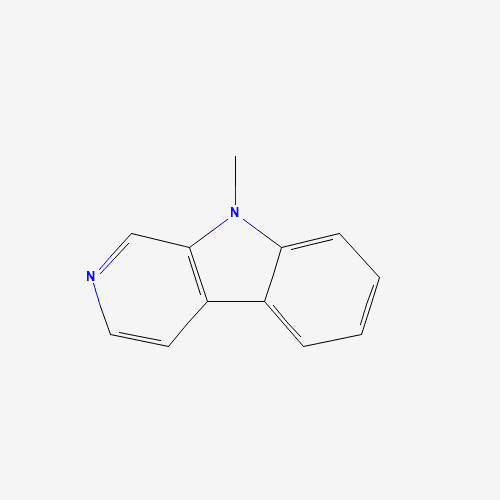
9-Me-BC
also 9-Methyl-β-carboline · 9-methyl-beta-carboline · 9-me-BC · 9-Methyl-9H-pyrido[3,4-b]indole · 9-methylnorharman
9-Me-BC is a β-carboline — the same tryptophan-derived ring system found in cooked meat, coffee and tobacco smoke, and in human blood and brain. Most members of that family damage dopaminergic neurons, which is why they have been investigated as causes of Parkinson's disease; 9-Me-BC does the opposite in cell culture and in one rat study, raising tyrosine hydroxylase, inducing neurotrophic factors and restoring dopamine after a neurotoxin [1][2][3]. Ten days of treatment also improved maze learning in rats and thickened dendrites in the dentate gyrus [4]. No human has been studied at any dose.
An unusually interesting preclinical molecule with a coherent neurotrophic mechanism and zero human data; everything known about it comes from two German laboratories working in cell culture and rats.
- meta-analysis
- RCT
- trial
- observational
- preclinical / case
- review / patent / other
- retracted
- + Increases the number of differentiated dopaminergic neurons in primary midbrain culture and induces the transcription factors that specify them
- + Reversed a neurotoxin's dopamine loss and restored substantia nigra cell counts in one rat study
- + Improved spatial learning in rats after ten days, alongside more complex dendrites and more spines in the dentate gyrus
- + Anti-inflammatory in culture, suppressing microglial proliferation and inflammatory cytokine expression
- − Not one human has taken it in a published study, so there is no efficacy, tolerability or pharmacokinetic evidence at all
- − The in-vivo evidence rests on a single rat study that delivered the compound directly into a cerebral ventricle
- − Almost every finding comes from the same small group of collaborating laboratories, with no independent replication
- − Its chemical family contains established neurotoxins, and 9-methyl-β-carbolines are efficient DNA photosensitisers under UVA
Overview
β-Carbolines are pyridoindoles built from tryptophan. They are formed in the body and also arrive from outside it — in fried meat and fish, coffee, alcoholic drinks, fruit and, above all, tobacco smoke — and they have been measured in human plasma, cerebrospinal fluid and brain [4][5]. Daily dietary exposure to the common members norharman and harman has been estimated at a few micrograms per kilogram of body weight, with smoking the single largest contributor [5].
The family has a bad reputation, and it earned it. Several β-carbolines resemble MPTP, the compound that produces parkinsonism in humans, and their methylated cationic forms inhibit mitochondrial complex I and kill dopaminergic neurons; because they are found at higher concentrations in the brains of people with Parkinson's disease, they have been proposed as contributing causes of it [1]. One endogenous β-carboline ester is taken up specifically by neurons and triggers apoptosis through release of cytochrome c and apoptosis-inducing factor [6]. β-Carbolines also bind melanin with high affinity and are retained in pigmented tissue for up to 30 days after a single dose, which is one reason the neuromelanin-rich substantia nigra keeps coming up [7].
9-Me-BC is the exception that got a commentary in Journal of Neurochemistry titled "Good guys from a shady family" [8]. Methylation at the ring nitrogen N9 — rather than at N2, which produces the positively charged neurotoxic species — appears to flip the molecule from neuron-killing to neuron-stimulating. In primary mesencephalic culture it lowered lactate dehydrogenase release and propidium iodide staining, cut caspase-3 activity, raised ATP content, damped inflammation-related genes, and significantly increased the number of differentiated dopaminergic neurons while stimulating an entire panel of factors that specify them: Shh, Wnt1, Wnt5a, En1, En2, Nurr1, Pitx3, plus the markers Th, Dat and Aldh1a1 [1].
A follow-up called the profile a "tetrad": stimulation of tyrosine hydroxylase expression and neurite outgrowth, protection against acute toxins, regeneration of tyrosine-hydroxylase-positive neurons after chronic rotenone, and an anti-inflammatory shift with reduced microglial proliferation — together with a fall in α-synuclein protein [2]. The only in-vivo study delivered the compound into a rat's left cerebral ventricle for 14 days after 28 days of the neurotoxin MPP+. It reversed the striatal dopamine loss, restored substantia nigra cell counts to normal, raised complex I activity by roughly 80%, and induced BDNF, CDNF, cerebellin 1 precursor protein and CNTF [3].
The result that drew a nootropics audience is separate. Rats treated for ten days — but not five — learned the radial maze better, had higher dopamine in the hippocampal formation, and showed longer and more branched dendritic trees with more spines on dentate gyrus granule neurons [4]. That is a genuine cognitive result in healthy animals, which is rarer than it sounds. It is also a single study in one species, and nothing comparable has been done in a person.
The honest summary is that 9-Me-BC has an interesting and internally consistent preclinical file assembled over about fifteen years by a small circle of German laboratories, and a completely empty human one. The 2011 review from the same group asked whether it might be "a new anti-Parkinson drug" [9]; fifteen years later no trial has tested that question.
Mechanism
The mechanism is transcriptional, not receptor-driven. There is no evidence that 9-Me-BC binds a dopamine receptor or transporter with useful affinity. What it does instead is raise the expression of the machinery that makes and maintains dopaminergic neurons. In primary midbrain culture it increased tyrosine hydroxylase protein and transcript in neurons that already expressed dopa decarboxylase — that is, it switched on the rate-limiting enzyme in cells that were already partway to a dopaminergic phenotype rather than creating new cells — and it induced the transcription factors Gata2, Gata3, Creb1 and Crebbp alongside it [2]. The earlier culture study found the same pattern across a wider developmental panel including Nurr1 and Pitx3 [1]. Whether the extra dopaminergic neurons come from precursors, from previously tyrosine-hydroxylase-negative neurons, or from transdifferentiation was explicitly left open by the authors [1].
Astrocytes do part of the work. The 2020 study treated cortical and midbrain astrocyte cultures and found 9-Me-BC was anti-proliferative without being toxic: adenylate kinase release did not rise at any concentration from 10 to 150 µM, and viability actually increased by 12% at 90 µM and 20% at 150 µM [10]. Those astrocytes then raised their expression of factors that support dopaminergic neurons — artemin 3.2-fold, and TGF-β2, BDNF, Egln1 and Ncam1 more modestly [10]. Uptake into astrocytes appears to run through an organic cation transporter rather than the dopamine transporter, since the OCT blocker decynium-24 abolished the anti-proliferative effect concentration-dependently [10].
One pathway is required rather than merely associated. Adding the PI3K inhibitor LY294002 completely blocked the increase in tyrosine-hydroxylase-positive neurons [10]. PI3K/Akt is the common downstream node for neurotrophic factor signalling, so this is consistent with the effect running through growth-factor pathways rather than through a direct action on dopamine synthesis.
Enzyme inhibition is real but modest. 9-Me-BC inhibits human MAO-A with an IC50 of 1 µM and MAO-B with an IC50 of 15.5 µM [10]. MAO-A inhibition at low micromolar concentrations is a plausible contributor to the higher dopamine content measured in treated cultures and, possibly, to the higher hippocampal dopamine seen in rats [4][10]. It is also the one part of the mechanism with an obvious safety implication, because MAO-A inhibitors interact with tyramine and with serotonergic drugs — though no interaction study of any kind has been done with this molecule.
The energetic effect came with the in-vivo work. In rats given MPP+ and then 9-Me-BC, striatal mitochondrial complex I activity was about 80% higher than in MPP+ plus saline or in sham-operated animals, while two-dimensional gel electrophoresis and mass fingerprinting showed no change in the composition of the respiratory complexes themselves [3]. Since MPP+ poisons complex I, a drug that raises complex I activity while inducing neurotrophins is a sensible explanation for the restoration of dopamine and cell counts in that model.
The plasticity result is morphological. Ten days of treatment lengthened and branched the dendritic trees of dentate gyrus granule neurons and increased spine density, with higher dopamine in the hippocampal formation and better radial maze performance [4]. Five days did not do it. The delay fits a mechanism that works through gene expression and structural remodelling rather than acute neurotransmission, and it means any human equivalent — if one exists — would not be a same-day effect.
What the mechanism does not include is a demonstrated molecular sensor. Nobody has shown what 9-Me-BC binds first. Every step above is downstream of an unidentified initiating event.
- Monoamine oxidase A and BblocksIC50 of 1 µM against human MAO-A and 15.5 µM against MAO-B in an enzyme assay, which may explain the rise in dopamine content seen in treated cultures [10]moderate
- Organic cation transportermodulatesthe OCT inhibitor decynium-24 blocked the anti-proliferative effect on astrocytes concentration-dependently, while the dopamine transporter did not appear to be involved, suggesting OCT-mediated uptake [10]weak
- Tyrosine hydroxylase expression in dopaminergic neuronsactivatesmoderate
- Neurotrophic factor gene expressionactivatesmoderate
- PI3K/Akt signallingactivatesthe PI3K inhibitor LY294002 completely abolished the increase in tyrosine-hydroxylase-positive neurons, placing PI3K/Akt on the required path rather than as a side effect [10]moderate
- Microglial proliferation and cytokine expressionblockssuppressed toxin-induced microglial proliferation and lowered expression of inflammatory cytokines and their receptors in primary culture [2]weak
- Mitochondrial complex I activityactivatescomplex I activity in striatal mitochondria was about 80% higher in rats given MPP+ followed by 9-Me-BC than in MPP+ plus saline or sham-operated rats, with no change in the composition of the respiratory complexes [3]weak
- α-Synuclein proteinblockslowered α-synuclein protein content in primary mesencephalic cultures; this was a culture measurement, not a measurement in an animal or a person [2]weak
Dosing
as studied or commonly reported; not a recommendationDoses below are what studies used or, where marked, what is commonly reported. None is a recommendation.No peer-reviewed human dosing data. The doses below come from animal studies or company filings; animal doses do not translate directly to people.
Oral
- 5–20 mgcommonly reported use by people buying it as a research chemicalonce dailycommonly reported, not from trials
- Notes
- No human dose has been studied. There is no published clinical trial, pharmacokinetic study or case series of 9-Me-BC in people at any dose by any route, so nothing is known about its oral absorption, brain penetration, half-life or tolerability in humans. The community row above reflects commonly reported practice, not evidence. The animal work used routes that do not translate to a capsule. The one in-vivo study infused the compound into the left cerebral ventricle of rats for 14 days, bypassing absorption and the blood-brain barrier entirely [3]. The rat cognition study dosed systemically for 5 or 10 days [4]. The exact milligram figures in both are reported only in the full texts, which are behind publisher paywalls with no free copy in PubMed Central or any open repository, so they are not restated here. Cell-culture work used 10–150 µM, most often 90 µM [10].
Safety
risks and cautions, not medical adviceThere is no human safety data. Not a single published trial, case report or pharmacokinetic study has given 9-Me-BC to a person, so statements about its tolerability, dose ceiling, drug interactions or long-term effects would be invention.
What the preclinical record shows is reassuring as far as it goes. In astrocyte cultures, concentrations from 10 to 150 µM produced no rise in adenylate kinase release and no fall in viability [10]. In mesencephalic culture the compound reduced markers of cell injury and apoptosis rather than causing them [1]. The rat study reported restoration rather than damage [3]. None of that is a toxicology programme: there is no published repeat-dose toxicity study, no genotoxicity battery, no reproductive toxicity work and no LD50 in the references cited here.
Two class-level facts deserve to be stated rather than smoothed over. First, β-carbolines as a family include compounds that inhibit mitochondrial complex I and kill dopaminergic neurons, and the charged 2,9-dimethyl form is used as the toxin in the very experiments where 9-Me-BC is the protector [1][2]. The difference between the neuroprotective and the neurotoxic member of this family is a methyl group in a different place, which is a reason for care rather than confidence. Second, β-carbolines bind melanin with high affinity and are retained in pigmented tissue — including the neuromelanin-containing neurons most affected in Parkinson's disease — for up to 30 days after a single dose [7]. A compound with that disposition taken daily for months is not pharmacologically the same as one that clears.
9-Methyl-β-carbolines are also efficient photosensitisers. Under UVA excitation at physiological pH they generate oxidised purine residues, single-strand breaks, abasic sites and cyclobutane pyrimidine dimers in DNA [11]. That was a photochemistry study in a cuvette, not a measurement of risk in skin or eye, but it is a real and specific property of this exact substitution pattern.
- No adverse effect has been reported in a human, because no human has been studied
- Cell-culture work found no toxicity to astrocytes at 10–150 µM, but that is a cell assay, not a safety finding [10]
- MAO-A inhibition at 1 µM in an enzyme assay raises theoretical tyramine and serotonergic interaction concerns that have never been tested in a living animal or a person [10]
- β-Carbolines bind melanin and are retained in pigmented tissue for weeks after a single dose, so repeated use is not pharmacokinetically equivalent to a single one [7]
- 9-Methyl-β-carbolines are efficient DNA photosensitisers under UVA in vitro [11]
- Closely related β-carbolines are dopaminergic neurotoxins, and the difference is the position of a single methyl group [1][6]
- No human study of any kind exists — no trial, no case series, no pharmacokinetic work, no safety data
- The only in-vivo efficacy study delivered the compound into a rat cerebral ventricle, which says nothing about oral dosing or brain penetration [3]
- Almost the entire literature comes from two collaborating German groups, with no independent replication
- The cognitive result rests on a single rat experiment in one task [4]
- No molecular binding target has been identified; every documented effect is downstream of an unknown first step
- Culture work used 10–150 µM concentrations with no evidence that any achievable human exposure reaches them [10]
- The exact animal doses are reported only in paywalled full texts with no free copy in PubMed Central or any open repository, so they are not restated on this page
- Repeated-dose toxicology, genotoxicity and reproductive toxicity studies have not been published
Interactions
documented pairs only, not exhaustive- any mao inhibitoravoid9-Me-BC inhibits MAO-A with an IC50 of 1 µM in an enzyme assay; stacking it with another MAO inhibitor has never been studied and compounds MAO-A blockade [10]
- any dopaminergiccaution
- Bromantanecautionboth act on dopamine-synthesis enzymes rather than receptors, both only in animals, and the combination has never been studied
- Phenylpiracetamcautionno interaction study exists; combining a dopamine transporter inhibitor with a MAO-A inhibitor is the kind of pairing that warrants caution on principle
History
The molecule emerged from a research programme asking why β-carbolines are elevated in the parkinsonian brain. In 2008 a Dresden group screening within the family reported that one member — the N9-methylated one — did the opposite of what was expected and increased the appearance of differentiated dopaminergic neurons in primary culture [1]. Two 2010 papers extended it, one in culture and one in rats [2][3], and a 2011 review from the same group framed it as a candidate anti-Parkinson drug [9]. A Magdeburg collaboration added the cognitive result in 2012, which is what carried the compound out of Parkinson's research and into the nootropics market [4]. A 2020 paper from the Dresden group worked out the astrocyte and MAO components [10]. That is essentially the whole literature. No company has taken it into development, and no clinical trial has been registered or published.
Reputation
how it is regarded elsewhere, not this wiki's readingOnline, 9-Me-BC is usually described as a dopamine neuron regenerator or a neurogenesis agent. The first half is a fair paraphrase of the rat and culture data, provided the word "regeneration" is read as it was used in the original papers — recovery of tyrosine-hydroxylase-positive cell counts after a toxin, in a rat receiving the drug directly into its brain [2][3]. The second half is looser than the evidence: the 2012 study measured dendritic and synaptic proliferation on existing granule neurons, not the birth of new ones [4], and the 2008 culture paper found an anti-proliferative effect with reduced BrdU incorporation [1].
The cycling schedules circulated in forums — a few weeks on, then off, on the theory that the neurotrophic effects persist — have no experimental basis whatever. No study has looked at repeated administration in an intact animal over months, at withdrawal, or at what the compound does in a brain that is not damaged. The one thing the literature is unambiguous about is that a ten-day course did something a five-day course did not [4], which is an argument about latency, not about cycling.
FAQ
- Has 9-Me-BC been tested in humans?
- No. There is no published trial, case series or pharmacokinetic study in people at any dose by any route.
- Does it really regenerate dopamine neurons?
- In one rat study, intraventricular 9-Me-BC restored substantia nigra tyrosine-hydroxylase-positive cell counts and striatal dopamine after MPP+ damage [3]. That is a single study in an animal model, with the drug delivered directly into the brain.
- Is it a MAO inhibitor?
- In an enzyme assay, yes — IC50 of 1 µM against MAO-A and 15.5 µM against MAO-B [10]. Whether any human dose reaches those concentrations in tissue is unknown.
- Isn't it just a neurotoxin like other β-carbolines?
- Its relatives include genuine dopaminergic neurotoxins, and the charged 2,9-dimethyl form is used as the toxin in experiments where 9-Me-BC is the protector [2]. 9-Me-BC itself was not toxic to astrocytes at 10–150 µM in culture [10], but no animal or human toxicology programme has been published.
- Why do people say it needs at least ten days?
- Because in the rat cognition study ten days of treatment improved maze learning and remodelled dentate gyrus dendrites while five days did not [4]. That is one experiment in rats, and it is not a dosing schedule for people.
- Do I get any of it from food?
- Not this one. Dietary and tobacco exposure to β-carbolines is dominated by norharman and harman, estimated at a few micrograms per kilogram of body weight a day [5]. 9-Me-BC is not a significant dietary constituent.
References
entry last reviewed 2026-09-20- [1]9-Methyl-beta-carboline up-regulates the appearance of differentiated dopaminergic neurones in primary mesencephalic culture.Hamann J, Wernicke C, Lehmann J et al.Neurochem Int 2008other · animalPMID 17913302◌ unreviewed
- [2]The exceptional properties of 9-methyl-beta-carboline: stimulation, protection and regeneration of dopaminergic neurons coupled with anti-inflammatory effects.Polanski W, Enzensperger C, Reichmann H et al.J Neurochem 2010other · animalPMID 20374418◌ unreviewed
- [3]9-Methyl-beta-carboline has restorative effects in an animal model of Parkinson's disease.Wernicke C, Hellmann J, Zieba B et al.Pharmacol Rep 2010other · animalPMID 20360614◌ unreviewed
- [4]9-Methyl-β-carboline-induced cognitive enhancement is associated with elevated hippocampal dopamine levels and dendritic and synaptic proliferation.Gruss M, Appenroth D, Flubacher A et al.J Neurochem 2012other · animalPMID 22380576◌ unreviewed
- [5]Exposure to beta-carbolines norharman and harman.Pfau W, Skog KJ Chromatogr B Analyt Technol Biomed Life Sci 2004reviewPMID 15036003◌ unreviewed
- [6]Beta-carbolines induce apoptosis in cultured cerebellar granule neurons via the mitochondrial pathway.Hans G, Malgrange B, Lallemend F et al.Neuropharmacology 2005other · animalPMID 15617732◌ unreviewed
- [7]Long-term retention of neurotoxic beta-carbolines in brain neuromelanin.Ostergren A, Annas A, Skog K et al.J Neural Transm (Vienna) 2004other · animalPMID 14767717◌ unreviewed
- [8]Good guys from a shady family.Gulyaeva N, Aniol VJ Neurochem 2012other · animalPMID 22372749◌ unreviewed
- [9]Stimulation, protection and regeneration of dopaminergic neurons by 9-methyl-β-carboline: a new anti-Parkinson drug?Polanski W, Reichmann H, Gille GExpert Rev Neurother 2011reviewPMID 21651332◌ unreviewed
- [10]9-Methyl-β-carboline inhibits monoamine oxidase activity and stimulates the expression of neurotrophic factors by astrocytes.Keller S, Polanski WH, Enzensperger C et al.J Neural Transm (Vienna) 2020other · animalPMID 32285253◌ unreviewed
- [11]Mechanisms of DNA damage by photoexcited 9-methyl-β-carbolines.Vignoni M, Rasse-Suriani FA, Butzbach K et al.Org Biomol Chem 2013other · animalPMID 23842892◌ unreviewed