Semax
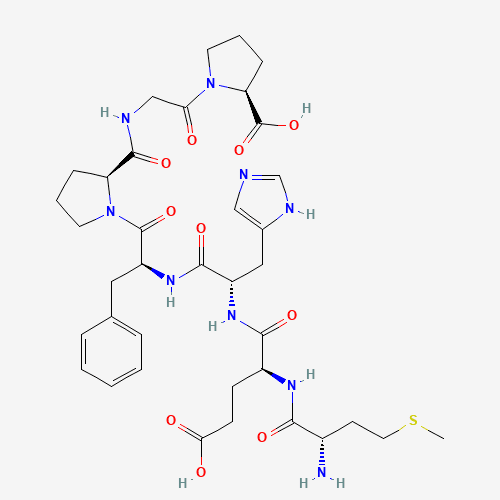
also ACTH(4-7)-Pro-Gly-Pro · Met-Glu-His-Phe-Pro-Gly-Pro · MEHFPGP
Semax is a synthetic heptapeptide (Met-Glu-His-Phe-Pro-Gly-Pro), an analogue of the ACTH(4-10) fragment of the hormone ACTH, given as a nasal spray [1]. It is used in acute stroke therapy [2]. In rats it raises BDNF and its receptor in the brain [3]. Almost all of its clinical research is published in Russian, and the human studies are small and mostly unblinded [4][5].
A genuinely interesting neuropeptide with consistent BDNF results in rats; the human stroke evidence is Russian-language, small and not placebo-controlled by modern standards.
- meta-analysis
- RCT
- trial
- observational
- preclinical / case
- review / patent / other
- retracted
- + Raises BDNF and trkB in rat brain after nasal dosing
- + Faster functional recovery after stroke in Russian clinical studies
- + Reaches the brain within minutes after nasal dosing in rats
- − Human studies are small and mostly not blinded
- − Clinical literature is almost entirely Russian
- − Rapidly broken down in the body
Overview
Semax is a seven-amino-acid peptide based on the 4-10 fragment of adrenocorticotropic hormone (ACTH). It is given as a nasal spray. In rodents and humans it affects learning and memory, and it has marked neuroprotective effects [1]. It is described as used in acute stroke therapy [2].
A note on the evidence. Semax's clinical literature is almost entirely in Russian journals. This entry relies on the English abstracts that PubMed indexes, and papers without one are not cited. Russian-language references are marked in the reference list.
In a 1997 study, 30 patients in the acute phase of ischaemic stroke received Semax alongside standard treatment and were compared with 80 patients on standard treatment alone. Semax sped the recovery of neurological, especially motor, function [4]. A 2018 study found Semax raised blood BDNF and, especially with early rehabilitation, sped functional recovery and improved motor performance on the Barthel index [5]. Neither abstract describes a randomised, placebo-controlled design.
In 52 healthy volunteers, a single dose changed resting-state connectivity between the right amygdala and temporal cortex on fMRI compared with placebo [6].
Mechanism
The best-supported mechanism is neurotrophic. After a nasal dose in rats, Semax raised BDNF protein in the basal forebrain within three hours [1]. A single dose increased hippocampal BDNF 1.4-fold, trkB activation 1.6-fold, and the BDNF and trkB genes 3-fold and 2-fold. Treated rats also learned an avoidance task better [3]. Rat basal forebrain membranes contain specific, high-affinity binding sites for Semax [1].
After experimental stroke in rats, Semax switched on neurotrophin and receptor genes in the damaged cortex [2]. Genome-wide, most of the genes it changed were immune-related, with vascular genes affected too [7]. It also inhibits enzymes that break down enkephalins in human serum, which may extend the action of the body's own regulatory peptides [8].
- BDNF / trkBactivatesmoderate
- Immune and vascular gene expression after ischaemiamodulatesmostly altered immune-response genes in rat brain after stroke [7]moderate
Safety
risks and cautions, not medical adviceThe cited abstracts do not report adverse events in detail, and no long-term safety study is indexed in English. The human studies are small. The peptide is rapidly broken down in the body [9].
- Not reported in detail in the indexed abstracts
- Products sold online are unregulated and unverified
- The absence of reported side effects reflects thin reporting, not proven safety
Interactions
documented pairs only, not exhaustive- SelankcompatibleNo interaction documented; the two were given separately, not together, in one volunteer study [6]
FAQ
References
entry last reviewed 2026-09-18- [1]Semax, an analogue of adrenocorticotropin (4-10), binds specifically and increases levels of brain-derived neurotrophic factor protein in rat basal forebrain.Dolotov OV, Karpenko EA, Seredenina TS et al.J Neurochem 2006preclinical · animalPMID 16635254◌ unreviewed
- [2]Semax and Pro-Gly-Pro activate the transcription of neurotrophins and their receptor genes after cerebral ischemia.Dmitrieva VG, Povarova OV, Skvortsova VI et al.Cell Mol Neurobiol 2010preclinical · animalPMID 19633950◌ unreviewed
- [3]Semax, an analog of ACTH(4-10) with cognitive effects, regulates BDNF and trkB expression in the rat hippocampus.Dolotov OV, Karpenko EA, Inozemtseva LS et al.Brain Res 2006preclinical · animalPMID 16996037◌ unreviewed
- [4][Effectiveness of semax in acute period of hemispheric ischemic stroke (a clinical and electrophysiological study)].Gusev EI, Skvortsova VI, Miasoedov NF et al.Zh Nevrol Psikhiatr Im S S Korsakova 1997clinical trial · humanPMID 11517472in Russian◌ unreviewed
- [5][The efficacy of semax in the tretament of patients at different stages of ischemic stroke].Gusev EI, Martynov MY, Kostenko EV et al.Zh Nevrol Psikhiatr Im S S Korsakova 2018clinical trial · humanPMID 29798983in Russian◌ unreviewed
- [6]Functional Connectomic Approach to Studying Selank and Semax Effects.Panikratova YR, Lebedeva IS, Sokolov OY et al.Dokl Biol Sci 2020clinical trial · humanPMID 32342318◌ unreviewed
- [7]The peptide semax affects the expression of genes related to the immune and vascular systems in rat brain focal ischemia: genome-wide transcriptional analysis.Medvedeva EV, Dmitrieva VG, Povarova OV et al.BMC Genomics 2014preclinical · animalPMID 24661604◌ unreviewed
- [8][Semax and selank inhibit the enkephalin-degrading enzymes from human serum]].Kost NV, Sokolov OIu, Gabaeva MV et al.Bioorg Khim 2001preclinicalPMID 11443939in Russian◌ unreviewed
- [9][Kinetics of Semax penetration into the brain and blood of rats after its intranasal administration].Shevchenko KV, Nagaev IIu, Alfeeva LIu et al.Bioorg Khim 2006preclinical · animalPMID 16523722in Russian◌ unreviewed