Aniracetam
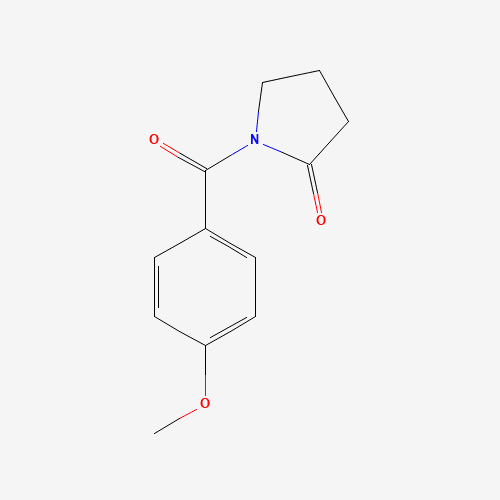
also Draganon · Sarpul · Ro 13-5057 · 1-(4-Methoxybenzoyl)-2-pyrrolidinone
Aniracetam is a fat-soluble piracetam analogue that positively modulates AMPA glutamate receptors [1]. It was marketed in Italy and Japan for dementia and post-stroke cognitive symptoms, and placebo-controlled trials in Alzheimer-type dementia gave contradictory answers [2][3]. It is no longer in clinical use [4], and in healthy animals it does nothing measurable [5][6].
A genuinely interesting AMPA modulator whose human trials were small, old and split, and whose only tests in healthy subjects — all in animals — were flatly negative.
- meta-analysis
- RCT
- trial
- observational
- preclinical / case
- review / patent / other
- retracted
- + A clearly defined mechanism: positive allosteric modulation of AMPA receptors
- + Two positive placebo-controlled trials in mild-to-moderate dementia
- + Well tolerated in the trials that reported tolerability
- − Three separate studies in healthy animals found no cognitive effect at all
- − The parent drug is almost gone from blood within an hour of an oral dose
- − Withdrawn from clinical use; sold in the US only as an unapproved supplement ingredient
Overview
Aniracetam is Piracetam with a 4-methoxybenzoyl group in place of the acetamide side chain. That change makes it fat-soluble rather than water-soluble, and gives it a mechanism piracetam does not clearly have: it is a positive allosteric modulator of AMPA glutamate receptors [1].
It was developed by Roche as Ro 13-5057 and sold in Italy and Japan for dementia and for the behavioural and psychological symptoms that follow stroke [7]. A 2010 survey of the piracetam family records that aniracetam, like Oxiracetam, is no longer in clinical use [4]. It survives as a supplement ingredient, which in the United States means an unapproved drug sold outside the drug approval system [8].
Mechanism
Aniracetam reversibly increases synaptic responses mediated by AMPA receptors, and leaves NMDA-mediated responses alone. It is considerably more potent at this than structurally similar nootropics, and it acts unevenly across the hippocampus — more in dentate gyrus and CA1 than in CA3 — which suggests it distinguishes between AMPA receptor variants [1]. The biophysics were later pinned down: aniracetam acts on the "flip" splice variants, slowing their desensitisation and deactivation [9].
It is not purely glutamatergic. At nanomolar concentrations it potentiates α4β2 nicotinic acetylcholine receptor currents in rat cortical neurons, with much weaker effects on α7 [10]. Reviews also describe positive modulation of metabotropic glutamate receptors and facilitation of cholinergic transmission [11].
A complication worth knowing: very little aniracetam survives first pass. Its metabolite 2-pyrrolidinone potentiates AMPA receptor currents more strongly and far more durably than aniracetam itself, through a CaMKII-dependent pathway [12]. Whatever aniracetam does in a person may largely be the work of its metabolites [7].
- AMPA glutamate receptorsmodulatesreversibly increases AMPA-mediated but not NMDA-mediated synaptic responses in hippocampus, with more effect in dentate gyrus and CA1 than CA3 [1]moderate
- AMPA receptor desensitisationblocksslows desensitisation of flip-splice-variant AMPA receptors, the biophysical basis of the potentiation [9]moderate
- α4β2 nicotinic acetylcholine receptorsmodulatespotentiates α4β2 currents in rat cortical neurons from 0.1 nM, with little effect on α7 [10]moderate
- Metabotropic glutamate receptorsmodulatesreported as a positive modulator alongside its AMPA action [11]weak
Dosing
as studied or commonly reported; not a recommendationDoses below are what studies used or, where marked, what is commonly reported. None is a recommendation.
Oral
- Timing and food
- Aniracetam is lipophilic and poorly water-soluble; it is conventionally taken with food, though no cited trial tested fed versus fasted dosing.
- Notes
- The clinical dose in the dementia trials was 1500 mg a day, usually split [11]. Supplements sold in the United States are a different matter: one product analysed in 2021 delivered 502 mg per serving against a typical pharmacologic dose of 200–750 mg, and several products' labels did not match their contents [8].
Pharmacokinetics
what the body does with it| Half-life | About 0.5 h for the parent drug after a 400 mg oral dose in healthy men [14]. The metabolites last far longer, and their half-life is 4–7 times greater again in very elderly patients with poor renal function [15]. |
|---|---|
| Time to peak | About 0.4 h for aniracetam itself [14]; its metabolites anisic acid and p-methoxyhippuric acid peak around 2 h [15]. |
| Peak level | 8.75 ± 7.82 ng/mL after 400 mg orally — a strikingly low and variable level for the dose [14]. |
| Metabolism | Extensively metabolised on first pass to N-anisoyl-GABA, anisic acid, p-methoxyhippuric acid and 2-pyrrolidinone; the metabolites are thought to carry much of the activity [7]. 2-Pyrrolidinone produces a longer-lasting AMPA potentiation than aniracetam itself, through CaMKII [12]. |
Safety
risks and cautions, not medical adviceThe trials that reported tolerability called it excellent [2], and a 1994 review noted in particular that aniracetam did not raise liver enzymes, while conceding that proper adverse-event incidence rates were not available [11]. The one clearly negative trial is also the one with a safety signal: treatment was stopped for confusion in four of the aniracetam patients versus one on placebo [3].
The practical risk is not the molecule but the market. Aniracetam is not approved for human use in the United States; in a 2021 analysis of ten cognitive-enhancement supplements, products containing aniracetam also contained undeclared unapproved drugs including phenibut, vinpocetine and picamilon, and 75% of declared quantities were inaccurate [8].
- Not approved for human use in the United States; products labelled as containing it frequently contain other undeclared unapproved drugs and inaccurate quantities [8]
- Metabolite half-life is 4–7 times longer in very elderly people with reduced creatinine clearance [15]
- No longer in clinical use anywhere, so there is no current prescribing information to fall back on [4]
- The two positive dementia trials are small (109 and 60 patients) and from 1991, before modern trial standards [2][13]
- The 1987 trial found improvement in both arms and no difference between them [3]
- No trial in healthy, unimpaired people exists; the only such tests are in mice and pigeons, and all were negative [5][6][16]
- A 1994 review noted adverse-event incidence rates were simply not available [11]
- The 2018 dementia network meta-analysis pooled aniracetam into a mixed 'symptomatic treatment for vascular dementia' arm with seven other agents, so it gives no aniracetam-specific estimate [17]
Interactions
documented pairs only, not exhaustive- any choline sourcecompatibleCommonly stacked in practice; no interaction study is cited here, and the combination has not been trialled
- PiracetamcompatibleCompared head to head in dementia trials rather than combined; aniracetam 1500 mg/day beat piracetam 2400 mg/day on 8 of 18 tests in a 6-month study [11]
- CaffeinecompatibleNo interaction documented
History
Roche developed aniracetam in the 1970s as the second-generation racetam. Clinical work concentrated in Italy and Japan through the late 1980s and early 1990s [7]. By 2010 it had dropped out of clinical use [4], but it had already found a second life in online nootropics communities — a fact the researchers who tested it in healthy mice cited as their reason for doing the study [5].
Reputation
how it is regarded elsewhere, not this wiki's readingAniracetam's community reputation is for anxiolysis and "smoother", more verbal cognition than piracetam. None of that is in the cited human literature: the trials measured psychometric batteries in demented patients, not mood or fluency in healthy adults.
What the literature does contain is an unusually direct rebuttal. Three independent studies asked whether aniracetam improves cognition in neurologically healthy subjects — twice in mice at 50 mg/kg orally, once in pigeons at 100 and 200 mg/kg by two routes — and all three found nothing, across water maze, fear conditioning, object recognition, rotarod, anxiety and delayed matching-to-sample tasks [5][6][16]. These are animals, not people, but they are the only experiments anyone has run on the question, and they point the same way.
FAQ
- Does aniracetam work in healthy people?
- No one has run the trial. The only experiments asking that question used healthy mice and pigeons, and all three found no effect on memory, learning or anxiety [5][6][16].
References
entry last reviewed 2026-09-20- [1]Selective effects of aniracetam across receptor types and forms of synaptic facilitation in hippocampus.Xiao P, Staubli U, Kessler M et al.Hippocampus 1991other · animalPMID 1688280◌ unreviewed
- [2]Aniracetam (Ro 13-5057) in the treatment of senile dementia of Alzheimer type (SDAT): results of a placebo controlled multicentre clinical study.Senin U, Abate G, Fieschi C et al.Eur Neuropsychopharmacol 1991RCT · humanPMID 1822317◌ unreviewed
- [3]Senile dementia of the Alzheimer type treated with aniracetam: a new nootropic agent.Sourander LB, Portin R, Mölsä P et al.Psychopharmacology (Berl) 1987RCT · humanPMID 3103163◌ unreviewed
- [4]Piracetam and piracetam-like drugs: from basic science to novel clinical applications to CNS disorders.Malykh AG, Sadaie MRDrugs 2010reviewPMID 20166767◌ unreviewed
- [5]Aniracetam does not alter cognitive and affective behavior in adult C57BL/6J mice.Elston TW, Pandian A, Smith GD et al.PLoS One 2014other · animalPMID 25099639◌ unreviewed
- [6]Aniracetam does not improve working memory in neurologically healthy pigeons.Phillips H, McDowell A, Mielby BS et al.PLoS One 2019other · animalPMID 31002681◌ unreviewed
- [7]Aniracetam: its novel therapeutic potential in cerebral dysfunctional disorders based on recent pharmacological discoveries.Nakamura KCNS Drug Rev 2002reviewPMID 12070527◌ unreviewed
- [8]Five Unapproved Drugs Found in Cognitive Enhancement Supplements.Cohen PA, Avula B, Wang YH et al.Neurol Clin Pract 2021otherPMID 34484905◌ unreviewed
- [9]AMPA receptor flip/flop mutants affecting deactivation, desensitization, and modulation by cyclothiazide, aniracetam, and thiocyanate.Partin KM, Fleck MW, Mayer MLJ Neurosci 1996other · humanPMID 8824304◌ unreviewed
- [10]Nootropic drug modulation of neuronal nicotinic acetylcholine receptors in rat cortical neurons.Zhao X, Kuryatov A, Lindstrom JM et al.Mol Pharmacol 2001other · animalPMID 11259610◌ unreviewed
- [11]Aniracetam. An overview of its pharmacodynamic and pharmacokinetic properties, and a review of its therapeutic potential in senile cognitive disorders.Lee CR, Benfield PDrugs Aging 1994reviewPMID 8199398◌ unreviewed
- [12]The aniracetam metabolite 2-pyrrolidinone induces a long-term enhancement in AMPA receptor responses via a CaMKII pathway.Nishizaki T, Matsumura TBrain Res Mol Brain Res 2002other · animalPMID 11834304◌ unreviewed
- [13][Efficacy and tolerance of aniracetam in elderly patients with primary or secondary mental deterioration].Canonico V, Forgione L, Paoletti C et al.Riv Neurol 1991RCT · humanPMID 1767242in Italian◌ unreviewed
- [14]Pharmacokinetics and bioequivalence study of aniracetam after single-dose administration in healthy Chinese male volunteers.Tian Y, Zhang JJ, Feng SD et al.Arzneimittelforschung 2008RCT · humanPMID 19025058◌ unreviewed
- [15]Pharmacokinetic study of aniracetam in elderly patients with cerebrovascular disease.Endo H, Tajima T, Yamada H et al.Behav Brain Res 1997clinical trial · humanPMID 9062694◌ unreviewed
- [16]Oral aniracetam treatment in C57BL/6J mice without pre-existing cognitive dysfunction reveals no changes in learning, memory, anxiety or stereotypy.Reynolds CD, Jefferson TS, Volquardsen M et al.F1000Res 2017other · animalPMID 29946420◌ unreviewed
- [17]The treatment of cognitive dysfunction in dementia: a multiple treatments meta-analysis.Perng CH, Chang YC, Tzang RFPsychopharmacology (Berl) 2018meta-analysis · humanPMID 29502274◌ unreviewed