Pramiracetam
also CI-879 · Pramistar · Neupramir · Remen
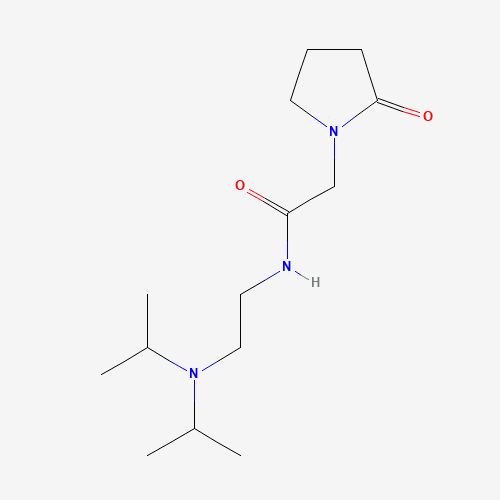
Pramiracetam is a Parke-Davis piracetam derivative with a basic diisopropylaminoethyl side chain, far more potent than Piracetam in animal amnesia models [1]. Its two positive controlled human results are narrow: partial reversal of scopolamine-induced amnesia in healthy volunteers [2] and improved delayed recall in young men with memory problems after head injury or anoxia [3]. In Alzheimer's disease it did nothing [4].
The only racetam here with a positive controlled result in people who were not demented — and it is two small studies, one of them an artificial amnesia model.
- meta-analysis
- RCT
- trial
- observational
- preclinical / case
- review / patent / other
- retracted
- + Two positive placebo-controlled human studies outside dementia
- + Clean, dose-linear pharmacokinetics with a workable 4–6 hour half-life
- + Still marketed as a prescription medicine in Italy
- − An inverted U-shaped dose-response, so more is not better
- − Failed in Alzheimer's disease at doses up to 4000 mg
- − Both positive studies are small, from 1991 and 1994, and have never been replicated
Overview
Pramiracetam came out of a Parke-Davis medicinal chemistry programme that synthesised a series of N-[(dialkylamino)alkyl]-2-oxo-1-pyrrolidineacetamides and tested them for reversal of electroconvulsive shock-induced amnesia in mice. The diisopropylaminoethyl side chain gave the most potent compound with the broadest dose-response, and it became CI-879, pramiracetam [1].
That basic side chain changes the molecule's character: unlike Piracetam and Oxiracetam, pramiracetam is a base, normally supplied as the sulfate salt, and it reaches plasma concentrations in the µg/mL range at gram doses [5]. It is still marketed in Italy as a prescription medicine.
Mechanism
Pramiracetam's mechanism is no better established than piracetam's. The 2010 survey of the family says the modes of action of piracetam and most of its derivatives remain an enigma [6].
The one concrete line of evidence is cholinergic and indirect. In rats, 14 days of scopolamine raised the extraction and permeability-surface area product for choline across the blood-brain barrier; co-injecting pramiracetam or piracetam at 100 mg/kg/day prevented that change and increased cerebral blood flow. The authors suggested the nootropics act by altering brain choline metabolism [7]. Pramiracetam also raises nitric oxide synthase activity in rat cerebral cortex after systemic dosing [8], though what that contributes is unclear.
In humans, the mechanistic signal is that pramiracetam partially blunts scopolamine amnesia — a cholinergic challenge — in both young and older healthy men [2]. That is consistent with a cholinergic action and does not identify one.
The recurring structural feature of the pharmacology is the inverted U. Active compounds in the original series all showed inverted U-shaped dose-response curves, and pramiracetam was picked partly because its curve was the broadest [1].
- Choline transport across the blood-brain barriermodulatesat 100 mg/kg/day in rats it prevented the scopolamine-induced rise in choline extraction across the blood-brain barrier and increased cerebral blood flow [7]weak
- Cholinergic memory pathwaysmodulatespartially reduced the episodic-memory and selective-attention deficits caused by intramuscular scopolamine in healthy volunteers [2]moderate
Dosing
as studied or commonly reported; not a recommendationDoses below are what studies used or, where marked, what is commonly reported. None is a recommendation.
Oral
- Form
- Usually supplied as pramiracetam sulfate; the head injury trial dosed 400 mg of the sulfate three times a day [3].
- Timing and food
- Both pharmacokinetic studies dosed after an overnight fast [5][9]. No cited study compared fed with fasted dosing.
- Time to effect
- In the head injury study, improvement in delayed recall was maintained through an 18-month open trial and persisted for a month after the drug was stopped [3].
- Notes
- The dose-response in animals is an inverted U — the compound has a pharmacologic therapeutic window with less effect above and below it [1][4]. That is the stated reason the Alzheimer's trial used a two-phase dose-finding design, and it found no reproducible best dose [4]. Doses up to 1600 mg as a single dose produced no significant side effects in healthy men [5].
Pharmacokinetics
what the body does with it| Half-life | 4.5–6.5 h across single oral doses of 400–1600 mg, independent of dose [5]. A second study found 4.3–4.7 h, very variable between subjects (2–8 h) but consistent within a subject [9]. |
|---|---|
| Time to peak | 2–3 h after single oral doses of 400–1600 mg [5]. |
| Peak level | 2.71 µg/mL after 400 mg rising linearly to 8.98 µg/mL after 1600 mg [5]; 5.8–6.8 µg/mL after 600 mg [9]. |
| Metabolism | Total body clearance 4.45–4.85 mL/min/kg, independent of dose [5]. |
| Excretion | Renal clearance 1.83–3.00 mL/min/kg [5]. |
Safety
risks and cautions, not medical advicePramiracetam was well tolerated in normal human volunteers from the start of its development [1], and the dose-ranging study found no significant side effects at any dose up to a single 1600 mg [5]. The head injury study reported it safe over 18 months of open-label use [3].
None of these is a large safety study, and no adverse-event tables are available in the cited material. It is a prescription medicine in Italy, so prescribing information exists — it simply is not among the references here.
- The scopolamine study had 24 subjects and tested an artificial, drug-induced amnesia rather than any real-world deficit [2]
- The head injury study is small, from 1991, and its long-term arm was open-label [3]
- The Alzheimer's trial enrolled ten patients and found no reproducible best dose [4]
- No trial in healthy, unimpaired people measuring ordinary cognition is cited here
- The inverted U-shaped dose-response means an effective dose range exists but has not been defined in humans [1]
Interactions
documented pairs only, not exhaustive- any choline sourcecompatibleFrequently stacked; pramiracetam's animal mechanism involves brain choline transport [7], but no combination study exists
- PiracetamcompatibleSame class; the two were tested together against scopolamine-induced changes in choline transport in rats with similar effects [7]
- CaffeinecompatibleNo interaction documented
History
Parke-Davis developed pramiracetam in the early 1980s and took it into dementia. The 1991 Alzheimer's trial settled that question in the negative: ten patients, a two-phase placebo-controlled enrichment design chosen specifically because the animal dose-response is an inverted U. Eight patients showed a best dose in the dose-finding phase, but only two reproduced it in the replication phase, and FDG-PET in two individuals showed no definite change. The authors concluded that doses up to 4000 mg are unlikely to help Alzheimer's patients [4].
The interesting human work went elsewhere. In 1991, young men with memory and cognitive problems after head injury and anoxia were given 400 mg of pramiracetam sulfate three times a day under double-blind placebo-controlled conditions. Memory measures — especially delayed recall — improved clinically significantly versus placebo, and the improvement was maintained through an 18-month open trial and for a month after discontinuation [3].
In 1994, two groups of twelve healthy men, one aged 18–42 and one 55–65, took 600 mg twice daily or placebo for ten days and were then challenged with intramuscular scopolamine. Scopolamine impaired episodic memory and selective attention in both groups; pramiracetam partially reduced that amnesia in young and old alike [2].
The 2010 review records pramiracetam as having improved cognitive deficits associated with traumatic brain injuries, and notes it as one of the subgroup-1 racetams that have been used in humans [6].
Reputation
how it is regarded elsewhere, not this wiki's readingPramiracetam's community reputation is as the strongest of the old racetams, with a focus-and-recall character rather than a mood one. Two things in the literature support that better than usual: it really is far more potent than piracetam in the animal assays it was selected on [1], and its two positive human studies are both about memory rather than global clinical impression [2][3].
Two things cut against it. The positive studies are tiny — 24 volunteers in one, a small head-injury cohort in the other — and both are over thirty years old with no replication cited here. And the inverted U-shaped dose-response means that the community habit of raising the dose when an effect fades has, for this compound specifically, a documented reason not to work [1][4].
FAQ
- Does pramiracetam work in people who are not impaired?
- The closest test gave healthy men 600 mg twice daily for ten days and then induced amnesia with scopolamine; pramiracetam partially blunted it [2]. No study measured ordinary cognition in unchallenged healthy people.
References
entry last reviewed 2026-09-20- [1]Amnesia-reversal activity of a series of N-[(disubstituted-amino)alkyl] -2-oxo-1-pyrrolidineacetamides, including pramiracetam.Butler DE, Nordin IC, L'Italien YJ et al.J Med Chem 1984other · humanPMID 6716406◌ unreviewed
- [2]Pramiracetam effects on scopolamine-induced amnesia in healthy volunteers.Mauri M, Sinforiani E, Reverberi F et al.Arch Gerontol Geriatr 1994RCT · humanPMID 15374306◌ unreviewed
- [3]Placebo-controlled study of pramiracetam in young males with memory and cognitive problems resulting from head injury and anoxia.McLean A, Cardenas DD, Burgess D et al.Brain Inj 1991RCT · humanPMID 1786500◌ unreviewed
- [4]Nootropic drugs in Alzheimer's disease: symptomatic treatment with pramiracetam.Claus JJ, Ludwig C, Mohr E et al.Neurology 1991clinical trial · humanPMID 2011259◌ unreviewed
- [5]Pharmacokinetics of oral pramiracetam in normal volunteers.Chang T, Young RM, Goulet JR et al.J Clin Pharmacol 1985RCT · humanPMID 4008675◌ unreviewed
- [6]Piracetam and piracetam-like drugs: from basic science to novel clinical applications to CNS disorders.Malykh AG, Sadaie MRDrugs 2010reviewPMID 20166767◌ unreviewed
- [7]Reversal of scopolamine-induced alterations of choline transport across the blood-brain barrier by the nootropics piracetam and pramiracetam.Brust PArzneimittelforschung 1989other · animalPMID 2610714◌ unreviewed
- [8]Systemic administration of pramiracetam increases nitric oxide synthase activity in the cerebral cortex of the rat.Corasaniti MT, Paoletti AM, Palma E et al.Funct Neurol 1995other · animalPMID 8557218◌ unreviewed
- [9]Pharmacokinetics of pramiracetam in healthy volunteers after oral administration.Auteri A, Blardi P, Celasco G et al.Int J Clin Pharmacol Res 1992other · humanPMID 1473879◌ unreviewed