Oxiracetam
also Neuromet · Hydroxypiracetam · ISF-2522 · CT-848
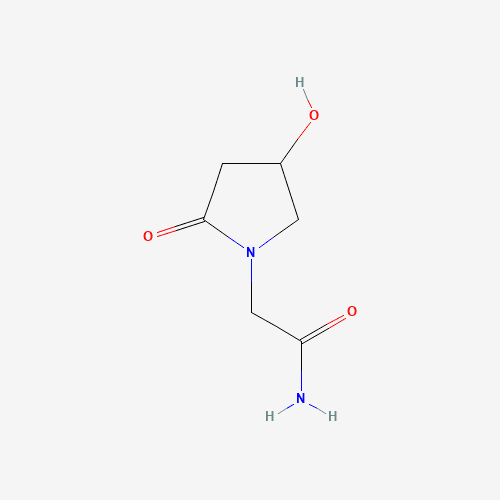
Oxiracetam is the 4-hydroxy analogue of Piracetam, prescribed for decades in Italy and South Korea for cognitive impairment. Small trials from the late 1980s and early 1990s reported benefit in mild dementia [1][2][3], but a 500-patient trial published in 2026 found no effect whatsoever on post-stroke cognition [4]. South Korea's regulator recommended suspending prescriptions in January 2023 [4].
The racetam with the clearest verdict — a large, modern, government-commissioned trial looked for a benefit, found none, and a national regulator acted on it.
- meta-analysis
- RCT
- trial
- observational
- preclinical / case
- review / patent / other
- retracted
- + Well characterised human pharmacokinetics across young, elderly and renally impaired patients
- + Consistently mild adverse-event profile, even at 1600 mg a day for a year
- + Enters the brain unmetabolised and concentrates in septum and hippocampus in rats
- − A 500-patient randomised trial reported in 2026 found no cognitive benefit after stroke
- − A 1992 Alzheimer's trial found no improvement on any test in any patient
- − Its prescription use was recommended for suspension in South Korea in 2023
Overview
Oxiracetam is Piracetam with a hydroxyl group at the 4-position of the pyrrolidone ring. It was developed in Italy and has been prescribed for cognitive impairment for decades; in South Korea it was widely prescribed and reimbursed, with annual spending reaching 22.8 billion KRW — about €17 million — in 2021 [4]. The 2010 survey of the piracetam family already recorded it as out of clinical use in the West [5].
Its story is unusually clean for a nootropic, because someone finally ran the big trial.
Mechanism
The standard account is that oxiracetam stimulates phospholipid biosynthesis, stabilises neuronal membranes and promotes cholinergic transmission [4] — essentially the membrane-fluidity story told about Piracetam, with a cholinergic addendum.
What is better established is where the drug goes. Radiolabelled oxiracetam given to rats orally or intra-arterially crosses into the brain unmetabolised and concentrates in the septum, then the hippocampus, with less in cortex and striatum. The same distribution appears when it is injected directly into the ventricles, so the regional preference is a property of the molecule rather than of the route. Delivered into the ventricles at brain concentrations matching an active systemic dose, it dose-dependently antagonised scopolamine-induced amnesia [6].
Oxiracetam is barely metabolised in humans: more than 90% of an intravenous dose comes back unchanged in urine [7]. Whatever it does, it does as itself.
- Phospholipid biosynthesis and neuronal membranesmodulatesthe proposed mechanism is stimulation of phospholipid synthesis and stabilisation of neuronal membranes [4]weak
- Septum and hippocampusno bindingradiolabelled oxiracetam enters the brain unmetabolised and accumulates most in septum, then hippocampus, regardless of route [6]moderate
Formulation
how the form changes blood levelsOxiracetam is sold as the racemate, but the two enantiomers have been separated. (S)-oxiracetam, the more active isomer, has been through phase I in Chinese volunteers by both routes.
Orally, (S)-oxiracetam 400–2000 mg was rapidly absorbed with Tmax 0.75–1.00 h and a half-life of 6.1–6.6 h. No chiral inversion occurred; 55% was excreted unchanged in urine and 36% in faeces. Exposure rose in proportion to dose from 400 to 1600 mg but flattened between 1600 and 2000 mg. Steady state was reached on day 5. Food left AUC unchanged but pushed Tmax to 3 h [8].
Intravenously, single doses of 2, 4 and 8 g gave Cmax of 111, 231 and 353 µg/mL, with about 60% urinary excretion of unchanged drug and an accumulation index of 1.05 after seven daily 4 g infusions [9].
Dosing
as studied or commonly reported; not a recommendationDoses below are what studies used or, where marked, what is commonly reported. None is a recommendation.
Oral
Pharmacokinetics
what the body does with it| Half-life | 3–6 h after 800 mg orally in healthy elderly women [10]; 7.7 h in healthy non-geriatric adults and 12.3 h in elderly patients, tracking the decline in renal function with age [11]. |
|---|---|
| Time to peak | 1–2 h after 2 g orally [7]; 1–3 h after 800 mg, slightly later in the elderly [10][11]. |
| Peak level | 25 ± 6 µg/mL after a single 800 mg oral dose in elderly patients [10]. |
| Bioavailability | 75 ± 7% absolute oral bioavailability [7]. |
| Steady state | No accumulation on 800 mg twice daily for 7 days [10]. |
| Metabolism | Essentially none — over 90% of an intravenous dose is recovered unchanged in urine within 48 h [7]. |
| Excretion | Renal, as unchanged drug: 84% of an oral dose within 24 h [10]. Kinetics are linear between 800 and 2000 mg [11]. |
Safety
risks and cautions, not medical adviceOxiracetam is unusually easy to tolerate. A year of 1600 mg a day in elderly demented outpatients produced no serious adverse events and no changes in routine laboratory tests [2]. In the 2026 post-stroke trial, adverse events occurred in 41.0% of the oxiracetam group and 34.9% of the placebo group — a numerical excess that did not reach significance — with serious adverse events causing discontinuation in 1.2% versus 0.4%, and no safety signal attributable to the drug [4].
Both phase I studies of (S)-oxiracetam reported mild-to-moderate, dose-independent adverse events and no serious events at up to 2 g orally or 8 g intravenously [8][9].
The safety profile is not the problem. The efficacy is.
- Clearance falls with age; half-life was 12.3 h in elderly patients versus 7.7 h in younger adults, and exposure roughly doubled [11]
- Excretion is almost entirely renal as unchanged drug, so renal impairment raises exposure [7][17]
- South Korea's regulator recommended suspending prescriptions in January 2023 [4]
- The positive trials are small and old: 40, 60 and 65 patients, published between 1987 and 1992 [1][2][3]
- A 24-patient Alzheimer's trial found no improvement in the treated group or in any individual patient [14]
- The one adequately powered modern trial, with 500 patients, was negative on both co-primary endpoints [4]
- No trial in healthy, unimpaired people is cited here
- The 2018 dementia network meta-analysis pooled oxiracetam into a mixed treatment arm with seven other agents and gives no drug-specific estimate [16]
Interactions
documented pairs only, not exhaustive- any choline sourcecompatibleCommonly stacked in practice; no interaction study is cited here
- PiracetamcompatibleSame class and same proposed mechanism; no additive benefit has been tested
- CaffeinecompatibleNo interaction documented
History
Oxiracetam was trialled through the late 1980s in Italy, where placebo-controlled studies of 40 to 65 patients with mild-to-moderate dementia reported gains on the Mini-Mental State Examination, attention tasks and quality-of-life scales [1][2][3][12]. A 1994 review of the whole piracetam family summarised the position as some benefit in mild-to-moderate dementia and no accepted mechanism [13]. A 24-patient American trial in probable Alzheimer's disease published the opposite result in the same period, with no improvement on any test in any individual patient [14].
The question stayed open for thirty years because nobody ran a trial big enough to close it. South Korea's Ministry of Food and Drug Safety eventually commissioned one as part of a programme to re-evaluate legacy drugs. Five hundred patients with subjective cognitive decline at least three months after stroke were randomised to 800 mg twice daily or placebo for 36 weeks, with a parallel exercise protocol and resting-state functional MRI built into the design from the start [15]. The co-primary endpoints moved not at all: MMSE +0.13 ± 2.27 on oxiracetam versus +0.27 ± 2.09 on placebo (p = 0.49), and CDR-SB −0.14 ± 0.70 versus −0.08 ± 0.80 (p = 0.38). A parallel exercise protocol produced no interaction either [4].
In January 2023, before the trial was published, the Korean regulator issued a drug safety communication recommending suspension of oxiracetam prescriptions. The authors concluded their findings support that decision [4].
Reputation
how it is regarded elsewhere, not this wiki's readingOxiracetam's community reputation is as the "stimulatory" racetam, sharper and more focus-oriented than Aniracetam. Nothing in the cited literature measures that; the human trials scored demented patients on psychometric batteries.
What the literature now offers instead is a rare thing in this field: a properly powered, government-commissioned, modern randomised trial with a clear negative answer, and a regulator that acted on it [4]. Whatever else is true of oxiracetam, the claim that it prevents cognitive decline after stroke has been tested and refuted.
FAQ
- Does oxiracetam prevent cognitive decline after stroke?
- No. A 500-patient randomised trial of 800 mg twice daily for 36 weeks found no difference from placebo on either co-primary endpoint [4].
- Why did the old trials look positive?
- They were small — 40 to 65 patients — used varied psychometric batteries, and were run in the late 1980s [1][2][3]. A contemporaneous American trial in Alzheimer's disease was negative [14].
References
entry last reviewed 2026-09-20- [1]Clinical and neuropsychological study with oxiracetam versus placebo in patients with mild to moderate dementia.Villardita C, Parini J, Grioli S et al.J Neural Transm Suppl 1987RCT · humanPMID 3479527◌ unreviewed
- [2]Clinical studies with oxiracetam in patients with dementia of Alzheimer type and multi-infarct dementia of mild to moderate degree.Villardita C, Grioli S, Lomeo C et al.Neuropsychobiology 1992RCT · humanPMID 1603291◌ unreviewed
- [3]Oxiracetam in dementia: a double-blind, placebo-controlled study.Bottini G, Vallar G, Cappa S et al.Acta Neurol Scand 1992RCT · humanPMID 1414239◌ unreviewed
- [4]Oxiracetam and physical activity in preventing cognitive decline after stroke: A multicenter, randomized controlled trial.Lim JS, Rha JH, Park JH et al.Eur Stroke J 2026RCT · humanPMID 41614470◌ unreviewed
- [5]Piracetam and piracetam-like drugs: from basic science to novel clinical applications to CNS disorders.Malykh AG, Sadaie MRDrugs 2010reviewPMID 20166767◌ unreviewed
- [6]Brain entry and direct central pharmacological effects of the nootropic drug oxiracetam. Oxiracetam: brain entry and pharmacological effects.Ponzio F, Pozzi O, Banfi S et al.Pharmacopsychiatry 1989other · animalPMID 2602442◌ unreviewed
- [7]Pharmacokinetics of oxiracetam following intravenous and oral administration in healthy volunteers.Perucca E, Albrici A, Gatti G et al.Eur J Drug Metab Pharmacokinet 1984other · humanPMID 6519128◌ unreviewed
- [8]Safety, tolerability, and pharmacokinetics of oral (S)-oxiracetam in Chinese healthy volunteers: A randomized, double-blind, controlled phase I study.Zhang T, Tao Y, Pu J et al.Eur J Pharm Sci 2024RCT · humanPMID 37898393◌ unreviewed
- [9]Pharmacokinetic Properties of S-oxiracetam After Single and Multiple Intravenous Infusions in Healthy Volunteers.Liang D, Shen J, Jia Y et al.Eur J Drug Metab Pharmacokinet 2021other · humanPMID 34549388◌ unreviewed
- [10]Oxiracetam pharmacokinetics following single and multiple dose administration in the elderly.Perucca E, Parini J, Albrici A et al.Eur J Drug Metab Pharmacokinet 1987other · humanPMID 3691580◌ unreviewed
- [11]Pharmacokinetics of oxiracetam in elderly patients after 800 mg oral doses, comparison with non-geriatric healthy subjects.Lecaillon JB, Dubois JP, Coppens H et al.Eur J Drug Metab Pharmacokinet 1990other · humanPMID 2253653◌ unreviewed
- [12]Oxiracetam in the treatment of primary degenerative and multi-infarct dementia: a double-blind, placebo-controlled study.Maina G, Fiori L, Torta R et al.Neuropsychobiology 1989clinical trial · humanPMID 2693996◌ unreviewed
- [13]Piracetam and other structurally related nootropics.Gouliaev AH, Senning ABrain Res Brain Res Rev 1994reviewPMID 8061686◌ unreviewed
- [14]Treatment trial of oxiracetam in Alzheimer's disease.Green RC, Goldstein FC, Auchus AP et al.Arch Neurol 1992clinical trial · humanPMID 1444879◌ unreviewed
- [15]Efficacy and safety of oxiracetam in patients with vascular cognitive impairment: A multicenter, randomized, double-blinded, placebo-controlled, phase IV clinical trial.Lim JS, Lee J, Kang Y et al.Contemp Clin Trials 2023RCT · humanPMID 36724841◌ unreviewed
- [16]The treatment of cognitive dysfunction in dementia: a multiple treatments meta-analysis.Perng CH, Chang YC, Tzang RFPsychopharmacology (Berl) 2018meta-analysis · humanPMID 29502274◌ unreviewed
- [17]Pharmacokinetics of oxiracetam in patients with renal impairment after a 800 mg single oral dose.Lecaillon JB, Dubois JP, Coppens H et al.Eur J Drug Metab Pharmacokinet 1990other · humanPMID 2253654◌ unreviewed