Nefiracetam
also DM-9384 · DZL-221 · Translon
Nefiracetam is a Japanese piracetam derivative that potentiates nicotinic α4β2 and NMDA receptors at nanomolar concentrations, through Gs proteins and protein kinase C [1][2]. Its human testing went in an unexpected direction — post-stroke depression and apathy rather than memory — and the results were mixed at best: no overall antidepressant effect in 159 patients [3], a positive apathy signal in one trial [4] and nothing in a second that could only randomise 13 [5].
The most pharmacologically interesting racetam and one of the least useful ones so far; its development stalled and the cognition trials it was built for failed.
- meta-analysis
- RCT
- trial
- observational
- preclinical / case
- review / patent / other
- retracted
- + A precise, replicated mechanism at nanomolar concentrations, unlike most of the class
- + Enhances hippocampal long-term potentiation through CaMKII and PKCα
- + A genuine positive signal on post-stroke apathy at 900 mg a day
- − Failed to improve cognition in post-stroke patients
- − No overall benefit on post-stroke depression in the largest trial
- − Development appears to have stopped; no approved product and no modern trials
Overview
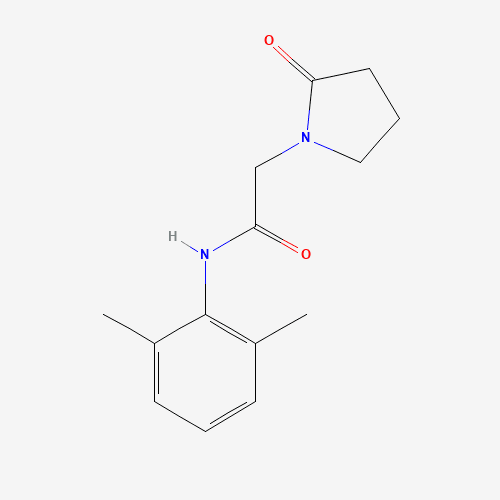
Nefiracetam is a Piracetam derivative made by Daiichi in Japan, carrying a 2,6-dimethylphenyl group on the acetamide nitrogen. It was developed for Alzheimer-type and post-stroke vascular dementia [1].
It did not get there. The 2010 survey of the piracetam family places nefiracetam in the subgroup of derivatives with unestablished clinical efficacy and records flatly that it failed to improve cognition in post-stroke patients [6]. What did get properly tested, in three randomised trials run by Robinson and colleagues, was something else entirely: mood and motivation after stroke.
Mechanism
Nefiracetam is the racetam with the most precisely worked-out mechanism, and it operates at concentrations three to six orders of magnitude below the others.
At 1 nM it potentiates α4β2 nicotinic acetylcholine receptor currents in rat cortical neurons to 200–300% of control, while barely touching α7. The dose-response is bell-shaped: 10 µM does less than 1 nM. Protein kinase A and C inhibitors do not block it and pertussis toxin does not either, but cholera toxin abolishes it — so the effect runs through Gs proteins [1]. (Aniracetam does the same thing at 0.1 nM in the same preparation.)
Separately, nefiracetam potentiates NMDA receptor currents. This one is PKC-dependent: it activates PKCα with a bell-shaped curve peaking at 10 nM, increases phosphorylation of the NMDA receptor, allosterically enhances glycine binding, and largely eliminates the voltage-dependent magnesium block [2].
Both converge on plasticity. At 1–1000 nM nefiracetam increases fEPSP slope in rat hippocampal CA1 and enhances long-term potentiation, with the same bell-shaped 10 nM peak, through CaMKII and PKCα and AMPA receptor phosphorylation [7]. Presynaptic nicotinic receptors are the functional target for a long-lasting facilitation of hippocampal neurotransmission [8].
The bell-shaped curves matter. More is not better for this compound, and the human trials used gram-scale oral doses.
- α4β2 nicotinic acetylcholine receptorsmodulatespotentiates α4β2 currents to 200–300% of control at 1 nM in rat cortical neurons, with only weak effect on α7; the action is abolished by cholera toxin, implicating Gs proteins [1]strong
- NMDA receptorsmodulatespotentiates NMDA currents via PKCα, enhancing glycine binding and largely removing the voltage-dependent magnesium block [2]moderate
- Presynaptic nicotinic receptorsactivatesfunctionally targets presynaptic nicotinic receptors to produce a long-lasting facilitation of hippocampal transmission [8]moderate
- Hippocampal long-term potentiationactivatesenhances LTP in rat CA1 with a bell-shaped dose-response peaking near 10 nM, through CaMKII and PKCα activation and AMPA receptor phosphorylation [7]moderate
Dosing
as studied or commonly reported; not a recommendationDoses below are what studies used or, where marked, what is commonly reported. None is a recommendation.
Oral
- Notes
- Every human dose cited here comes from the post-stroke psychiatric programme, which used 600 or 900 mg a day [3][4][5]. No human pharmacokinetic study is cited here, and the free full text needed to state half-life, Tmax or bioavailability was not available. Note the mismatch between those doses and the preclinical pharmacology, which peaks at nanomolar concentrations and falls off above them [1][7].
Safety
risks and cautions, not medical adviceThe cited trials report no safety problems at 600–900 mg a day in stroke patients over 4 to 12 weeks [3][4][5], but none of them was designed as a safety study and none reports an adverse-event table in the material available here. There is no approved product and therefore no prescribing information.
The honest summary is that nefiracetam has been given to a few hundred people in short trials without anything alarming being reported, and that this is a long way from an established safety profile.
- The cognition programme it was designed for failed and the failure is recorded only in a review, not a published trial [6]
- The largest trial, in 159 patients, missed its primary endpoint; the positive finding was in a post-hoc top quintile [3]
- The apathy result comes from a subgroup of a failed depression trial rather than a trial designed for apathy [4]
- The confirmatory apathy trial randomised 13 patients out of 2514 screened and was uninformative [5]
- No human pharmacokinetic data is cited here; free full text establishing half-life or bioavailability was not available
- The preclinical effects peak at nanomolar concentrations with bell-shaped dose-response curves, which the gram-scale human doses may well overshoot [1][7]
Interactions
documented pairs only, not exhaustive- any choline sourcecompatibleNo interaction documented; nefiracetam acts on nicotinic receptors rather than on choline supply
- AniracetamcompatibleBoth potentiate α4β2 nicotinic currents in the same preparation [1]; no combination study exists
- CaffeinecompatibleNo interaction documented
History
Nefiracetam went into development in Japan as DM-9384 for dementia. After the cognition programme failed [6], it was redirected to the psychiatric consequences of stroke.
The first trial enrolled 159 patients with major depression within three months of stroke. Overall it missed: response rates exceeded 70% and remission exceeded 40% in both arms, with no significant time-by-treatment interaction. Only in the top quintile of Hamilton Depression Rating Scale scores did 900 mg separate from 600 mg and placebo [3].
A reanalysis of that cohort focused on apathy, which affected 51% of the depressed patients. Here 900 mg produced a significantly greater change in Apathy Scale scores than 600 mg or placebo [4].
The confirmatory trial never happened properly. A two-centre Australian study screened 2514 stroke patients to find enough with apathy, and randomised 13. Apathy scores fell by 7.0 points overall with no between-group difference — a result the authors correctly described as a lesson about the feasibility of behavioural drug trials in stroke rather than a verdict on the drug [5].
Reputation
how it is regarded elsewhere, not this wiki's readingNefiracetam circulates in nootropics communities as the "powerful" racetam, on the strength of its nanomolar potency in slice electrophysiology. The potency is real and well replicated [1][2][7]. What does not follow is that a gram-scale oral dose in a person reproduces a 10 nM bath concentration on a cortical neuron, and the dose-response curves are bell-shaped in every one of those experiments.
Set against the mechanism, the human record is thin and mostly negative: a failed cognition programme [6], a failed depression trial [3], one positive apathy signal [4] and one trial too small to say anything [5].
FAQ
- Does nefiracetam improve memory in people?
- Not on the evidence cited here. The 2010 survey of the class records that it failed to improve cognition in post-stroke patients [6], and no positive human cognition trial is cited.
References
entry last reviewed 2026-09-20- [1]Nootropic drug modulation of neuronal nicotinic acetylcholine receptors in rat cortical neurons.Zhao X, Kuryatov A, Lindstrom JM et al.Mol Pharmacol 2001other · animalPMID 11259610◌ unreviewed
- [2]Nefiracetam potentiates N-methyl-D-aspartate (NMDA) receptor function via protein kinase C activation and reduces magnesium block of NMDA receptor.Moriguchi S, Shioda N, Maejima H et al.Mol Pharmacol 2007other · animalPMID 17095583◌ unreviewed
- [3]Double-blind randomized treatment of poststroke depression using nefiracetam.Robinson RG, Jorge RE, Clarence-Smith KJ Neuropsychiatry Clin Neurosci 2008RCT · humanPMID 18451188◌ unreviewed
- [4]Double-blind treatment of apathy in patients with poststroke depression using nefiracetam.Robinson RG, Jorge RE, Clarence-Smith K et al.J Neuropsychiatry Clin Neurosci 2009RCT · humanPMID 19622685◌ unreviewed
- [5]A Randomized, Placebo-Controlled, Double-Blind Efficacy Study of Nefiracetam to Treat Poststroke Apathy.Starkstein SE, Brockman S, Hatch KK et al.J Stroke Cerebrovasc Dis 2016RCT · humanPMID 26915605◌ unreviewed
- [6]Piracetam and piracetam-like drugs: from basic science to novel clinical applications to CNS disorders.Malykh AG, Sadaie MRDrugs 2010reviewPMID 20166767◌ unreviewed
- [7]CaM kinase II and protein kinase C activations mediate enhancement of long-term potentiation by nefiracetam in the rat hippocampal CA1 region.Moriguchi S, Shioda N, Han F et al.J Neurochem 2008other · animalPMID 18445137◌ unreviewed
- [8]Presynaptic nicotinic acetylcholine receptors as a functional target of nefiracetam in inducing a long-lasting facilitation of hippocampal neurotransmission.Nishizaki T, Matsuoka T, Nomura T et al.Alzheimer Dis Assoc Disord 2000other · animalPMID 10850735◌ unreviewed