Fasoracetam
also NS-105 · NFC-1 · LAM-105 · AEVI-001
Fasoracetam is a racetam repurposed as a metabotropic glutamate receptor activator and trialled in adolescents with ADHD who carry disruptive variants in mGluR network genes. A 30-patient open-label dose-escalation study with one single-blind placebo week reported significant improvement on global rating scales and good tolerability [1]. That is a phase I result and the only human efficacy evidence there is.
The one racetam with a modern, coherent development programme behind it — and still only a single small open-label study to show for it.
- meta-analysis
- RCT
- trial
- observational
- preclinical / case
- review / patent / other
- retracted
- + The only racetam with a clean modern pharmacokinetic dataset in humans
- + A genetically targeted rationale rather than a general "cognition enhancer" claim
- + No difference in adverse events between the placebo week and four weeks of active drug
- − The efficacy study was open-label with a one-week single-blind placebo period, not a randomised controlled trial
- − Thirty adolescents, one site, five weeks
- − No published trial in adults, in healthy people, or in anyone without mGluR variants
Overview
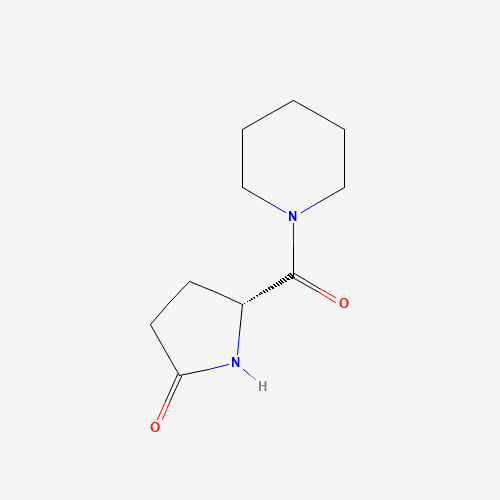
Fasoracetam is a pyrrolidone from Nippon Shinyaku, originally NS-105, developed for vascular dementia in the 1990s. Structurally it is the odd one out in the family: the acetamide side chain of Piracetam is replaced by a piperidine carbonyl directly on the ring, and the molecule is a single (R) enantiomer.
Its second life came through genetics. Researchers at the Children's Hospital of Philadelphia identified children with ADHD carrying disruptive copy-number variants in metabotropic glutamate receptor network genes, and picked fasoracetam — as NFC-1 — as a drug that acts on that system [1]. This is the only racetam whose modern development rests on a stated molecular hypothesis about who should respond.
Mechanism
Fasoracetam is described as a non-selective metabotropic glutamate receptor activator with additional GABA-B and cholinergic enhancing effects [1]. The cited trial does not itself establish receptor pharmacology, and no primary pharmacology paper with a readable abstract is cited here — so this description should be read as the investigators' working account rather than as a demonstrated mechanism.
The trial does provide indirect support. Among the 30 adolescents, those with deletions or disruptive duplications in Tier-1 and Tier-2 mGluR genes showed significantly better responses than those with variants in more distantly related Tier-3 genes (p < 3.1 × 10⁻⁶ and p < 2.1 × 10⁻³ versus p < 0.053), and mutation tier status was double-blinded during the study [1]. If the drug worked by some route unconnected to mGluR signalling, that gradient would be hard to explain — though with 17, 7 and 6 patients in the three groups, it is also not hard to get by chance.
- Metabotropic glutamate receptors (mGluR)activatesdescribed as a non-selective mGluR activator; response in ADHD was greatest in patients carrying disruptive variants in Tier 1 and Tier 2 mGluR network genes [1]unclear
- GABA-B receptorsmodulatesreported to have additional GABA-B and cholinergic enhancing effects alongside its glutamatergic action [1]unclear
Dosing
as studied or commonly reported; not a recommendationDoses below are what studies used or, where marked, what is commonly reported. None is a recommendation.
Oral
- Time to effect
- Clinical Global Impressions-Severity scores did not separate from baseline at 50 mg twice daily, but did at 100 mg and above, with the largest effect at 400 mg twice daily in week 5 [1].
- Notes
- The investigators concluded that at least 100 mg twice daily — roughly 3–5 mg/kg/day in adolescents — was needed for a clinical response, and that improvement increased with dose up to 400 mg twice daily [1]. Pharmacokinetics were dose-linear from 50 to 800 mg [1]. No dose has been established for adults or for anyone without mGluR variants.
Pharmacokinetics
what the body does with it| Half-life | 4.06–6.99 h across single doses of 50–800 mg in adolescents, averaging 4.82 h, and consistent with earlier adult data [1]. |
|---|---|
| Steady state | Detectable in plasma at every weekly visit during twice-daily dosing [1]. |
| Metabolism | Largely unmetabolised; two minor metabolites (LAM-79 and LAM-163) were measured and matched previously reported profiles, with little or no enterohepatic circulation [1]. |
| Excretion | Mostly renal, as unchanged drug [1]. |
Safety
risks and cautions, not medical adviceIn the cited study, treatment-emergent adverse events were generally mild and non-limiting, and — importantly — there was no difference in the frequency of any adverse event between the single-blind placebo week and the four weeks on active drug. Headache was reported by 63.3% of subjects, but at almost the same rate during placebo [1].
Three serious adverse events occurred, none attributed to the drug: a head injury assessed in hospital; one episode of dizziness with a brief loss of consciousness on the morning of a titration to 100 mg, which did not recur when titration resumed; and a creatine phosphokinase rise to around 20,000 attributed to strenuous sports training, which did not return when the drug was restarted [1].
That is 30 adolescents for five weeks. It is not a safety database.
- Not an approved medicine; the human data consists of one 30-person phase I study
- Doses above 400 mg twice daily have only been given as single doses, not repeatedly [1]
- Nothing is known about use in adults, in healthy people, or beyond five weeks
- The only efficacy study is open-label with a single-blind one-week placebo period, in 30 adolescents at one site [1]
- Patients were aware that their dose was escalating each week, so expectancy tracks the dose-response exactly [1]
- Everyone enrolled carried an mGluR network variant, so nothing is known about people who do not [1]
- The tier subgroups contained 17, 7 and 6 patients [1]
- No published adult trial, no randomised controlled trial, and no trial in healthy people
- A 2019 systematic review notes that novel non-stimulant ADHD agents as a group are unlikely to match stimulant efficacy [2]
Interactions
documented pairs only, not exhaustive- any choline sourcecompatibleNo interaction documented
- CaffeinecompatibleNo interaction documented
- ModafinilcautionNo interaction study exists; both have been trialled for attention, and combining unstudied attention drugs has no evidence behind it
History
Nippon Shinyaku developed fasoracetam as NS-105 for vascular dementia and did not bring it to market. It was later licensed as NFC-1 by neuroFix Therapeutics, which was acquired by Aevi Genome Medicine, and the compound was renamed AEVI-001.
The 2018 study in Nature Communications is the programme's main public output: 30 adolescents aged 12–17 with ADHD and mGluR network variants, recruited from a prior genomics cohort. Each completed a 24-hour single-dose pharmacokinetic study at 50, 100, 200, 400 or 800 mg, then a week of single-blind placebo followed by four weeks of escalation from 50 to 400 mg twice daily. Mean Clinical Global Impressions-Improvement went from 3.79 at baseline to 2.33 at week 5, and CGI-Severity from 4.83 to 3.86; over 80% of subjects showed clinically significant improvement [1].
A 2019 systematic review of novel ADHD compounds lists fasoracetam among 28 agents in the pipeline, and makes the general point that none of them is likely to beat stimulants on efficacy at the group level, though they may be better tolerated [2].
Reputation
how it is regarded elsewhere, not this wiki's readingFasoracetam arrived in nootropics communities with an unusual pedigree — an actual FDA-cleared IND, an actual pharmacokinetic dataset — and that has given it more credibility than the evidence supports.
The honest reading of the one efficacy study is that its design cannot separate drug effect from expectation. All 30 patients knew they were escalating dose; only the placebo week was blinded, and only as to which of the five weeks it was. Response rose monotonically with dose over four consecutive weeks, which is what you would expect from a real drug effect and also from an open-label titration in adolescents who had just come off their usual medication. The authors call it a phase I study and say so themselves [1].
The genetic gradient is the interesting part, and it is the part that most needs replicating.
FAQ
- Is fasoracetam proven for ADHD?
- No. One open-label, single-site, 30-patient phase I study reported improvement on global rating scales [1]. No randomised controlled trial has been published.
- What dose was used?
- Escalating from 50 to 400 mg twice daily over four weeks. Scores did not separate from baseline at 50 mg twice daily but did at 100 mg and above [1].
- Do you need the genetic variants for it to work?
- Unknown — everyone in the trial had one. Response was strongest in those with Tier-1 and Tier-2 mGluR variants and weakest in Tier-3, but the subgroups had 17, 7 and 6 patients [1].
References
entry last reviewed 2026-09-20- [1]Fasoracetam in adolescents with ADHD and glutamatergic gene network variants disrupting mGluR neurotransmitter signaling.Elia J, Ungal G, Kao C et al.Nat Commun 2018clinical trial · humanPMID 29339723◌ unreviewed
- [2]Beyond stimulants: a systematic review of randomised controlled trials assessing novel compounds for ADHD.Nageye F, Cortese SExpert Rev Neurother 2019meta-analysis · humanPMID 31167583◌ unreviewed