Thymosin Alpha-1
also Thymalfasin · Thymosin alpha 1 · Thymosin alpha1 · Zadaxin · alpha1-Thymosin
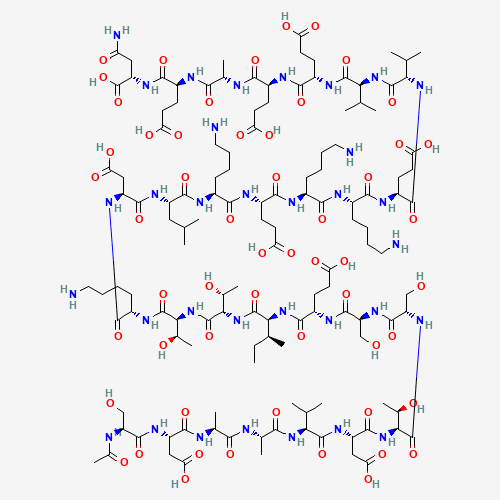
Thymosin alpha-1 is a 28-residue peptide from thymosin fraction 5, a thymus extract, and it is licensed in around thirty countries as an immunomodulator - mainly for chronic hepatitis B and as an adjunct in sepsis. It has a better evidence base than anything else in this group except teriparatide, and it has just had the reckoning that comes with proper trials. In 2013 ETASS reported 28-day mortality in severe sepsis of 26.0% against 35.0% on control [1], and a decade of meta-analyses built on that [2]. Then TESTS, a 1106-patient double-blind placebo-controlled phase 3 trial published in the BMJ in 2025, found 28-day mortality of 23.4% against 24.1%, hazard ratio 0.99 - no benefit [3]. A 2026 Cochrane review of hepatitis B rates all its evidence as very low certainty [4].
A licensed immunomodulator whose promising sepsis result did not survive a properly powered phase 3 trial, and whose hepatitis B evidence Cochrane rates as very low certainty throughout.
- meta-analysis
- RCT
- trial
- observational
- preclinical / case
- review / patent / other
- retracted
- + Licensed in around thirty countries, with decades of clinical use
- + Improved monocyte HLA-DR expression, an objective marker of immune restoration, in sepsis
- + Cochrane found it may reduce all-cause mortality and serious adverse events in chronic hepatitis B
- + Consistently well tolerated, including in critically ill patients
- − The definitive 1106-patient sepsis trial found no mortality benefit
- − All Cochrane hepatitis B outcomes are rated very low certainty
- − Most of the supporting trials are small, single-country and older
- − Not licensed in the United States, the European Union or the United Kingdom
Overview
What it is. Thymosin alpha-1 is a 28-amino-acid peptide first isolated from thymosin fraction 5, a bovine thymus extract, and now made synthetically. It is licensed in around thirty countries - not the United States, European Union or United Kingdom - principally for chronic hepatitis B and as an adjunct in sepsis and some cancers [5].
Sepsis, and how the story changed. ETASS, published in 2013, was a multicentre randomised single-blind trial in 361 patients with severe sepsis across six tertiary ICUs in China. 28-day all-cause mortality was 26.0% on thymosin alpha-1 against 35.0% on control - a hazard ratio of 0.74 whose confidence interval (0.54-1.02) touched 1. The trial also found greater improvement in monocyte HLA-DR expression at days 3 and 7, which is a genuine immunological readout rather than a symptom score [1].
That result, plus several trials of thymosin alpha-1 combined with ulinastatin [6][7][8], generated a decade of favourable meta-analyses [2].
Then TESTS. A multicentre, double-blinded, randomised, placebo-controlled phase 3 trial enrolled 1106 adults with sepsis, of whom 1089 were analysed. 28-day all-cause mortality was 127 of 542 (23.4%) on thymosin alpha-1 and 132 of 547 (24.1%) on placebo, hazard ratio 0.99. The authors concluded there was no clear evidence that it decreases 28-day mortality in sepsis [3]. A 2025 meta-analysis followed [9].
This is the same pattern as aviptadil in COVID-19 and exenatide in Parkinson's disease: an encouraging trial with a confidence interval brushing significance, followed by a larger, better-blinded trial that finds nothing. It is the most common way a promising drug fails, and it is why the size and blinding of a trial matter more than the direction of its point estimate.
Hepatitis B. Here the picture is longer-standing and still unresolved. Meta-analyses have compared it with interferon alpha [10][11] and trials have tested combinations with interferon and lamivudine [12][13][14]. The 2026 Cochrane review is the most rigorous assessment: it found thymosin alpha-1 may reduce all-cause mortality (RR 0.53, 95% CI 0.29-0.96), serious adverse events (RR 0.72, 0.53-0.99) and non-serious adverse events, with little or no effect on quality of life or histological improvement - and graded the certainty of the evidence as very low for every outcome, concluding that the effects are very uncertain [4].
Mechanism
Thymosin alpha-1 acts on the innate and adaptive interface rather than on a single receptor pathway. It signals through Toll-like receptors on dendritic cells and monocytes, promoting dendritic cell maturation, T cell differentiation and natural killer cell activity, and modulating cytokine production [5].
The sepsis rationale is specific and biologically sound. Sepsis involves an initial inflammatory surge followed by immunoparalysis, in which monocytes downregulate HLA-DR and lose antigen-presenting capacity - a state associated with secondary infection and death. Thymosin alpha-1 is intended to reverse that, and ETASS showed it measurably does: mHLA-DR improved more on treatment at days 3 and 7 [1].
The instructive part is that this did not translate. TESTS confirmed the drug can be given safely to septic patients at scale and found no mortality difference [3]. Correcting a biomarker of immunoparalysis is not the same as correcting the outcome it marks - which is a general caution worth carrying to every other compound on this site whose case rests on moving a marker.
- Toll-like receptors and innate immune signallingmodulatesacts on dendritic cells and monocytes through TLR signalling, shifting immune function rather than broadly suppressing or stimulating it [5]moderate
- Monocyte HLA-DR expressionactivatesin ETASS, improvement in mHLA-DR was greater on thymosin alpha-1 at day 3 (mean difference 3.9%, 95% CI 0.2-7.6, P = 0.037) and day 7 (5.8%, 95% CI 1.0-10.5, P = 0.017) - a real immunological effect [1]moderate
- 28-day mortality in sepsisno bindingstrong
- Hepatitis B virus clearance and liver outcomesmodulatesCochrane found it may reduce all-cause mortality (RR 0.53, 95% CI 0.29-0.96, 3 studies, 907 participants) and serious adverse events (RR 0.72, 95% CI 0.53-0.99), but graded every outcome low or very low certainty and concluded the evidence is very uncertain [4]weak
Formulation
how the form changes blood levelsA synthetic 28-residue acetylated peptide, supplied as lyophilised powder for subcutaneous injection and marketed as Zadaxin where licensed [5]. It is a defined synthetic molecule, which distinguishes it from Thymalin - a thymic extract of undefined composition used in the Russian peptide literature.
Dosing
as studied or commonly reported; not a recommendationDoses below are what studies used or, where marked, what is commonly reported. None is a recommendation.
Subcutaneous injection
- Form
- Lyophilised powder reconstituted for subcutaneous injection; marketed as Zadaxin in the countries where it is licensed.
- Notes
- The sepsis and hepatitis B regimens are quite different - short intensive courses in critical care against months of twice-weekly dosing in hepatitis. Doses in the TESTS abstract are not stated; the ETASS regimen above is the one most commonly cited [1].
Pharmacokinetics
what the body does with it| Half-life | About two hours; given as twice-weekly or daily subcutaneous injections depending on indication [5] |
|---|---|
| Bioavailability | Subcutaneous; a peptide, not orally available [5] |
| Metabolism | Peptide catabolism |
Safety
risks and cautions, not medical adviceConsistently well tolerated, which is notable given the populations studied. In TESTS, a placebo-controlled trial in 1106 septic patients, no safety concern emerged that changed the conclusion [3]. In chronic hepatitis B, the Cochrane review found thymosin alpha-1 associated with fewer serious adverse events than control (RR 0.72, 95% CI 0.53-0.99) and fewer non-serious adverse events - though at low and very low certainty respectively [4].
That tolerability is the strongest and most consistent finding across its literature, and it is presumably why the drug has remained licensed in many countries despite equivocal efficacy.
Two caveats. Most of the trial evidence comes from China and other Asian countries, and the Cochrane review notes that among trials reporting age, none included certain groups - so generalisability is limited. And an immunomodulator's long-term consequences - autoimmunity, altered infection or malignancy risk over years - are not something any of these trials were designed or sized to detect.
- Consistently well tolerated; in chronic hepatitis B, Cochrane found fewer serious adverse events than control, at low certainty [4]
Interactions
documented pairs only, not exhaustiveThe combinations that have been formally studied are therapeutic rather than problematic. With interferon alpha in chronic hepatitis B [10][12], with lamivudine [13], and with ulinastatin in sepsis, where the combination has its own meta-analyses [6][7][8].
No adverse drug interactions of note have been reported.
- ThymalincautionThymalin is a thymic extract of undefined composition; thymosin alpha-1 is a defined synthetic peptide. They are not interchangeable, and no study has combined them [5].
History
Thymosin fraction 5 was prepared from bovine thymus by Allan Goldstein's group in the 1960s and 1970s, and thymosin alpha-1 was isolated from it and sequenced. Synthetic peptide followed, and licensing in numerous countries for hepatitis B and as an immune adjunct [5].
The sepsis programme ran from ETASS in 2013 [1] through a decade of meta-analyses [2][7][8] to the null TESTS phase 3 trial in 2025 [3]. The Cochrane review of chronic hepatitis B appeared in 2026 and graded all evidence very low certainty [4].
FAQ
- Does thymosin alpha-1 work for sepsis?
- On the best evidence, no. The 1106-patient TESTS trial found 28-day mortality of 23.4% against 24.1% on placebo, hazard ratio 0.99 [3]. An earlier 361-patient trial had reported 26.0% against 35.0% [1].
- What about hepatitis B?
- Cochrane found it may reduce all-cause mortality and serious adverse events, but graded every outcome low or very low certainty and concluded the evidence is very uncertain [4].
- Is it the same as thymalin or thymosin beta-4?
- No. Thymosin alpha-1 is a defined 28-residue synthetic peptide. Thymalin is an undefined thymic extract; thymosin beta-4 is a different molecule with a different function despite the name.
- Is it approved?
- In around thirty countries, but not in the United States, European Union or United Kingdom [5].
References
entry last reviewed 2026-09-19- [1]The efficacy of thymosin alpha 1 for severe sepsis (ETASS): a multicenter, single-blind, randomized and controlled trial.Wu J, Zhou L, Liu J et al.Crit Care 2013RCT · humanPMID 23327199◌ unreviewed
- [2]The efficacy of thymosin α1 as immunomodulatory treatment for sepsis: a systematic review of randomized controlled trials.Liu F, Wang HM, Wang T et al.BMC Infect Dis 2016meta-analysis · humanPMID 27633969◌ unreviewed
- [3]The efficacy and safety of thymosin α1 for sepsis (TESTS): multicentre, double blinded, randomised, placebo controlled, phase 3 trial.Wu J, Pei F, Zhou L et al.BMJ 2025RCT · humanPMID 39814420◌ unreviewed
- [4]Thymosin-ɑ1 for people with chronic hepatitis B.Naing C, Ni H, Aung HH et al.Cochrane Database Syst Rev 2026meta-analysis · humanPMID 42713852◌ unreviewed
- [5]Thymosin alpha-1.Ancell CD, Phipps J, Young LAm J Health Syst Pharm 2001reviewPMID 11381492◌ unreviewed
- [6]A new immunomodulatory therapy for severe sepsis: Ulinastatin Plus Thymosin {alpha} 1.Li Yumin, Chen Hao, Li Xun et al.J Intensive Care Med 2009RCT · humanPMID 19033321◌ unreviewed
- [7]Ulinastatin- and thymosin α1-based immunomodulatory strategy for sepsis: A meta-analysis.Han D, Shang W, Wang G et al.Int Immunopharmacol 2015meta-analysis · humanPMID 26522590◌ unreviewed
- [8]Ulinastatin and/or thymosin α1 for severe sepsis: A systematic review and meta-analysis.Feng Z, Shi Q, Fan Y et al.J Trauma Acute Care Surg 2016meta-analysis · humanPMID 26517783◌ unreviewed
- [9]Efficacy of thymosin α1 for sepsis: a systematic review and meta-analysis of randomized controlled trials.Gu B, Zhou Y, Nie Y et al.Front Cell Infect Microbiol 2025meta-analysis · humanPMID 40969554◌ unreviewed
- [10]Comparison of the efficacy of thymosin alpha-1 and interferon alpha in the treatment of chronic hepatitis B: a meta-analysis.Yang YF, Zhao W, Zhong YD et al.Antiviral Res 2008meta-analysis · humanPMID 18078676◌ unreviewed
- [11][Treatment with interferon and thymosin alpha-1 versus interferon monotherapy for HBeAg positive chronic hepatitis B: a meta-analysis].Mao HY, Shi TDZhonghua Gan Zang Bing Za Zhi 2011meta-analysis · humanPMID 21272455in Chinese◌ unreviewed
- [12]Efficacy of thymosin alpha-1 and interferon alpha in treatment of chronic viral hepatitis B: a randomized controlled study.You J, Zhuang L, Cheng HY et al.World J Gastroenterol 2006RCT · humanPMID 17075991◌ unreviewed
- [13]Combination therapy of thymosin alpha-1 and lamivudine for HBeAg positive chronic hepatitis B: A prospective randomized, comparative pilot study.Lee HW, Lee JI, Um SH et al.J Gastroenterol Hepatol 2008RCT · humanPMID 18410608◌ unreviewed
- [14]The efficacy and safety of thymosin alpha-1 in Japanese patients with chronic hepatitis B; results from a randomized clinical trial.Iino S, Toyota J, Kumada H et al.J Viral Hepat 2005RCT · humanPMID 15850471◌ unreviewed