PQQ
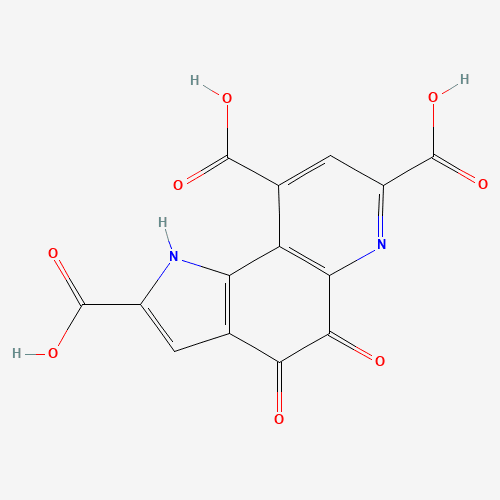
also Pyrroloquinoline quinone · Methoxatin · PQQ disodium salt
PQQ (pyrroloquinoline quinone) is a redox cofactor first found in bacteria. Mammals do not make it but take in trace amounts from food [1]. In cells it switches on mitochondrial biogenesis through the PGC-1α pathway [2][3]. In humans, small 12-week trials of PQQ disodium salt reported better memory and attention scores [4][5].
A plausible mitochondrial nutrient with a handful of small, positive cognition trials; the mechanism is cell work, and the human trials use one commercial ingredient.
- meta-analysis
- RCT
- trial
- observational
- preclinical / case
- review / patent / other
- retracted
- + Improved memory scores in 12-week human trials
- + Stimulates mitochondrial biogenesis in cells
- + No adverse events reported in the trials cited
- − Human trials are small and use one branded ingredient
- − Mitochondrial evidence comes from cell studies
- − Not classified as a vitamin
Overview
PQQ is an aromatic tricyclic quinone, first identified as a redox cofactor for bacterial enzymes. Mammals cannot make it, but trace amounts turn up in human and rat tissues from food. In rodents, diets lacking PQQ cause growth, immune and reproductive problems, which is why it is sometimes discussed as a possible nutrient. It is not classified as a vitamin [1].
The human evidence is a small set of cognition trials using PQQ disodium salt. In a 12-week double-blind trial in 58 older adults who felt more forgetful, PQQ improved composite and verbal memory, reaction time, attention and executive function scores compared with placebo [4]. A second 12-week trial in adults aged 20 to 65 found memory gains. Younger participants improved on cognitive flexibility and processing speed by week 8, and older ones on memory by week 12 [5]. A six-week trial of a PQQ-containing blend in older adults with mild cognitive impairment reported better orientation scores, brain oxygenation and brain metabolite levels, from a small sample [6].
Mechanism
The mitochondrial story comes from cell studies. In mouse liver cells, PQQ increased mitochondrial DNA, respiration and markers of mitochondrial content. It did so by activating CREB and PGC-1α, the master switch for mitochondrial biogenesis, and the effect disappeared when either was knocked down [2]. In fibroblasts, low nanomolar PQQ raised NAD+ and activated SIRT1, which in turn switched on PGC-1α [3].
Whether oral doses reach tissues at concentrations that do this in people has not been shown in the trials cited here.
- PGC-1α (mitochondrial biogenesis)activatesmoderate
- SIRT1 / NAD+activatesraised cellular NAD+ and activated SIRT1 in cell culture [3]weak
Safety
risks and cautions, not medical adviceNone of the cited trials reported adverse events from PQQ [4]. Reviews describe no reported toxicity or genotoxicity in the studies to date [7]. The human safety record is short-term, measured in weeks.
- Long-term human safety data is limited to weeks, not years
Interactions
documented pairs only, not exhaustive- Coenzyme Q10compatibleCommonly combined in mitochondrial formulas; no interaction documented
FAQ
- Is PQQ a vitamin?
- No. It has been discussed as a possible nutrient because PQQ-deficient rodents do poorly, but it is not classified as a vitamin [1].
References
entry last reviewed 2026-09-18- [1]Recent progress in studies on the health benefits of pyrroloquinoline quinone.Akagawa M, Nakano M, Ikemoto KBiosci Biotechnol Biochem 2016reviewPMID 26168402◌ unreviewed
- [2]Pyrroloquinoline quinone stimulates mitochondrial biogenesis through cAMP response element-binding protein phosphorylation and increased PGC-1alpha expression.Chowanadisai W, Bauerly KA, Tchaparian E et al.J Biol Chem 2010preclinical · cellPMID 19861415◌ unreviewed
- [3]Pyrroloquinoline Quinone, a Redox-Active o-Quinone, Stimulates Mitochondrial Biogenesis by Activating the SIRT1/PGC-1α Signaling Pathway.Saihara K, Kamikubo R, Ikemoto K et al.Biochemistry 2017preclinical · cellPMID 29185343◌ unreviewed
- [4]Effect of Dietary Pyrroloquinoline Quinone Disodium Salt on Cognitive Function in Healthy Volunteers: A Randomized, Double-Blind, Placebo-Controlled, Parallel-Group Study.Shiojima Y, Takahashi M, Takahashi R et al.J Am Nutr Assoc 2022RCT · humanPMID 34415830◌ unreviewed
- [5]Pyrroloquinoline quinone disodium salt improves brain function in both younger and older adults.Tamakoshi M, Suzuki T, Nishihara E et al.Food Funct 2023RCT · humanPMID 36807425◌ unreviewed
- [6]The impact of six-week dihydrogen-pyrroloquinoline quinone supplementation on mitochondrial biomarkers, brain metabolism, and cognition in elderly individuals with mild cognitive impairment: a randomized controlled trial.Baltic S, Nedeljkovic D, Todorovic N et al.J Nutr Health Aging 2024RCT · humanPMID 38908296◌ unreviewed
- [7]Pyrroloquinoline Quinone (PQQ): Its impact on human health and potential benefits: PQQ: Human health impacts and benefits.Yan T, Nisar MF, Hu X et al.Curr Res Food Sci 2024reviewPMID 39513102◌ unreviewed