Alpha-lipoic acid
also ALA · Thioctic acid · R-ALA · R-lipoic acid · Na-R-ALA
Alpha-lipoic acid (ALA) is a sulfur-containing mitochondrial cofactor, used as a racemic drug for the pain and pins-and-needles of diabetic nerve damage [1]. Meta-analyses of randomised trials support it for diabetic neuropathy symptoms [2][3]. Its effects on weight and blood sugar are real but small [4][5]. Supplements come as the racemic mix, as pure R-ALA, or as Na-R-ALA, a sodium salt of R-ALA made to absorb better [6].
A well-studied antioxidant cofactor with a real role in diabetic neuropathy; the fat-loss and glucose effects are too small to matter clinically, and in rare, genetically susceptible people it can trigger an autoimmune cause of low blood sugar.
- meta-analysis
- RCT
- trial
- observational
- preclinical / case
- review / patent / other
- retracted
- + Reduces diabetic neuropathy symptoms in meta-analyses
- + Natural mitochondrial cofactor with a long clinical record
- + R-ALA and Na-R-ALA forms raise blood levels more than racemic ALA
- − Weight and glucose effects are below clinically important thresholds
- − Short half-life and poor bioavailability as standard racemic ALA
- − Rare insulin autoimmune syndrome in susceptible people
Overview
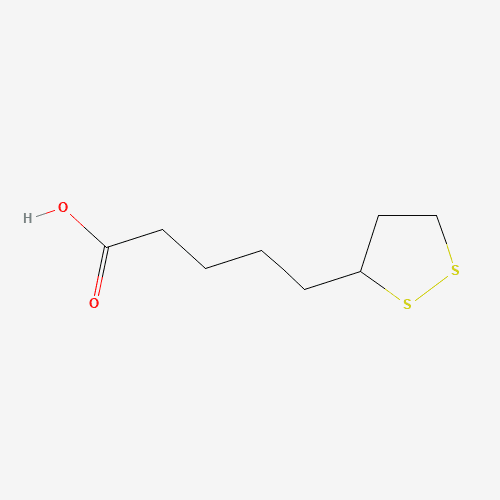
ALA (also called thioctic acid) is made by plants, animals and humans. Inside mitochondria it is a cofactor for the pyruvate dehydrogenase and α-ketoglutarate dehydrogenase complexes, two key steps in turning food into energy. As a drug it is used, in racemic form, for the pain and pins-and-needles of diabetic polyneuropathy [1].
Diabetic neuropathy is where the evidence is strongest. A meta-analysis of intravenous ALA at 600 mg a day for three weeks found meaningful improvements in symptoms and nerve deficits, with adverse events no different from placebo [3]. A broader meta-analysis of 15 intravenous trials found faster nerve conduction, though the trials were of poor quality [7]. For oral ALA, a 2023 meta-analysis of 10 randomised trials (1,242 patients) found improved symptom scores with a dose-response trend, but no benefit on several objective nerve measures [2].
Elsewhere the effects are modest. ALA produced about 1.3 kg more short-term weight loss than placebo [4]. In type 2 diabetes, oral ALA lowered HbA1c, weight and triglycerides, but every effect fell below the threshold for clinical importance [5].
Mechanism
ALA is a natural mitochondrial cofactor, and in supplement doses it is also a strong antioxidant [1]. The neuropathy benefit is thought to come from reduced oxidative stress and improved blood flow to nerves [2].
R-ALA, S-ALA and Na-R-ALA. ALA has a chiral centre, so it exists as R and S forms. The drug form, like most supplements, is the racemic mix of both [1]. The R form shows better pharmacokinetics, including higher bioavailability, than the S form [1]. In a crossover study of racemic tablets and solution, both enantiomers were absorbed within about 20 to 30 minutes, and the solution delivered noticeably more R-ALA than tablets [8]. Pure R-ALA tends to polymerise. Na-R-ALA (sodium R-lipoate) was developed to fix that. It is fully water-soluble, less prone to polymerising, and gave higher peak levels and total exposure than R-ALA or racemic ALA in healthy volunteers [6].
- Pyruvate and α-ketoglutarate dehydrogenase complexesactivatesALA is the natural cofactor for these mitochondrial enzymes [1]strong
- Oxidative stress and nerve microcirculationmodulatesreducing oxidative stress and improving microcirculation is the proposed basis of its neuropathy benefit [2]moderate
Safety
risks and cautions, not medical adviceIn the neuropathy trials adverse events were no more common than on placebo [3], and no serious adverse events were seen in the intravenous meta-analysis [7].
The notable rare risk is insulin autoimmune syndrome (Hirata disease). ALA's sulfur groups can alter insulin in people who carry particular HLA genes (HLA-DRB1*04:06, 04:03 or 04:04), leading them to make antibodies against their own insulin. The result is recurrent low blood sugar, sometimes alternating with high blood sugar after meals [9]. The first European cases were reported in 2014, and hypoglycaemia eased after ALA was stopped [10].
- The strongest neuropathy data are for intravenous ALA; oral meta-analyses show symptom benefit but mixed objective results [2]
- Many neuropathy trials are of poor methodological quality [7]
- Weight and glucose effects fall below clinically important thresholds [5]
- Na-R-ALA's advantage is shown in blood levels, not yet in clinical outcomes [6]
Interactions
documented pairs only, not exhaustiveALA lowers blood sugar modestly [5], so people on glucose-lowering drugs should watch for lows. Anyone who develops unexplained hypoglycaemia while taking ALA should consider insulin autoimmune syndrome [9].
- PQQcompatibleCommonly combined in mitochondrial formulas; no interaction documented
- Coenzyme Q10compatibleCommonly combined; no interaction documented
FAQ
- What is the difference between ALA, R-ALA and Na-R-ALA?
- Standard ALA is a racemic mix of R and S forms. R-ALA is the natural form and has better pharmacokinetics [1]. Na-R-ALA is the sodium salt of R-ALA, made to avoid polymerising; it gave higher blood levels than R-ALA or racemic ALA [6].
- Does ALA help diabetic neuropathy?
- Meta-analyses find it reduces symptoms such as pain, burning and numbness, most clearly with intravenous use [2][3].
- Does ALA cause weight loss?
- Only slightly, about 1.3 kg more than placebo in the short term [4].
References
entry last reviewed 2026-09-18- [1]Insights on the Use of α-Lipoic Acid for Therapeutic Purposes.Salehi B, Berkay Yılmaz Y, Antika G et al.Biomolecules 2019reviewPMID 31405030◌ unreviewed
- [2]Effects of Oral Alpha-Lipoic Acid Treatment on Diabetic Polyneuropathy: A Meta-Analysis and Systematic Review.Hsieh RY, Huang IC, Chen C et al.Nutrients 2023meta-analysis · humanPMID 37630823◌ unreviewed
- [3]Treatment of symptomatic diabetic polyneuropathy with the antioxidant alpha-lipoic acid: a meta-analysis.Ziegler D, Nowak H, Kempler P et al.Diabet Med 2004meta-analysis · humanPMID 14984445◌ unreviewed
- [4]Alpha-lipoic acid (ALA) as a supplementation for weight loss: results from a meta-analysis of randomized controlled trials.Kucukgoncu S, Zhou E, Lucas KB et al.Obes Rev 2017meta-analysis · humanPMID 28295905◌ unreviewed
- [5]Efficacy and safety of oral alpha-lipoic acid supplementation for type 2 diabetes management: a systematic review and dose-response meta-analysis of randomized trials.Jibril AT, Jayedi A, Shab-Bidar SEndocr Connect 2022meta-analysis · humanPMID 36006850◌ unreviewed
- [6]The plasma pharmacokinetics of R-(+)-lipoic acid administered as sodium R-(+)-lipoate to healthy human subjects.Carlson DA, Smith AR, Fischer SJ et al.Altern Med Rev 2007clinical trial · humanPMID 18069903◌ unreviewed
- [7]A systematic review and meta-analysis of α-lipoic acid in the treatment of diabetic peripheral neuropathy.Han T, Bai J, Liu W et al.Eur J Endocrinol 2012meta-analysis · humanPMID 22837391◌ unreviewed
- [8]Enantiomer-selective pharmacokinetics, oral bioavailability, and sex effects of various alpha-lipoic acid dosage forms.Hermann R, Mungo J, Cnota PJ et al.Clin Pharmacol 2014clinical trial · humanPMID 25506250◌ unreviewed
- [9]Alpha-lipoic acid as a trigger of insulin autoimmune syndrome: Current evidence, a case-based approach, diagnostic pitfalls, and practical management.Vallianou NG, Kounatidis DC, Dalamaga M et al.Metabol Open 2026reviewPMID 42662728◌ unreviewed
- [10]Insulin autoimmune syndrome (Hirata Disease) in European Caucasians taking α-lipoic acid.Gullo D, Evans JL, Sortino G et al.Clin Endocrinol (Oxf) 2014case report · humanPMID 24111525◌ unreviewed