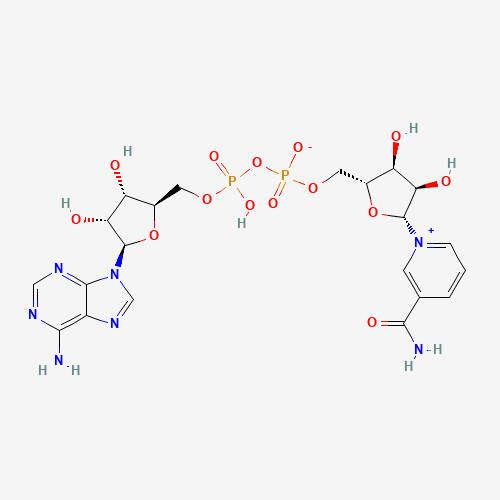
NAD+
also Nicotinamide adenine dinucleotide · NAD · Nadide · Coenzyme I · beta-NAD
NAD+ (nicotinamide adenine dinucleotide) is a coenzyme in every cell. It carries electrons in energy metabolism and is used up by sirtuins, PARPs and CD38 [1]. Clinics sell it as an intravenous drip, but no trial has tested NAD+ infusions for any health outcome [2]. In a small study, infused NAD+ disappeared from the blood for the first 2 hours [3]. Most human data come from its oral precursors NR and NMN. They reliably raise NAD+, but their effects on health outcomes are mixed and often null [2].
Central to metabolism, but the infusions have tolerability data from 6 clinic clients and no outcome trials; the oral precursors are the better-studied way to raise NAD+, and even they have delivered little so far.
- meta-analysis
- RCT
- trial
- observational
- preclinical / case
- review / patent / other
- retracted
- + Oral precursors NR and NMN reliably raise blood NAD+
- + Improved muscle insulin sensitivity in one NMN trial
- + Improved walking distance in one NR trial in peripheral artery disease
- − No outcome trials of intravenous NAD+
- − Infusions commonly cause cramping, nausea and chest pressure
- − Evidence that NAD+ falls with age in human blood is inconsistent
Overview
NAD+ is a coenzyme that every cell needs. It carries electrons in the reactions that release energy from food. It is also used up by enzymes that act on DNA repair, gene regulation and immune function: the sirtuins, the PARPs and CD38 [1].
Does NAD+ fall with age? Rodent studies and a 2021 review say tissue NAD+ declines with age, and link that decline to many age-related diseases [1]. In mice, CD38-rich inflammatory immune cells, activated by senescent cells, drain NAD+ from fat and liver [4]. The human evidence is weaker. A 2025 review found the age-related fall has been seen consistently in only a few human studies [5]. In 2026, a validated mass-spectrometry method measured whole-blood NAD+ across seven human cohorts. Levels did not change with age or lifestyle, but did rise with NR supplements [6].
Intravenous NAD+. Clinics offer NAD+ drips, but a 2026 systematic review found no outcome trials of intravenous or intramuscular NAD+ for anti-ageing or wellness. Only a pharmacokinetic pilot could be found [2]. In that pilot, 8 healthy men received 750 mg over 6 hours. Plasma NAD+ did not rise at all for the first 2 hours: the infused NAD+ was removed as fast as it went in [3]. In a retrospective review from a wellness-clinic chain, 6 clients received 500 mg a day for 4 days. All of them had moderate to severe side effects during the drip [7].
Oral precursors. Most human trials use nicotinamide riboside (NR) or nicotinamide mononucleotide (NMN), which cells turn into NAD+:
- NR 500 mg twice daily for 6 weeks was well tolerated and raised NAD+ in blood immune cells by about 60% in healthy middle-aged and older adults [8].
- NR 1 g a day for 21 days raised NAD+ metabolites in the muscle of 12 older men and lowered inflammatory cytokines, but did not change mitochondrial function [9].
- NMN 250 mg a day for 10 weeks improved muscle insulin sensitivity in 25 postmenopausal women with prediabetes [10].
- NR 1 g a day for 30 days raised brain NAD+ in 30 people with newly diagnosed Parkinson's disease, by varying amounts [11].
- In 90 people with peripheral artery disease, 6 months of NR improved the 6-minute walk compared with placebo [12].
- In 40 people with COPD, NR 2 g a day for 6 weeks roughly halved sputum IL-8, an inflammatory marker, and more than doubled whole-blood NAD+ [13].
There are negative results too. A 2025 meta-analysis found NR and NMN did not improve muscle mass, grip strength or walking speed in adults over 60 [14]. The 2026 systematic review concluded that the precursors clearly engage their target, but that effects on function, metabolism and blood vessels are inconsistent and often absent [2].
Mechanism
NAD+ switches between its oxidised form (NAD+) and its reduced form (NADH) as it carries electrons through metabolism. Separately, sirtuins, PARPs and CD38 break it down to do their jobs, so the cell has to keep remaking it [1]. The rationale for supplements is that raising NAD+ keeps these enzymes supplied, especially when consumption rises, for example when CD38-rich immune cells accumulate with ageing [4].
Infused NAD+ does not simply stay in the blood as NAD+. The metabolites seen during an infusion point to breakdown by NAD+ glycohydrolase and pyrophosphatase enzymes [3]. In a 2026 comparison, NR and NMN (1 g a day) raised blood NAD+ by similar amounts after 14 days, but nicotinamide did not. Lab work suggested gut bacteria convert NR and NMN into nicotinic acid, which then feeds NAD+ synthesis [15].
- Redox reactions of energy metabolismmodulatesthe coenzyme that carries electrons in glycolysis, the citric acid cycle and mitochondrial respiration [1]strong
- Sirtuins, PARPs and CD38activatesconsumed as a substrate by these enzymes, which control DNA repair, gene regulation and immune signalling [1]moderate
Formulation
how the form changes blood levelsNAD+ itself is sold for injection, as intravenous drips or smaller subcutaneous shots. Oral products usually contain NR or NMN, the forms tested in most trials [2]. Its reduced form, NADH, has also been tested by mouth, mainly in chronic fatigue syndrome. A systematic review of trials of NADH and precursors found them well tolerated [16].
Dosing
as studied or commonly reported; not a recommendationDoses below are what studies used or, where marked, what is commonly reported. None is a recommendation.
Intravenous
Subcutaneous injection
- 50–100 mggeneral wellness useseveral times a weekcommonly reported, not from trials
- Form
- Sold as powder for intravenous or subcutaneous injection. Oral supplements usually contain the precursors nicotinamide riboside (NR) or nicotinamide mononucleotide (NMN) instead [2].
- Timing and food
- In the clinic review, NAD+ infusions averaged 97 minutes because clients slowed them down to ease side effects. Infusions of NR took 37 minutes [7].
Pharmacokinetics
what the body does with it| Onset | During a 6-hour infusion of 750 mg, plasma NAD+ and its breakdown products did not change for the first 2 hours [3] |
|---|---|
| Bioavailability | Oral NAD+ itself has not been studied. The precursors NR and NMN raise blood NAD+ when taken by mouth, apparently partly after gut bacteria turn them into nicotinic acid [15] |
| Metabolism | Infused NAD+ is cleared from the blood quickly. The metabolites fit breakdown by NAD+ glycohydrolase and pyrophosphatase enzymes [3] |
| Excretion | After an infusion, NAD+ itself and methylnicotinamide appeared in urine, but nicotinamide did not rise [3] |
Safety
risks and cautions, not medical adviceIntravenous NAD+ is poorly tolerated at the rates clinics use. In the clinic review, all 6 people given 500 mg had abdominal cramping, diarrhoea, nausea, vomiting, a faster heart rate and chest pressure. These stopped when the infusion ended. The same dose of NR by drip caused only mild tingling and cramping. Liver, kidney and thyroid markers did not change, but HDL cholesterol fell after NAD+ [7]. That study was small and retrospective, and its authors worked for the clinic chain [7].
The oral precursors were well tolerated for weeks to months in trials [2][8].
- Intravenous: abdominal cramping, diarrhoea, nausea, vomiting, faster heart rate and chest pressure during infusion [7]
- Intravenous NAD+ is a clinic service with no outcome trials behind it [2]
- Injectable products are sold without drug-level quality control
- No outcome trials of intravenous or intramuscular NAD+ [2]
- Human evidence for an age-related fall in NAD+ is inconsistent; whole-blood NAD+ did not change with age in seven cohorts [5][6]
- Most positive human data are for the precursors NR and NMN, not NAD+ itself, and are often small or null [2][14]
- The only infusion safety data come from 6 people in a retrospective review run by a clinic chain [7]
Interactions
documented pairs only, not exhaustiveNo drug interactions have been documented for NAD+ itself.
FAQ
- Do NAD+ IV drips work?
- Nobody knows. No trial has tested them for any health outcome [2], and in a small study infused NAD+ vanished from the blood for the first 2 hours [3].
References
entry last reviewed 2026-09-19- [1]NAD+ metabolism and its roles in cellular processes during ageing.Covarrubias AJ, Perrone R, Grozio A et al.Nat Rev Mol Cell Biol 2021reviewPMID 33353981◌ unreviewed
- [2]NAD⁺ supplementation for anti-aging and wellness: A PRISMA-guided systematic review of preclinical and clinical evidence.Gallagher C, Emmanuel OOAgeing Res Rev 2026meta-analysis · humanPMID 41655607◌ unreviewed
- [3]A Pilot Study Investigating Changes in the Human Plasma and Urine NAD+ Metabolome During a 6 Hour Intravenous Infusion of NAD.Grant R, Berg J, Mestayer R et al.Front Aging Neurosci 2019clinical trial · humanPMID 31572171◌ unreviewed
- [4]Senescent cells promote tissue NAD+ decline during ageing via the activation of CD38+ macrophages.Covarrubias AJ, Kale A, Perrone R et al.Nat Metab 2020preclinical · animalPMID 33199924◌ unreviewed
- [5]NAD+ precursor supplementation in human ageing: clinical evidence and challenges.Vinten KT, Trętowicz MM, Coskun E et al.Nat Metab 2025reviewPMID 41083806◌ unreviewed
- [6]Human whole-blood NAD+ levels do not vary with age or lifestyle interventions.Trętowicz MM, Scantlebery AML, Schomakers BV et al.Nat Metab 2026observational · humanPMID 42135539◌ unreviewed
- [7]Intravenous infusion of nicotinamide adenine dinucleotide (NAD+) versus nicotinamide riboside (NR): a retrospective tolerability pilot study in a real-world setting.Reyna K, Heinzen G, Patel N et al.Front Aging 2026observational · humanPMID 41704678◌ unreviewed
- [8]Chronic nicotinamide riboside supplementation is well-tolerated and elevates NAD+ in healthy middle-aged and older adults.Martens CR, Denman BA, Mazzo MR et al.Nat Commun 2018RCT · humanPMID 29599478◌ unreviewed
- [9]Nicotinamide Riboside Augments the Aged Human Skeletal Muscle NAD+ Metabolome and Induces Transcriptomic and Anti-inflammatory Signatures.Elhassan YS, Kluckova K, Fletcher RS et al.Cell Rep 2019RCT · humanPMID 31412242◌ unreviewed
- [10]Nicotinamide mononucleotide increases muscle insulin sensitivity in prediabetic women.Yoshino M, Yoshino J, Kayser BD et al.Science 2021RCT · humanPMID 33888596◌ unreviewed
- [11]The NADPARK study: A randomized phase I trial of nicotinamide riboside supplementation in Parkinson's disease.Brakedal B, Dölle C, Riemer F et al.Cell Metab 2022RCT · humanPMID 35235774◌ unreviewed
- [12]Nicotinamide riboside for peripheral artery disease: the NICE randomized clinical trial.McDermott MM, Martens CR, Domanchuk KJ et al.Nat Commun 2024RCT · humanPMID 38871717◌ unreviewed
- [13]Effect of nicotinamide riboside on airway inflammation in COPD: a randomized, placebo-controlled trial.Norheim KL, Ben Ezra M, Heckenbach I et al.Nat Aging 2024RCT · humanPMID 39548320◌ unreviewed
- [14]The Effect of Nicotinamide Mononucleotide and Riboside on Skeletal Muscle Mass and Function: A Systematic Review and Meta-Analysis.Prokopidis K, Moriarty F, Bahat G et al.J Cachexia Sarcopenia Muscle 2025meta-analysis · humanPMID 40275690◌ unreviewed
- [15]The differential impact of three different NAD+ boosters on circulatory NAD and microbial metabolism in humans.Christen S, Redeuil K, Goulet L et al.Nat Metab 2026RCT · humanPMID 41540253◌ unreviewed
- [16]Evaluation of safety and effectiveness of NAD in different clinical conditions: a systematic review.Gindri IM, Ferrari G, Pinto LPS et al.Am J Physiol Endocrinol Metab 2024meta-analysis · humanPMID 37971292◌ unreviewed