PPAP
also Phenylpropylaminopentane · 1-Phenyl-2-propylaminopentane · (−)-PPAP · MK-306 · N-Propyl-1-phenyl-2-pentylamine
PPAP (1-phenyl-2-propylaminopentane) is a research stimulant made in Joseph Knoll's Budapest laboratory as a version of selegiline with the MAO-B inhibition taken out [1][2]. In rats it improved learning and retention, reversed the learning deficit caused by tetrabenazine and was active in the forced swimming test, without releasing catecholamines the way amphetamine does [1][3]. No human has been studied at any dose: its inventor wrote in 2001 that, despite his group's efforts, it had never been tested clinically [4], and almost every experiment comes from the group that invented it.
A historically important tool compound that showed selegiline's stimulant-like "enhancer" effect does not need MAO-B inhibition; the evidence is rat pharmacology from its inventors, with no human dose, pharmacokinetics or safety record.
- meta-analysis
- RCT
- trial
- observational
- preclinical / case
- review / patent / other
- retracted
- + Improved learning and retention in rat avoidance tests across a broad dose range, where amphetamine helps only in a narrow one
- + Prevented tetrabenazine-induced depression of learning in rats at 1–5 mg/kg and was active in the forced swimming test
- + Did not release dopamine from resting rat striatal tissue at 10 µM, where methamphetamine and phenylethylamine did
- + Not an MAO inhibitor and, according to its developers, not metabolised to amphetamines, unlike selegiline
- − Never tested in people, so there is no efficacy, tolerability or pharmacokinetic evidence in humans
- − Nearly all of the pharmacology comes from the Knoll laboratory and its collaborators
- − Its own developers rated it a relatively weak enhancer and replaced it with BPAP, which works at a fiftieth to a hundredth of the dose
- − At the lower of the two doses tested for three weeks, dopamine release from rat brain tissue fell below control
- − The only toxicity figures are rat lethal doses in a company patent
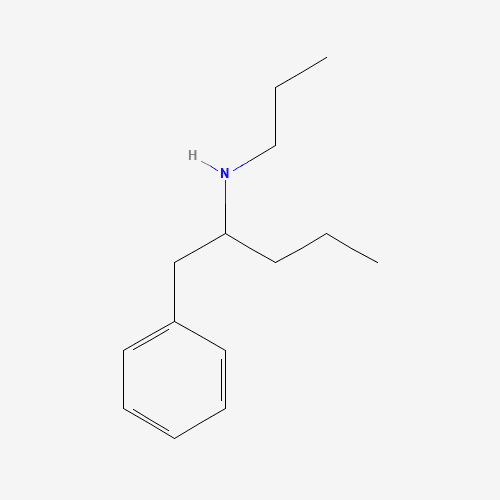
PPAP is phenylethylamine with a propyl group on the nitrogen and another on the carbon next to it. Amphetamine carries a single methyl group in the second position and methamphetamine a methyl in both; stretching those groups to ethyl or propyl is what removes the ability to push dopamine out of resting nerve terminals [3]. Its inventors called amphetamine its parent compound and derived it from selegiline [1][5].
It was made to answer a question about selegiline. Selegiline is a selective MAO-B inhibitor, and it is broken down in the body to methamphetamine and amphetamine [2]. Joseph Knoll's group in Budapest, which had created selegiline in the 1960s, argued that small doses of it also raise the activity of catecholamine neurons in a way that has nothing to do with MAO [6]. To show that directly they looked for selegiline analogues that neither inhibit MAO nor break down to amphetamines, and picked PPAP as the reference compound [1][4].
The 1992 paper that introduced it described a stimulant with an unusual profile. PPAP was taken up into catecholamine nerve endings but did not release their contents, and it inhibited the uptake of noradrenaline, of dopamine and of the amines that act by releasing them. It increased motility at 2 mg/kg and suppressed it only at 50 mg/kg, produced much less stereotyped behaviour than amphetamine or methamphetamine, facilitated learning and retention, reversed the behavioural depression caused by tetrabenazine, and was effective in the forced swimming test. Where amphetamines improved performance in a narrow band of low doses and then impaired it, PPAP improved it over a broad range. The authors suggested depression, Alzheimer's disease and attention-deficit hyperactivity disorder as plausible uses [1].
Later papers reframed it as a "catecholaminergic activity enhancer". The best-documented experiment is simple. Tetrabenazine empties catecholamine stores, and a rat given 1 mg/kg of it an hour before each session barely learns to avoid a foot shock over five days of training. Rats given 1 mg/kg of (−)-PPAP at the same time learned the task and rarely failed to escape, with no rise in the between-trial crossings that track general activity [7]. The group concluded that this effect was not explained by MAO inhibition, by presynaptic receptor blockade, by uptake inhibition or by catecholamine release, and that selegiline and PPAP both act by strengthening the link between a nerve impulse and the release of transmitter [7]. Their wider argument is that phenylethylamine and the amphetamines are enhancers too at low concentrations and releasers at higher ones, and that the releasing action hid the enhancer effect for decades [4].
The repeated-dose data are less tidy than the summaries of them. After 21 daily injections of 0.1 mg/kg, brain regions taken from male rats released one and a half to two times as much dopamine, and nearly twice as much noradrenaline, as those from saline-treated rats. At 0.05 mg/kg noradrenaline release was higher, but dopamine release was significantly lower than control in all three regions measured, and serotonin release from the raphe was lower too [8]. The paper reports the table as showing that PPAP acts like selegiline in very low doses and does not comment on the fall.
PPAP then became the starting point for something stronger. Changing its phenyl ring produced 65 new compounds, from which the benzofuran analogue BPAP was chosen; it was about 100 times more potent than PPAP in the shuttle box [2][9]. The paper that reported this called selegiline and PPAP "relatively weak" enhancers [2]. The group's attention moved to BPAP, and a 2016 review from the same laboratory still named selegiline as the only enhancer available as a drug [6].
PPAP never reached a patient. Knoll wrote in 2001 that it was the first enhancer free of selegiline's unwanted properties, and that its clinical efficacy had never been tested despite all the group's efforts [4]. The literature is also narrow: the work comes from Knoll's group and its collaborators at Fujimoto Pharmaceutical [3][9], apart from one paper on immune cells from another department of the same university [10]. Two of the papers, the 1992 pharmacology paper and a 1994 paper on repeated dosing, are not available online and are cited here from their abstracts [1][5]; the rest were read in full.
It is not a releaser. Amphetamine, methamphetamine and the trace amine phenylethylamine raise dopamine outflow from nerve terminals that are not being stimulated. In superfused rat striatal slices, phenylethylamine and methamphetamine raised resting dopamine release and (−)-PPAP at 10 µM did not [3]. The original paper reached the same conclusion with older methods [1], and the patent reports that the series did not contract the nictitating membrane of an anaesthetised cat, a sign of noradrenaline release, where amphetamine and methamphetamine caused long-lasting contraction [11].
It inhibits uptake. The 1992 paper called PPAP a potent inhibitor of the uptake of releasing amines and of noradrenaline and dopamine themselves [1]. On rabbit pulmonary artery it blocked the noradrenaline-releasing effect of tyramine and phenylethylamine with an ID50 of 1.22 µM, which the authors put down to competition for the neuronal transport system; it was more potent in this test than (−)-methamphetamine, and selegiline was too weak to measure [7][12]. The patent adds an IC50 of 50 nM for noradrenaline uptake in a rat cortex preparation, between desipramine (1–5 nM) and selegiline (7 µM) [11]. That last figure is company data from a filing and has no peer-reviewed counterpart.
The enhancer effect is measured on stimulated release. In isolated rat brain stem loaded with labelled noradrenaline, 2 and 4 µg/mL of (−)-PPAP increased the amount released by each burst of electrical stimulation while leaving the release between bursts unchanged or slightly raised [7]. In a screening table, the lowest concentration that raised stimulated noradrenaline and dopamine release by at least a quarter was 2.5 mg/L (9.6 µM) for both (−)-PPAP and selegiline and 0.05 mg/L for BPAP; (−)-PPAP did not reach that mark for serotonin at 5 mg/L and did at 10 mg/L [9]. The group's other assay removes brain regions from treated rats and measures how much transmitter the tissue gives off [13]. Thirty minutes after a single 0.1 mg/kg injection of (−)-PPAP, striatum, substantia nigra and olfactory tubercle released more dopamine and the locus coeruleus more noradrenaline than tissue from saline-treated rats [14]. In these assays the group rated PPAP about as potent as selegiline [6][14].
Uptake inhibition is not the developers' explanation for that effect. Desipramine, a strong uptake inhibitor, did nothing against tetrabenazine in the shuttle box at 0.5 to 10 mg/kg, and the brain-stem experiments were run with cocaine in the bath, so the 1996 paper ruled uptake inhibition out along with MAO inhibition, presynaptic receptors and release. What remained was stronger coupling between the action potential and transmitter release. The authors assumed that this works through a larger rise in cytosolic calcium, and the supporting observation was indirect: at 4 µg/mL, selegiline and PPAP enhanced the slow inward calcium current in sino-auricular fibres of the frog heart, in three fibres. They noted that calcium would need to be measured in neurons to settle it [7]. A companion paper reported that selegiline and (−)-PPAP reversed tetrabenazine in the shuttle box while the natural trace amines phenylethylamine and tyramine, which are broken down quickly in the body, did not at doses up to 40 mg/kg [12].
A receptor has been proposed but not tested with PPAP. Trace amine-associated receptor 1 (TAAR1) is an intracellular receptor for phenylethylamine and the amphetamines. The group suggested as early as 2002 that the newly discovered trace-amine receptors were the "enhancer receptors" [15]. In rat striatum the TAAR1 antagonist EPPTB blocked the enhancer effect of BPAP and, in a later study, of selegiline [3][16]. The authors propose two binding sites on TAAR1, one for releasers with small side-chain groups and one for enhancers with bulky ethyl or propyl groups, naming PPAP among the latter [3]. PPAP itself was tested only for its lack of releasing action in that paper, not against the antagonist.
It does not behave exactly like BPAP. A weak BPAP analogue, 3-F-BPAP, blocked BPAP's reversal of tetrabenazine in the shuttle box. It did not block selegiline's, and 5 mg/kg of (−)-PPAP still reversed tetrabenazine completely when 5 mg/kg of 3-F-BPAP was injected with it, which the authors took as the first evidence that phenylethylamine-derived and tryptamine-derived enhancers act differently [15]. PPAP acts mainly on catecholamine transmission, whereas BPAP is about equally active on catecholamines and serotonin [3].
What the structure-activity work found. Substituting PPAP's phenyl ring, for example with chlorine or fluorine, gave nothing remarkably more potent, and moving the nitrogen one carbon closer to or further from the ring made the compound weaker. Larger ring systems helped: the naphthyl analogue was about twice as potent in the shuttle box, the indolyl and methylenedioxyphenyl analogues about five times, and the benzofuran, BPAP, about 100 times. In the same test (−)-PPAP was about twice as potent as selegiline [9].
Which enantiomer is the active one is less settled than it looks. Later work uses the (−) form, which has the R configuration and is described as the more active [3], and it is reported as more potent than the (+) form on stimulated transmitter release [2]. The frog-heart paper says the same of the calcium current in its text, but in its own figure, at the single concentration tested, the curve labelled (+)-PPAP shows the larger current, roughly 1.5 µA against 1.1 µA [7]. The abstract of the 1994 repeated-dose study also says the (+) enantiomers of PPAP and p-fluorodeprenyl were the more active [5]; that paper's full text was not available.
Outside the brain. A separate group gave female rats 0.25 mg/kg of (−)-PPAP under the skin and measured serotonin in peritoneal immune cells by flow cytometry. Thirty minutes after a single dose at six weeks of age, serotonin was 19–26% higher in lymphocytes, in mast cells and in the pooled monocytes and granulocytes. Three weeks after three daily doses at weaning it was still 17–24% higher in the last two and unchanged in lymphocytes; the authors noted that the differences were hard to see under the microscope. Selegiline at the same dose had no acute effect and lowered serotonin by 28–40% three weeks later [10].
- Resting (non-vesicular) dopamine releaseno bindingmoderate
- Noradrenaline and dopamine uptakeblocksmoderate
- Tyramine and phenylethylamine uptake into noradrenergic nerve endingsblocksmoderate
- Monoamine oxidase Bno bindingunclear
- Trace amine-associated receptor 1 (TAAR1)modulatesproposed, not shown: a TAAR1 antagonist blocked the enhancer effect of BPAP and of selegiline on dopamine release in rat striatum, and the authors suggest that enhancers with bulky side-chain groups such as PPAP use a separate TAAR1 binding site, but PPAP itself was not tested against the antagonist [3][16]unclear
- Impulse-evoked catecholamine release (catecholaminergic activity enhancer effect)activates(−)-PPAP raised the electrically stimulated release of labelled noradrenaline and dopamine from isolated rat brain stem at 2.5 mg/L (9.6 µM), the same threshold as selegiline and fifty times that of BPAP, and of serotonin only at 10 mg/L; its developers place the action at the coupling of the action potential to transmitter release [2][7][9]moderate
- Slow inward calcium currentactivatesat 4 µg/mL, PPAP and selegiline enhanced the inward Ca2+ current in sino-auricular fibres of the frog heart (three fibres); the developers took this as support for an action on cytosolic calcium, which they did not measure in neurons [7]weak
- Serotonin release from the rapheblocksafter 21 daily doses of 0.05 mg/kg, serotonin release from the excised raphe of male rats was about a third lower than in saline-treated rats; at 0.1 mg/kg it was unchanged [8]weak
Formulation
how the form changes blood levelsThe only description of PPAP as a material is in the developer's patent, and what follows is the filing's own account [11]. The compound is made by condensing benzyl propyl ketone with n-propylamine and reducing the resulting imine with sodium borohydride. The free base is a fat-soluble oil. The hydrochloride is a crystalline, water-soluble salt melting at 122–124 °C; the later chemistry paper gives 123 °C [9]. The hydrochloride is the form used in the pharmacology papers. Chinoin supplied it for the studies of the 1990s and Fujimoto Pharmaceutical for the most recent one [3][7][17].
The patent's worked examples are hard gelatin capsules, tablets and coated tablets containing 30 mg of the hydrochloride, a 25 mg suppository and a 30 mg/mL solution for injection. These are illustrations of how the compound could be formulated. No dissolution, absorption or bioavailability data accompany them, and no pharmacokinetic study of PPAP in any species was found.
Dosing
as studied or commonly reported; not a recommendationDoses below are what studies used or, where marked, what is commonly reported. None is a recommendation.No peer-reviewed human dosing data. The doses below come from animal studies or company filings; animal doses do not translate directly to people.
Subcutaneous injection
- 1 mg/kg (human equivalent ≈0.16 mg/kg)
- 2.5–5 mg/kg (human equivalent ≈0.40–0.81 mg/kg)rats, shuttle-box avoidance learning; 2.5 mg/kg was the lowest dose that fully reversed tetrabenazine in a dose-finding series, and 5 mg/kg still did so when the BPAP antagonist 3-F-BPAP was given with itonce daily, injected with tetrabenazine 1 mg/kg one hour before testing · 5 days
- 0.05–0.1 mg/kg (human equivalent ≈0.008–0.016 mg/kg)
- 0.1 mg/kg (human equivalent ≈0.016 mg/kg)
- 0.25 mg/kg (human equivalent ≈0.04 mg/kg)
Oral
- 10–50 mglow to high range of reported useper dose, in the morningcommonly reported, not from trials
- Form
- Studied as the hydrochloride salt, dissolved in saline and injected under the skin in rats [7][10]. The free base is an oil; the hydrochloride is a crystalline, water-soluble salt melting at about 123 °C [9][11].
- Time to effect
- In the shuttle-box experiments rats were tested one hour after each injection, on five consecutive days [7]. Brain tissue removed 30 minutes after a single 0.1 mg/kg injection already released more catecholamines [14]. Nothing is known about onset in people.
- Notes
- No human dose has been studied. Its inventor wrote in 2001 that PPAP's clinical efficacy had never been tested [4], and no clinical trial, case series or human pharmacokinetic study was found from any later year. The human equivalents in the rows above are body-surface-area arithmetic from rat doses [18], not doses anyone has taken under study. The 10–50 mg row is not from a study either. It is a practice range per dose, taken in the morning, not a tested dose. The developer's patent states a "preferred daily dose" of about 10 mg to about 150 mg, "particularly" about 30 mg, by mouth, by injection or under the tongue, and gives recipes for 30 mg capsules and tablets [11]. That is a claim in a company filing: the patent contains no human data, and the figure should not be read as a tested dose. The three-week study is the one result that does not run in a straight line. At 0.05 mg/kg a day, dopamine release from striatum, substantia nigra and olfactory tubercle was about a quarter lower than in saline-treated rats while noradrenaline release was higher; at 0.1 mg/kg dopamine release was 1.5 to 1.9 times the control value and noradrenaline release 1.9 times [8]. Every published rat dose was injected. The only oral figure for PPAP is the patent's oral lethal dose in rats, about five times the subcutaneous one [11]. The patent also reports that 0.5 mg/kg a day improved shuttle-box learning without raising general motility and that 15 mg/kg a day still improved it, without stating the route for those experiments. The 1992 pharmacology paper reports increased motility at 2 mg/kg and inhibition only at 50 mg/kg [1]; its full text is not available online, so the routes, group sizes and the doses used in its learning and forced swimming tests could not be checked.
Pharmacokinetics
what the body does with it| Metabolism | Not metabolised to amphetamines, according to its developers, which is one of the two ways it was meant to differ from selegiline [2][4]. No metabolite study was found. |
|---|
Safety
risks and cautions, not medical adviceThere is no human safety data. PPAP was never tested clinically [4], and no later trial, case report or human pharmacokinetic study was found, so its tolerability, dose ceiling and interactions in humans are unknown.
The measured toxicity is a single table in the patent. The lethal dose for half of the rats was 27 mg/kg intravenously, 50 mg/kg under the skin and 270 mg/kg by mouth [11]. This is company data with no methods beyond the route, and no repeat-dose, genetic or reproductive toxicity study appears in the patent or in the papers read for this page.
Behaviourally it looked milder than amphetamine. It was substantially less effective at inducing stereotyped behaviour, and it depressed motility only at 50 mg/kg [1]. At 1 mg/kg in the shuttle box it did not raise the number of between-trial crossings, the test's measure of general activity [7]. In the patent, 5 mg/kg reduced rats' food intake in the first hour about as much as 0.5 mg/kg of amphetamine, and the series raised metabolic rate less and for a shorter time than amphetamine or selegiline [11].
Its pharmacology still points to the usual stimulant questions. PPAP inhibits noradrenaline uptake at nanomolar concentrations in the patent's assay and raises impulse-evoked catecholamine release [7][11]. None of the papers read here reports heart rate or blood pressure. One interaction runs against expectation: by competing for transport into nerve endings, PPAP prevents tyramine-induced noradrenaline release in isolated artery [12].
- No adverse effect has been reported in a human, because it was never tested clinically [4]
- Motility was inhibited at 50 mg/kg, and stereotyped behaviour was much weaker than with amphetamine or methamphetamine [1]
- In the patent, 5 mg/kg reduced rats' food intake in the first hour about as much as 0.5 mg/kg of amphetamine [11]
- Rat LD50 in the patent: 27 mg/kg intravenously, 50 mg/kg under the skin, 270 mg/kg by mouth [11]
- It inhibits noradrenaline uptake at nanomolar concentrations in the patent's assay, and no cardiovascular measurements are reported in the sources read [11]
- PPAP and amphetamine, and PPAP and mazindol, antagonised each other's motility effects, so its behaviour alongside other stimulants is not simply additive [1]
- The response to repeated low doses was not proportional to dose: 0.05 mg/kg a day lowered dopamine and serotonin release from rat brain tissue, and 0.1 mg/kg a day raised dopamine release and left serotonin unchanged [8]
- Never tested in people: its inventor said so in 2001, and no trial, case series, pharmacokinetic study or safety data was found from any later year [4]
- Almost all of the pharmacology comes from the laboratory that invented the compound and its industrial partner [2][3]
- The 1992 paper that defines PPAP's behavioural profile and the 1994 paper on repeated dosing are not available online and are cited from their abstracts, so the doses and group sizes behind the motility, stereotypy and forced swimming findings could not be checked [1][5]
- The experiments are small: 8 rats per group in the learning tests and three fibres in the frog-heart recording [7][15]
- The "enhancer" effect is defined by the developers' own assays, and the proposed TAAR1 mechanism was tested with BPAP and selegiline, not with PPAP [3][16]
- Which enantiomer is more active is not consistent across the sources, or between the text and the figure of one paper [5][7]
- At the lower repeated dose, dopamine release fell below control, a result the paper reporting it does not discuss [8]
- The noradrenaline-uptake IC50 and the lethal doses come from a patent, which is company data and not peer reviewed [11]
- No pharmacokinetic study in any species was found, so half-life, oral absorption and brain exposure are unknown
Interactions
documented pairs only, not exhaustive- AdderallcautionIn rats PPAP and amphetamine each reduced the other's motility-increasing effect; PPAP inhibits the uptake of releasing amines into the nerve ending [1]
- VyvansecautionLisdexamfetamine acts as amphetamine, and in rats PPAP and amphetamine each reduced the other's motility-increasing effect [1]
- any mao inhibitorcaution
Selegiline was created in Joseph Knoll's laboratory in the 1960s and became the first selective MAO-B inhibitor [6]. PPAP grew out of structure-activity work on selegiline's ability to block tyramine uptake [1]. The Hungarian patent application that covers it was filed on 25 September 1986 and assigned to the drug company Chinoin, with Knoll as first inventor; the United States patent was granted in 1993 [11]. The group's own papers date the compound to 1992, the year its pharmacology was published [1][12].
Between 1994 and 1996 the group used PPAP alongside selegiline to argue for a "catecholaminergic activity enhancer" mechanism separate from MAO inhibition [5][7], calling PPAP the more selective of the two because it lacks the MAO effect [12]. In 1996 they reported that a rat strain that learned quickly was more sensitive to it than one that learned slowly [17].
In 1999, working with Fujimoto Pharmaceutical in Japan, the group replaced PPAP's phenyl ring with a benzofuran and reported BPAP, about 130 times more potent than selegiline in the shuttle box [2][9]. Two years later Knoll recorded that PPAP's clinical efficacy had never been tested [4]. It has appeared since mainly as a comparator. The most recent experiment found used a sample donated by Fujimoto and was published in 2022 [3].
- Has PPAP been tested in humans?
- No. Its inventor wrote in 2001 that its clinical efficacy had never been tested despite his group's efforts [4], and no human study was found from any later year. The daily dose range in the patent is a claim in a company filing with no human data behind it [11].
- Is PPAP an amphetamine?
- Structurally it is a close relative: its inventors called amphetamine its parent compound [5]. Pharmacologically it differs in the way that matters most. At 10 µM it did not release dopamine from resting rat striatal tissue, where methamphetamine did [3].
- Is it an MAO inhibitor like selegiline?
- No. It was designed as a selegiline analogue without MAO-B inhibition, and it is described as free of MAO inhibitory potency [1][7].
- How does it compare with selegiline and BPAP?
- Its developers rated it about as potent as selegiline on catecholamine release and about twice as potent in the rat shuttle box [9][14]. BPAP, which is PPAP with the phenyl ring replaced by a benzofuran, was about 100 times more potent than PPAP in the shuttle box and also enhances serotonin release at low concentrations [9].
References
entry last reviewed 2026-10-11- [1]The pharmacology of 1-phenyl-2-propylamino-pentane (PPAP), a deprenyl-derived new spectrum psychostimulant.Knoll J, Knoll B, Török Z et al.Arch Int Pharmacodyn Ther 1992preclinical · animalPMID 1356324◌ unreviewed
- [2](-)1-(Benzofuran-2-yl)-2-propylaminopentane, [(-)BPAP], a selective enhancer of the impulse propagation mediated release of catecholamines and serotonin in the brain.Knoll J, Yoneda F, Knoll B et al.Br J Pharmacol 1999preclinical · animalPMID 10588928◌ unreviewed
- [3]Enhancer Regulation of Dopaminergic Neurochemical Transmission in the Striatum.Harsing LG, Knoll J, Miklya IInt J Mol Sci 2022preclinical · animalPMID 35955676◌ unreviewed
- [4]
- [5]Multiple, small dose administration of (-)deprenyl enhances catecholaminergic activity and diminishes serotoninergic activity in the brain and these effects are unrelated to MAO-B inhibition.Knoll J, Miklya IArch Int Pharmacodyn Ther 1994preclinical · animalPMID 7893186◌ unreviewed
- [6]The significance of selegiline/(-)-deprenyl after 50 years in research and therapy (1965-2015).Miklya IMol Psychiatry 2016reviewPMID 27480491◌ unreviewed
- [7](-)Deprenyl and (-)1-phenyl-2-propylaminopentane, [(-)PPAP], act primarily as potent stimulants of action potential-transmitter release coupling in the catecholaminergic neurons.Knoll J, Miklya I, Knoll B et al.Life Sci 1996preclinical · animalPMID 8602114◌ unreviewed
- [8]Enhanced catecholaminergic and serotoninergic activity in rat brain from weaning to sexual maturity: rationale for prophylactic (-)deprenyl (selegiline) medication.Knoll J, Miklya ILife Sci 1995preclinical · animalPMID 7869839◌ unreviewed
- [9]Structure-activity studies leading to (-)1-(benzofuran-2-yl)-2-propylaminopentane, ((-)BPAP), a highly potent, selective enhancer of the impulse propagation mediated release of catecholamines and serotonin in the brain.Yoneda F, Moto T, Sakae M et al.Bioorg Med Chem 2001preclinical · animalPMID 11377178◌ unreviewed
- [10]Acute and delayed effect of (-) deprenyl and (-) 1-phenyl-2-propylaminopentane (PPAP) on the serotonin content of peritoneal cells (white blood cells and mast cells).Csaba G, Kovács P, Pállinger ECell Biochem Funct 2006preclinical · animalPMID 15584092◌ unreviewed
- [11]Psychostimulant agentJozsef Knoll, Antal Simay, Eva Szinnyei et al.Patent US5220068A · Chinoin Gyogyszer es Vegyeszeti Termekek Gyara Zrt 1993patentnot peer reviewed◌ unreviewed
- [12]Phenylethylamine and tyramine are mixed-acting sympathomimetic amines in the brain.Knoll J, Miklya I, Knoll B et al.Life Sci 1996preclinical · animalPMID 8649195◌ unreviewed
- [13]An HPLC tracing of the enhancer regulation in selected discrete brain areas of food-deprived rats.Miklya I, Knoll B, Knoll JLife Sci 2003preclinical · animalPMID 12697275◌ unreviewed
- [14]A pharmacological analysis elucidating why, in contrast to (-)-deprenyl (selegiline), alpha-tocopherol was ineffective in the DATATOP study.Miklya I, Knoll B, Knoll JLife Sci 2003preclinical · animalPMID 12672509◌ unreviewed
- [15]1-(Benzofuran-2-yl)-2-(3,3,3-trifluoropropyl)aminopentane HCl, 3-F-BPAP, antagonizes the enhancer effect of (-)-BPAP in the shuttle box and leaves the effect of (-)-deprenyl unchanged.Knoll J, Miklya I, Knoll B et al.Life Sci 2002preclinical · animalPMID 12175892◌ unreviewed
- [16]Striking Neurochemical and Behavioral Differences in the Mode of Action of Selegiline and Rasagiline.Harsing LG, Timar J, Miklya IInt J Mol Sci 2023preclinical · animalPMID 37686140◌ unreviewed
- [17]High performing rats are more sensitive toward catecholaminergic activity enhancer (CAE) compounds than their low performing peers.Knoll J, Knoll B, Miklya ILife Sci 1996preclinical · animalPMID 8786700◌ unreviewed
- [18]A simple practice guide for dose conversion between animals and human.Nair AB, Jacob SJ Basic Clin Pharm 2016reviewPMID 27057123◌ unreviewed