Bromantane
also Bromantan · Bromontan · Ladasten · Adamantylbromphenylamine · N-(2-adamantyl)-N-(4-bromophenyl)amine
Bromantane is a lipophilic adamantane stimulant-anxiolytic developed in the Soviet Union and marketed in Russia as Ladasten for asthenic disorders. A 30-person, single-blind placebo trial reported faster and greater symptom relief, while a 728-patient uncontrolled programme reported improvement from day 3; neither result has been independently replicated [1][2]. Its best-supported mechanism is not direct receptor agonism or dopamine transporter blockade, but altered expression of dopamine-synthesis enzymes in animals [3][4].
An unusual stimulant-anxiolytic with a plausible indirect dopaminergic mechanism and one small positive placebo trial, but almost all evidence comes from its Russian developers.
- meta-analysis
- RCT
- trial
- observational
- preclinical / case
- review / patent / other
- retracted
- + A small placebo-controlled trial reported faster and greater relief of neurasthenic symptoms
- + A single 100 mg dose improved performance measures during mental fatigue in healthy volunteers
- + Stimulant-like and anxiolytic effects appear together rather than as the usual trade-off
- − The placebo-controlled evidence is one single-blind trial with 15 people per arm
- − Most mechanistic work used rats or isolated tissue at doses and concentrations not linked to human exposure
- − Prohibited in competition as a non-specified stimulant
Overview
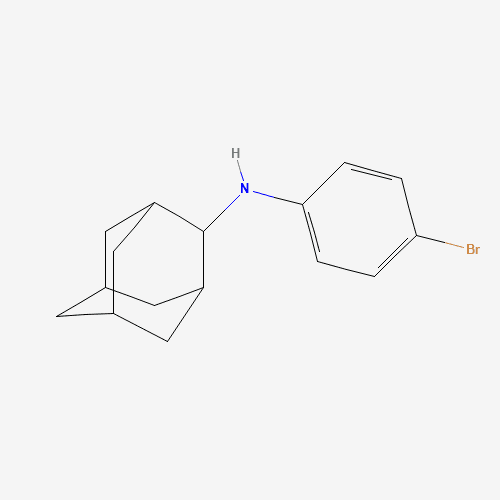
Bromantane combines an adamantane cage with a para-bromophenylamine group. The adamantane half is the same rigid, fat-soluble diamond-fragment scaffold found in amantadine and memantine, and it is what lets the molecule cross into the brain and stay there; the bromophenyl half is what makes it different from either. It was developed in the Soviet programme for actoprotectors: drugs intended to preserve physical and mental work under stress without the oxygen demand or overt hyperstimulation of classic stimulants [5]. In Russia it later became Ladasten, a medicine for asthenic and neurasthenic disorders.
Two things make it unusual as a stimulant. Acute toxicity is very low — the reported mouse LD50 is 8100 mg/kg intraperitoneally — while the behavioural profile is genuinely stimulant-like: it activates both simple and complex forms of behaviour, produces the EEG changes typical of psychostimulants, antagonises drugs with a depressant neuropsychotropic action, and improves memory and complex operant performance in rats [6]. And unlike a classic stimulant, it is also anxiolytic, which is what the actoprotector concept was reaching for.
The human evidence is positive but concentrated in one research tradition. The key randomised study enrolled 30 adults with neurasthenia, 15 per arm. It was single-blind, used 100 mg a day for 28 days and reported that bromantane reduced core asthenic symptoms faster and further than placebo, without a withdrawal syndrome [1]. A separate multicentre programme analysed 728 patients given 50–100 mg a day for 28 days. It reported response rates of 76.0% on CGI-S and 90.8% on CGI-I, but had no randomised control group, so expectation, regression to the mean and the natural course of fatigue cannot be separated from drug effect [2].
A single 100 mg dose also improved psychophysiological measures during mental fatigue in healthy volunteers, with larger effects in stress-labile participants [7]. An earlier ten-person placebo comparison found EEG changes consistent with moderate vigilance but little change in untired operators' principal performance measures [8]. That is evidence for a state-dependent signal, not proof of broad cognitive enhancement.
Mechanism
No direct receptor target has been demonstrated. Bromantane is often described as dopaminergic, but the better evidence points to altered synthesis rather than the direct dopamine-transporter inhibition seen with Phenylpiracetam. In rats, a single 50 mg/kg oral dose changed tyrosine-hydroxylase messenger RNA and protein, L-DOPA and dopamine differently across the ventral tegmental area, nucleus accumbens, hypothalamus, striatum and hippocampus [4]. A separate expression study found increased genes for tyrosine hydroxylase and aromatic L-amino-acid decarboxylase, the rate-limiting and final enzymes in dopamine synthesis [3]. These are downstream genomic effects in animals; the initiating molecular sensor is unknown.
Direct monoamine-uptake effects appear only at high in-vitro concentrations. Bromantane inhibited synaptosomal dopamine and serotonin uptake at 50 µM, while norepinephrine uptake needed more than 500 µM [9]. No human study establishes that those concentrations occur in brain, so calling it a conventional reuptake inhibitor would overstate the evidence.
The dopamine signal can feed plasticity. In rat hippocampal slices, 10 µM bromantane converted short-term potentiation into a longer-lasting form. Anisomycin abolished the effect and the D1/D5 antagonist SCH23390 reduced it, pointing to new protein synthesis downstream of dopamine signalling rather than direct D1/D5 agonism [4]. Animal expression work also reports induction of neurotrophin and MAP-kinase pathways, but does not identify a binding target [10].
Older experiments found complex, region- and dose-dependent changes in dopamine and serotonin content [11]. Together they support an indirect monoaminergic drug, not the tidy story of a selective receptor ligand.
The anxiolytic half has its own mechanism, and it is corrective rather than sedative. A Russian study tested ladasten in two inbred rat strains chosen for opposite emotional-stress phenotypes. At 30 mg/kg intraperitoneally it produced an anxiolytic effect in the open field in MR rats and no effect at all in MNRA rats. In the same MR rats — and not in MNRA rats — a model stress disrupted the regulation of [3H]diazepam binding to the benzodiazepine site of the GABA-A receptor, and ladasten given at the anxiolytic dose prevented that stress-induced change [12].
Read carefully, that is not benzodiazepine-site agonism. What the experiment shows is that the drug stops stress from dysregulating the site, in the genotype where stress dysregulates it — and does nothing in the genotype where it does not. A drug whose anxiolytic effect is contingent on the animal's stress phenotype would explain why the human signal is strongest in fatigued, stress-labile participants and weakest in rested ones [7][8]. It is one study in one laboratory, and it has not been replicated outside that tradition.
So the honest summary of the mechanism is a drug with no identified binding site that appears to work by nudging two regulatory systems — dopamine synthesis and stress-driven GABA-A regulation — back toward baseline, with effects that show up mainly when baseline has been disturbed.
- Direct receptor targetno bindingunclear
- Dopamine and serotonin uptakeblocksinhibited synaptosomal dopamine and serotonin uptake only at 50 µM in vitro; norepinephrine uptake required concentrations above 500 µM, so relevance to clinical dosing is unknown [9]weak
- GABA-A benzodiazepine binding sitemodulatesnot agonism but normalisation: stress disrupted the regulation of [3H]diazepam binding at the benzodiazepine site in the stress-susceptible rat strain only, and ladasten at its anxiolytic dose prevented that stress-induced change [12]weak
- Tyrosine hydroxylase and DOPA decarboxylase expressionactivatesmoderate
- Hippocampal D1/D5-dependent plasticityactivates10 µM bromantane converted short-term potentiation into a longer-lasting form in rat hippocampal slices; protein-synthesis inhibition blocked it and a D1/D5 antagonist attenuated it [4]weak
- Strain-dependent anxiolytic responsemodulates30 mg/kg produced an anxiolytic effect in open-field testing in MR rats — the inbred strain with the passive emotional-stress phenotype — and no effect at all in MNRA rats [12]weak
Dosing
as studied or commonly reported; not a recommendationDoses below are what studies used or, where marked, what is commonly reported. None is a recommendation.
Oral
- 100 mgneurasthenia in a 30-person single-blind placebo-controlled trial50 mg twice daily · 28 dayshuman study[1]
- 50–100 mgasthenic disorders with psychoautonomic symptoms in a 728-patient uncontrolled multicentre programmedaily · 28 dayshuman study[2]
- 100 mgpsychophysiological performance during experimentally induced mental fatigue in healthy volunteerssingle dosehuman study[7]
- Timing and food
- The clinical trial divided 100 mg into two daily 50 mg doses [1].
- Time to effect
- The uncontrolled multicentre programme reported an antiasthenic signal from day 3 and persistence one month after withdrawal [2].
- Notes
- These rows report Russian research doses, not a recommendation. The only placebo-controlled course cited here had 15 participants per arm and was single-blind [1].
Pharmacokinetics
what the body does with it| Time to peak | A narrative review reports 2.75 h in women and 4.0 h in men; the underlying pharmacokinetic report is old and not independently replicated [5]. |
|---|---|
| Bioavailability | A narrative review reports 42% oral bioavailability, rapid tissue distribution and slow elimination [5]. |
| Metabolism | Primarily hepatic hydroxylation of the adamantane ring, according to an actoprotector review [5]. |
| Excretion | Metabolites remained detectable in urine for up to two weeks in the pharmacokinetic work summarised by a review [5]. |
Safety
risks and cautions, not medical adviceIn the 30-person placebo trial, one participant reported mild internal restlessness; laboratory tests and ECG did not show a treatment signal, and no withdrawal syndrome appeared during the final placebo week [1]. In the 728-patient uncontrolled programme, adverse effects were reported by 3%, treatment was stopped in 0.8%, and no serious adverse event was reported [2]. These short Russian studies do not establish long-term or rare-event safety.
Bromantane is explicitly listed as a non-specified S6 stimulant prohibited in competition on the 2026 World Anti-Doping Agency list. Its appearance in elite sport and detection in doping control were documented in 1997 [13].
- The only placebo-controlled course cited here was single-blind and randomised just 30 people, 15 per arm [1]
- The 728-patient multicentre programme had no placebo group despite high reported response rates [2]
- Human studies are almost entirely Russian, short, and conducted by groups close to the drug's development
- No direct receptor or high-affinity molecular target has been identified [4][5]
- Dopamine-synthesis, neurotrophin and synaptic-plasticity mechanisms come from rats or isolated tissue, not people [3][4][10]
- The pharmacokinetic figures are old and are reported here through a narrative review rather than a modern replicated study [5]
- The GABA-A finding is a single Russian study in two inbred rat strains, and it reports prevention of a stress-induced change in binding rather than any intrinsic action at the site [12]
- The anxiolytic effect was present in one rat strain and absent in the other, so even in animals the response depends on the genotype being tested [12]
- Several of the Russian primary papers on its dopamine effects — including the 1995 striatal microdialysis study — have no abstract in any database reached here and no retrievable full text, so they are kept as background rather than cited for their results
Interactions
documented pairs only, not exhaustive- any stimulantcaution
- PhenylpiracetamcautionBoth are stimulant-like and dopaminergic by different mechanisms; the combination has not been studied
- ModafinilcautionNo interaction study exists; combining two wakefulness-promoting agents could add insomnia or activation
- CaffeinecautionNo interaction study exists; additive stimulation and sleep disruption are plausible
History
Bromantane emerged from Soviet military and sports pharmacology and was used to shorten recovery after heavy physical exertion before being repositioned as Ladasten for asthenic disorders [5]. The clinical literature is almost entirely Russian and mostly available only in Russian, which is not itself a quality problem; the more important limitations are small samples, single blinding, uncontrolled cohorts and a lack of independent replication [1][2].
Reputation
how it is regarded elsewhere, not this wiki's readingOnline descriptions often call bromantane a dopamine "upregulator" that feels smoother than a conventional stimulant. The first half is a fair shorthand for rat gene-expression results; it is not a direct receptor or transporter mechanism, and has not been demonstrated in humans [3][4]. The second half resembles the Russian trial description of simultaneous stimulant and anxiolytic effects, but subjective experience has not been mapped in modern blinded studies [1][14].
FAQ
- Does bromantane directly stimulate dopamine receptors?
- No direct receptor agonism has been shown. Rat studies instead find changes in tyrosine hydroxylase, L-DOPA and dopamine, consistent with altered dopamine synthesis [3][4].
- Is it a dopamine reuptake inhibitor?
- Only weakly in the evidence cited here. Synaptosomal uptake was inhibited at 50 µM in vitro, with no proof that human brain reaches that concentration [9].
- Is Bromantane supported by placebo-controlled trials?
- One small single-blind trial randomised 30 people and was positive [1]. The much larger 728-patient programme was uncontrolled [2].
- Is it allowed in sport?
- No. Bromantan is listed as a non-specified S6 stimulant prohibited in competition on the 2026 WADA list.
- How can one drug be both stimulating and calming?
- That combination is the whole point of the actoprotector idea, and the one mechanistic study on it suggests the anxiolytic half is corrective rather than sedative. Stress disrupted benzodiazepine-site binding on the GABA-A receptor in stress-susceptible rats, and bromantane at its anxiolytic dose prevented that disruption without binding the site itself [12]. The effect appeared in one inbred strain and not the other.
- How toxic is it?
- Acutely, very little: the reported LD50 in mice is 8100 mg/kg intraperitoneally [6]. That says nothing about long-term use, which has not been characterised.
References
entry last reviewed 2026-09-20- [1][Ladasten, the new drug with psychostimulant and anxiolytic actions in treatment of neurasthenia (results of the comparative clinical study with placebo)].Neznamov GG, Siuniakov SA, Teleshova SE et al.Zh Nevrol Psikhiatr Im S S Korsakova 2009RCT · humanPMID 19491814in Russian◌ unreviewed
- [2][Treatment of asthenic disorders in patients with psychoautonomic syndrome: results of a multicenter study on efficacy and safety of ladasten].Voznesenskaia TG, Fokina NM, Iakhno NNZh Nevrol Psikhiatr Im S S Korsakova 2010clinical trial · humanPMID 21322821in Russian◌ unreviewed
- [3][Ladasten induces the expression of genes regulating dopamine biosynthesis in various structures of rat brain].Vakhitova IuV, Iamidanov RS, Seredinin SBEksp Klin Farmakol 2004preclinical · animalPMID 15500036in Russian◌ unreviewed
- [4]The effects of ladasten on dopaminergic neurotransmission and hippocampal synaptic plasticity in rats.Mikhaylova M, Vakhitova JV, Yamidanov RS et al.Neuropharmacology 2007preclinical · animalPMID 17854844◌ unreviewed
- [5]The pharmacology of actoprotectors: practical application for improvement of mental and physical performance.Oliynyk S, Oh SBiomol Ther (Seoul) 2012reviewPMID 24009833◌ unreviewed
- [6][The characteristics of the neuropsychotropic activity of bromantane in laboratory animals].Morozov IS, Klimova NV, Karpova TD et al.Eksp Klin Farmakol 1999preclinical · animalPMID 10340117in Russian◌ unreviewed
- [7][Effect of ladasten on the psychophysiological parameters of healthy volunteers].Bogdan NG, Kolotilinskaia NV, Iarkova MA et al.Eksp Klin Farmakol 2009clinical trial · humanPMID 19642584in Russian◌ unreviewed
- [8][The neuro- and psychophysiological effects of bromantane].Viatleva OA, Barchukov VG, Morozov IS et al.Voen Med Zh 2000clinical trial · humanPMID 10998997in Russian◌ unreviewed
- [9][The mechanisms of the neurotropic action of bromantan].Morozov IS, Pukhova GS, Avdulov NA et al.Eksp Klin Farmakol 1999preclinical · animalPMID 10198757in Russian◌ unreviewed
- [10]Mechanisms of action of ladasten: activation of gene expression for neurotrophins and mitogen-activated kinases.Salimgareeva MKh, Yamidanov RS, Vakhitova YV et al.Bull Exp Biol Med 2012preclinical · animalPMID 22803074◌ unreviewed
- [11][The effect of bromantane on the dopamin- and serotoninergic systems of the rat brain].Kudrin VS, Sergeeva SA, Krasnykh LM et al.Eksp Klin Farmakol 1995preclinical · animalPMID 7580761in Russian◌ unreviewed
- [12][Studying the mechanisms of ladasten action].Iarkova MA, Voronin MV, Seredenin SBEksp Klin Farmakol 2005preclinical · animalPMID 16047669in Russian◌ unreviewed
- [13]Bromontan, a new doping agent.Burnat P, Payen A, Le Brumant-Payen C et al.Lancet 1997other · humanPMID 9314900◌ unreviewed
- [14][Pilot clinical trial of ladasten].Siuniakov SA, Grishin SA, Teleshova ES et al.Eksp Klin Farmakol 2006clinical trial · humanPMID 16995430in Russian◌ unreviewed