DL-Phenylalanine
also DLPA · DL-3-Phenylalanine · Racemic phenylalanine · DL-2-Amino-3-phenylpropanoic acid
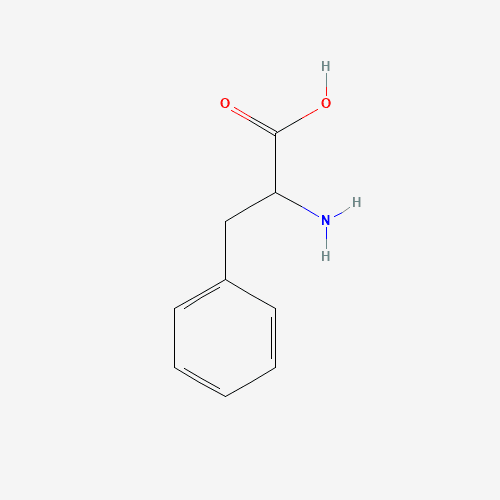
DL-phenylalanine (DLPA) is a 50:50 mix of the dietary amino acid L-phenylalanine and its mirror image, D-phenylalanine. It is sold for mood and pain on the strength of two 1970s–80s ideas: that L-phenylalanine feeds catecholamine and phenylethylamine synthesis, and that D-phenylalanine slows the breakdown of enkephalins [1][2]. The human evidence is old and thin. Small German depression studies were positive but had no placebo arm [3][4], and the only placebo-controlled chronic-pain trial of D-phenylalanine found no analgesic effect [5]. The strongest modern data concern L-phenylalanine alone: short-term tolerability up to 12 g/day in healthy men and gut-hormone effects at 10 g [6][7][8].
A cheap, food-derived amino-acid mix whose mood and pain claims rest on small, uncontrolled or null trials from forty years ago—plausible in theory, unproven in practice, and off-limits in phenylketonuria.
- meta-analysis
- RCT
- trial
- observational
- preclinical / case
- review / patent / other
- retracted
- + Depressed inpatients on 150–200 mg/day did about as well as those on imipramine in one small 30-day double-blind comparison, without a placebo group
- + Improved mood and mood lability in a two-week crossover in adults with ADHD, an effect that faded within three months
- + L-phenylalanine plus UVA light repigmented vitiligo patches in several small trials
- + Up to 12 g/day of phenylalanine for four weeks caused no treatment-related adverse events in healthy men
- − No analgesic effect over placebo in the one double-blind chronic-pain trial of D-phenylalanine
- − D-phenylalanine did not help hyperactive boys in a double-blind crossover
- − The depression evidence is open-label or active-controlled, small and from 1975–1979
- − A 100 mg/kg phenylalanine drink worsened involuntary movements in men with tardive dyskinesia
Phenylalanine is an essential amino acid: the L-form is part of every dietary protein and supplies 4–6 g a day in a meat-based Western diet [7]. DL-phenylalanine is the racemic chemical, an equal mix of that L-form and its mirror image, D-phenylalanine, which is not built into human protein. The combination was promoted in the late 1970s and 1980s because each half seemed to offer something different—L-phenylalanine as a precursor of catecholamines and phenylethylamine, D-phenylalanine as a putative "enkephalinase" inhibitor that might extend the body's own opioid signalling [1][9].
Depression. A 1975 note reported that 17 of 23 people with treatment-resistant endogenous depression became euthymic within two weeks on 50–100 mg/day of DL- or D-phenylalanine [10]. Beckmann's open study gave 75–200 mg/day to 20 depressed inpatients; 12 were discharged without other treatment and 4 did not respond [3][11]. His double-blind follow-up compared 150–200 mg/day with the same dose of imipramine in 40 inpatients for 30 days. Only 27 finished, and the groups did not differ on the Hamilton scale, although imipramine helped anxiety and sleep sooner; the authors themselves urged careful interpretation [4]. "No difference from imipramine" in 27 completers is not proof of equivalence, and none of these studies had a placebo arm.
Pain. Animal work found that D-phenylalanine produced naloxone-reversible analgesia in mice and potentiated acupuncture analgesia, and it was then tried in people with chronic pain [2][9]. The one randomized, double-blind, placebo-controlled trial—30 people with long-standing mixed chronic pain, 250 mg four times a day for four weeks per arm—found no analgesic effect: 25% reported more relief on D-phenylalanine and 22% on placebo [5]. The positive human reports are small or uncontrolled: attenuated tourniquet pain in eight volunteers, enhanced acupuncture analgesia in Japanese experiments, and relief of incident pain in nine terminally ill cancer patients [12][13][14][15]. In monkeys, 500 mg/kg gave no significant or naloxone-reversible analgesia [16].
Attention. In adults with ADHD, a two-week double-blind crossover of DL-phenylalanine against placebo improved mood and mood lability, and global improvement approached significance in the 13 of 19 who finished. The benefit was gone within three months of continued open use, and a later open trial of L-phenylalanine did nothing [17]. D-phenylalanine 20 mg/kg/day had no effect in 11 hyperactive boys [18].
Other uses. L-phenylalanine combined with UVA light is the application reviewers consider most promising: small trials, including a 32-patient double-blind trial, reported repigmentation of vitiligo, but they were of poor methodological quality and could not be pooled [19][20][21]. A 20-patient randomized trial of a supplement combining D-phenylalanine with L-glutamine and 5-HTP reduced psychiatric symptom scores during alcohol withdrawal, but the mixture makes it impossible to credit D-phenylalanine [22]. Ten grams of L-phenylalanine before a meal cut intake by 184 kcal in lean men but had no overall effect in overweight women, and the D-form did not reproduce L-phenylalanine's hormone effects [7][8][23].
The L-half is converted by phenylalanine hydroxylase to L-tyrosine, the precursor of dopamine and noradrenaline [6][24]. It is also the precursor of phenylethylamine (PEA), a trace amine that modulates aminergic synapses and is broken down by MAO-B. Sabelli's review noted lower levels of PEA's main metabolite in depressed patients and argued that L-phenylalanine lifts mood mainly when MAO-B is inhibited [1]; an uncontrolled series of 155 patients given selegiline plus L-phenylalanine is the main clinical support [25]. Extra precursor does not act uniformly: in people with tardive dyskinesia, the effect of a phenylalanine challenge depended on fasting amino-acid levels [26].
The D-half is the source of the "DLPA for pain" idea. D-phenylalanine was proposed to block the carboxypeptidase that degrades enkephalins, and in mice it gave long-lasting, naloxone-reversible analgesia whose potency tracked inhibition of enkephalin breakdown [2][5]. The translation is weak. In rats it blunted cold-swim stress analgesia rather than adding to it [27]; in monkeys it gave no opioid-mediated analgesia [16]; in people it lowered plasma enkephalinase activity but, unlike captopril and thiorphan, was not reported to lower it in cerebrospinal fluid [28]. The mood hypothesis for the D-form is also shaky: in rats, D-phenylalanine raised brain phenylalanine but did not change catecholamines, serotonin or PEA, and was not converted to PEA [29].
The two halves are handled differently. D-phenylalanine reaches higher plasma peaks, about a third is converted to the L-form, and 27–38% is excreted unchanged [30]. D-amino acid oxidase, the enzyme that acts on D-amino acids such as D-serine and D-DOPA, is the likely first step of that conversion [31]. In growing mice fed amino-acid diets, D-phenylalanine replaced 28–81% of the nutritional value of the L-form, depending on how much of each the diet contained [32]. Part of any DLPA dose therefore simply becomes extra L-phenylalanine.
In the gut, L-phenylalanine stimulates CCK, PYY, insulin and glucagon, which accounts for its short-term appetite and glucose effects; at the same dose D-phenylalanine did not stimulate insulin, glucagon or GIP [7][8].
- Enkephalin-degrading peptidasesblocksweak
- Phenylalanine hydroxylase → tyrosine → catecholaminesactivatesweak
- Phenylethylamine synthesismodulatesunclear
- Gut satiety and incretin hormonesactivatesmoderate
Formulation
how the form changes blood levelsDLPA is the racemate; L-phenylalanine and D-phenylalanine are sold separately too. The clinical literature is split by form: the depression trials used DL-phenylalanine [3][4], the pain and pediatric trials D-phenylalanine [5][18], and the vitiligo and appetite studies L-phenylalanine [7][19]. Results from one form cannot be transferred to another: in the same 11 volunteers, 10 g of the L-form raised insulin, glucagon and GIP while 10 g of the D-form did not [8]. In a two-person isotope study, oral D-phenylalanine reached about three times the plasma peak of L-phenylalanine, and a quarter to a third of it was lost in urine [30].
Dosing
as studied or commonly reported; not a recommendationDoses below are what studies used or, where marked, what is commonly reported. None is a recommendation.
Oral
- 75–200 mg/day
- 150–200 mg/day40 depressed inpatients, double-blind against imipramine 150–200 mg/day; 13 DLPA and 14 imipramine patients completed, with no difference on the Hamilton scale; no placebo armdaily · 30 dayshuman study[4]
- 50–100 mg/day (DL- or D-form)23 people with endogenous depression that had not responded to standard antidepressants; uncontrolled, 17 reported full remissiondaily · 15 dayshuman study[10]
- 250 mg (D-phenylalanine)30 people with chronic pain of mixed cause, double-blind placebo crossover; no analgesic effect4 times a day · 4 weeks per armhuman study[5]
- 250 mg (D-phenylalanine)9 terminally ill cancer patients with incident pain, uncontrolled; 7 needed no extra analgesics3 times a day, 15 days on and 10 days offhuman study[15]
- 4 g (D-phenylalanine)low back pain and tooth extraction under acupuncture anaesthesia; better results than placebo for tooth extraction, not significant for back painsingle dose 30 minutes before acupuncturehuman study[14]
- 20 mg/kg/day (D-phenylalanine)11 hyperactive boys, double-blind placebo crossover; no change in behaviour or cognition and no side effectsdaily · 2 weekshuman study[18]
- 10 g (D- or L-phenylalanine)11 healthy adults, double-blind crossover; only the L-form raised insulin, glucagon and GIP, neither changed energy intakesingle dose, 70 minutes before a mealhuman study[8]
- 5–10 g (L-phenylalanine)
- 3, 6, 9 and 12 g/day (phenylalanine)30 healthy Japanese men (23 per protocol), open-label tolerance study; no treatment-related adverse eventsdaily · 4 weeks per dose, 2-week washoutshuman study[6]
- 50–100 mg/kg (L-phenylalanine)
- 250 mg/day L-phenylalanine with selegiline 5–10 mg/day155 unipolar depressed patients, uncontrolled; a prescription MAO-B inhibitor combination, not a supplement regimendailyhuman study[25]
- 500–1,500 mg/daygeneral supplement use for mood or painsplit doses, often between mealscommonly reported, not from trials
- Form
- Sold as DL-phenylalanine powder or capsules, which are half L- and half D-phenylalanine. The two halves behave differently: the D-form reaches higher plasma peaks sooner and a large share leaves unchanged in urine [30]. Most modern trials used L-phenylalanine alone; several older pain trials used D-phenylalanine alone.
- Timing and food
- Vitiligo trials timed UVA exposure 30–60 minutes after the dose, at the plasma peak [19][34]. Appetite studies dosed 20–30 minutes before a meal [7][23]. One Dutch vitiligo protocol gave the dose after a low-protein breakfast [20].
- Time to effect
- The uncontrolled depression studies reported responses within days to three weeks [3][10]. In adult ADHD the early benefit was gone within three months [17].
- Notes
- The depression doses (50–200 mg/day) are tiny next to the 4–5 g of phenylalanine in an ordinary protein-containing diet [7], which is one reason the positive open results are hard to credit. The adult ADHD and alcohol-withdrawal trials give no dose in their abstracts, and their full texts could not be reached (publisher paywall and a publisher bot check) [17][22]. These are doses as studied, not recommendations.
Pharmacokinetics
what the body does with it| Time to peak | In two volunteers given 25 mg/kg of each enantiomer together, D-phenylalanine rose faster and peaked about three times higher than L-phenylalanine [30]. Oral L-phenylalanine peaked 30–60 minutes after dosing in vitiligo patients [19][34]. |
|---|---|
| Peak level | 1.5 g oral L-phenylalanine peaked at about 20 µg/mL, against about 50 µg/mL after the same dose intravenously, in two volunteers [33]. |
| Bioavailability | Oral L-phenylalanine gave lower plasma levels than intravenous, yet similar amounts were converted to tyrosine, consistent with first-pass hydroxylation [33]. Higher L-phenylalanine doses raised plasma levels further without better vitiligo outcomes [19]. |
| Metabolism | L-phenylalanine is hydroxylated to L-tyrosine. About one-third of an oral D-phenylalanine dose was converted to the L-form and then hydroxylated [30]. In rats, D-phenylalanine was not converted to phenylethylamine [29]. |
| Excretion | Only 0.25–0.8% of an oral L-phenylalanine dose appeared unchanged in urine, against 27–38% of the D-phenylalanine dose [30]. |
Safety
risks and cautions, not medical advicePhenylketonuria is the hard stop. People with PKU lack working phenylalanine hydroxylase; phenylalanine builds up and damages the brain, causing intellectual disability, epilepsy and, in adults, executive-function and mood problems [24][36]. In pregnancy, high maternal phenylalanine is a teratogen: untreated classic maternal PKU causes microcephaly and intellectual disability in most offspring, with lower but real risks at lower levels [37]. Phenylalanine supplements have no place in PKU or in pregnancy with raised phenylalanine.
In healthy adults, the best dedicated study gave 3, 6, 9 and 12 g/day of phenylalanine to healthy Japanese men for four weeks at each dose. There were 25 mild or moderate adverse events in seven men (gastrointestinal symptoms, headache, cold-like symptoms, tiredness), mostly at the lower doses and none judged treatment-related; blood chemistry changed only trivially, and plasma tyrosine rose at 12 g/day. The authors set a no-observed-adverse-effect level of 12 g/day [6][38]. The study was open-label, all-male, four weeks per dose and did not state the enantiomer. Single 10 g doses of L- or D-phenylalanine caused no reported side effects in healthy adults [7][8], though 10 g L-phenylalanine raised nausea ratings in overweight women [23].
The older trials used far smaller doses and reported little: no important adverse reactions at 50–100 mg/day in depression, none in boys on 20 mg/kg/day D-phenylalanine, and none in the vitiligo trials [10][18][35][39]. D-phenylalanine has no long-term human safety data.
Tardive dyskinesia. A 100 mg/kg phenylalanine drink increased involuntary movements to a clinically meaningful degree in 18 men with schizophrenia and tardive dyskinesia, compared with placebo [40].
- Not for phenylketonuria; high phenylalanine damages the brain and, in pregnancy, the fetus [24][37].
- Combining with MAO inhibitors such as selegiline changes phenylethylamine metabolism [25].
- Phenylalanine competes with levodopa for brain entry [41].
- People with tardive dyskinesia had more involuntary movements after a phenylalanine load [40].
- The depression evidence is two open reports, one uncontrolled note and one active-controlled trial with 27 completers, all from 1975–1979; none had a placebo arm [3][4][10].
- The only placebo-controlled chronic-pain trial of D-phenylalanine was negative [5]; the positive pain reports are small or uncontrolled [12][15].
- Vitiligo trials of L-phenylalanine with UVA were small, poorly reported and not poolable [20].
- Human pharmacokinetic data on the D-form come from two volunteers [30].
- The 12 g/day safety result covers four weeks per dose in healthy men only [6].
Interactions
documented pairs only, not exhaustiveMAO inhibitors. L-phenylalanine is the precursor of phenylethylamine, which MAO-B normally clears. Combining L-phenylalanine with selegiline was used deliberately to raise brain phenylethylamine in depression [1][25]. That is a pharmacological combination, not a neutral pairing, and the published series was uncontrolled.
Levodopa. Phenylalanine is one of the large neutral amino acids that compete with levodopa for entry into the brain. In Parkinson's patients on ordinary diets, everyday fluctuations in these amino acids mattered little next to swings in levodopa itself [41]; gram doses of supplemental phenylalanine were not studied.
Antipsychotics. A phenylalanine load worsened tardive dyskinesia in men on long-term antipsychotic treatment [40].
- any mao inhibitorcaution
- L-Tyrosinecompatible
- Does DLPA work for depression?
- It has not been shown to. Small 1970s studies were positive, but none had a placebo group, and the double-blind trial against imipramine had only 27 completers [3][4].
- Does DLPA relieve chronic pain?
- The one placebo-controlled trial of D-phenylalanine in chronic pain found no effect, and monkey experiments did not support the enkephalin mechanism [5][16]. Positive reports are small or uncontrolled [12][15].
- What is the difference between DLPA, L-phenylalanine and D-phenylalanine?
- DLPA is half of each. The L-form is the dietary amino acid and becomes tyrosine; the D-form reaches higher plasma peaks, is partly converted to the L-form and is partly excreted unchanged [30]. At 10 g, only the L-form raised insulin, glucagon and GIP [8].
References
entry last reviewed 2026-09-28- [1]Phenylethylamine modulation of affect: therapeutic and diagnostic implications.Sabelli HC, Javaid JIJ Neuropsychiatry Clin Neurosci 1995reviewPMID 7711493◌ unreviewed
- [2]Analgesic properties of enkephalinase inhibitors: animal and human studies.Ehrenpreis SProg Clin Biol Res 1985other · humanPMID 2934746◌ unreviewed
- [3]Dl-phenylalanine in depressed patients: an open study.Beckmann H, Strauss MA, Ludolph EJ Neural Transm 1977clinical trial · humanPMID 335027◌ unreviewed
- [4]DL-phenylalanine versus imipramine: a double-blind controlled study.Beckmann H, Athen D, Olteanu M et al.Arch Psychiatr Nervenkr (1970) 1979clinical trial · humanPMID 387000◌ unreviewed
- [5]Analgesic effectiveness of D-phenylalanine in chronic pain patients.Walsh NE, Ramamurthy S, Schoenfeld L et al.Arch Phys Med Rehabil 1986RCT · humanPMID 3524509◌ unreviewed
- [6]Subchronic Tolerance Trials of Graded Oral Supplementation with Phenylalanine or Serine in Healthy Adults.Miura N, Matsumoto H, Cynober L et al.Nutrients 2021clinical trial · humanPMID 34201370◌ unreviewed
- [7]Effects of L-Phenylalanine on Energy Intake and Glycaemia-Impacts on Appetite Perceptions, Gastrointestinal Hormones and Gastric Emptying in Healthy Males.Fitzgerald PCE, Manoliu B, Herbillon B et al.Nutrients 2020RCT · humanPMID 32560181◌ unreviewed
- [8]Differential effects of L- and D-phenylalanine on pancreatic and gastrointestinal hormone release in humans: A randomized crossover study.Amin A, Frampton J, Liu Z et al.Diabetes Obes Metab 2021RCT · humanPMID 32991046◌ unreviewed
- [9]D-phenylalanine and other enkephalinase inhibitors as pharmacological agents: implications for some important therapeutic application.Ehrenpreis SAcupunct Electrother Res 1982other · humanPMID 6128872◌ unreviewed
- [10]Therapy of depression by phenylalanine. Preliminary note.Fischer E, Heller B, Nachon M et al.Arzneimittelforschung 1975other · humanPMID 1173765◌ unreviewed
- [11][DL-phenylalanine as an antidepressant. Open study (author's transl)].Beckmann H, Ludolph EArzneimittelforschung 1978clinical trial · humanPMID 380577in German◌ unreviewed
- [12]Attenuation of tourniquet-induced pain in man by D-phenylalanine, a putative inhibitor of enkephalin degradation.Nurmikko T, Pertovaara A, Pöntinen PJAcupunct Electrother Res 1987other · humanPMID 2895566◌ unreviewed
- [13]Studies on the enhanced effect of acupuncture analgesia and acupuncture anesthesia by D-phenylalanine (first report)--effect on pain threshold and inhibition by naloxone.Kitade T, Odahara Y, Shinohara S et al.Acupunct Electrother Res 1988other · humanPMID 2904213◌ unreviewed
- [14]Studies on the enhanced effect of acupuncture analgesia and acupuncture anesthesia by D-phenylalanine (2nd report)--schedule of administration and clinical effects in low back pain and tooth extraction.Kitade T, Odahara Y, Shinohara S et al.Acupunct Electrother Res 1990clinical trial · humanPMID 1978503◌ unreviewed
- [15][Curing trial of complicated oncologic pain by D-phenylalanine (author's transl)].Donzelle G, Bernard L, Deumier R et al.Anesth Analg (Paris) 1981other · humanPMID 7114516in French◌ unreviewed
- [16]D-phenylalanine: a putative enkephalinase inhibitor studied in a primate acute pain model.Halpern LM, Dong WKPain 1986other · animalPMID 3515291◌ unreviewed
- [17]Treatment of attention deficit disorder with DL-phenylalanine.Wood DR, Reimherr FW, Wender PHPsychiatry Res 1985clinical trial · humanPMID 3903813◌ unreviewed
- [18]Treatment of hyperactive children with D-phenylalanine.Zametkin AJ, Karoum F, Rapoport JLAm J Psychiatry 1987clinical trial · humanPMID 3296793◌ unreviewed
- [19]L-phenylalanine and UVA irradiation in the treatment of vitiligo.Siddiqui AH, Stolk LM, Bhaggoe R et al.Dermatology 1994clinical trial · humanPMID 8186511◌ unreviewed
- [20]A systematic review of natural health product treatment for vitiligo.Szczurko O, Boon HSBMC Dermatol 2008review · humanPMID 18498646◌ unreviewed
- [21]A Systematic Review of Nutrition, Supplement, and Herbal-Based Adjunctive Therapies for Vitiligo.Shakhbazova A, Wu H, Chambers CJ et al.J Altern Complement Med 2021review · humanPMID 33337930◌ unreviewed
- [22]The use of a food supplementation with D-phenylalanine, L-glutamine and L-5-hydroxytriptophan in the alleviation of alcohol withdrawal symptoms.Jukić T, Rojc B, Boben-Bardutzky D et al.Coll Antropol 2011RCT · humanPMID 22397264◌ unreviewed
- [23]Effects of L-phenylalanine on energy intake in overweight and obese women: interactions with dietary restraint status.Pohle-Krauza RJ, Navia JL, Madore EY et al.Appetite 2008RCT · humanPMID 18342398◌ unreviewed
- [24]Phenylketonuria and the brain.Rovelli V, Longo NMol Genet Metab 2023reviewPMID 37105048◌ unreviewed
- [25]L-deprenyl plus L-phenylalanine in the treatment of depression.Birkmayer W, Riederer P, Linauer W et al.J Neural Transm 1984other · humanPMID 6425455◌ unreviewed
- [26]The association between risk factors for tardive dyskinesia and phenylalanine-induced abnormal movements in schizophrenia.Schultz SK, Ellingrod V, Fleming FW et al.Hum Psychopharmacol 2001clinical trial · humanPMID 12404580◌ unreviewed
- [27]Antagonism of stress-induced analgesia by D-phenylalanine, an anti-enkephalinase.Bodnar RJ, Lattner M, Wallace MMPharmacol Biochem Behav 1980other · animalPMID 7208549◌ unreviewed
- [28]Pharmacological "enkephalinase" inhibition in man.Marcello F, Grazia SM, Sergio M et al.Adv Exp Med Biol 1986other · humanPMID 3028074◌ unreviewed
- [29]Metabolism of D-phenylalanine and its effects on concentrations of brain monoamines and amino acids in rats--a basic study on possibility of clinical use of D-phenylalanine as an antidepressant.Hashimoto H, Nakajima T, Nishimura T et al.Folia Psychiatr Neurol Jpn 1983other · animalPMID 6671633◌ unreviewed
- [30]Stereospecificity of phenylalanine plasma kinetics and hydroxylation in man following oral application of a stable isotope-labelled pseudo-racemic mixture of L- and D-phenylalanine.Lehmann WD, Theobald N, Fischer R et al.Clin Chim Acta 1983other · humanPMID 6851137◌ unreviewed
- [31]Human D-amino acid oxidase: an update and review.Kawazoe T, Park HK, Iwana S et al.Chem Rec 2007reviewPMID 17924443◌ unreviewed
- [32]The nutritive value and safety of D-phenylalanine and D-tyrosine in mice.Friedman M, Gumbmann MRJ Nutr 1984other · animalPMID 6491762◌ unreviewed
- [33]Oral versus intravenous L-phenylalanine loading compared by simultaneous application of L-[2H5] and L-[15N]phenylalanine.Lehmann WD, Heinrich HCClin Chim Acta 1985other · humanPMID 3995775◌ unreviewed
- [34]Phenylalanine and UVA light for the treatment of vitiligo.Cormane RH, Siddiqui AH, Westerhof W et al.Arch Dermatol Res 1985clinical trial · humanPMID 3885873◌ unreviewed
- [35]Vitiligo therapy with oral and topical phenylalanine with UVA exposure.Antoniou C, Schulpis H, Michas T et al.Int J Dermatol 1989clinical trial · humanPMID 2583897◌ unreviewed
- [36]The complete European guidelines on phenylketonuria: diagnosis and treatment.van Wegberg AMJ, MacDonald A, Ahring K et al.Orphanet J Rare Dis 2017reviewPMID 29025426◌ unreviewed
- [37]Maternal phenylketonuria: a metabolic teratogen.Levy HL, Ghavami MTeratology 1996reviewPMID 8761885◌ unreviewed
- [38]Tolerable Upper Intake Level for Individual Amino Acids in Humans: A Narrative Review of Recent Clinical Studies.Elango RAdv Nutr 2023reviewPMID 37062432◌ unreviewed
- [39]Phenylalanine plus ultraviolet light: preliminary report of a promising treatment for childhood vitiligo.Schulpis CH, Antoniou C, Michas T et al.Pediatr Dermatol 1989other · humanPMID 2616391◌ unreviewed
- [40]Tardive dyskinesia exacerbated after ingestion of phenylalanine by schizophrenic patients.Mosnik DM, Spring B, Rogers K et al.Neuropsychopharmacology 1997clinical trial · humanPMID 9015796◌ unreviewed
- [41]Influence of fluctuations of plasma large neutral amino acids with normal diets on the clinical response to levodopa.Nutt JG, Woodward WR, Carter JH et al.J Neurol Neurosurg Psychiatry 1989other · humanPMID 2738591◌ unreviewed