MOTS-c
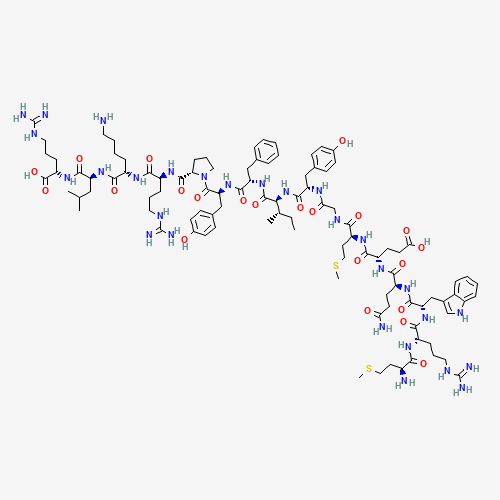
also Mitochondrial ORF of the 12S rRNA type-c · MOTSc · MRWQEMGYIFYPRKLR
MOTS-c is a 16-amino-acid peptide encoded in mitochondrial DNA, not in the cell nucleus [1]. In mice, injections prevented diet-induced obesity and insulin resistance [1] and improved running capacity at every age tested [2]. In people, exercise raises the body's own MOTS-c [2], but no trial has given MOTS-c to humans, and measurements of it in blood disagree between methods [3].
Some of the most interesting biology in this group, with striking mouse results and no human treatment data at all.
- meta-analysis
- RCT
- trial
- observational
- preclinical / case
- review / patent / other
- retracted
- + Prevented diet-induced obesity and insulin resistance in mice
- + Improved physical capacity in young, middle-aged and old mice
- + Exercise raises natural MOTS-c in human muscle and blood
- − Never tested as a treatment in humans
- − Blood-level measurements disagree between methods
- − The mouse studies injected it into the abdominal cavity
Overview
MOTS-c (mitochondrial open reading frame of the 12S rRNA type-c) is, like humanin, a signalling peptide encoded in the mitochondria's own genome. It was described in 2015 as a short reading frame inside the mitochondrial 12S rRNA gene [1]. It is present in plasma, and a review reports that levels fall with age [4].
Mouse evidence. In mice, MOTS-c injections prevented age-related and high-fat-diet insulin resistance and diet-induced obesity [1]. In obese mice it also lowered plasma metabolites linked to obesity and diabetes, and increased fat burning [5]. Daily injections improved running performance in young, middle-aged and old mice. Treatment three times a week, started in very old mice, improved grip strength, gait and walking [2].
Human evidence. No study has given MOTS-c to people. The human data are about the body's own peptide:
- In 10 young men, a hard cycling session raised MOTS-c 11.9-fold in thigh muscle and about 1.5-fold in blood. Blood levels returned to baseline within 4 hours [2].
- Plasma MOTS-c was similar in lean and obese adults. It tracked insulin resistance only in the lean group [6].
- A fat infusion raised plasma MOTS-c, insulin damped the rise, and 8 weeks of moderate exercise training did not change resting levels [7].
- An Asian-specific mitochondrial DNA variant (m.1382A>C) changes one amino acid (K14Q). It was linked to type 2 diabetes in men, and the variant peptide did not work in mice [8].
One caution applies to all the human blood data. When anti-doping chemists built a mass-spectrometry test, they could not confirm the levels a commercial ELISA kit had reported (45.9–218.5 ng/mL) [3]. Another study reported plasma levels below 1 ng/mL [6].
Mechanism
MOTS-c acts mainly on skeletal muscle. It inhibits the folate cycle and the de novo purine synthesis linked to it, and this activates AMPK, the cell's energy-shortage sensor [1]. Under metabolic stress such as glucose restriction, it moves into the nucleus in an AMPK-dependent way. There it regulates a broad set of genes, including antioxidant-response genes, and interacts with the transcription factor NRF2 [9]. The authors present this as evidence that mitochondrial DNA can directly regulate nuclear genes.
In mice it also changed skeletal-muscle metabolism and gene expression, and helped muscle cells adapt to metabolic stress [2]. Male mice responded to it but female mice did not [8].
- Folate cycle and de novo purine synthesisblocksinhibited in cells, leading to AMPK activation [1]moderate
- AMPKactivatesactivated in skeletal muscle, the peptide's main target organ in mice [1]moderate
- Nuclear gene expression (NRF2 / antioxidant response elements)modulatesmoves into the nucleus under metabolic stress, in an AMPK-dependent way, and regulates antioxidant-response genes with NRF2 [9]moderate
Dosing
as studied or commonly reported; not a recommendationDoses below are what studies used or, where marked, what is commonly reported. None is a recommendation.No peer-reviewed human dosing data. The doses below come from animal studies or company filings; animal doses do not translate directly to people.
Intraperitoneal (animals)
- 0.5 mg/kg (human equivalent ≈0.041 mg/kg, or ≈2.4 mg at 60 kg)
- 5 mg/kg (human equivalent ≈0.41 mg/kg, or ≈24 mg at 60 kg)
- 5 or 15 mg/kg (human equivalent ≈0.41 or 1.2 mg/kg, or ≈24 or 73 mg at 60 kg)
Pharmacokinetics
what the body does with it| Metabolism | In vitro it forms four metabolites and two oxidation products, which anti-doping tests now look for [3] |
|---|
Safety
risks and cautions, not medical adviceThere are no human safety data. A 2026 review of peptides sold directly to patients lists MOTS-c among unapproved compounds whose animal results look favourable but whose human safety data are scarce [12]. Anti-doping labs have developed a test for synthetic MOTS-c in plasma [3].
- Not studied in humans
- Unapproved; human safety data are scarce [12]
- Products sold online are unregulated and unverified
FAQ
References
entry last reviewed 2026-09-19- [1]The mitochondrial-derived peptide MOTS-c promotes metabolic homeostasis and reduces obesity and insulin resistance.Lee C, Zeng J, Drew BG et al.Cell Metab 2015preclinical · animalPMID 25738459◌ unreviewed
- [2]MOTS-c is an exercise-induced mitochondrial-encoded regulator of age-dependent physical decline and muscle homeostasis.Reynolds JC, Lai RW, Woodhead JST et al.Nat Commun 2021preclinical · animalPMID 33473109◌ unreviewed
- [3]Development of a mass spectrometry based detection method for the mitochondrion-derived peptide MOTS-c in plasma samples for doping control purposes.Knoop A, Thomas A, Thevis MRapid Commun Mass Spectrom 2019other · humanPMID 30394592◌ unreviewed
- [4]MOTS-c: A promising mitochondrial-derived peptide for therapeutic exploitation.Zheng Y, Wei Z, Wang TFront Endocrinol (Lausanne) 2023reviewPMID 36761202◌ unreviewed
- [5]The mitochondrial-derived peptide MOTS-c is a regulator of plasma metabolites and enhances insulin sensitivity.Kim SJ, Miller B, Mehta HH et al.Physiol Rep 2019preclinical · animalPMID 31293078◌ unreviewed
- [6]Plasma MOTS-c levels are associated with insulin sensitivity in lean but not in obese individuals.Cataldo LR, Fernández-Verdejo R, Santos JL et al.J Investig Med 2018observational · humanPMID 29593067◌ unreviewed
- [7]Lipids and insulin regulate mitochondrial-derived peptide (MOTS-c) in PCOS and healthy subjects.Ramanjaneya M, Jerobin J, Bettahi I et al.Clin Endocrinol (Oxf) 2019clinical trial · humanPMID 31066084◌ unreviewed
- [8]A pro-diabetogenic mtDNA polymorphism in the mitochondrial-derived peptide, MOTS-c.Zempo H, Kim SJ, Fuku N et al.Aging (Albany NY) 2021observational · humanPMID 33468709◌ unreviewed
- [9]The Mitochondrial-Encoded Peptide MOTS-c Translocates to the Nucleus to Regulate Nuclear Gene Expression in Response to Metabolic Stress.Kim KH, Son JM, Benayoun BA et al.Cell Metab 2018preclinical · cellPMID 29983246◌ unreviewed
- [10]A simple practice guide for dose conversion between animals and human.Nair AB, Jacob SJ Basic Clin Pharm 2016reviewPMID 27057123◌ unreviewed
- [11]Dose translation from animal to human studies revisited.Reagan-Shaw S, Nihal M, Ahmad NFASEB J 2008reviewPMID 17942826◌ unreviewed
- [12]Safety and Efficacy of Approved and Unapproved Peptide Therapies for Musculoskeletal Injuries and Athletic Performance.Mendias CL, Awan TMSports Med 2026reviewPMID 41966639◌ unreviewed