SLU-PP-332
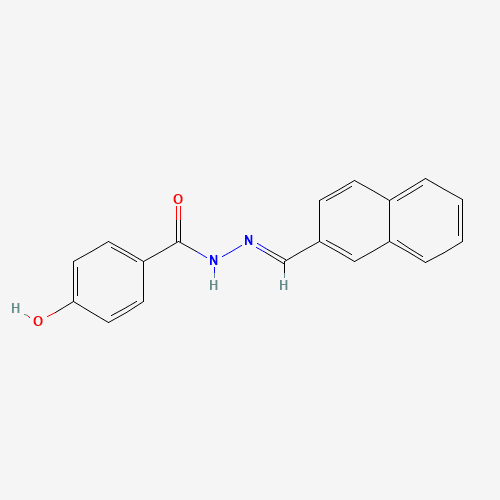
also ERR pan-agonist 332 · 4-Hydroxy-N'-(naphthalen-2-ylmethylene)benzohydrazide
SLU-PP-332 is a synthetic agonist of all three estrogen-related receptors (ERRα, β and γ), strongest at ERRα, and the best-known "exercise mimetic" research compound. In mice it switched on an aerobic exercise gene program, increased oxidative muscle fibers and improved endurance [1]. In obese mice it raised energy expenditure and fat oxidation, reduced fat mass and improved glucose tolerance [2]. It has never been tested in humans.
A well-characterized mouse tool compound with striking exercise-mimetic results; there is no human data at all, and it is banned in sport.
- meta-analysis
- RCT
- trial
- observational
- preclinical / case
- review / patent / other
- retracted
- + Improved endurance and oxidative muscle fibers in mice
- + Reduced fat mass and improved glucose tolerance in obese mice
- + Protected the heart and aging kidney in mouse models
- − No human studies of any kind
- − Poor oral bioavailability; mouse studies inject it twice daily
- − Prohibited by WADA as an exercise mimetic
The estrogen-related receptors are orphan nuclear receptors, not receptors for estrogen. Genetic studies show they matter for muscle's capacity for exercise, but ERRα had proved hard to activate with a drug. SLU-PP-332, from Saint Louis University, targets all three ERRs with the highest potency at ERRα, and works well enough in vivo to be used as a research tool [1].
The mouse results are what made it famous. It increased the proportion of oxidative type IIa muscle fibers, and after a week of twice-daily injections sedentary mice ran about 70% longer and 45% further on a treadmill than untreated mice [1]. In mice made obese on a high-fat diet, 28 days of treatment left them about 12% lighter. Untreated mice gained about 5 g of fat over that time and treated mice less than 0.5 g, with no change in food intake or lean mass. Fasting glucose and insulin fell and glucose tolerance improved, but an insulin tolerance test did not change [2]. In lean mice on normal chow, it did not change body weight, glucose tolerance or insulin [2]. In a pressure-overload heart failure model it improved ejection fraction, reduced fibrosis and increased survival, mainly through ERRγ [3]. In 21-month-old mice, eight weeks of treatment reversed age-related albuminuria, podocyte loss, mitochondrial dysfunction and kidney inflammation [4].
The ERRs control genes for mitochondrial biogenesis, oxidative phosphorylation, fatty acid oxidation and the Krebs cycle [5]. Activating them with SLU-PP-332 set off an acute aerobic exercise program in muscle that depended on ERRα [1]. It induced the exercise gene Ddit4 as strongly as treadmill running or more [5]. In the heart its benefit ran mainly through ERRγ, which drove fatty acid metabolism and mitochondrial function [3].
Chemically it is an acyl hydrazone, designed from the earlier ERRβ/γ agonist GSK4716 using the crystal structure of GSK4716 bound to the ERRγ ligand-binding domain. Swapping an isopropylphenyl group for a naphthalene was predicted to add π-stacking with Phe328, a residue unique to ERRα, and that change gave the jump in ERRα potency while keeping activity at ERRβ and ERRγ [6]. A 2026 structure-activity study mapped which parts of the scaffold control potency and ERRα versus ERRγ activity [7].
The hydrazone linker is also its main chemical weakness. Medicinal chemists treat hydrazides and hydrazones as problematic because they are metabolized quickly and carry toxicity concerns; the parent GSK4716 had a human liver microsomal half-life of 6.4 minutes. A 2026 review from the lab that made the compound concludes that SLU-PP-332 is potent and efficacious but not metabolically stable enough to be a drug candidate without further work, and that the field should move to other scaffolds [6].
- ERRα / ERRβ / ERRγ nuclear receptorsactivatesstrong
- Aerobic exercise gene programactivatesmoderate
- Fatty acid oxidation and mitochondrial functionactivatesmoderate
Dosing
as studied or commonly reported; not a recommendationDoses below are what studies used or, where marked, what is commonly reported. None is a recommendation.No peer-reviewed human dosing data. The doses below come from animal studies or company filings; animal doses do not translate directly to people.
Intraperitoneal (animals)
- 50 mg/kg (human equivalent ≈4.1 mg/kg, or ≈240 mg at 60 kg)
- 50 mg/kg
- 50 mg/kggenetically obese (ob/ob) mice; shortened because they tolerated twice-daily injections poorlytwice daily · 12 daysanimal study[2]
- 25 mg/kg (human equivalent ≈2 mg/kg, or ≈120 mg at 60 kg)
Pharmacokinetics
what the body does with it| Peak level | Single time points only: 2 hours after a 30 mg/kg intraperitoneal injection in mice, about 0.6 µM in skeletal muscle and 0.2 µM in plasma [1] |
|---|---|
| Bioavailability | Not orally bioavailable in mice; studies give it by injection [5] |
| Metabolism | The acyl hydrazone linker is a metabolic liability shared by the whole chemotype. Its discoverers judge SLU-PP-332 not metabolically stable enough to be a drug candidate without further optimization [6]. In human liver preparations it forms six phase I and three phase II metabolites [10]. |
Safety
risks and cautions, not medical adviceThere is no human safety data. In the original mouse study, ten days of twice-daily injections caused no overt toxicity: blood counts, electrolytes and creatine kinase (a marker of muscle damage) were normal [1]. Genetically obese ob/ob mice tolerated the twice-daily injections less well, so their study was cut to 12 days [2]. A 2026 systematic review of the animal studies reported no evident toxicity in obesity models, and concluded that clinical trials are needed to establish efficacy and safety in humans [11].
It is not orally bioavailable in mice [5], so oral products sold online may deliver little. Their contents are unverified in any case.
The World Anti-Doping Agency prohibits exercise mimetics and metabolic modulators in sport. Anti-doping laboratories have already mapped SLU-PP-332's metabolites in human liver preparations so they can detect it [10][12].
- None established; no human exposure has been studied
- Prohibited in sport by WADA; detectable by anti-doping labs [12]
- Not approved; product identity and purity unverified
- Every efficacy result is from mice [11]
- In lean mice it changed fuel use but not body weight or glucose control; the weight and glucose benefits were seen only in obese mice [2]
- Three authors of the obesity study hold stock in Myonid Therapeutics and Pelagos Pharmaceuticals [2]
- Lacks oral bioavailability [5] and is metabolically unstable; its own discoverers call it a tool compound rather than a drug candidate [6]
Interactions
documented pairs only, not exhaustiveNo interaction studies exist. In human liver preparations it forms six phase I and three phase II metabolites [10], but no study says which enzymes are involved.
- SLU-PP-915cautionSame receptors, same mechanism; combining them duplicates one lever and has never been studied
- Does SLU-PP-332 work in humans?
- Unknown. It has never been tested in people; all evidence is from mice and cells [11].
- Can SLU-PP-332 be taken orally?
- In mice it lacks oral bioavailability, which is why its successor SLU-PP-915 was developed [5].
- Is it banned in sport?
- WADA prohibits exercise mimetics and metabolic modulators, and anti-doping labs have characterized its metabolites for detection [12].
References
entry last reviewed 2026-09-18- [1]Synthetic ERRα/β/γ Agonist Induces an ERRα-Dependent Acute Aerobic Exercise Response and Enhances Exercise Capacity.Billon C, Sitaula S, Banerjee S et al.ACS Chem Biol 2023preclinical · animalPMID 36988910◌ unreviewed
- [2]A Synthetic ERR Agonist Alleviates Metabolic Syndrome.Billon C, Schoepke E, Avdagic A et al.J Pharmacol Exp Ther 2024preclinical · animalPMID 37739806◌ unreviewed
- [3]Novel Pan-ERR Agonists Ameliorate Heart Failure Through Enhancing Cardiac Fatty Acid Metabolism and Mitochondrial Function.Xu W, Billon C, Li H et al.Circulation 2024preclinical · animalPMID 37961903◌ unreviewed
- [4]Estrogen-Related Receptor Agonism Reverses Mitochondrial Dysfunction and Inflammation in the Aging Kidney.Wang XX, Myakala K, Libby AE et al.Am J Pathol 2023preclinical · animalPMID 37717940◌ unreviewed
- [5]An orally active estrogen receptor-related receptor agonist, SLU-PP-915, enhances aerobic exercise capacity.Billon C, Appourchaux K, Côté I et al.J Pharmacol Exp Ther 2026preclinical · animalPMID 41421047◌ unreviewed
- [6]Pharmacology of estrogen-related receptors (ERRs) agonists.Radwan MO, Guin S, Burris TPRSC Chem Biol 2026reviewPMID 42256350◌ unreviewed
- [7]Chemical optimization of the exercise mimetic SLU-PP-332 enables insight into estrogen-related receptor signaling.Okda HE, Zhao P, Hayes M et al.Int J Biol Macromol 2026preclinical · cellPMID 41850449◌ unreviewed
- [8]A simple practice guide for dose conversion between animals and human.Nair AB, Jacob SJ Basic Clin Pharm 2016reviewPMID 27057123◌ unreviewed
- [9]Dose translation from animal to human studies revisited.Reagan-Shaw S, Nihal M, Ahmad NFASEB J 2008reviewPMID 17942826◌ unreviewed
- [10]In Vitro Metabolism and Analytical Characterization of SLU-PP-332 and SLU-PP-915: Novel Pan-ERR Agonists With Doping Potential.Möller T, Krug O, Thevis MRapid Commun Mass Spectrom 2026preclinical · cellPMID 41588687◌ unreviewed
- [11][Pharmacological Activation of ERRα/β/γ as an Exercise Mimetic: Potential Therapeutic Applications].de Souza-Lima J, Astrosa-Martin BD, Galaz-Rodríguez CA et al.Rev Med Chil 2026reviewPMID 42024694in Spanish◌ unreviewed
- [12]Analysis and Identification of In Vitro Metabolites of Exercise Mimetic SLU-PP-332 ERRα/β/γ Agonist for Doping-Control Purposes.Avliyakulov NK, Sobolevsky T, Ahrens EDrug Test Anal 2026preclinical · cellPMID 41688415◌ unreviewed