ATX-304
also O304 · O-304 · O304 sodium salt
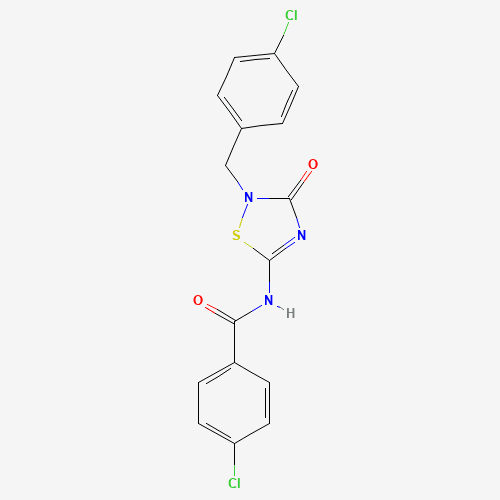
ATX-304, formerly O304, is a pan-AMPK activator from Betagenon developed as a type 2 diabetes drug and exercise mimetic [1]. In a phase IIa trial in people with type 2 diabetes already on metformin, it lowered fasting glucose and insulin resistance and improved microvascular perfusion [2]. Newer mouse work extends it to fatty liver and kidney injury [1][3]. The developer's patents describe a milled sodium salt: in volunteers, a quarter of the dose matched the blood levels of the original suspension, partly because of the salt and partly because of the milling [4][5].
One of the few exercise mimetics with human trial data, all of it early and small; promising for diabetes and fatty liver, unproven for anything else.
- meta-analysis
- RCT
- trial
- observational
- preclinical / case
- review / patent / other
- retracted
- + Lowered fasting glucose and HOMA-IR in a phase IIa trial
- + Reduced liver fat and fibrosis in a fatty-liver mouse model
- + A quarter-dose of the sodium salt matched the old suspension's blood levels
- − Human efficacy data is a single proof-of-concept trial
- − Also acts as a mild mitochondrial uncoupler
- − Salt and non-salt forms are not dose-equivalent
Overview
AMPK is the enzyme that senses a cell's energy shortage. Exercise and calorie restriction both switch it on. O304 was developed by the Swedish company Betagenon to activate it pharmacologically and is now called ATX-304. A 2025 paper describes it as "ATX-304 (formerly O304)", with the same CAS number, 1261289-04-6 [1]. In diet-induced obese mice it raised glucose uptake into skeletal muscle, reduced stress on insulin-producing β cells and let them rest [2].
It then went into a proof-of-concept phase IIa trial in people with type 2 diabetes who were already taking metformin. It lowered fasting plasma glucose and HOMA-IR, a measure of insulin resistance. It also improved peripheral microvascular perfusion and lowered blood pressure [2]. In aged mice it prevented and reversed age-related insulin resistance and improved cardiac function and exercise capacity [6].
Later mouse studies widened the picture:
- Fatty liver. In a model of progressive fatty liver disease it reduced body fat and blood cholesterol and eased liver steatosis and fibrosis, though unevenly across the liver [1].
- Acute kidney injury. A week of pre-treatment protected against cisplatin-induced kidney injury. The protection was lost in cells lacking AMPK [3].
- Kidney ageing. In naturally aged mice it reduced cellular senescence and fibrosis in the kidney [7].
- Aortic aneurysm. In a mouse model it reduced aneurysm formation and blood pressure [8].
Mechanism
ATX-304 activates AMPK across its isoforms. In the heart it acted as exercise does: it raised glucose uptake, lowered glycogen and improved stroke volume in mice, without enlarging the heart [2].
A 2023 study added an important detail. It also acts as a mitochondrial uncoupler. The metabolic demand that creates is what lets muscle take up and burn glucose independently of insulin, rather than storing it as glycogen [9]. In kidney cells it raised basal oxygen consumption by 38% without changing maximal respiration [3]. In the liver it shifted metabolism towards fatty acid oxidation and away from lipid synthesis [1]. In the pancreas it largely prevented the gene expression and chromatin changes that a high-fat diet causes in islets [10].
How much of the drug reaches the blood depends heavily on its form. That is covered in its own section below.
Formulation
how the form changes blood levelsATX-304 has been given to people in two forms: the original molecule (the "free" or non-salt form) as a liquid suspension, and a finely milled sodium salt in capsules or tablets. The developer describes the sodium salt in two patent filings. Both are company data and not peer reviewed, but they contain the only published comparisons of the two forms [4][5].
| WO2021074646 | WO2022153042 | |
|---|---|---|
| Filed (priority) | October 2019 | January 2021 |
| Applicant | Balticgruppen Bio AB | Betagenon AB |
| What it claims | The salt itself: sodium or potassium salts, milled particles, enteric coating | Dosing the sodium salt in people: 200 to 1000 mg a day for diabetes, heart failure and diabetic kidney disease, and with SGLT2 inhibitors |
| Evidence inside | Single-dose studies in rabbits | Multiple-dose studies in healthy volunteers |
Why a new form was needed. In the earlier phase IIa trial (TELLUS), 65 people with type 2 diabetes took 1000 mg a day of the non-salt drug as a suspension for 28 days. Their average peak blood level at day 28 was 55 µg/mL [5]. The later patent's stated aim is a "dose-efficient" form that reaches the same blood levels from a smaller dose, which it argues should also mean fewer side effects [5].
The rabbit studies (2019 patent). The first patent tested what drives absorption, one variable at a time [4]:
- Materials. The non-salt drug, its sodium salt and its potassium salt. Each was air-jet milled twice, bringing 90% of particles under about 8 to 12 µm (from 55, 32 and 205 µm before milling).
- Design. Male New Zealand White rabbits, 3 per group, each given one oral dose of 90 mg/kg. Each material was given in plain or enteric-coated capsules, and a plain suspension of the non-salt drug served as the reference. Blood was sampled for 72 hours.
- Measure. Total exposure, as the area under the blood-level curve up to the last sample (AUC).
| Material (90 mg/kg, single dose) | AUC, plain capsule | AUC, enteric capsule | Peak level, plain capsule |
|---|---|---|---|
| Non-salt drug, plain suspension (reference) | 952 | — | 31 µg/mL |
| Non-salt drug, milled | 3,448 | 2,988 | 64 µg/mL |
| Potassium salt, milled | 4,526 | 3,993 | 82 µg/mL |
| Sodium salt, milled | 5,985 | 5,708 | 99 µg/mL |
AUC is in h·µg/mL. Read down the table and three separate effects appear [4]:
- Milling and capsules alone raised exposure about 3 to 3.6 times over the suspension, before any salt was involved.
- The sodium salt raised it a further 1.7 to 1.9 times over the equally milled non-salt drug. The potassium salt added only about 1.3 times.
- Enteric coating made little difference either way.
The headline "up to six-fold" gain compares the milled sodium salt with the plain suspension, so it bundles the salt and milling effects together. Two follow-up experiments added magnesium oxide, an alkaline excipient, to enteric capsules of the salt. At 25 mg/kg that raised exposure by about 16% over the same capsule made with mannitol (AUC 1,704 versus 1,473) [4]. The patent's figures for exposure extrapolated to infinity are mostly estimated beyond the sampling window, so this entry uses exposure up to the last sample.
The human studies (2021 patent). The second patent reports two studies of the sodium salt in healthy volunteers [5]:
- Capsule study. 24 volunteers were randomised to 200, 400 or 800 mg of the sodium salt once a day for 18 days. The capsules were enteric-coated and held milled salt (90% of particles under 8 µm). From day 19 to day 25, dapagliflozin 10 mg a day was added.
- Tablet study. 20 volunteers were randomised to 212 or 424 mg tablets of the sodium salt (equal to 200 and 400 mg of the parent drug) once a day for 21 days, in an open design.
The first thing both studies show is slow build-up. A first capsule took about 15 hours to reach its peak, and levels kept climbing with daily dosing until close to steady state before day 18 [5]:
| Capsule dose | Peak level, day 1 | Peak level, day 18 | AUC, day 1 | AUC, day 18 |
|---|---|---|---|---|
| 200 mg | 7.2 µg/mL | 49.9 µg/mL | 87 | 1,061 |
| 400 mg | 10.6 µg/mL | 70.8 µg/mL | 159 | 1,541 |
| 800 mg | 22.8 µg/mL | 118.5 µg/mL | 341 | 2,619 |
With tablets, the level 24 hours after a dose rose from 11.4 to 80.4 µg/mL at 200 mg (about 7-fold) and from 24.9 to 129 µg/mL at 400 mg (about 5-fold) between day 1 and day 21 [5].
The second finding is how the salt compares with the old suspension. The patent lines up these studies with five earlier multiple-dose studies of the non-salt suspension. The fairest comparison is with 800 mg of suspension taken once a day in healthy volunteers, measured at steady state [5]:
| Form and daily dose (as parent drug) | Peak level at steady state | Daily AUC | AUC per mg taken |
|---|---|---|---|
| Non-salt suspension, 800 mg | 48.3 µg/mL | 1,023 | 1.28 |
| Sodium salt capsule, 189 mg | 49.9 µg/mL | 1,016 | 5.08 |
| Sodium salt capsule, 377 mg | 70.8 µg/mL | 1,526 | 3.82 |
| Sodium salt capsule, 754 mg | 118.5 µg/mL | 2,564 | 3.21 |
| Sodium salt tablet, 200 mg | 86.8 µg/mL | 1,942 | 9.71 |
| Sodium salt tablet, 400 mg | 138.4 µg/mL | 3,098 | 7.74 |
Read plainly:
- A quarter of the dose, the same exposure. A 189 mg salt capsule matched 800 mg of suspension on both peak and total exposure. That is the source of the patent's "up to five-fold" claim.
- Tablets beat capsules. At about the same dose, tablets gave roughly 1.9 times the exposure of capsules. Per milligram they were 6 to 8 times the suspension.
- Exposure does not rise in step with dose. Per milligram it fell from 5.1 to 3.2 as the capsule dose went from 189 to 754 mg, so doubling the dose less than doubles the blood level.
- Below the dose used in TELLUS. Even the lowest salt doses reached or exceeded the peak levels that 1000 mg of suspension produced in TELLUS (55 µg/mL).
What this does and does not show.
- These are exposure studies. None measured blood sugar, heart function or any other clinical outcome, and the patent describes safety assessments without reporting their results.
- The human comparison with the suspension is across separate studies run at different times, not a head-to-head trial. In people, the salt was never compared with equally milled non-salt drug. That like-for-like comparison exists only in rabbits, where the salt's own contribution was about 1.7 to 1.9-fold.
- The studies are small (3 rabbits per group; 20 to 24 volunteers split across dose groups) and run by the developer.
- The practical upshot is that milligrams are not interchangeable across forms. Salt versus non-salt, milled versus not, and tablet versus capsule each shifted exposure, and research-chemical products rarely state any of the three.
Safety
risks and cautions, not medical adviceLater work from the developer's group describes it as well tolerated in humans [6], but the published human data is brief and small. In mice and rats it did not increase heart weight, a concern with long-term AMPK activation in the heart [2]. Because it partly uncouples mitochondria [9], the heat and energy-wasting risks that uncouplers carry are worth keeping in mind, though none have been reported.
The patent's volunteer studies included safety assessments, but it does not report their results in a form that can be cited as a safety finding [5].
The formulation findings matter for safety in their own right (see Formulation). The same number of milligrams can give very different blood levels depending on the form, and levels keep rising for about two weeks of daily dosing [5], so effects and side effects may not show up in the first few days.
- Described as well tolerated in humans [6]; detailed adverse event data has not been published
- Human efficacy rests on one phase IIa trial (TELLUS: 65 patients, 28 days, randomised, double-blind, placebo-controlled) [2][5]
- Exercise-mimetic, liver, kidney and aneurysm benefits all come from mice [1][3][6]
- The formulation data come from the developer's patents, not peer-reviewed papers; in people the salt was compared only with the suspension, across separate studies [4][5]
- In the fatty-liver model the benefit varied from one part of the liver to another [1]
Interactions
documented pairs only, not exhaustiveThe human trial was run on top of metformin, so that combination has been studied [2]. In the developer's capsule study, volunteers added the SGLT2 inhibitor dapagliflozin (10 mg a day) for a week once ATX-304 levels were steady, and the patent claims the combination [5]. The patent does not report how dapagliflozin changed ATX-304 levels. No peer-reviewed interaction data exists beyond that.
- BAM15cautionBoth uncouple mitochondria (ATX-304 partly [9]); the combined effect on energy expenditure and heat has never been studied
FAQ
- Is ATX-304 the same as O304?
- Yes. The developer renamed it; a 2025 paper calls it "ATX-304 (formerly O304)" and gives the same CAS number [1].
- Has it been tested in people?
- Yes, in a proof-of-concept phase IIa trial in type 2 diabetes on metformin, where it lowered fasting glucose and insulin resistance [2]. The developer's patent also describes volunteer studies of the sodium salt [5].
- Why does the sodium salt matter?
- It reaches the same blood levels from much less drug. In volunteers, a 189 mg salt capsule matched 800 mg of the old suspension [5]. In rabbits, the salt alone added 1.7 to 1.9 times over equally milled non-salt drug; milling did the rest [4].
- Why does it take weeks to reach full effect?
- Blood levels build up with daily dosing. In volunteers they rose 5- to 12-fold over 18 to 21 days before levelling off [5].
- What is the difference between the two patents?
- WO2021074646 (2019) claims the salt itself and its formulations, backed by single-dose rabbit studies [4]. WO2022153042 (2021) claims how to dose the sodium salt in people, backed by two volunteer studies, and covers combining it with SGLT2 inhibitors [5].
References
entry last reviewed 2026-09-18- [1]AMPK activator ATX-304 reduces oxidative stress and improves MASLD via metabolic switching.Holm E, Vermeulen I, Parween S et al.JCI Insight 2025preclinical · animalPMID 40197369◌ unreviewed
- [2]PAN-AMPK activator O304 improves glucose homeostasis and microvascular perfusion in mice and type 2 diabetes patients.Steneberg P, Lindahl E, Dahl U et al.JCI Insight 2018clinical trial · humanPMID 29925691◌ unreviewed
- [3]The AMPK activator ATX-304 alters cellular metabolism to protect against cisplatin-induced acute kidney injury.Katerelos M, Gleich K, Harley G et al.Biomed Pharmacother 2024preclinical · animalPMID 38749175◌ unreviewed
- [4]New formulationsThomas Edlund, Jacob WestmanPatent WO2021074646A1 · Carling David Andrew, Balticgruppen Bio AB 2021patentnot peer reviewed◌ unreviewed
- [5]4-chloro-n-[2-[(4-chlorophenyl)methyl]-3-oxo-1,2,4-thiadiazol-5-yl]benzamide for use in medicineThomas Edlund, Jacob WestmanPatent WO2022153042A1 · Betagenon AB 2022patentnot peer reviewed◌ unreviewed
- [6]AMPK activator O304 improves metabolic and cardiac function, and exercise capacity in aged mice.Ericsson M, Steneberg P, Nyrén R et al.Commun Biol 2021preclinical · animalPMID 34795407◌ unreviewed
- [7]AMPK Activator O304 Protects Against Kidney Aging Through Promoting Energy Metabolism and Autophagy.Zhu M, Shen W, Li J et al.Front Pharmacol 2022preclinical · animalPMID 35308246◌ unreviewed
- [8]O304 alleviates abdominal aortic aneurysm formation via AMPK/mTOR/MMP pathway activation.Sun D, Du YFront Pharmacol 2024preclinical · animalPMID 39679375◌ unreviewed
- [9]O304 ameliorates hyperglycemia in mice by dually promoting muscle glucose effectiveness and preserving β-cell function.Norlin S, Axelsson J, Ericsson M et al.Commun Biol 2023preclinical · animalPMID 37626210◌ unreviewed
- [10]Pan-AMPK activator O304 prevents gene expression changes and remobilisation of histone marks in islets of diet-induced obese mice.López-Pérez A, Norlin S, Steneberg P et al.Sci Rep 2021preclinical · animalPMID 34949756◌ unreviewed