Concerta
also OROS methylphenidate · Methylphenidate extended release · Methylphenidate hydrochloride extended release
Concerta is an osmotic extended-release formulation of methylphenidate hydrochloride for ADHD. [1] A controlled pediatric comparison found effects lasting through 12 hours and broadly matching immediate-release methylphenidate given three times daily. [2] It is the same active drug as Ritalin, with a different delivery system. [3]
A well-supported way to extend methylphenidate coverage across the day, without changing its underlying stimulant risks.
- meta-analysis
- RCT
- trial
- observational
- preclinical / case
- review / patent / other
- retracted
- + Once-daily delivery with sustained ADHD benefit
- + Avoids multiple daytime doses in the studied comparison
- − Same stimulant risks as other methylphenidate formulations
- − Tablet must be swallowed whole
Overview
Concerta changes how methylphenidate is released, not which active drug reaches the circulation. The US indication covers ADHD from age 6 through 65. [1]
In a 68-child crossover, once-daily Concerta and three-times-daily immediate-release methylphenidate both improved behavior and academic performance versus placebo. Most measures did not distinguish the active regimens; two parent ratings favored Concerta, and sleep and appetite effects were similar. [2]
The broader methylphenidate evidence supports ADHD symptom reduction in children and adults. Brand-specific superiority cannot be inferred from pooled methylphenidate results. [4]
Mechanism
Methylphenidate inhibits dopamine and noradrenaline reuptake. This differs from amphetamine’s transporter-substrate and reverse-transport mechanism. The precise relationship between these molecular effects and therapeutic response remains incompletely understood. [1][5]
Formulation
how the form changes blood levelsAn immediate-release outer coat is followed by an osmotic delivery system that releases drug over hours. The prolonged concentration profile explains how a molecule with a roughly 3.5-hour elimination half-life can provide longer symptom coverage. The tablet must be swallowed whole; the nonabsorbable shell may appear in stool. [1]
Dosing
as studied or commonly reported; not a recommendationDoses below are what studies used or, where marked, what is commonly reported. None is a recommendation.
Oral
- 18, 36 or 54 mg (OROS methylphenidate hydrochloride)68 children aged 6–12 already treated with methylphenidate; comparison with immediate-release methylphenidate and placeboonce each morning · 7 days per condition in a three-condition crossoverhuman study[2]
- Form
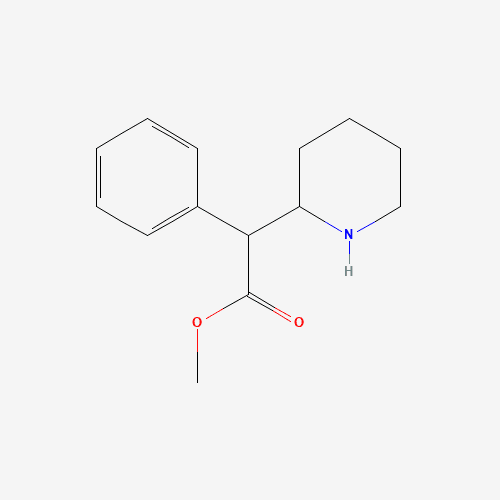
- OROS extended-release methylphenidate hydrochloride tablet. The displayed PubChem identity is the active methylphenidate molecule, not the hydrochloride salt or tablet. [1]
- Timing and food
- The label specifies once each morning, with or without food, swallowed whole. [1]
- Time to effect
- In the pediatric comparison, benefit was present across the study day and through the 12-hour assessment; this does not guarantee 12 hours for every patient. [2]
- Notes
- The study compared 18/36/54 mg Concerta with 5/10/15 mg immediate release three times daily. These are study-specific formulation comparisons, not instructions to combine products. [2]
Pharmacokinetics
what the body does with it| Half-life | About 3.5–4 hours for methylphenidate after Concerta; this is shorter than its clinical coverage because absorption continues during extended release. [1][6] |
|---|---|
| Time to peak | An early rise occurs around 1 hour, followed by a later main peak: 6–8 hours in the published OROS study and 6–10 hours across label studies. [1][6] |
| Peak level | After 18 mg in 36 healthy adults, mean Cmax was 3.7 ng/mL; the comparison with three 5 mg immediate-release doses had a mean Cmax of 4.2 ng/mL. [1] |
| Bioavailability | Dose-normalized relative bioavailability was complete versus the immediate- and sustained-release comparators in the OROS PK study; this is not 100% absolute oral bioavailability. [6] |
| Steady state | Single and repeated once-daily dosing had similar exposure profiles, without significant drug accumulation. [1] |
| Metabolism | Predominantly de-esterified to the largely inactive ritalinic-acid metabolite. [1] |
| Excretion | Predominantly urinary metabolites; about 90% of radiolabeled dose was recovered in urine in the label’s disposition study. [1] |
Safety
risks and cautions, not medical adviceCommon problems include appetite loss, insomnia and increased pulse or blood pressure. The US label carries a boxed warning for abuse, misuse and addiction. Serious cardiac disease, new psychotic or manic symptoms, circulation problems in fingers or toes, and reduced growth in children require clinical attention. Blood pressure, pulse, weight and pediatric growth are monitored during treatment. [1]
Concerta has a formulation-specific concern: its nondeformable tablet can cause obstruction in people with severe gastrointestinal narrowing. It is unsuitable for people who cannot swallow it whole. [1]
- Appetite loss, insomnia, abdominal discomfort, nervousness and increased pulse or blood pressure. [1]
- The comparative evidence is strongest for short-term ADHD symptom control. The 2018 network meta-analysis had insufficient data at 26 and 52 weeks, and most indirect comparisons had low or very low certainty. It does not establish cognitive enhancement in healthy people. [4]
- The 68-child formulation comparison enrolled children already taking methylphenidate and included behavioral treatment; each treatment condition lasted only seven days. [2]
Interactions
documented pairs only, not exhaustiveMAO inhibitors are contraindicated during treatment and for 14 days after their discontinuation because of hypertensive crisis risk. Methylphenidate can oppose antihypertensive treatment; blood pressure needs monitoring. [1]
Concerta plus Ritalin duplicates methylphenidate. Total exposure and timing must be considered; the different names do not identify independent nootropic mechanisms. [1][3]
- any mao inhibitoravoidContraindicated during MAOI treatment and within 14 days after discontinuation because of hypertensive crisis risk. [1]
- any stimulantcautionAdditional stimulants may compound cardiovascular and sleep effects; combined dosing needs a specific clinical rationale. [1]
- Ritalincaution
FAQ
- Is Concerta stronger than Ritalin?
- The main difference is release timing. In the controlled comparison, once-daily Concerta and three-times-daily immediate-release methylphenidate were similar on most outcomes. The paired study doses were not equal milligram for milligram. [2]
References
entry last reviewed 2026-09-21- [1]CONCERTA® (methylphenidate hydrochloride) extended-release tablets, for oral use, CII Initial U.S. Approval: 2000DailyMed prescribing information 2026other◌ unreviewed
- [2]Once-a-day Concerta methylphenidate versus three-times-daily methylphenidate in laboratory and natural settings.Pelham WE, Gnagy EM, Burrows-Maclean L et al.Pediatrics 2001clinical trial · humanPMID 11389303◌ unreviewed
- [3]RITALIN® (methylphenidate hydrochloride) tablets, for oral use, CIIInitial U.S. Approval: 1955DailyMed prescribing information 2025other◌ unreviewed
- [4]Comparative efficacy and tolerability of medications for attention-deficit hyperactivity disorder in children, adolescents, and adults: a systematic review and network meta-analysis.Cortese S, Adamo N, Del Giovane C et al.Lancet Psychiatry 2018meta-analysis · humanPMID 30097390◌ unreviewed
- [5]Amphetamine, past and present--a pharmacological and clinical perspective.Heal DJ, Smith SL, Gosden J et al.J Psychopharmacol 2013reviewPMID 23539642◌ unreviewed
- [6]Single- and multiple-dose pharmacokinetics of an oral once-a-day osmotic controlled-release OROS (methylphenidate HCl) formulation.Modi NB, Lindemulder B, Gupta SKJ Clin Pharmacol 2000clinical trial · humanPMID 10761165◌ unreviewed