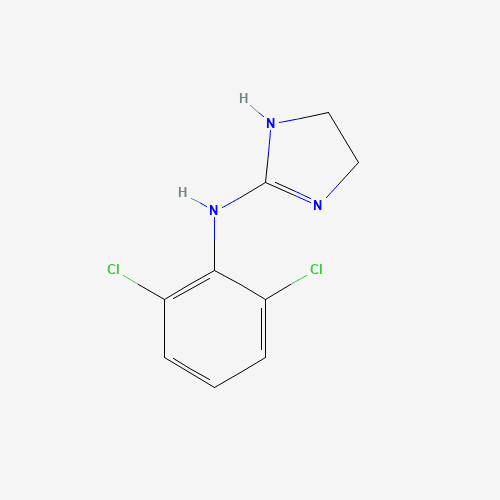
Clonidine
also Clonidine hydrochloride · Catapres · Kapvay
Clonidine is a central alpha-2 adrenergic agonist that lowers sympathetic activity and blood pressure. Its extended-release tablets are also used for ADHD, alone or alongside a stimulant. [1] Pediatric trials support symptom improvement, with sedation, fatigue and slower heart rate as important tradeoffs. [2][3]
An evidence-based non-stimulant option for pediatric ADHD, with sedation and blood-pressure effects that need monitoring.
- meta-analysis
- RCT
- trial
- observational
- preclinical / case
- review / patent / other
- retracted
- + Pediatric ADHD evidence as monotherapy and add-on treatment
- + A non-stimulant mechanism
- − Sleepiness, fatigue and low blood pressure
- − Abrupt withdrawal can cause rebound hypertension
Overview
Clonidine combines an antihypertensive action with a non-stimulant ADHD indication. The evidence on this page concerns the oral extended-release ADHD formulation; it should not be transferred directly to immediate-release tablets or patches. [1]
In a 236-participant randomized trial, both 0.2 and 0.4 mg/day improved pediatric ADHD ratings versus placebo at week 5. A separate 198-participant trial found additional symptom improvement when extended-release clonidine was added to a stimulant that had provided only a partial response. [2][3]
Results are not uniformly positive across every setting or test. A review found no improvement on a go/no-go performance task in one small trial; in another trial parents reported benefit while teachers did not. The 2018 network meta-analysis identified no qualifying adult clonidine ADHD trials. [4][5]
Mechanism
Clonidine stimulates alpha-2 adrenergic receptors. In the brainstem this reduces sympathetic outflow, lowering peripheral vascular resistance, blood pressure and heart rate. It is not a stimulant, and the exact mechanism responsible for improvement in ADHD is not established. [1]
- Alpha-2 adrenergic receptorsactivatesReduces central sympathetic outflow; the precise mechanism of ADHD benefit remains uncertain. [1]strong
Formulation
how the form changes blood levelsExtended release produces a later, lower peak than immediate release. The prescribing information advises against direct milligram-for-milligram substitution, and the extended-release tablets must not be crushed, chewed or broken. [1]
Dosing
as studied or commonly reported; not a recommendationDoses below are what studies used or, where marked, what is commonly reported. None is a recommendation.
Oral
- 0.2 or 0.4 mg/day (extended release, after titration)
- 0.1–0.4 mg/day (extended release, titrated)
- Form
- Oral clonidine hydrochloride; immediate- and extended-release products are not interchangeable milligram for milligram. Identity fields describe clonidine itself, not its hydrochloride salt. [1]
- Time to effect
- In the monotherapy trial, rating-scale improvement separated from placebo by week 2. [2]
- Notes
- These rows report pediatric trial regimens, not adult dosing advice. Extended-release tablets are swallowed whole. Abrupt discontinuation can cause rebound hypertension; the label specifies a supervised taper rather than sudden stopping. [1]
Pharmacokinetics
what the body does with it| Half-life | About 12–16 hours after oral immediate-release clonidine; severe renal impairment can prolong this to approximately 41 hours. [1] |
|---|---|
| Time to peak | In the label’s single-dose 0.1 mg adult crossover study, mean peak time was about 2.1 hours for immediate release and 6.5 hours for fasted extended release. [1] |
| Peak level | In that 0.1 mg study, mean peak concentrations were 443 pg/mL for immediate release versus 258 pg/mL for fasted extended release. [1] |
| Bioavailability | Extended-release systemic exposure was approximately 89% of immediate release in the adult comparison; this is relative, not absolute, bioavailability. [1] |
| Metabolism | About half of the absorbed immediate-release dose is metabolized in the liver. [1] |
| Excretion | About 40–60% of the absorbed immediate-release dose is recovered unchanged in urine within 24 hours. [1] |
Safety
risks and cautions, not medical adviceSomnolence, fatigue, hypotension and bradycardia are the central tolerability issues. Historical reports of serious cardiac events had substantial confounding, and the reviewed trials did not establish a causal fatal interaction with methylphenidate. They also cannot exclude rare harms. [4]
Blood pressure and pulse require monitoring, particularly during titration and in people with conduction disease or renal impairment. Sudden withdrawal can cause rebound hypertension. [1]
- Somnolence, fatigue, dizziness, low blood pressure and bradycardia. [4]
Interactions
documented pairs only, not exhaustiveClonidine plus a stimulant is a studied treatment strategy for partial response, not a way to cancel out stimulant adverse effects. [3] Alcohol and other central nervous system depressants can worsen sedation. Antihypertensives can intensify hypotension, while beta blockers, some calcium-channel blockers and digitalis can worsen bradycardia or conduction problems. [1]
FAQ
- Is clonidine a stimulant?
- No. It stimulates alpha-2 adrenergic receptors and reduces sympathetic outflow. [1]
References
entry last reviewed 2026-09-21- [1]CLONIDINE HYDROCHLORIDE extended-release tablets, for oral use Initial U.S. Approval: 1974DailyMed prescribing information 2020other◌ unreviewed
- [2]Clonidine extended-release tablets for pediatric patients with attention-deficit/hyperactivity disorder.Jain R, Segal S, Kollins SH et al.J Am Acad Child Adolesc Psychiatry 2011RCT · humanPMID 21241954◌ unreviewed
- [3]Clonidine extended-release tablets as add-on therapy to psychostimulants in children and adolescents with ADHD.Kollins SH, Jain R, Brams M et al.Pediatrics 2011RCT · humanPMID 21555501◌ unreviewed
- [4]Safety and efficacy of clonidine and clonidine extended-release in the treatment of children and adolescents with attention deficit and hyperactivity disorders.Ming X, Mulvey M, Mohanty S et al.Adolesc Health Med Ther 2011reviewPMID 24600280◌ unreviewed
- [5]Comparative efficacy and tolerability of medications for attention-deficit hyperactivity disorder in children, adolescents, and adults: a systematic review and network meta-analysis.Cortese S, Adamo N, Del Giovane C et al.Lancet Psychiatry 2018meta-analysis · humanPMID 30097390◌ unreviewed