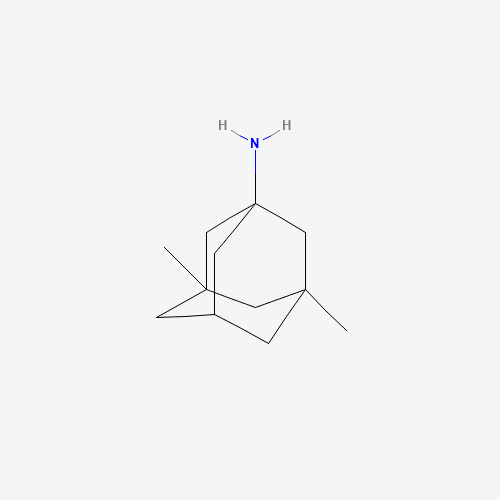
Memantine
also Namenda · Axura · Memantin · 1-Amino-3,5-dimethyladamantane
Memantine is a prescription adamantane derivative that blocks pathologically active NMDA receptor channels with moderate affinity and fast on-off kinetics [1]. A Cochrane review of 44 trials found small but consistent benefits in cognition, daily function, global status and behaviour in moderate-to-severe Alzheimer's disease, with or without a cholinesterase inhibitor; it found no benefit in mild Alzheimer's disease [2]. It slows deterioration rather than restoring lost cognition.
An established symptomatic treatment for moderate-to-severe Alzheimer's disease, with modest average benefit and no good case for cognitive enhancement in healthy people.
- meta-analysis
- RCT
- trial
- observational
- preclinical / case
- review / patent / other
- retracted
- + High-certainty evidence of small benefit across four clinical domains in moderate-to-severe Alzheimer's disease
- + Can be used with or without a cholinesterase inhibitor
- + Adverse-event rates are close to placebo in pooled dementia trials
- − Does not benefit mild Alzheimer's disease in current evidence
- − Effects are modest and do not reverse the disease
- − Dizziness, headache and sometimes confusion occur
Overview
Memantine is not a general memory booster. It is a symptomatic drug for a specific stage of dementia. The 2019 Cochrane review assembled nearly 10,000 participants across 44 trials. In roughly 3,700 people with moderate-to-severe Alzheimer's disease, high-certainty evidence showed small benefits over six to seven months in global rating, cognition, activities of daily living and behaviour. The effect was present whether or not people also took a cholinesterase inhibitor [2].
The scale of benefit matters. In the pooled analysis, the average advantage was 3.11 points on the 100-point Severe Impairment Battery and 1.09 points on the 54-point ADL19 scale [2]. In the original 28-week monotherapy trial, memantine reduced deterioration on daily function and severe-cognition measures, but one of the two primary outcomes reached significance only in the observed-cases analysis, not the last-observation-carried- forward analysis [3]. It is a brake, not a reversal.
Added to stable donepezil, memantine produced statistically better cognitive, daily-function, global and behavioural outcomes over 24 weeks [4]. A later 52-week factorial trial found average advantages of 1.2 points on the 30-point SMMSE and 1.5 points on the 60-point BADLS, below its stated minimum clinically important differences; combining memantine with donepezil was not significantly better than donepezil alone [5].
Severity is the boundary. In mild Alzheimer's disease, pooled trials found no advantage on cognition, daily living, global rating or behaviour [2][6]. There are no cited trials showing cognitive enhancement in healthy people.
Mechanism
NMDA receptors are both essential and dangerous. Brief, well-timed activation supports synaptic plasticity and memory; prolonged activation can drive excessive calcium entry and excitotoxic stress. Memantine sits inside the open ion channel rather than competing with glutamate at its binding site. Its block is uncompetitive, voltage-dependent, moderate in affinity and quick to disengage [1].
That kinetic profile is the point. A high-affinity, slow NMDA antagonist would also suppress normal synaptic signalling and cause unacceptable central effects. Memantine preferentially limits channels that remain pathologically active, while leaving during normal voltage changes and short transmitter pulses [1]. Clinical trials show symptomatic benefit, but they do not establish that this mechanism changes the underlying course of Alzheimer's pathology.
- NMDA receptor open channelblocksacts as a moderate-affinity, uncompetitive and voltage-dependent channel blocker with fast on-off kinetics, favouring persistently active receptors over normal brief signalling [1]strong
- Pathological glutamatergic excitationblocksstrong
- Cognitive and functional decline in moderate-to-severe Alzheimer diseaseblockspooled trials show small reductions in deterioration across cognition, daily living, global status and behaviour, not disease reversal [2]moderate
Dosing
as studied or commonly reported; not a recommendationDoses below are what studies used or, where marked, what is commonly reported. None is a recommendation.
Oral
- 20 mgmonotherapy in 252 outpatients with moderate-to-severe Alzheimer's diseasedaily · 28 weekshuman study[3]
- 5 mg titrated to 20 mgadd-on treatment in 404 patients with moderate-to-severe Alzheimer's disease taking stable donepezildaily, increased by 5 mg each week to the target dose · 24 weekshuman study[4]
- 20 mgfactorial trial in 295 community-dwelling patients with moderate-to-severe Alzheimer's disease previously taking donepezildaily · 52 weekshuman study[5]
Pharmacokinetics
what the body does with it| Half-life | About 62–67 hours after single 5–20 mg doses in healthy adults; renal impairment prolonged the mean to 83, 100 and 124 hours in mild, moderate and severe impairment [7][9]. |
|---|---|
| Time to peak | Mean 5.7–6.9 hours after single oral doses of 5–20 mg [7]. |
| Peak level | Mean 11.6 ng/mL after 10 mg and 25.34 ng/mL after 20 mg in healthy adults, with approximately dose-linear exposure [7]. |
| Steady state | Repeated 5 mg once daily accumulated over 14 days to a mean peak of 19.69 ng/mL and trough of 12.76 ng/mL [7]. |
| Excretion | Renal handling is highly pH-dependent. Alkaline urine reduced renal clearance roughly seven- to ten-fold compared with acidic urine [8]. Renal impairment raised exposure 1.62- to 2.33-fold and prolonged the half-life as kidney function worsened [9]. |
Safety
risks and cautions, not medical adviceAcross dementia trials, the Cochrane review found no meaningful difference in the chance of having at least one adverse event. Dizziness was more common with memantine than placebo (6.1% versus 3.9%) and headache may have been slightly more common (5.5% versus 4.3%); falls did not differ [2]. A pooled safety analysis of 2,311 trial participants similarly found overall event and discontinuation rates close to placebo [10].
Confusion can matter in the population most likely to receive it. In the donepezil add-on trial, confusion occurred in 7.9% on memantine and 2.0% on placebo, though most cases on memantine were mild and resolved within two weeks [4].
Clearance is a practical safety issue. Renal impairment roughly doubled exposure in the most impaired group and prolonged half-life to about 124 hours [9]. Alkaline urine sharply reduces renal clearance [8], so substantial changes in renal function or urinary pH can change exposure even without a dose change.
- Average benefits in moderate-to-severe Alzheimer's disease are small, even where evidence certainty is high [2]
- There is no demonstrated benefit in mild Alzheimer's disease [2][6]
- Pivotal trials largely measured outcomes over six to seven months; durability beyond that period is less certain [2]
- The original monotherapy trial had a 28% dropout rate and one primary outcome depended on the missing-data analysis used [3]
- No cited study supports use as a cognitive enhancer in healthy adults
FAQ
- Does memantine improve memory in healthy people?
- No cited trial establishes that. Its evidence is in dementia, with a small benefit in moderate-to-severe Alzheimer's disease and no demonstrated benefit in mild disease [2].
References
entry last reviewed 2026-09-20- [1]Classics in Chemical Neuroscience: Memantine.Alam S, Lingenfelter KS, Bender AM et al.ACS Chem Neurosci 2017reviewPMID 28737885◌ unreviewed
- [2]Memantine for dementia.McShane R, Westby MJ, Roberts E et al.Cochrane Database Syst Rev 2019meta-analysis · humanPMID 30891742◌ unreviewed
- [3]Memantine in moderate-to-severe Alzheimer's disease.Reisberg B, Doody R, Stöffler A et al.N Engl J Med 2003RCT · humanPMID 12672860◌ unreviewed
- [4]Memantine treatment in patients with moderate to severe Alzheimer disease already receiving donepezil: a randomized controlled trial.Tariot PN, Farlow MR, Grossberg GT et al.JAMA 2004RCT · humanPMID 14734594◌ unreviewed
- [5]Donepezil and memantine for moderate-to-severe Alzheimer's disease.Howard R, McShane R, Lindesay J et al.N Engl J Med 2012RCT · humanPMID 22397651◌ unreviewed
- [6]Lack of evidence for the efficacy of memantine in mild Alzheimer disease.Schneider LS, Dagerman KS, Higgins JP et al.Arch Neurol 2011meta-analysis · humanPMID 21482915◌ unreviewed
- [7]Pharmacokinetics of single-dose and multiple-dose memantine in healthy chinese volunteers using an analytic method of liquid chromatography-tandem mass spectrometry.Liu MY, Meng SN, Wu HZ et al.Clin Ther 2008RCT · humanPMID 18498913◌ unreviewed
- [8]Influence of urine pH and urinary flow on the renal excretion of memantine.Freudenthaler S, Meineke I, Schreeb KH et al.Br J Clin Pharmacol 1998RCT · humanPMID 9862242◌ unreviewed
- [9]Effect of renal impairment on the pharmacokinetics of memantine.Moritoyo T, Hasunuma T, Harada K et al.J Pharmacol Sci 2012clinical trial · humanPMID 22863669◌ unreviewed
- [10]Memantine for the treatment of Alzheimer's disease: tolerability and safety data from clinical trials.Farlow MR, Graham SM, Alva GDrug Saf 2008other · humanPMID 18558791◌ unreviewed