Epitalon
also Epithalon · Epithalone · AEDG peptide · Ala-Glu-Asp-Gly · Epitalone
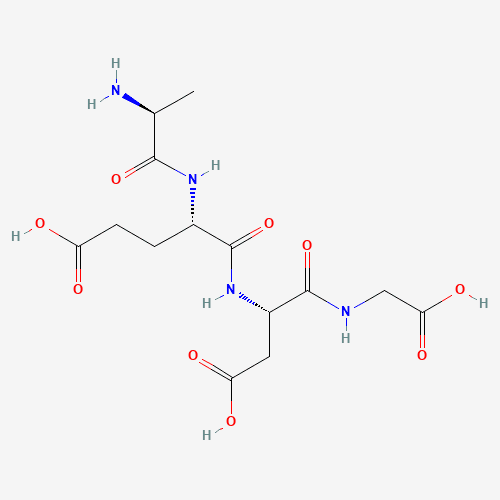
Epitalon is a four-amino-acid peptide, Ala-Glu-Asp-Gly, designed in St Petersburg from the amino acid composition of Epithalamin — a bovine pineal gland extract — and later shown to be present in that extract [1][2]. It is the peptide behind the claim that you can lengthen your telomeres, and that claim does rest on real experiments: Khavinson's group reported telomerase activation and telomere elongation in human fetal fibroblasts in 2003 [3], and an independent laboratory reproduced dose-dependent telomere lengthening in human cell lines in 2025 [4]. What the marketing tends to blur is that the long-term human trials — the ones showing lower mortality in elderly cardiac patients — used Epithalamin, the extract, not the synthetic tetrapeptide [5][6], and that almost the entire literature on both comes from one research group.
The strongest claim in the bioregulator category, resting on a real and now independently replicated cell-culture finding, a set of long-term human trials that used a different preparation, and an evidence base with one author's name on most of it.
- meta-analysis
- RCT
- trial
- observational
- preclinical / case
- review / patent / other
- retracted
- + Telomerase activation and telomere elongation in human cells, replicated by an independent laboratory in 2025
- + Restored night melatonin release and circadian rhythm in old monkeys and in elderly people with low pineal output
- + Antioxidant enzyme induction in old rats, by a mechanism distinct from melatonin's
- + The related extract Epithalamin has long-term randomised human data on mortality
- − The human mortality trials used the pineal extract, not this tetrapeptide
- − Almost the whole literature comes from one group, much of it in Russian-language journals
- − Telomerase activation is exactly the mechanism cancer cells use to become immortal
- − No pharmacokinetic study in any species
- − Not approved as a medicine anywhere outside Russia
Overview
Two different things are called Epitalon in casual use, and keeping them apart is most of the work of reading this literature.
Epithalamin is a polypeptide extract of bovine pineal gland, made in St Petersburg from the 1970s onwards. Epitalon (also Epithalon, AEDG) is a synthetic tetrapeptide, Ala-Glu-Asp-Gly, designed from the amino acid composition of that extract on the theory that a short peptide carries the activity [1][7]. In 2017 the same group used mass spectrometry to show AEDG is genuinely present among the tetrapeptides of the pineal polypeptide complex, which closes that loop [2].
The telomerase claim. In 2003 Khavinson and colleagues added Epithalon to telomerase-negative human fetal fibroblasts and reported induction of the catalytic subunit, telomerase enzyme activity and telomere elongation [3]. A follow-up in 2004 found treated fibroblasts pushed ten passages past the point where controls stopped dividing [8]. For twenty years those two papers, from one laboratory, were the whole basis of the claim. In 2025 a group at Brunel University tested it independently across normal epithelial and fibroblast cells and two breast cancer lines, and found dose-dependent telomere lengthening: through hTERT and telomerase upregulation in the normal cells, and through the alternative lengthening of telomeres pathway in the cancer cells [4]. That paper carries a published correction [9]. This is still cell culture — but it is no longer a single-laboratory result, which is more than can be said for most of this category.
The human trials, and what they actually tested. The Kiev group of Korkushko and Khavinson ran long randomised studies in elderly patients with coronary disease and accelerated cardiovascular ageing. At 12 years, deaths in the treated group were 28% lower and cardiovascular mortality roughly half [5]; a 15-year follow-up of 39 treated against 40 control patients reported decelerated cardiovascular ageing, preserved physical endurance, normalised melatonin rhythm and lower mortality [6]. A separate randomised study reported improved lipids and lower 24-hour blood pressure in older women with ischaemic heart disease and hypertension [10]. All of these used Epithalamin, the extract. A randomised study of melatonin rhythm in healthy elderly subjects also used the extract, and found it modulated rather than simply raised melatonin: it went up in those whose pineal function was already low and tended to fall in those with normal function [11].
The tetrapeptide itself does appear in human work. A 2007 Russian-language report describes both Epithalamin and Epitalon restoring night melatonin release in old monkeys and raising night melatonin in elderly people with pineal insufficiency [12], and the 2002 monograph reports improved visual function in patients with pigmentary retinal degeneration [7]. These are not controlled trials with reported effect sizes, and they are not independent of the group that developed the compound.
Animal work. Epitalon restores circadian melatonin and cortisol rhythms in old rhesus monkeys, increases lifespan in mice and fruit flies, and prolongs retinal function in a rat model of retinitis pigmentosa, all reported within the same programme [7][13]. Pineal peptides restored age-related disturbances in pineal and pancreatic hormone function in rats [14], and both preparations raised antioxidant enzyme activity in old rats [15][16]. In stressed rats, intranasal Epitalon changed c-Fos expression in pinealocytes [17].
Mechanism
The proposed mechanism is direct and unusual: the peptide is small enough to enter cells and the nucleus, and it binds DNA and chromatin in a sequence-selective way, changing gene expression.
The evidence for that is real but indirect. Fluorescently labelled Epithalon showed up in the cytoplasm, nucleus and nucleolus of HeLa cells; in vitro it quenched the fluorescence of labelled oligonucleotides with constants that differed by sequence, binding preferentially to CNG- and CAG-containing sequences and discriminating their cytosine methylation status [18]. Molecular modelling places its binding on histones H1/3 and H1/6, at sites that contact DNA [19]. The same study found AEDG raised expression of the neurogenic markers nestin, GAP43, β-tubulin III and doublecortin by 1.6-1.8 fold in human gingival mesenchymal stem cells, with the protein synthesis to match [19][20]. The group has assembled this into a general "peptide regulation of gene expression" framework covering the whole family of short peptides [21][22][23].
Two things to hold onto. First, sequence-selective binding to naked oligonucleotides in a cuvette is a long way from regulating a gene in a living cell, and the step between them has not been demonstrated. Second, nobody has shown that an injected tetrapeptide with free termini survives in plasma long enough to reach a cell nucleus in a living animal — there is no pharmacokinetic study at all.
The telomerase effect, if it is real in vivo, would be downstream of that: hTERT transcription switched back on in a cell that had silenced it [3][4].
- Telomerase (hTERT)activatesinduced hTERT expression, telomerase activity and telomere elongation in telomerase-negative human fetal fibroblasts [3]; an independent 2025 study found dose-dependent telomere lengthening through hTERT and telomerase upregulation in normal human cells, and through the alternative lengthening (ALT) pathway in breast cancer lines [4]moderate
- Gene expression and chromatinmodulatesweak
- Replicative (Hayflick) limitmodulateshuman fetal lung fibroblasts that stopped dividing at passage 34 elongated their telomeres and managed ten further passages when Epithalon was added [8]weak
- Pineal melatonin secretionmodulatesmoderate
- Antioxidant enzymes (SOD, glutathione peroxidase)activatesmoderate
Formulation
how the form changes blood levelsEpitalon is the free tetrapeptide Ala-Glu-Asp-Gly, molecular weight 390, usually supplied lyophilised as the acetate. Epithalamin is a different product entirely: a polypeptide complex extracted from bovine pineal gland, in which free amino acids, dipeptides, tripeptides and tetrapeptides including AEDG have been catalogued by HPLC and mass spectrometry [2].
Routes used in the research literature include intranasal in rats [17] and intramuscular courses for the extract in the human trials [6]. The review literature notes that, despite twenty-five years of biological study, the physicochemical and structural characterisation of the peptide itself remains thin [1].
Dosing
as studied or commonly reported; not a recommendationDoses below are what studies used or, where marked, what is commonly reported. None is a recommendation.
Nasal
- not stated in a form usable hereintact and osmotic-stress-exposed rats; pinealocyte c-Fos expressionrepeated infusions · short courseanimal study[17]
Intramuscular injection
- not stated in the available abstracts
- Notes
- No human dose of the Epitalon tetrapeptide has been established in a published trial with a stated dose. The long-term human dosing in the literature is for Epithalamin, the bovine pineal extract, given as repeated courses of intramuscular injections over years [6]. The Russian-language reports that include Epitalon in elderly people do not state a dose in their English abstracts [12]. Anything quoted as an Epitalon protocol is community practice, not a studied dose.
Pharmacokinetics
what the body does with it| Half-life | No pharmacokinetic study of Epitalon has been published in any species. This is a four-residue peptide with free amino and carboxyl termini, so rapid peptidase cleavage is the expectation, but it has not been measured |
|---|---|
| Bioavailability | Unknown. The animal work has used intranasal [17] and injected routes; no comparison of routes exists |
| Metabolism | Not characterised. The proposed mechanism has the intact peptide reaching the cell nucleus and binding DNA and histones [18][19], which if true requires it to survive long enough to get there — something no study has measured directly in a living animal |
Safety
risks and cautions, not medical adviceNo adverse effect has been reported in the published human work, and the 2007 report on melatonin rhythm states the pineal preparations had no side effects and could be used in geriatric practice [12]. The long-term trials of the extract, followed to 12 and 15 years, reported lower rather than higher mortality [5][6]. That is a meaningful safety record for the extract, in the population it was studied in.
Three caveats belong with it.
The telomerase question cuts both ways. Reactivating telomerase is the central step by which a somatic cell escapes its replicative limit; it is also what most cancers do. The 2025 replication is explicit that in breast cancer cell lines, Epitalon extended telomeres through the ALT pathway [4]. Nobody has run the experiment that matters — long-term exposure in a living animal with cancer incidence as an endpoint — although the developing group reports anticarcinogenic rather than carcinogenic effects for Epithalamin in rodent models [7]. The honest position is that the mechanism is one that should raise the question, and the question has not been answered independently.
Provenance. The overwhelming majority of the literature on Epitalon and Epithalamin comes from the St Petersburg Institute of Bioregulation and Gerontology and its collaborators, published largely in Bulletin of Experimental Biology and Medicine and Advances in Gerontology, much of it in Russian. Independent replication exists for the cell-culture telomere result [4] and essentially nowhere else.
No pharmacokinetics. There is no study of what happens to the peptide after a dose, in any species.
- None reported in the published human work; the melatonin-rhythm report states the preparations had no side effects [12]
- The long-term human mortality trials used Epithalamin, the bovine pineal extract, not this tetrapeptide [5][6]
- Almost the entire literature comes from one research group, much of it in Russian-language journals
- The telomere evidence is cell culture; no in vivo telomere measurement in a treated human or animal has been published
- No pharmacokinetic study exists in any species
- The human reports involving the tetrapeptide itself do not state doses in their English abstracts [12]
Interactions
documented pairs only, not exhaustiveNo interaction studies exist. The mechanistically interesting one is melatonin: Epitalon and Epithalamin are reported to raise the body's own melatonin production in those whose pineal output is low, and to reduce it in those whose output is normal [11][12]. If that modulation is real, stacking it with supplemental melatonin is not simply additive, and neither combination has been tested.
The antioxidant work notes that the pineal peptides act through induction of antioxidant enzymes rather than by direct scavenging, which is a different mechanism from melatonin's [15].
- Melatonincaution
- DSIPcompatibleNo interaction documented. Both are pineal- or sleep-associated peptides but they have no shared, identified target [12].
History
The programme began with Vladimir Khavinson's work on organ-derived peptide extracts in Leningrad in the 1970s, of which Epithalamin (pineal) and Thymalin (thymus) were the first. The amino acid compositions of those extracts were then used to design short synthetic peptides intended to carry the same tissue-specific activity, and Ala-Glu-Asp-Gly was the design for the pineal gland and, interestingly, also for the retina — which the group attributed to their common embryonic origin [7].
The telomerase papers appeared in 2003 and 2004 [3][8]. The long-term Kiev clinical studies of Epithalamin reported at 12 and 15 years [5][6]. AEDG was confirmed inside the extract in 2017 [2], and the first independent replication of the telomere finding was published in 2025 [4], with a correction later the same year [9]. A 2025 review from Warsaw surveys the whole field [1].
FAQ
- Does Epitalon lengthen telomeres?
- In cell culture, yes — reported by Khavinson's group in 2003 and reproduced independently in 2025 across normal and cancer human cell lines [3][4]. No study has measured telomere length in a person or animal given the peptide.
- Is Epitalon the same as Epithalamin?
- No. Epithalamin is a bovine pineal extract; Epitalon is a synthetic tetrapeptide designed from its amino acid composition and later confirmed to be one of its components [2]. The long-term human trials used the extract [6].
- What about the mortality data?
- Twelve- and fifteen-year randomised studies in elderly coronary patients reported around 28% fewer deaths and roughly half the cardiovascular mortality — with Epithalamin, the extract, from the group that developed it [5][6].
- Could activating telomerase cause cancer?
- It is the right question to ask, because that is how cancer cells become immortal, and the 2025 study found telomere extension in breast cancer lines through the ALT pathway [4]. The developing group reports anticarcinogenic effects for the extract in rodent models [7]. No independent long-term study has settled it.
References
entry last reviewed 2026-09-19- [1]Overview of Epitalon-Highly Bioactive Pineal Tetrapeptide with Promising Properties.Araj SK, Brzezik J, Mądra-Gackowska K et al.Int J Mol Sci 2025reviewPMID 40141333◌ unreviewed
- [2]Identification of Peptide AEDG in the Polypeptide Complex of the Pineal Gland.Khavinson VK, Kopylov AT, Vaskovsky BV et al.Bull Exp Biol Med 2017otherPMID 29124531◌ unreviewed
- [3]Epithalon peptide induces telomerase activity and telomere elongation in human somatic cells.Khavinson VKh, Bondarev IE, Butyugov AABull Exp Biol Med 2003other · cellPMID 12937682◌ unreviewed
- [4]Epitalon increases telomere length in human cell lines through telomerase upregulation or ALT activity.Al-Dulaimi S, Thomas R, Matta S et al.Biogerontology 2025other · cellPMID 40908429◌ unreviewed
- [5]Geroprotective effect of epithalamine (pineal gland peptide preparation) in elderly subjects with accelerated aging.Korkushko OV, Khavinson VKh, Shatilo VB et al.Bull Exp Biol Med 2006RCT · humanPMID 17426848◌ unreviewed
- [6]Peptide geroprotector from the pituitary gland inhibits rapid aging of elderly people: results of 15-year follow-up.Korkushko OV, Khavinson VKh, Shatilo VB et al.Bull Exp Biol Med 2011RCT · humanPMID 22451889◌ unreviewed
- [7]Peptides and Ageing.Khavinson VKhNeuro Endocrinol Lett 2002reviewPMID 12374906◌ unreviewed
- [8]Peptide promotes overcoming of the division limit in human somatic cell.Khavinson VKh, Bondarev IE, Butyugov AA et al.Bull Exp Biol Med 2004other · cellPMID 15455129◌ unreviewed
- [9]Correction: Epitalon increases telomere length in human cell lines through telomerase upregulation or ALT activity.Al-Dulaimi S, Thomas R, Matta S et al.Biogerontology 2025otherPMID 41240216◌ unreviewed
- [10][Effect of the pineal gland peptide preparation on the diurnal profile of arterial pressure in middle-aged and elderly women with ischemic heart disease and arterial hypertension].Merkur'eva GA, Ryzhak GAAdv Gerontol 2008RCT · humanPMID 18546838in Russian◌ unreviewed
- [11]Effect of peptide preparation epithalamin on circadian rhythm of epiphyseal melatonin-producing function in elderly people.Korkushko OV, Khavinson VKh, Shatilo VB et al.Bull Exp Biol Med 2004RCT · humanPMID 15452611◌ unreviewed
- [12][Normalizing effect of the pineal gland peptides on the daily melatonin rhythm in old monkeys and elderly people].Korkushko OV, Lapin BA, Goncharova ND et al.Adv Gerontol 2007other · humanPMID 17969590in Russian◌ unreviewed
- [13][Peptide correction of age-related pineal disturbances in monkeys].Goncharova ND, Vengerin AA, Shmaliĭ AV et al.Adv Gerontol 2003other · animalPMID 14743609in Russian◌ unreviewed
- [14]Pineal peptides restore the age-related disturbances in hormonal functions of the pineal gland and the pancreas.Goncharova ND, Vengerin AA, Khavinson VKh et al.Exp Gerontol 2005other · animalPMID 15664732◌ unreviewed
- [15]Antioxidant properties of geroprotective peptides of the pineal gland.Kozina LS, Arutjunyan AV, Khavinson VKhArch Gerontol Geriatr 2007other · animalPMID 17317455◌ unreviewed
- [16]Effects of pineal peptide preparation Epithalamin on free-radical processes in humans and animals.Anisimov VN, Arutjunyan AV, Khavinson VKNeuro Endocrinol Lett 2001reviewPMID 11335874◌ unreviewed
- [17]Epitalon influences pineal secretion in stress-exposed rats in the daytime.Sibarov DA, Kovalenko RI, Malinin VV et al.Neuro Endocrinol Lett 2002other · animalPMID 12500171◌ unreviewed
- [18]Penetration of short fluorescence-labeled peptides into the nucleus in HeLa cells and in vitro specific interaction of the peptides with deoxyribooligonucleotides and DNA.Fedoreyeva LI, Kireev II, Khavinson VKh et al.Biochemistry (Mosc) 2011other · cellPMID 22117547◌ unreviewed
- [19]AEDG Peptide (Epitalon) Stimulates Gene Expression and Protein Synthesis during Neurogenesis: Possible Epigenetic Mechanism.Khavinson V, Diomede F, Mironova E et al.Molecules 2020other · cellPMID 32019204◌ unreviewed
- [20]Effect of short peptides on neuronal differentiation of stem cells.Caputi S, Trubiani O, Sinjari B et al.Int J Immunopathol Pharmacol 2019preclinical · cellPMID 30791821◌ unreviewed
- [21]Peptide Regulation of Gene Expression: A Systematic Review.Khavinson VK, Popovich IG, Linkova NS et al.Molecules 2021reviewPMID 34834147◌ unreviewed
- [22]Peptide Regulation of Cell Differentiation.Khavinson V, Linkova N, Diatlova A et al.Stem Cell Rev Rep 2020reviewPMID 31808038◌ unreviewed
- [23]Neuroepigenetic Mechanisms of Action of Ultrashort Peptides in Alzheimer's Disease.Ilina A, Khavinson V, Linkova N et al.Int J Mol Sci 2022reviewPMID 35457077◌ unreviewed