DSIP
also Delta sleep-inducing peptide · Emideltide · Deltaran
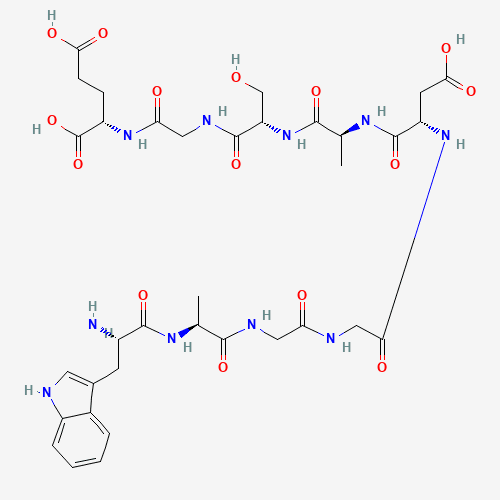
DSIP is a nine-amino-acid peptide pulled out of the cerebral venous blood of sleeping rabbits in Basel in 1977 and named for what its discoverers thought it did [1]. Unusually for a peptide sold online, it was actually tested in people: several small controlled trials in insomniacs through the 1980s, all using intravenous doses of 25 nmol/kg. The early results were encouraging [2][3][4] and the later, better-controlled ones were not — one concluded sleep improvement was "of little clinical significance" [5] and a 1992 double-blind study found the effects weak, partly an artefact of the placebo group, and "not likely to be of major therapeutic benefit" [6]. Nearly fifty years on, no DSIP gene, precursor protein or receptor has been identified, and a 2006 review called the sleep hypothesis "extremely poorly documented and still weak" [1]. Its plasma half-life in dogs is four minutes [7].
A genuine 1970s discovery that was properly trialled, gave shrinking effects as the controls got tighter, and still has no identified receptor or gene — sold today by an injection route nobody has studied.
- meta-analysis
- RCT
- trial
- observational
- preclinical / case
- review / patent / other
- retracted
- + Tested in humans in several small controlled polysomnography trials, which is more than most peptides can claim
- + Improved sleep efficiency and latency in early trials, without daytime sedation
- + One seven-night trial improved daytime alertness and performance as well as night sleep
- + Consistently well tolerated at the doses used
- − The two most rigorous trials concluded the effect was clinically insignificant
- − No DSIP gene, precursor or receptor has ever been identified
- − Plasma half-life of about four minutes in dogs, two to three in rats and monkeys
- − Every human trial used intravenous infusion; the subcutaneous route it is sold for has never been studied
- − Not approved as a medicine anywhere
Overview
In 1977 the Schoenenberger–Monnier group in Basel took venous blood from the brains of rabbits in induced sleep, isolated a nonapeptide from it, and named it delta sleep-inducing peptide [1]. That is a legitimate piece of classical neuroendocrinology, and it is why DSIP got a proper run of human trials while most of the peptides sold alongside it got none.
The human trials, in order. All used 25 nmol/kg intravenously.
- 1981, healthy volunteers. Six subjects, double-blind crossover, dosed in the morning. Subjects reported immediate sleep pressure and total sleep time over the next 130 minutes rose 59% against placebo; the following night had shorter sleep onset and better efficiency. EEG analysis showed no sedation in the classical pharmacological sense [2].
- 1981, insomniacs. Six middle-aged chronic insomniacs given a single dose slept longer and better, with slightly more REM and no daytime sedation. The effect appeared only in the second hour; the first hour showed a slight arousing effect [3].
- 1987, seven nights. Fourteen middle-aged chronic insomniacs, placebo-controlled and double-blind. Sleep improved substantially with the first dose and further with repeated ones, the improvement carried into a post-treatment placebo night, and daytime alertness and mental performance rose significantly [4].
- 1987, crossover. Four nights, double-blind crossover. Total and NREM sleep rose, and the rise was in stage 2 - slow-wave sleep, the thing the peptide is named after, did not change. The differences from placebo were also present at baseline. Conclusion: "sleep improvement under DSIP treatment is of little clinical significance" [5].
- 1992, parallel groups. Sixteen chronic insomniacs, double-blind, matched pairs, five laboratory nights. Sleep efficiency and latency favoured DSIP, but the effects were weak, partly attributable to an incidental change in the placebo group, and subjective sleep quality did not move at all. Conclusion: short-term treatment of chronic insomnia with DSIP "is not likely to be of major therapeutic benefit" [6].
The pattern is the familiar one: the tighter the design, the smaller the effect. It is worth saying that even the negative trials found a consistent direction, and that all of them found the peptide well tolerated.
Outside sleep. An uncontrolled pilot in seven patients with migraine, vasomotor headache, tinnitus or psychogenic pain reported significantly lower pain in six of them after a course of injections, along with reduced depressive symptoms [8]. Seven patients, no control group. Animal work continues in stroke recovery [9], memory at altitude using a phosphorylated analogue [10] and stress protection with the Russian preparation Deltaran [11], and DSIP has been proposed as a link between circadian mechanisms and obesity [12].
The unresolved part. No DSIP gene has been isolated. No precursor protein. No receptor. The 2006 review that surveyed the field concluded the sleep hypothesis is "extremely poorly documented and still weak", and proposed that the immunoreactivity and activity attributed to DSIP may belong to some other, related peptide that has not been identified [1]. Earlier reviews had raised the same problem [13][14][15], and a survey of neuropeptides and human sleep placed it among the substances with suggestive rather than established effects [16].
Mechanism
There is no established mechanism, because the molecular target has never been found [1]. What exists are observations.
DSIP-like immunoreactivity is distributed in neurosecretory hypothalamic nuclei across vertebrate species — but, as the 2006 review points out, in nuclei that are not particularly relevant to sleep regulation, which is one of the reasons for suspecting the immunoreactivity belongs to a different peptide [1]. The peptide crosses the blood-CSF barrier in dogs, and the degree of penetration tracks plasma concentration, plasma half-life and lipophilicity — so its analogues, which differ in those properties, get into the brain to different degrees [17][18]. Notably, some artificial DSIP structural analogues promote slow-wave sleep more convincingly than DSIP itself does [1].
The wider effects attributed to it — interaction with opioid-peptidergic systems, induction of brain MAO-A activity, effects on circadian locomotion, cortisol and stress responses — come from the older animal literature and were the rationale for trying it in pain and withdrawal [8]. A proposed link to glucocorticoid-induced leucine zipper connects it to circadian and metabolic regulation, but this is a hypothesis paper, not a finding [12].
One practical consequence of the pharmacokinetics deserves emphasis. With a plasma half-life of two to four minutes [7], almost nothing that DSIP does can be a direct effect of the circulating peptide hours later. The seven-night trial's persistence of benefit into a post-treatment placebo night [4] therefore requires some downstream, longer-lived change — which nobody has characterised.
- DSIP receptorno bindingnone has been found. The gene, the precursor protein and the receptor are all still missing, which is the central problem with the whole field [1]unclear
- Sleep architecturemodulatesweak
- Slow-wave (delta) sleepno bindingweak
- Endogenous opioid and stress systemsmodulatesweak
Dosing
as studied or commonly reported; not a recommendationDoses below are what studies used or, where marked, what is commonly reported. None is a recommendation.
Intravenous
- 25 nmol/kg (about 21 µg/kg)six healthy volunteers, double-blind crossover; daytime sleep pressure and the following night's sleepsingle morning infusion · single dosehuman study[2]
- 25 nmol/kg
- 25 nmol/kg14 middle-aged chronic insomniacs, placebo-controlled double-blind; sleep and daytime performanceonce nightly · 7 consecutive nightshuman study[4]
- 25 nmol/kg16 chronic insomniacs, double-blind matched-pairs parallel groupsonce in the afternoon before each study night · 3 nightshuman study[6]
- 25 nmol/kg
- not stated in the abstractseven patients with migraine, vasomotor headache, chronic tinnitus or psychogenic pain; uncontrolled pilotdaily for 5 days, then every 48-72 hours · 10 injectionshuman study[8]
- Form
- The sold product is a lyophilised nonapeptide for reconstitution. Deltaran is a Russian preparation of DSIP used in the antistress literature [11].
- Timing and food
- The trials that gave it at night dosed shortly before bed or in the afternoon of the study night [4][6]. One trial deliberately gave it in the morning and measured daytime sleep pressure instead [2].
- Time to effect
- Second hour after an intravenous dose [3]. The seven-night trial found effects built with repeated dosing and persisted into a placebo night afterwards [4].
- Notes
- Every published human dose is 25 nmol/kg given intravenously — roughly 21 µg/kg, or about 1.5 mg for a 70 kg adult. No trial has used the subcutaneous route the compound is sold for, and no bioavailability figure exists for it. Given a plasma half-life of minutes in every species measured [7], the pharmacokinetics of a subcutaneous injection are simply unknown.
Pharmacokinetics
what the body does with it| Half-life | About 4.0 ± 0.7 minutes in anaesthetised dogs after intravenous injection, 2.9 minutes in a monkey and 2.0 ± 0.54 minutes in rats [7]. No human figure has been published |
|---|---|
| Onset | In insomniacs given 25 nmol/kg intravenously, the sleep-promoting effect appeared only in the second hour after injection, with a slight arousing effect in the first [3] |
| Peak level | Not reported in humans. Metabolic clearance rate in dogs was 30.7 ± 2.5 ml/kg per minute [7] |
| Bioavailability | Unknown by any route. Every human trial used intravenous administration [2][6] |
| Metabolism | Cleared from plasma within minutes in every species measured [7]. It does cross the blood-CSF barrier in dogs, and how much gets in depends on plasma concentration, plasma half-life and lipophilicity rather than on molecular weight or protein binding [17] |
Safety
risks and cautions, not medical adviceThe trials are small but consistent on tolerability. In the first human study, extensive behavioural, EEG, physiological and biochemical measurements found no side effects and no classical sedation [2]. The insomniac studies reported no daytime sedation [3] and no adverse events prominent enough to reach the abstracts [4][5][6]. The pain pilot reported a reduction in depressive symptoms rather than any new problem [8].
That is a reassuring record, and it comes with three large qualifications. The total number of people dosed across all published trials is under sixty. Every one of them received the peptide intravenously in a laboratory, at 25 nmol/kg, for at most seven nights — so nothing is known about repeated subcutaneous use over months. And there is no post-marketing surveillance of any kind, because DSIP has never been a licensed medicine.
The deeper safety unknown is the one the 2006 review identified: with no receptor and no gene, there is no way to reason about what else the peptide might act on, or about what chronic exposure would do [1].
- The two best-controlled trials concluded the sleep effect was clinically insignificant [5][6]
- No gene, precursor protein or receptor has ever been identified [1]
- Fewer than sixty people have received it in published trials, all intravenously
- Despite the name, it did not increase slow-wave sleep in the trial that measured it [5]
- The subcutaneous route it is sold for has never been studied in any species
Interactions
documented pairs only, not exhaustiveNo interaction studies exist. The older animal literature describes modulation of responses to systemically administered morphine and amphetamine, and that pharmacology is why DSIP was tried in opioid withdrawal and chronic pain [8]. Whether that translates into a meaningful interaction in people has never been tested.
Nothing in the literature documents an interaction with melatonin or any other sleep compound on this site.
- MelatonincompatibleNo interaction has been documented in either direction. They are studied for the same outcome by different routes, and nothing in the DSIP trial literature involved melatonin [6].
History
DSIP was isolated in 1977 by Monnier, Schoenenberger and colleagues in Basel, from the cerebral venous blood of rabbits whose thalamus was being electrically stimulated to induce sleep [1]. Synthetic peptide became available quickly and the same group ran the first human studies in 1981 [2][3]. Reviews in 1984 and 1986 treated it as a promising but unresolved sleep factor [13][14]; a 2001 review revisited it for anaesthesia [15]. The controlled trials of the late 1980s and early 1990s cooled the field [5][6], and by 2006 the summary was that the central questions — gene, protein, receptor — remained open [1].
In Russia the peptide continued as the preparation Deltaran, studied for stress protection [11], and animal work has continued sporadically in stroke and hypoxia models [9][10].
FAQ
- Does DSIP actually increase deep sleep?
- Not in the trial that measured sleep stages: the extra sleep was stage 2, and slow-wave sleep did not change [5]. Some synthetic analogues of DSIP do promote slow-wave sleep more than DSIP itself [1].
- Why do the early and late trials disagree?
- The early studies were small and open or lightly controlled and found clear benefit [2][3]; the tighter double-blind designs found weak effects that partly reflected baseline differences and placebo-group drift [5][6]. That is the usual direction of travel.
- Is the injected dose people use the same as the trial dose?
- The trial dose was 25 nmol/kg intravenously, roughly 1.5 mg for a 70 kg adult [6]. No trial has used subcutaneous injection, and no bioavailability figure exists for that route.
- Has a DSIP receptor been found?
- No. Neither the gene, the precursor protein nor a receptor has been isolated, nearly fifty years after the peptide was described [1].
References
entry last reviewed 2026-09-19- [1]Delta sleep-inducing peptide (DSIP): a still unresolved riddle.Kovalzon VM, Strekalova TVJ Neurochem 2006reviewPMID 16539679◌ unreviewed
- [2]Acute and delayed effects of DSIP (delta sleep-inducing peptide) on human sleep behavior.Schneider-Helmert D, Gnirss F, Monnier M et al.Int J Clin Pharmacol Ther Toxicol 1981clinical trial · humanPMID 6895513◌ unreviewed
- [3]The influence of synthetic DSIP (delta-sleep-inducing-peptide) on disturbed human sleep.Schneider-Helmert D, Schoenenberger GAExperientia 1981clinical trial · humanPMID 7028502◌ unreviewed
- [4]Effects of delta-sleep-inducing peptide on 24-hour sleep-wake behaviour in severe chronic insomnia.Schneider-Helmert DEur Neurol 1987clinical trial · humanPMID 3622582◌ unreviewed
- [5]Study of delta sleep-inducing peptide efficacy in improving sleep on short-term administration to chronic insomniacs.Monti JM, Debellis J, Alterwain P et al.Int J Clin Pharmacol Res 1987clinical trial · humanPMID 3583493◌ unreviewed
- [6]Effects of delta sleep-inducing peptide on sleep of chronic insomniac patients. A double-blind study.Bes F, Hofman W, Schuur J et al.Neuropsychobiology 1992RCT · humanPMID 1299794◌ unreviewed
- [7]Development of an enzyme immunoassay for delta sleep-inducing peptide (DSIP) and its use in the determination of the metabolic clearance rate of DSIP administered to dogs.Kato N, Honda Y, Ebihara S et al.Neuroendocrinology 1984other · animalPMID 6379493◌ unreviewed
- [8]Therapeutic effects of delta-sleep-inducing peptide (DSIP) in patients with chronic, pronounced pain episodes. A clinical pilot study.Larbig W, Gerber WD, Kluck M et al.Eur Neurol 1984clinical trial · humanPMID 6548970◌ unreviewed
- [9]Delta Sleep-Inducing Peptide Recovers Motor Function in SD Rats after Focal Stroke.Tukhovskaya EA, Ismailova AM, Shaykhutdinova ER et al.Molecules 2021other · animalPMID 34500605◌ unreviewed
- [10]Phosphorylated delta sleep inducing peptide restores spatial memory and p-CREB expression by improving sleep architecture at high altitude.Roy K, Chauhan G, Kumari P et al.Life Sci 2018other · animalPMID 30107169◌ unreviewed
- [11]Delta sleep-inducing peptide and Deltaran: potential approaches to antistress protection.Koplik EV, Umryukhin PE, Konorova IL et al.Neurosci Behav Physiol 2008other · animalPMID 18975104◌ unreviewed
- [12]Delta sleep-inducing peptide and glucocorticoid-induced leucine zipper: potential links between circadian mechanisms and obesity?Gimble JM, Ptitsyn AA, Goh BC et al.Obes Rev 2009reviewPMID 19849801◌ unreviewed
- [13]Delta-sleep-inducing peptide (DSIP): a review.Graf MV, Kastin AJNeurosci Biobehav Rev 1984reviewPMID 6145137◌ unreviewed
- [14]Delta-sleep-inducing peptide (DSIP): an update.Graf MV, Kastin AJPeptides 1986reviewPMID 3550726◌ unreviewed
- [15]Delta sleep-inducing peptide.Pollard BJ, Pomfrett CJEur J Anaesthesiol 2001reviewPMID 11437870◌ unreviewed
- [16]Neuropeptides and human sleep.Steiger A, Holsboer FSleep 1997reviewPMID 9456470◌ unreviewed
- [17]Entry of DSIP peptides into dog CSF: role of physicochemical and pharmacokinetic parameters.Banks WA, Kastin AJ, Coy DH et al.Brain Res Bull 1986other · animalPMID 3768731◌ unreviewed
- [18]Peptides and the blood-brain barrier.Banks WAPeptides 2015reviewPMID 25805003◌ unreviewed