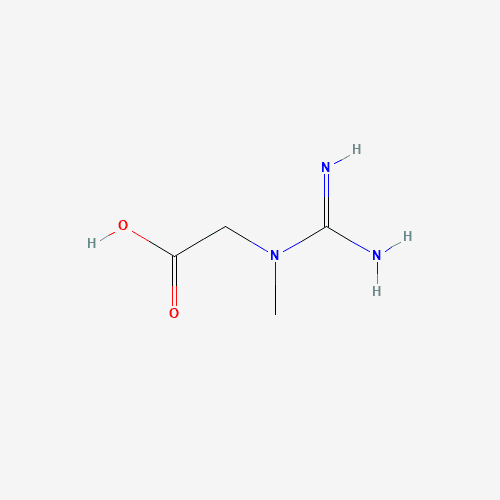
Creatine
also Creatine monohydrate · N-amidinosarcosine · Methylglycocyamine
Creatine is one of the most researched sports supplements. It is best known for building strength and muscle, and is increasingly studied for the brain. Meta-analyses of randomised trials find small-to-moderate improvements in memory, attention and processing speed [1]. The effects on memory are largest in older adults [2]. It is well tolerated at 3 to 5 g a day [3].
Cheap, safe and well studied; the cognitive benefits are modest and show most in older adults or under stress such as sleep loss.
- meta-analysis
- RCT
- trial
- observational
- preclinical / case
- review / patent / other
- retracted
- + Well-established strength and performance effects
- + Small-to-moderate memory gains in meta-analysis
- + Helps cognition during sleep deprivation in one trial
- − Raises serum creatinine, which can be mistaken for kidney trouble
- − Brain uptake is slow at standard doses
Overview
Creatine is made by the body and found in meat and fish. Supplemental creatine monohydrate is standard in sport for muscle mass, performance and recovery, and there are more than 500 peer-reviewed publications on it [3].
The cognitive research is newer. A 2024 meta-analysis of 16 RCTs (492 participants) found significant improvements in memory (SMD 0.31), attention time and processing speed, but not in overall cognition or executive function [1]. A 2023 meta-analysis of healthy people found memory gains, especially in adults aged 66 to 76 [2].
Mechanism
Creatine feeds the phosphocreatine system, which regenerates ATP quickly when energy demand spikes. Sleep deprivation and creatine have opposite effects on the brain's high-energy phosphates. That makes sleep loss a natural test case [4].
Getting creatine into the brain is the main obstacle, and uptake normally takes weeks of dosing. One study gave a single high dose (0.35 g/kg) during 21 hours of sleep deprivation. It measured changes in brain high-energy phosphates and better cognitive performance within hours [4].
- Phosphocreatine energy bufferactivatessupports rapid ATP regeneration in muscle and brain [4]strong
Safety
risks and cautions, not medical adviceCreatine is well tolerated at the usual 3 to 5 g a day [3]. A 2025 meta-analysis found a small, transient rise in serum creatinine, the standard kidney-function marker, but no significant change in measured glomerular filtration rate [5]. The creatinine rise matters mostly for how blood test results are read.
- Small transient rise in serum creatinine without GFR change [5]
- Tell your doctor if you take creatine before kidney blood tests, because it raises serum creatinine [5]
- People with existing kidney disease should get medical advice first
Interactions
documented pairs only, not exhaustive- CaffeinecompatibleCommonly combined in sport; no adverse interaction documented here
FAQ
- Does creatine damage your kidneys?
- A 2025 meta-analysis found only a small, transient creatinine rise and no significant change in GFR [5].
References
entry last reviewed 2026-09-18- [1]The effects of creatine supplementation on cognitive function in adults: a systematic review and meta-analysis.Xu C, Bi S, Zhang W et al.Front Nutr 2024meta-analysis · humanPMID 39070254◌ unreviewed
- [2]Effects of creatine supplementation on memory in healthy individuals: a systematic review and meta-analysis of randomized controlled trials.Prokopidis K, Giannos P, Triantafyllidis KK et al.Nutr Rev 2023meta-analysis · humanPMID 35984306◌ unreviewed
- [3]Common questions and misconceptions about creatine supplementation: what does the scientific evidence really show?Antonio J, Candow DG, Forbes SC et al.J Int Soc Sports Nutr 2021reviewPMID 33557850◌ unreviewed
- [4]Single dose creatine improves cognitive performance and induces changes in cerebral high energy phosphates during sleep deprivation.Gordji-Nejad A, Matusch A, Kleedörfer S et al.Sci Rep 2024clinical trial · humanPMID 38418482◌ unreviewed
- [5]Effect of creatine supplementation on kidney function: a systematic review and meta-analysis.Naeini EK, Eskandari M, Mortazavi M et al.BMC Nephrol 2025meta-analysis · humanPMID 41199218◌ unreviewed