Tesamorelin
also Egrifta · TH9507 · TH 9507
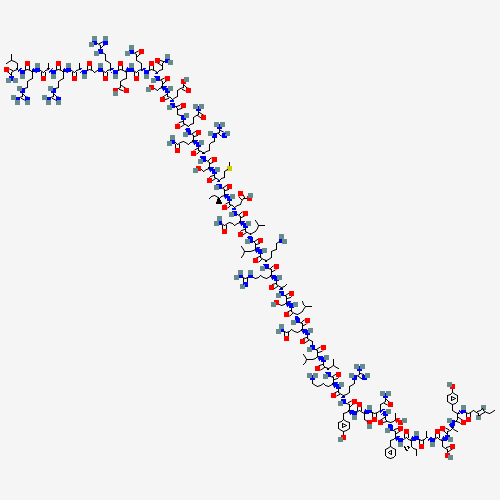
Tesamorelin (Egrifta) is a synthetic version of growth hormone-releasing hormone (GHRH). It makes the pituitary release more of the body's own growth hormone [1][2]. It is approved to reduce excess abdominal fat in people with HIV [1]. In two phase 3 trials, daily injections cut visceral (deep abdominal) fat by about 15% more than placebo over 26 weeks while leaving fat under the skin alone [3], and it also lowered liver fat [4][5]. The fat returns once treatment stops [6]. One trial in older adults reported better executive function [7], but a later trial in people with HIV found no clear cognitive benefit [8].
A well-tested, approved drug that reliably shrinks visceral and liver fat in people with HIV, as long as the daily injections continue. Nearly all the evidence comes from that population, and the cognitive findings are preliminary.
- meta-analysis
- RCT
- trial
- observational
- preclinical / case
- review / patent / other
- retracted
- + About 15–18% less visceral fat over 6–12 months in people with HIV, with no loss of fat under the skin
- + Lower liver fat and less progression of liver fibrosis in HIV-associated fatty liver disease
- + Lower triglycerides and a better cholesterol ratio
- + Better executive function in one 20-week trial in older adults
- − Daily subcutaneous injection
- − Visceral fat comes back once treatment stops
- − Joint pain, muscle pain, tingling and injection-site reactions
- − Glucose can rise, especially early in treatment
- − Almost all trials were in people with HIV
Overview
Tesamorelin is a synthetic analogue of human GHRH(1-44), the hypothalamic hormone that tells the pituitary to release growth hormone [1][9]. Unlike injected growth hormone, it works through the body's own growth hormone release: in healthy men it raised both basal and pulsatile secretion [2].
Visceral fat in HIV. Some people on antiretroviral therapy build up visceral fat. In the first phase 3 trial (412 patients), 26 weeks of 2 mg daily cut visceral fat by 15.2%, while it rose 5.0% on placebo. Triglycerides fell by 50 mg/dL [10]. A second trial of 404 patients reported similar results [9]. Pooled across both trials (806 patients), the treatment effect was −15.4%. Subcutaneous fat barely changed, and body-image scores improved [3]. People who stayed on the drug for 52 weeks kept the loss (about −18%), but visceral fat came back in those switched to placebo [6]. A 2026 meta-analysis of five trials also found more lean mass and a smaller waist, with no change in BMI [11].
Liver fat. In a 50-person trial, 6 months of tesamorelin reduced liver fat as well as visceral fat [4]. In 61 people with HIV and fatty liver disease, 12 months lowered the liver fat fraction by 37% relative to baseline. Liver fat fell below the 5% threshold in 35% on tesamorelin and 4% on placebo [5]. Liver biopsies showed fibrosis progressing in 10.5% on tesamorelin and 37.5% on placebo, but the drug did not reverse existing fibrosis [5].
Cognition. In 152 adults aged 55–87, with or without mild cognitive impairment, 1 mg nightly for 20 weeks improved a combined cognitive score. The effect came mainly from executive function; verbal memory showed only a trend [7]. A 73-person open-label trial in people with HIV and cognitive impairment found no significant difference from standard care over 6 months [8].
Mechanism
Tesamorelin activates the GHRH receptor on the pituitary, which releases growth hormone in its natural pulses. Growth hormone in turn raises IGF-1 from the liver [1][2]. In the phase 3 trials, IGF-1 rose by 81% [10]. In older adults it rose 117% but stayed within the normal range [7]. The fat loss is selective: visceral fat falls while subcutaneous fat barely changes [3].
- GHRH receptor (pituitary)activatesstrong
- IGF-1activatesstrong
- Visceral and liver fatblocksstrong
Dosing
as studied or commonly reported; not a recommendationDoses below are what studies used or, where marked, what is commonly reported. None is a recommendation.
Subcutaneous injection
- 2 mg
- 2 mg
- 2 mg
- 1 mgolder adults (55–87) with and without mild cognitive impairmentonce daily, 30 minutes before bed · 20 weekshuman study[7]
- 2 mg
- Timing and food
- The cognition trial gave injections 30 minutes before bedtime; if side effects became a problem, the dose was lowered by 0.25 mg a day [7].
- Time to effect
- Visceral fat was measured at 26 weeks in the phase 3 trials and fell further by 52 weeks with continued use [3]. The gains were rapidly lost in people switched to placebo [9].
- Notes
- Every efficacy trial of visceral fat found for this entry enrolled people with HIV on antiretroviral therapy.
Pharmacokinetics
what the body does with it| Steady state | With daily dosing, the fraction absorbed by the slower first-order process was 13.1% higher on day 14 than on day 1 [12] |
|---|---|
| Metabolism | In a population model of 38 people given 1 or 2 mg daily for 14 days, apparent clearance was about 1,060 L/h and volume of distribution about 200 L. Age, body size, race and HIV status did not change these [12] |
Safety
risks and cautions, not medical adviceAcross the phase 3 trials tesamorelin was generally well tolerated. Treatment-emergent serious adverse events occurred in under 4% of patients over 26 weeks, and most events were injection-site reactions or known effects of growth hormone, such as joint pain, headache and swelling of the legs [1]. In the first trial, overall adverse events did not differ from placebo, but more people on tesamorelin withdrew because of one [10]. A meta-analysis lists joint pain, muscle pain, tingling and injection-site redness [11]. In older adults, 68% on tesamorelin reported mild adverse events, against 36% on placebo. These were mainly skin reactions and joint pain, with some tingling in the hands and fluid retention [7].
Glucose. Over 26 and 52 weeks, the phase 3 trials found no clinically meaningful change in glucose [3][6]. Fasting glucose did rise at 2 weeks in the liver-fat trial and then settled [4]. In the fatty-liver trial, two people on tesamorelin stopped for worsening high blood sugar, one of whom already had diabetes [5]. Fasting insulin rose 35% in older adults with mild cognitive impairment [7]. In healthy men, insulin sensitivity measured by clamp did not change [2].
- Almost all efficacy data are in people with HIV on antiretroviral therapy [11]
- The benefit lasts only as long as treatment continues [6]
- The fibrosis finding comes from a secondary endpoint in a 61-person trial [5]
- The positive cognition trial was 20 weeks long, and a later trial in people with HIV was negative [7][8]
FAQ
- Is tesamorelin the same as growth hormone?
- No. It is a GHRH analogue that makes the pituitary release more of its own growth hormone, in its natural pulses [2].
- Does the fat loss last?
- Only while treatment continues. Visceral fat came back in people switched to placebo after 26 weeks [6].
- Does it work for people without HIV?
- The visceral-fat trials enrolled people with HIV. A trial in older adults without HIV found less body fat and better executive function, but it was not designed as a fat-loss trial [7].
References
entry last reviewed 2026-09-19- [1]Tesamorelin: a review of its use in the management of HIV-associated lipodystrophy.Dhillon SDrugs 2011reviewPMID 21668043◌ unreviewed
- [2]Effects of a growth hormone-releasing hormone analog on endogenous GH pulsatility and insulin sensitivity in healthy men.Stanley TL, Chen CY, Branch KL et al.J Clin Endocrinol Metab 2011clinical trial · humanPMID 20943777◌ unreviewed
- [3]Effects of tesamorelin (TH9507), a growth hormone-releasing factor analog, in human immunodeficiency virus-infected patients with excess abdominal fat: a pooled analysis of two multicenter, double-blind placebo-controlled phase 3 trials with safety extension data.Falutz J, Mamputu JC, Potvin D et al.J Clin Endocrinol Metab 2010RCT · humanPMID 20554713◌ unreviewed
- [4]Effect of tesamorelin on visceral fat and liver fat in HIV-infected patients with abdominal fat accumulation: a randomized clinical trial.Stanley TL, Feldpausch MN, Oh J et al.JAMA 2014RCT · humanPMID 25038357◌ unreviewed
- [5]Effects of tesamorelin on non-alcoholic fatty liver disease in HIV: a randomised, double-blind, multicentre trial.Stanley TL, Fourman LT, Feldpausch MN et al.Lancet HIV 2019RCT · humanPMID 31611038◌ unreviewed
- [6]Long-term safety and effects of tesamorelin, a growth hormone-releasing factor analogue, in HIV patients with abdominal fat accumulation.Falutz J, Allas S, Mamputu JC et al.AIDS 2008RCT · humanPMID 18690162◌ unreviewed
- [7]Effects of growth hormone–releasing hormone on cognitive function in adults with mild cognitive impairment and healthy older adults: results of a controlled trial.Baker LD, Barsness SM, Borson S et al.Arch Neurol 2012RCT · humanPMID 22869065◌ unreviewed
- [8]Effects of Tesamorelin on Neurocognitive Impairment in Persons With HIV and Abdominal Obesity.Ellis RJ, Vaida F, Hu K et al.J Infect Dis 2025RCT · humanPMID 39813152◌ unreviewed
- [9]Effects of tesamorelin, a growth hormone-releasing factor, in HIV-infected patients with abdominal fat accumulation: a randomized placebo-controlled trial with a safety extension.Falutz J, Potvin D, Mamputu JC et al.J Acquir Immune Defic Syndr 2010RCT · humanPMID 20101189◌ unreviewed
- [10]Metabolic effects of a growth hormone-releasing factor in patients with HIV.Falutz J, Allas S, Blot K et al.N Engl J Med 2007RCT · humanPMID 18057338◌ unreviewed
- [11]Body composition, hepatic fat, metabolic, and safety outcomes of Tesamorelin, a GHRH analogue, in HIV-associated lipodystrophy: A meta-analysis of randomized controlled trials.Badran AS, Helal A, Shata KS et al.Obes Res Clin Pract 2026meta-analysis · humanPMID 41545261◌ unreviewed
- [12]Population pharmacokinetic analysis of tesamorelin in HIV-infected patients and healthy subjects.González-Sales M, Barrière O, Tremblay PO et al.Clin Pharmacokinet 2015clinical trial · humanPMID 25358450◌ unreviewed